17.6°C Kathmandu
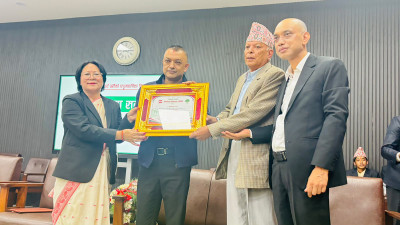
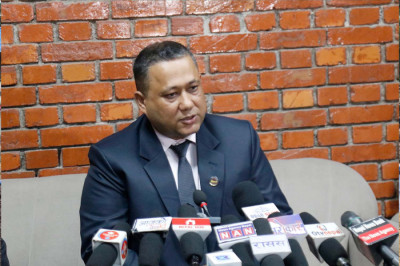
Gagan Thapa takes oath as Congress president, vows to regain public trust
Says his main challenge was to preserve Congress’s legacy while making it relevant to a changing Nepali society.
Says his main challenge was to preserve Congress’s legacy while making it relevant to a changing Nepali society.
Many leaders who stayed away from January’s special convention are now joining the Thapa-led 15th general convention, leaving Deuba with a smaller camp.
Bill proposes new administrative structure, retirement rules, recruitment quotas, lateral entry, and a two-year cooling-off period, among other things.
The bill would change some existing rules, retain others and introduce new provisions covering recruitment, pensions, retirement, inclusion and federal, provincial and local administration .
The bill, approved for submission to Parliament, has been revised to ensure employees retired under the provision do not lose pension benefits after the Public Service Commission raised legal concerns.
Commission objects to proposed 55-year or 30-year service retirement rule and pension changes, saying they could conflict with legal protections for civil servants.
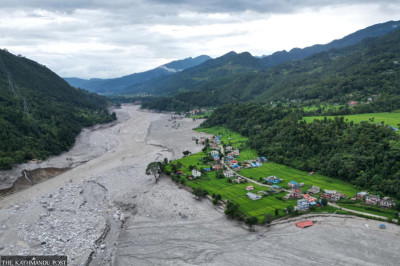
More than a dozen members of the UN-backed Loss and Damage Fund are pushing for an emergency board meeting to consider Nepal’s request for support after the Bhotekoshi floods.
The missing include 83 security personnel and 64 local representatives and government employees, according to government data, as the overall number of people unaccounted for reaches 3,916.
Kathmandu seeks specialised international support, including tunnel rescue teams, refrigeration units for bodies and heavy-lift drones, as difficult terrain hampers operations.
Home Minister Gurung promises support with legal reforms and technology as officials explore ways to allow Nepalis to vote away from home.
Heavy consular workloads are keeping diplomats busy with routine services instead of trade, investment and economic diplomacy.
Secretary-level meeting calls for faster implementation of measures needed to remove Nepal from the FATF grey list.
Ambassadorial posts in 21 countries are vacant or in transition. This has limited Nepal’s access to senior officials and its ability to advance key political, economic and strategic interests.
Critics say the government is sidelining women, Madheshis, Dalits and other marginalised groups in public appointments, despite the Constitution’s mandate for proportional representation.
High expectations, meagre budgets and ignored recommendations have left seven commissions struggling to fulfil their constitutional role.