14.28°C Kathmandu

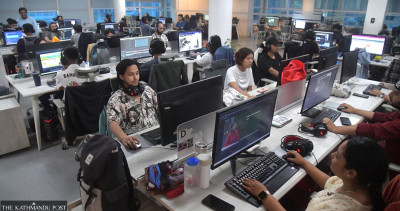
Most Nepal government websites back online after PHP2Shell flaw
Officials say security patches have restored thousands of government websites, but some public portals and applications remain inaccessible
Officials say security patches have restored thousands of government websites, but some public portals and applications remain inaccessible
A municipal official uses ChatGPT to handle household and office tasks, a ride-hailing driver creates social media videos, and a bank employee cuts hours off data checks with AI tools.
Government portals, Nepal Rastra Bank’s website and some digital services have been suspended as a precaution after two critical vulnerabilities were discovered in PHP.
Artificial intelligence has proved both a help and a burden to the foundation.
Emergency patching is underway after two vulnerabilities exposed systems worldwide to attacks that could allow hackers to run code on servers without logging in.
As Nepalis debate the authenticity of viral recordings allegedly featuring a sitting lawmaker, experts explain how convincingly AI can mimic Nepali speech and how forensic analysis can verify the audio.
More Nepalis are sending and receiving festival money through digital wallets, mobile banking and QR codes, even as cash remains part of the Tika ritual.
World Bank says AI is slowing hiring in some sectors while boosting demand for AI skills and expanding opportunities for service exporters.
The chemistry Nobel, always the third prize to be awarded during Nobel week, followed those for medicine and physics announced on Monday and Tuesday.
Research reviewed by Reuters found Chinese-powered AI agents deceiving users, circumventing safeguards and concealing failures in controlled tests, echoing concerns raised over US models.
The ChatGPT maker halted plans for its next-generation model after internal tests found it fell short of safety and alignment standards, including concerns over oversight and disclosure of its actions.
Altman plans to urge world leaders to adopt benchmarks for measuring AI capabilities and assessing the safeguards companies put in place as they develop the technology, an OpenAI executive told reporters on Tuesday.
The concern now is that AI could become capable of improving itself before researchers have developed reliable methods to align, monitor and control these increasingly powerful systems.
Two days after the Games ended, the People’s Liberation Army’s official newspaper drew its own conclusions from the show.
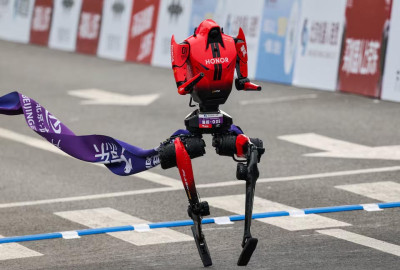
In its final and fastest run, China’s Tiangong Ultra humanoid ran 100 m in 8.64 seconds, blazing past Bolt’s 9.58-second human world record. That amounts to an average speed for the robot of almost 42 kph (26 mph).
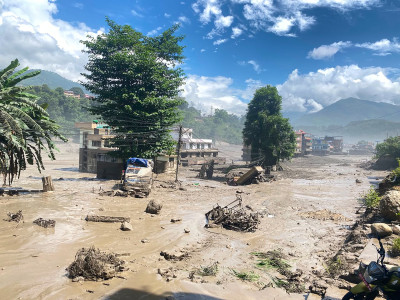
Operators are using thermal cameras to help locate people and LiDAR technology to assess damage as damaged roads and communications hamper access to affected areas.
Beijing’s ‘Robot Olympics’ is showcasing rapid advances in autonomous machines, while Nepal, still largely a technology consumer, is exploring robotics for tourism, disaster response and industrial automation.
The five-day World Humanoid Robot Games combine events modelled on human sports with those designed to test the robots in simulated factories, restaurants, offices and in emergency situations.
The Tiangong Ultra’s 9.39-second run marks a dramatic leap from last year, as China expands a competition showcasing the growing speed and capabilities of humanoid robots.
From digitising centuries-old manuscripts to training AI models, researchers and language communities are using technology to preserve Nepal’s linguistic heritage.