15.13°C Kathmandu

Gagan Thapa takes oath as Congress president, vows to regain public trust
Says his main challenge was to preserve Congress’s legacy while making it relevant to a changing Nepali society.
Says his main challenge was to preserve Congress’s legacy while making it relevant to a changing Nepali society.
Lalitpur Mayor Chiribabu Maharjan ranks second among the top 10 vote-getters, followed by Basana Thapa, according to the results.
The rival camp has completed constituency conventions in 112 of 165 federal constituencies, but thousands of ward and local-level gatherings remain outstanding.
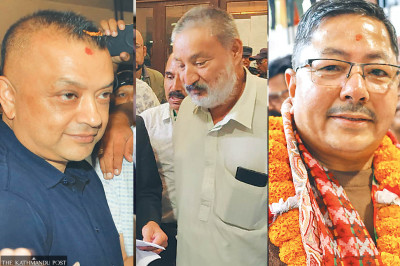
Pradeep Paudel tops the general secretary race, with Udaya Shumsher Rana and Dila Sangroula also elected.
Candidates have demanded that figures for all ballots counted so far be entered into the computer system before counting resumes.
Thapa’s election as president and Sharma’s unopposed rise as senior vice-president mark a generational shift, but the pair inherit a party still divided by factional rivalries and an entrenched political culture.
Thapa secures 6,584 votes against 375 for rival Shyam Krishna Khadgi, winning by a margin of 6,209 votes.
A crowded field and late finalisation of candidate list delayed ballot printing and frustrated delegates eager to return to home districts for Dashain.
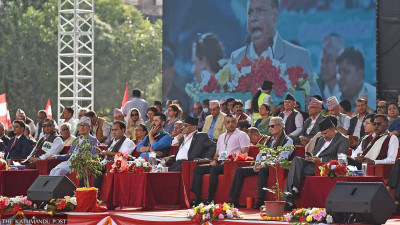
The convention is electing the party president, office-bearers and central committee members under a reshaped structure that expands its size and sets aside seats for youth.
Thapa faces two challengers for party presidency. The race for 25 office-bearer positions is testing his efforts to bring together factions divided over special convention.
Central committee also decides to increase general secretaries to three and joint general secretaries to 13.
Nepali Congress president Gagan Thapa calls for a break with the politics of recurring power struggles, while opposition leaders question the government’s approach to Parliament and democracy.
As he seeks re-election, the Nepali Congress president outlines his vision for a party that goes beyond elections and power to become a broader social movement.
Move comes amid growing pressure to give younger leaders and women a bigger say in the party’s decision-making process.
The debate centres on how the grand old party should adapt BP Koirala’s socialist principles to changing political and economic realities.