Deuba faction presses ahead with parallel Congress convention
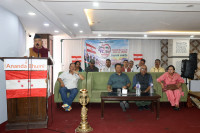
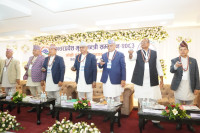
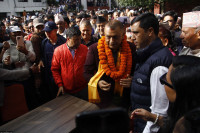
The rival camp has completed constituency conventions in 112 of 165 federal constituencies, but thousands of ward and local-level gatherings remain outstanding. Members of the Sher Bahadur Deuba-led faction of the Nepali Congress attend the joint ward convention in Kathmandu Constituency-1. Nepal Photo Library
Former Nepali Congress president Sher Bahadur Deuba’s faction has taken its parallel 15th general convention process to the constituency level, with conventions completed in 112 of the country’s 165 federal constituencies.
Conventions in the remaining constituencies will continue as long as district conventions go, said Ekaraj Pokharel, coordinator of the faction’s election committee.
The Deuba camp began ward conventions on October 1, challenging the convention process advanced by the party’s rival leadership, under Gagan Thapa. Its schedule calls for conventions at ward, local, provincial assembly constituency, federal constituency, district and provincial levels, culminating in a central general convention in Kathmandu on December 7-9.
The process has fallen behind schedule. Of the country’s 6,743 wards, conventions have been completed in 5,500, leaving 1,243 outstanding. Similarly, 497 of the 753 rural municipalities and municipalities have held their conventions, while 256 are yet to do so.
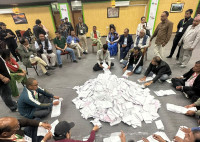
The faction had scheduled local-level conventions for October 6 and provincial assembly constituency conventions for October 9. Although committees were elected unanimously in most provincial assembly constituencies, contests were held in many places to select general convention delegates, Pokharel said.
The faction plans to hold district conventions on November 1, completing the outstanding ward, local-level and federal constituency conventions by then. Provincial conventions are scheduled for November 20, followed by the central convention in December.
The Deuba camp has also revised the rules for selecting delegates to its proposed general convention. Each federal constituency will elect 35 delegates under the revised arrangement.
Of these, 14 will be elected under the open category, including four women, while 10 will represent inclusive groups. Two young delegates, including one woman, will be aged 18-28, while another two, also including one woman, will be under 40.
The remaining seven seats will be allocated to one person with disability; two representatives of democratic veterans, conflict victims and martyrs’ families; two subject experts and workers; and two representatives from other groups.
The 165 constituencies will therefore elect 5,775 delegates. The total will be higher once office-holders entitled to attend automatically are included. These include federal constituency presidents, district presidents in districts with a single federal constituency, provincial assembly constituency presidents and local-level presidents.
A special general convention held in Kathmandu in January, backed by a majority of registered convention delegates, elected Thapa president and installed a new leadership team. Thapa and General Secretary Bishwa Prakash Sharma had spearheaded the reformist, youth-led camp in opposition to Deuba’s traditional establishment faction.
The Deuba camp continues to present itself as the successor to the central working committee elected at the party’s 14th general convention, challenging the legitimacy of the leadership elected through the special convention.
With the Thapa-led Congress having completed its 15th general convention, Deuba’s faction is pursuing its own process to assert its claim to the party’s leadership.




 17.82°C Kathmandu