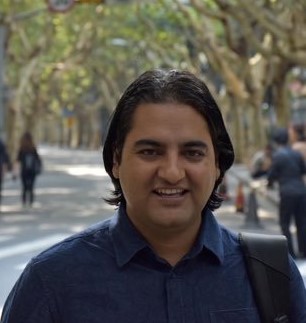
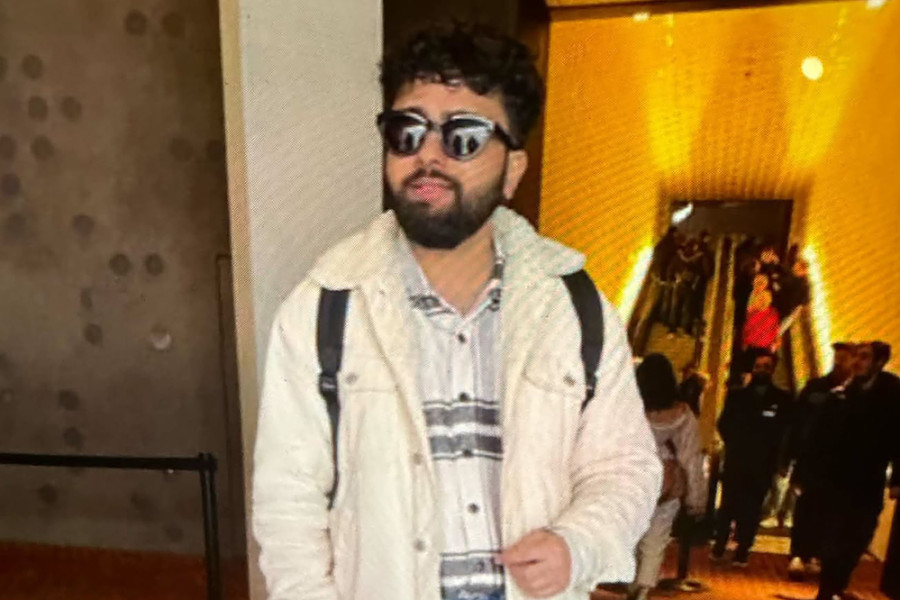
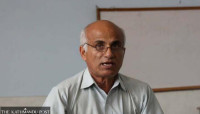
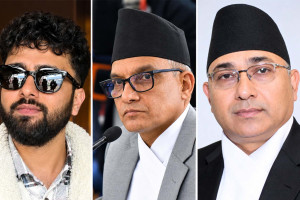
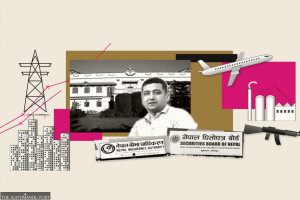
The arrest of a previously obscure man has exposed a web of connections involving the Prime Minister’s Office, senior security officials and Supreme Court judges, raising questions about institutional safeguards and judicial accountability. Inam Sapkota was intercepted at Tribhuvan International Airport in Kathmandu on October 1. Obtained from social media
What began with the arrest of a previously obscure 31-year-old man has now unfolded into a controversy involving the Prime Minister’s Office, the police leadership, the security establishment and, most consequentially, the judiciary.
In the weeks since Inam Sapkota was intercepted at Tribhuvan International Airport, his communications with powerful officials and sitting Supreme Court judges have raised questions about how people outside formal positions of authority were able to approach those exercising public power, what they sought from them and whether those connections were being used to influence state institutions.
The consequences have extended well beyond the investigation into Sapkota. Communications between him and sitting Supreme Court judges have brought the possibility of impeachment into political discussion, placing the ruling Rastriya Swatantra Party in a difficult position. The party has condemned the arrest of journalists who reported on the exchanges, but remains divided over whether judges implicated in the controversy should face impeachment proceedings.
In a conversation with Kantipur days after Sapkota’s arrest, Kumar Byanjankar, Prime Minister Balendra Shah’s chief adviser popularly known as Kumar Ben, said he had discovered that Sapkota was invoking the prime minister’s name to secure deals and pursue other activities.
“After learning that he was misusing the PM’s name, I had asked him if he knew me,” Ben said. “He attempted to establish familiarity by reminding me that he had attended Little Angels School with me.”
Prime Minister Balendra Shah and his chief advisor Kumar Byanjankar. Obtained from social media
The affair, however, did not begin with the judges or even with Sapkota’s arrest. Its origins lie in the events surrounding former chief justice Cholendra Shumsher Rana, who was taken from his residence in the middle of the night and brought to a police office in Teku.
Shortly after midnight on September 27, a team from the Kathmandu Valley Crime Investigation Office went to Rana’s residence in Bansbari and took him to its office. Police subsequently maintained that he had been brought in for security reasons, not arrested. He was released the following afternoon.
A senior Nepal Police official familiar with the operation described a confrontation between Home Minister Sudan Gurung and Inspector General of Police Dan Bahadur Karki before Rana was taken to Teku. According to the official, who spoke on condition of anonymity, Gurung instructed Karki to arrest Rana. Karki questioned the legal basis for doing so.
The official said Gurung told Karki that he was under pressure from Kumar Ben. Gurung, according to the official, said Ben had reprimanded him for failing to act against influential people and create a buzz. The official added that the PMO’s inner circle was concerned that Rana was attempting to use Supreme Court judges to undermine some of the government’s plans.
Karki initially resisted the instruction but eventually agreed.
At Teku, police took Rana’s mobile phone into custody to examine his WhatsApp communications. Investigators found that Rana had been in regular contact with Sapkota.
Three days after Rana was taken to Teku, Sapkota was intercepted at Tribhuvan International Airport on September 30 as he was preparing to board a Nepal Airlines flight to Delhi. Immigration records seen by Kantipur show that he had already cleared the immigration desk. His departure was recorded at 12:15 pm, ahead of the scheduled 1:25 pm flight. A cancellation entry appeared more than five hours later, at 5:38 pm.
Immigration records also show an unusual pattern of travel in the 53 days before his arrest. Sapkota made four trips abroad, spending approximately 16 days outside Nepal. His destinations included India and Singapore, and he returned from Vietnam before attempting another trip to Delhi. He was back in Kathmandu for only about 38 hours before he was intercepted at the airport. The records show no departures from Tribhuvan International Airport between September 2023 and July 2025, or between July 2025 and August 2026, before this sudden series of journeys.
Sapkota’s phone soon became central to the investigation.
A senior police official said that after Sapkota was intercepted, his phone was handed to people in the prime minister’s inner circle. According to the official, who also sought anonymity, they examined conversations involving Shah and Ben. He said he had not personally seen those exchanges.
The device was subsequently sent for forensic examination. Police have yet to publicly establish the complete chain of custody or explain who accessed it during the period it was outside their control.
The Prime Minister’s Secretariat has maintained that Sapkota had been misusing the names of Shah and his office. Ben acknowledged communicating with him just once after learning about Sapkota’s “shenanigans.”
An official from the Secretariat described Sapkota as a relatively junior intermediary and suggested that investigators had begun with him because they believed he was a weaker link in a wider network.
After spending two days in the Special Bureau’s custody, Sapkota was transferred to the District Police Range in Kathmandu and initially investigated under allegations of indecent behaviour. His detention was subsequently extended, and the investigation expanded to include allegations relating to foreign exchange, banking offences and money laundering.
An examination of his two phones revealed communications with senior Nepal Police officers, Armed Police Force officials, sitting and former judges, politicians, lawyers and businesspeople. Investigators also recovered documents referring to financial transactions and containing the names of prominent individuals.
Another illustration of Sapkota’s claimed access to the government involved Armed Police Force Additional Inspector General Banshiraj Dahal, whose four-year term was due to expire on October 27. According to senior APF sources, Sapkota had assured Dahal that he could help secure a one-year extension through his connections with the prime minister and his adviser. Investigators also found messages showing that Dahal shared information about the prime minister’s movements with Sapkota, including movements outside Baluwatar and Singha Durbar.
The exchanges acquired further significance because Dahal had also visited former chief justice Rana at Teku on the night he was taken there. After the communications came to light, the APF sought an explanation from Dahal. He was subsequently dismissed on the grounds that he had disclosed sensitive information about the prime minister’s movements and breached his professional obligations.
The episode illustrates how Sapkota’s communications extended into the security establishment. It also raises questions about how a senior official came to believe that someone without a formal government position could help secure an extension through access to the executive.
A senior Nepal Police official, who agreed to speak to Kantipur only on condition of anonymity, recalled meeting Sapkota at a social gathering and later over coffee last year. He said he had heard that Sapkota had deep connections within the government and the Prime Minister’s Office. The official initially understood him to be someone working for the US Embassy with extraordinary influence. The embassy subsequently denied that anyone named Inam Sapkota worked there.
Investigators also say Sapkota approached police officers with offers of assistance on promotions and transfers. He communicated with officials ranging from special-class government officers to police superintendents and had shown interest in police contracts and procurement deals.
The emerging picture is of a man whose value to his contacts may have rested less on any formal authority than on his claimed ability to reach people who exercised it. Whether Sapkota was independently cultivating those relationships or acting as an intermediary for others remains unresolved.
The most serious implications emerged when investigators found that he had also been communicating with Supreme Court judges.
According to Justice Hari Prasad Phuyal, Sapkota initially approached him through an acquaintance at a time when rumours of impeachment proceedings against several senior judges were circulating. Sapkota presented himself as someone close to Prime Minister Shah who could convey the government’s position and reassure judges that they faced no such threat.
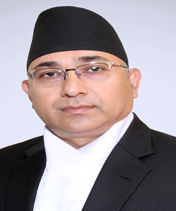
Supreme Court Justice Hari Phuyal has admitted meeting Sapkota but has denied any dealings. Supreme Court's website
Phuyal said their initial conversations concerned political developments and current affairs. The judges were initially receptive to Sapkota’s approach, believing he might genuinely be conveying the government’s position. Their suspicions grew when he began raising pending cases and suggesting how judges should deal with them.
The most direct example concerned businessman Rohit Gupta, who was facing allegations relating to banking offences.
At 10:21 am on September 2, Sapkota sent Phuyal a screenshot of the Supreme Court case list. He followed it with messages asking the judge to dismiss the petition, invoking the prime minister’s interest in the matter.
Phuyal said he did not see the message until he returned home from court that evening. By then, the bench had already decided to release Gupta on bail of Rs20 million, finding insufficient grounds to keep him in custody. Phuyal subsequently explained the decision to Sapkota over WhatsApp, including the reasoning behind the bail amount.
Phuyal maintained that he had no financial dealings with Sapkota and had not agreed to influence judicial proceedings. He also said the bench’s decision had not followed Sapkota’s request.
The messages establish that Sapkota approached a sitting Supreme Court judge about a pending case and that the two communicated about it. They do not, by themselves, establish that he influenced the judicial decision. The proposed meeting at Hotel Himalaya the following evening also forms part of the exchange. Whether it took place, and what was discussed if it did, remain separate questions.
The Phuyal-Sapkota communications were exposed on October 30 by Naya Patrika daily and the digital outlet Diyo Post. But the reporting did not emerge in isolation. Long before the messages became public, a senior police official had told Kantipur that Sapkota was in communication with at least four Supreme Court judges, including Phuyal.
The controversy has since widened beyond Phuyal. Reports have emerged alleging that Chief Justice Manoj Kumar Sharma, among others, was involved in financial dealings with Sapkota. Sharma has denied any direct or indirect contact with him.
The disclosures have raised a fundamental question: whether anyone within the executive was using Sapkota to communicate political preferences to judges, or whether he was independently invoking the prime minister’s name to create an impression of authority.
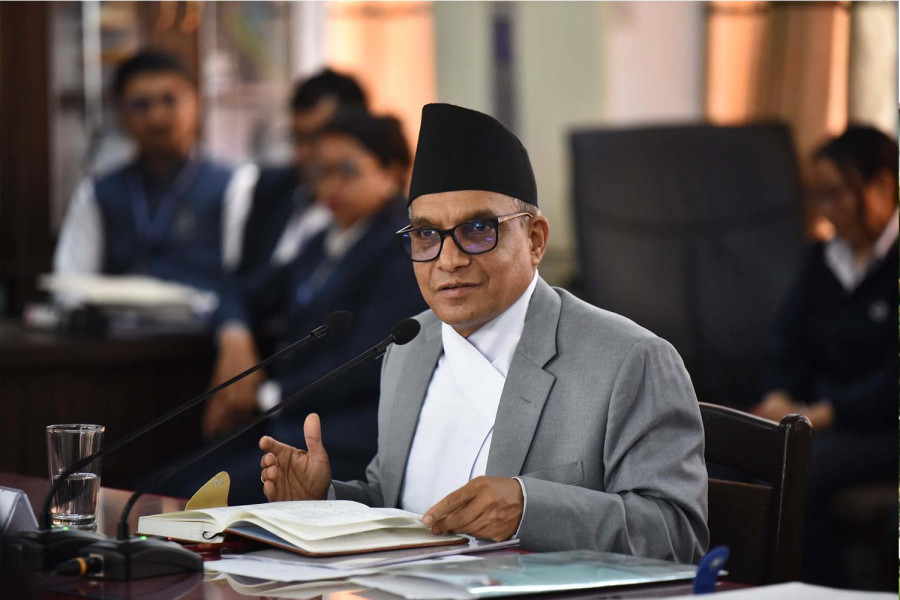
The Supreme Court’s full court meeting, which continued from Friday, said on Monday that allegations involving Sapkota and judges should be investigated in accordance with the constitution and the law. The ruling Rastriya Swatantra Party, meanwhile, remains divided over whether an impeachment motion should be brought against the judges concerned.
The party has also condemned the arrest of journalists from Naya Patrika and Diyo Post following publication of the communications. The Prime Minister’s Office distanced itself from the arrests, while police later said the action followed concerns raised by the PMO. The arrests have further complicated the government’s position, raising questions about its response to reporting on a controversy involving the judiciary.
The Sapkota affair has now drawn several of Nepal’s most powerful institutions into a single controversy. The Prime Minister’s Office has yet to fully explain the nature of its connections with Sapkota. Police have yet to publicly establish the complete chain of custody of the phones central to the investigation. Investigators must also determine whether the promises Sapkota made to officials translated into any actual intervention or benefit.
But the most consequential questions concern the judiciary. The communications have placed sitting Supreme Court judges under scrutiny and brought impeachment into the political arena. Any action against them must establish individual responsibility through evidence and follow the constitutional process, rather than rest on association or political pressure.
What began with the removal of a former chief justice from his residence in the middle of the night has, through the communications and connections of Inam Sapkota, become a test of Nepal’s institutional independence.
The investigation into a man who held no formal public office has drawn the executive, the police leadership and the security establishment into questions about the exercise of public authority. But the gravest consequence is now unfolding in the judiciary, where the credibility and independence of the Supreme Court—and the constitutional process governing accountability of its judges—are at stake.




 17.53°C Kathmandu