Who is Inam Sapkota, the man linked to Cholendra Rana and top police officials?
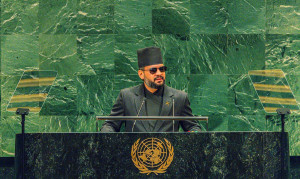
Phone records link Sapkota to judicial figures, politicians and senior security officials amid probes into alleged court fixing and information leaks.Inam Sapkota Obtained from social media
Until September 27, Inam Sapkota had little public profile. His name had never surfaced among those suspected of fixing policy decisions, appointments, or government contracts.
That changed when police examined the mobile phone of former chief justice Cholendra Shumsher Rana, who had been taken to the Valley Crime Investigation Office in Teku. Investigators found repeated calls between Rana and Sapkota and began probing the latter’s connections.
“They didn’t appear to be related or have any other obvious connection,” an officer involved in the investigation said on condition of anonymity. “But the frequency of their calls seemed suspicious.”
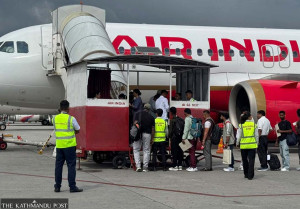
As the inquiry deepened, police found indications of Sapkota’s links with security officials, politicians and legal professionals. The Special Bureau, a specialised Nepal Police unit, was deployed to track him. Investigators traced his mobile phone to the Tribhuvan International Airport area, where a plainclothes team approached him for questioning.
“When the officers approached him at the airport and said they needed to question him, he was taken by surprise,” the officer said.
The 30-year-old had no reason to expect an arrest. No complaint had been filed against him, nor any case been registered against him.
A senior official familiar with the operation said the Special Bureau was mobilised to maintain secrecy. The unit, which reports directly to the inspector general of Nepal Police, handles counterterrorism and transnational crime investigations. It also operates confidential offices outside police headquarters, known as safe houses.
“Sapkota didn’t utter a word for a long time during questioning at the safe house,” the officer said. “But investigators had already recovered information from Rana’s phone, so he could not remain silent indefinitely.”
Police, meanwhile, began examining the two mobile phones seized from Sapkota. Their review of his WhatsApp conversations revealed contacts with senior Nepal Police officials, sitting and former judges, politicians, and lawyers.
Investigators say Sapkota had become an intermediary for security officials seeking promotions and people hoping to influence court proceedings.
“Most people in line for promotion appear to have sought his assistance, while those facing cases seem to have approached him to get matters settled in court,” an officer said.
Sapkota reportedly acknowledged these contacts in his statement, but it remains unclear whether he delivered what his contacts sought. Police have widened the investigation to establish whether any interventions were made.
A senior security official told Kantipur that Sapkota had introduced himself as a medical doctor working for an embassy. His WhatsApp messages also showed an interest in police procurement, including uniform and clothing contracts, which he discussed with junior police officers.
A more consequential link emerged when investigators found that Sapkota had been in contact with people at Nakkhu Prison in Lalitpur.
“We found evidence that he was in contact with Deepak Bhatta, who is in custody on money laundering and banking offence charges, another member of Bhatta’s family, and the group associated with [businessman] Sulav Agrawal,” the officer said. “We then concluded that he was the link connecting the information we had received from higher up.”
According to sources, an anonymous complaint had been submitted to the Prime Minister’s Office several months earlier, alleging interference and collusive arrangements in judicial proceedings at the Supreme Court and elsewhere. The complaint named Bhatta and Rana among those allegedly involved.
“We don’t know who filed the complaint. But it travelled through the Home Ministry, Nepal Police headquarters and the Valley Police Office in Ranipokhari before reaching the Valley Crime Investigation Office,” the officer said. “No investigation had moved forward. It had effectively been left in limbo.”
The inquiry gained momentum after Bhatta’s family approached the Supreme Court to challenge orders by the Special Court and the Patan High Court remanding him in custody for trial. Bhatta faces an alleged banking offence involving Rs421.89 million and a money laundering claim of Rs26.63 billion.
His decision to approach the Supreme Court after spending three months in custody awaiting trial raised questions among senior government officials.
“Rumours had started that Bhatta would be released before Dashain. When we began looking into what was happening, the trail led us to former chief justice Rana,” a source familiar with the investigation said. “That gave us a lead to Sapkota. Whether taking him into custody was right or wrong is a separate question, but this is a step towards dismantling the networks of collusion operating in the courts.”
Investigators had found no direct link between Rana and Bhatta. But evidence recovered from Sapkota’s phone, and his statement after arrest, led them to conclude that he had acted as an intermediary, facilitating contact and information-sharing between the two.
Police also found grounds to suspect that Sapkota may have managed assets for high-profile individuals. They have handed the probe over to the Department of Money Laundering Investigation.
“We found a company registered in his name in Singapore and an apartment in Dubai,” an officer involved in the investigation said. “He spent more time abroad than in Nepal. Our preliminary assessment is that he managed overseas the money from transactions carried out in Nepal.”
A source who reviewed screenshots of Sapkota’s messages said he appeared to have been in contact with several high-profile individuals who had been jailed, some of whom were subsequently released.
“Whether they were released because of him or whether it was merely a coincidence requires further investigation,” the source said. “The dates of some court verdicts appear to coincide with the acquisition of land and property in Sapkota’s name. We are investigating whether he obtained these assets by fixing cases or through other means.”
Investigators also found records of conversations between Sapkota and former home minister Bal Krishna Khand, who was jailed in the fake Bhutanese refugee scam; former minister Deepak Khadka, accused of money laundering; and Nepali Congress leader Umesh Shrestha, among others.
Sapkota also appears to have communicated with leaders close to Sher Bahadur Deuba while the Nepali Congress’s dispute over party legitimacy was before the courts. Although the court has already ruled against Deuba, its subsequent decision to allow a review has brought the case back under judicial consideration.
During the dispute, Congress leader Khadka had taken the lead in pursuing the Deuba faction’s case for official recognition. He was publicly warned against claiming that the case had been fixed through arrangements involving court employees and judges.
After the Supreme Court, on August 6, granted leave to review its April 17 ruling in the party legitimacy dispute, Khadka reportedly told party leaders that the necessary arrangements had already been made and that his faction would secure official recognition.
The claims prompted objections from Kusum Thapa Magar, then a Congress lawmaker, who criticised such assertions on social media.
“Don’t go around claiming that you have fixed everything from court employees to judges,” she wrote. “Such claims erode public trust in the judiciary, whose dignity we all have a responsibility to protect.”
Khadka responded that same day, saying his faction had been denied justice in the party dispute and had approached the Supreme Court seeking redress.
“I am seriously concerned by a campaign in which certain individuals and groups have deliberately linked my name to allegations of court fixing, with the aim of undermining the independent judiciary and eroding public trust, simply because we sought justice,” he said in a statement.
“We are investigating these allegations and counter-allegations, as well as the exchanges between Khadka and Sapkota,” an officer involved in the investigation said.
Investigators found records of Sapkota’s conversations with former judge Nabaraj Thapaliya, alleged court middleman Deepak Timilsina, Prabhu Shumsher Rana, the former chief justice’s brother, and businessman Nabinraj Basnet.
On October 8, the Department of Money Laundering Investigation raided their homes and seized electronic devices and documents.
“The individuals whose homes were raided appear to have been in contact with both Sapkota and former chief justice Rana and involved in interference in judicial matters,” the officer said.
Some contacts were through chats, while others took place over WhatsApp calls. “There were no messages exchanged with Rana; their conversations appear to have taken place over WhatsApp calls,” the officer said.
How did Sapkota become so close to Rana? According to investigators, Sapkota said during questioning that he had attended the same school as Rana’s son, Sachindra Shumsher Rana.
“He was senior to me at Little Angels’ School. That is how I got to know him,” Sapkota reportedly told investigators during informal questioning. “We gradually began talking, and through him I got to know others as well.”
Sapkota has said he was planning to travel to Delhi for treatment for a stomach ailment. Investigators suspect, however, that the trip may have been connected to hundi, or informal money-transfer transactions. He has also said he is involved in share trading. Officials have sought his bank statements and plan to question his business partners.
The department began investigating the matter on Wednesday. Officers say the inquiry into Bhatta and Rana has also opened the way to examine several older cases.
Investigators say Sapkota was in repeated contact with Thapaliya, who was considered close to Rana. In March 2019, Rana, then chief justice, appointed Thapaliya to the High Court on the recommendation of the Judicial Council, despite his relatively brief career as a lawyer.
While serving at the Jumla bench of the Surkhet High Court, Thapaliya was transferred to the Supreme Court on deputation after complaints were lodged with the Judicial Council. The complaints alleged that he had communicated with litigants, negotiated payments, and influenced verdicts. He was accused of using his connections with Rana to meet litigants and rule in their favour in exchange for money. Council sources said the complaints included audio recordings and call details.
The complaints were investigated under Sections 17 and 18 of the Judicial Council Act, 2016. An inquiry led by Supreme Court Justice Til Prasad Shrestha recommended action against Thapaliya, who was removed from office by the Judicial Council on February 25, 2024.
Investigators say Thapaliya remained close to Rana and active in judicial circles after his removal.
“We are investigating Thapaliya,” the officer said. “We have also found chats between Sapkota and some judges, and the investigation is continuing.”
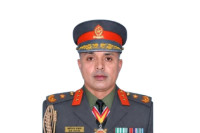
Meanwhile, Additional Inspector General of the Armed Police Force Banshiraj Dahal has been dismissed over his links with Rana. Dahal visited the Valley Crime Investigation Office around 3am on September 27 to meet the former chief justice and left at 5am.
Even Armed Police Force chief Narayandatta Poudel was unaware of the visit. Dahal gained entry by identifying himself as an AIG of the force. He informed Poudel about the meeting only after returning.
The visit came as the Armed Police Force headquarters was recommending a one-year extension of Dahal’s tenure to the Home Ministry. But information recovered from Sapkota’s phone changed the course of events.
According to an officer involved in the investigation, WhatsApp conversations lasting between 15 minutes and an hour had initially appeared unremarkable. Investigators, however, found messages indicating that information about Prime Minister Balendra Shah leaving his official residence in Baluwatar on two occasions had been shared.
“Screenshots of messages found on Sapkota’s phone reached Home Minister Sudan Gurung and other senior officials,” the officer said.
The Home Ministry subsequently directed Poudel to seek an explanation from Dahal. On October 6, the ministry suspended him pending an investigation into allegations that he had leaked sensitive information. It also assigned another AIG, Anjanikumar Pokharel, to investigate the matter.
Pokharel submitted his report to the ministry on Thursday, recommending disciplinary action against Dahal.
“The report cites provisions of the Armed Police Force regulations and recommends action that could extend to dismissal. The ministry will make the final decision,” a senior security source said.
Sources said Dahal acknowledged during questioning that he had communicated with Sapkota. Asked why he had shared the information, Dahal reportedly said he had responded to a query because Sapkota had claimed to be close to the prime minister.
Investigators have also found communications between Sapkota and two other senior police officials.
“Communication alone does not establish involvement in an offence,” the officer said. “But the records suggest that Sapkota contacted people when he needed something done, while others approached him for assistance. These connections warrant further investigation, and we have expanded the probe.”




 16.78°C Kathmandu