



 14.76°C Kathmandu
Fri, Oct 9, 2026
National
Bhotekoshi floods leave 269 children without one or both parents
A study of 584 children living in holding centres in Kathmandu, Nuwakot and Rasuwa finds that 41 had lost both parents, 161 their fathers and 67 their mothers.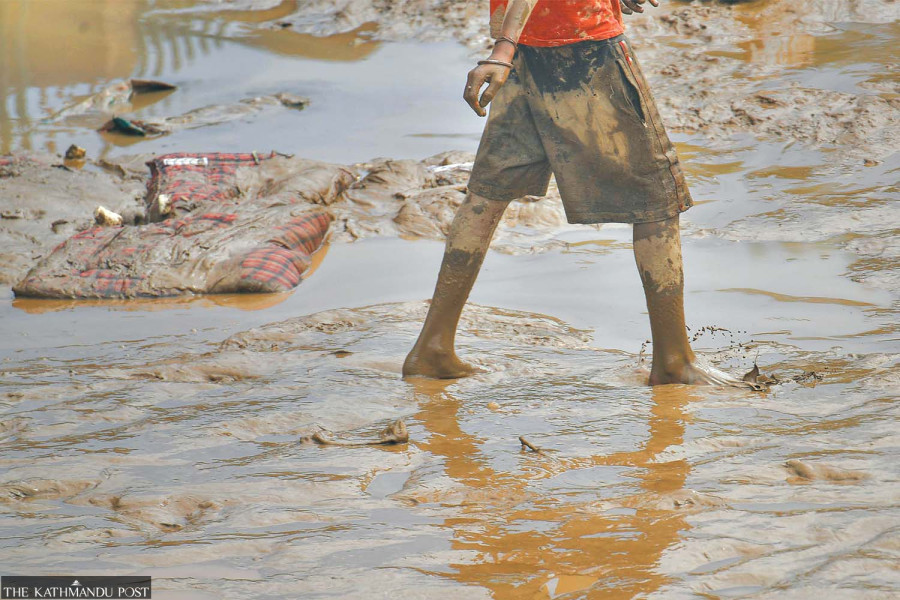
bookmark
Sudeep Kaini
Published at : October 9, 2026
Updated at : October 9, 2026 22:20
Kathmandu
At least 269 children affected by the Bhotekoshi floods in Nuwakot and Rasuwa districts have been left without one or both parents, according to a study by the National Child Rights Council.
The council assessed 584 children living in holding centres in Kathmandu, Nuwakot and Rasuwa. Of them, 269, or 46 percent, were found to have lost contact with one or both parents, leaving them without parental care.
The council’s preliminary report found that 41 children had lost both parents. The number of children left without parents following the August 26 floods is not final, however.
Ram Bahadur Chand, the council’s information officer, said the authorities were still documenting affected children and that the figure could rise.
An earlier rapid assessment by the council had recorded 102 children who had lost both parents and 439 who had lost one parent. “The rapid assessment was based on general notes,” Chand said. “The preliminary report was prepared formally using the children’s names, surnames and addresses. Some children may have been missed.”
Chand added the number of children who had lost their parents could increase because people from districts other than Rasuwa and Nuwakot had also gone missing after the floods.
The rapid assessment had covered 1,233 children. The council said the difference between the figures in the two reports could be partly due to some children having been counted more than once in the earlier records.
The report concludes that the actual situation can be assessed only after a detailed review of all affected children. The council is collecting information through local units and district administration offices, Chand said.
Of the 41 children who had lost both parents, 28 were staying in Nuwakot, two in Rasuwa and 11 in holding centres in Kathmandu. Another 161 children had lost their fathers. Of them, 106 were staying in Kathmandu, 32 in Nuwakot and 23 in Rasuwa.
The report also identified 67 children who had lost their mothers. Of these, 39 were in Nuwakot, nine in Rasuwa and 19 in Kathmandu. Most children staying in Kathmandu’s holding centres were from Rasuwa.
Seven percent of the 584 children assessed had lost both parents and were classified as an extremely vulnerable, high-risk group requiring immediate legal protection and long-term care, the council said. Children who had lost one parent accounted for 39 percent of those assessed and were classified as being at medium risk.
The remaining 315 children, or 54 percent, were living in holding centres with both parents and were classified as being at low risk.
The council said 296 children displaced by the floods were sheltering in different monasteries in Kathmandu.
The findings highlight the challenges involved in protecting children who have lost their parents, reuniting families and ensuring long-term care.
The study was conducted by the National Child Rights Council, under the Ministry of Women, Children, Gender and Sexual Minorities, and Social Security, in collaboration with UNICEF and Save the Children.
The report identified health problems, disabilities, the destruction of birth registration and other documents, and the risk of discrimination and abuse as major challenges in protecting affected children. Children whose birth registration certificates were destroyed when their homes were swept away could face difficulties accessing relief and enrolling in school, the report said.
The assessment also found that some children had health conditions including pneumonia, lung problems requiring surgery, heart disease and autism. It also documented a case of caste-based discrimination and abuse involving a girl staying at a monastery in Kathmandu. The council said such incidents must be addressed promptly and prevented by ensuring a safe environment for children.
The council recommended that children who had lost one or both parents should, wherever possible, be cared for within their families. Where relatives could not provide care, arrangements should be made with other willing individuals or families before considering institutional care, the report said.
The council also recommended prompt psychosocial counselling for children who had experienced the floods and lost family members.
Local units should provide free copies of birth registration certificates and citizenship-related documents to those who had lost them, while ensuring that the children could continue their education, the report said.
The council stressed the need for coordination among family members, local governments, local child rights committees and relevant government agencies, with the best interests of children taking priority.
The preliminary report released on Thursday covers information collected through September 28, the council said. It also highlighted the need for a detailed assessment of families and children living in holding centres after the floods.
Most Read from National
Balendra Shah UN speech: Full transcript of Nepal prime minister’s address to the 81st UN General Assembly
Heavy rains cut off key roads to Kathmandu
The speech Nepal — and the world — had been waiting for
For 26 years, India has searched passengers at Kathmandu airport. Nepal can’t say why
14 Nepalis missing on Himlung after avalanche as bad weather hampers rescue
Editor's Picks

Constitutional Bench caught in seniority, ‘pick and choose’ dispute

A Dom boy’s long road to becoming a doctor

From blankets to handmade dolls, two foreign women bring comfort to flood survivors

News Analysis: When institutional defence exposes institutional fault lines

It’s a bird … it’s a plane … it’s the Indian ambassador’s farewell tweets
E-PAPER | October 09, 2026

×