What happens to passengers’ belongings after a road accident?
Families repeatedly complain about missing cash, jewellery, and phones after crashes, exposing shortcomings in how victims’ possessions are collected, documented, and returned. While rescue teams focus on saving lives and retrieving bodies, the belongings of the injured and dead can be left scattered at the scene, with no clear record of who collects them or where they are taken. RSS File Photo
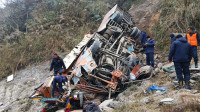
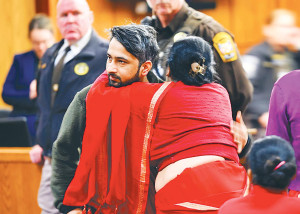
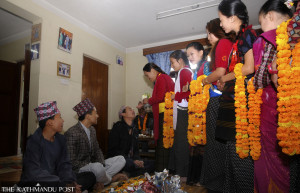
Awadhesh Yadav of Sundarpur in Sarlahi had to perform the funeral rites for six members of his family after a road accident in Makawanpur on November 12. His wife, three daughters and two brothers were killed when the vehicle they were travelling in crashed at Chisapanigadhi while they were returning home for the Chhath festival.
As he struggles to come to terms with the loss, Yadav is also trying to find out what happened to the cash and gold jewellery his wife had with her. He says Rs100,000 and several pieces of jewellery kept in her handbag went missing after the accident.
In the confusion following the crash, with rescuers attending to the injured and bodies being recovered, the family had little opportunity to look for their possessions. But the disappearance of the valuables and belongings has become another source of anguish for Yadav, who wants the authorities to account for what was recovered from the scene.
“Where is the money and jewellery that were in my wife’s bag?” is the question he has been asking.
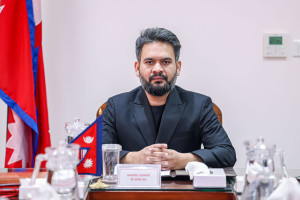
When Speaker Dol Prasad Aryal visited the bereaved family in Sundarpur on Monday, Yadav showed him the handbag and explained what was missing. Opening its zip, he pointed to the compartment where he said he had placed Rs100,000 and gold jewellery before the accident.
“My Rs100,000 and some jewellery are missing. Please help me find them,” he told Aryal.
The Speaker then sought an explanation from Superintendent Rabindra Nath Poudel, the Sarlahi police chief, who said he had contacted Makawanpur Police chief SP Shyam Bahadur Khatri. Police officials assured the family that belongings recovered from the crash site would be secured and that nothing would be allowed to go missing.
Poudel said the investigation would establish what had happened to the items Yadav reported missing. He had heard that some belongings were recovered from the site but said he had yet to receive a detailed account of the items that had been found.
For Yadav, however, the suggestion that some money had been recovered only deepened his frustration.
He recalls hearing a police officer standing on the road above the crash site call colleagues down to where the vehicle had fallen, asking whether Rs100,000 had been found. He says he then heard someone respond that Rs60,000 had been recovered.
“Initially, I was told that money had been found. But what happened to it? It is bad enough that some of the items have gone missing. Recovered belongings should not disappear too. I want an impartial investigation,” he said.
Yadav has also appealed to Nepali Congress President Gagan Kumar Thapa and journalist Rishi Dhamala for help in tracing the missing cash and jewellery. He said the money included Rs50,000 of his own savings and another Rs50,000 he had borrowed from a lender for the Chhath festivities. Empty handbags belonging to his wife and brother were found at the crash site.
For someone who has lost six relatives, the missing money and jewellery may seem secondary. But Yadav says the issue is also about knowing what happened at the crash site and ensuring that the belongings of those who died are not simply lost.
His appeal has since gained widespread attention on social media.
Complaints about valuables disappearing after road accidents are not new. While rescue teams focus on saving lives and retrieving bodies, the belongings of the injured and dead can be left scattered at the scene, with no clear record of who collects them or where they are taken.
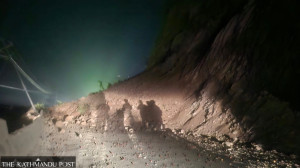
At Chisapanigadhi, the first responders were teams from the Bhimphedi Area Police Office and the Armed Police Force. Sub-inspector Dipendra Dhakal, who led the local police team, acknowledged that belongings were scattered across the crash site but said he had no information about the missing cash.
“We didn’t touch the bags, scattered money, or other belongings. The team that came from the district collected everything,” he said. “We have no reason to believe anyone took the money. That should not have happened.”
Deputy Superintendent of Police Madhav Kafle, spokesperson for the Makawanpur District Police Office, said recovering the bodies had been particularly difficult. He however claimed that no cash was found at the scene.
“We handed over whatever belongings we found and could identify,” he said. “We will raise the questions concerning cash and jewellery with the investigation committee.”
The police response points to a larger problem: while procedures exist for collecting and returning belongings recovered after an accident, little is clear about what happens when something cannot be accounted for.
Nepal Police spokesperson Abi Narayan Kafle told Kantipur that complaints of missing belongings were uncommon in most road accidents. But he said problems could arise in major crashes when local residents reach the scene before police officers.
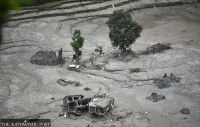
He cited the Bhotekoshi flood as another example of people taking valuables washed away by the disaster, arguing that some individuals exploit rescue efforts for personal gain.
“Even during the devastating Bhotekoshi flood, some people took gold and other belongings carried away by the water. There may be people who go to disaster sites ostensibly to help but have other intentions,” he said.
Kafle said district police investigated complaints about passengers’ belongings going missing and took action when they found evidence of wrongdoing. He added that the Nepal Police inspector general had instructed officers to take road accidents and the problems arising from them seriously.
Police officers deployed to accident sites were responsible for ensuring that injured people reached hospitals and that the bodies of those killed were recovered, he said. Although accidents were frequent on highways, he maintained that passengers’ belongings did not go missing in every case.
“Protecting human life and property with honesty and professionalism is the responsibility of the police,” Kafle said. “Sometimes people with dishonest intentions are responsible for such incidents. Problems do not arise when police reach the scene immediately.”
A recurring complaint
Previous accidents show that the problem is not confined to the Chisapanigadhi crash.
On May 20, 2024, a bus travelling from Janakpur to Birgunj crashed near Lachka along the East-West Highway in ward 2 of Chandrapur Municipality, Rautahat. Thirty-two passengers were injured and all were treated at Chandranigahapur Hospital. After returning home, some passengers verbally complained to police that their mobile phones and other belongings had gone missing. Police said all the items recovered from the scene had been returned to their owners.
More than a year later, another passenger complained of losing belongings in a bus accident along the East-West Highway. Uttam Pokhrel of Simara, Bara, was injured in a crash in August 2025. His mobile phone went missing, prompting him to lodge a complaint at the Chandranigahapur Area Police Office. A year later, he was still waiting for its return, while police continued to tell him that they were searching for it.
A missing phone may appear to be a relatively small loss compared with the injuries and deaths caused by a road crash. But for Pokhrel, the contents of the device made its disappearance particularly troubling. It held personal details, contact numbers, photographs, and other important information.
“When belongings remain missing for years, people’s trust in police investigations also suffers,” he said. “This is not just about a mobile phone. It is also about the safety of passengers and their belongings.”
The problem has also surfaced in accidents involving people who later accused rescuers of stealing their possessions.
On May 17, 2019, a motorcycle and a taxi cab collided near a school in Sinamangal, Kathmandu. Arun Dhimal, originally from Morang and living in Balkot at the time, was taking his younger sister Asmita to college when the two vehicles crashed. His motorcycle, registration number Ba 72 Pa 25, collided with a taxi, Ba 2 Ja 5258.
Arun lost consciousness and was taken to the nearby Kathmandu Medical College Hospital. He regained the ability to speak about half an hour later. By then, he and his sister had realised that their belongings were missing.
His wallet, his sister’s small bag and both their mobile phones had disappeared. The wallet contained Rs5,000, his citizenship certificate, the vehicle registration booklet, and other documents. The Gaushala police office said it was investigating the accident and the reported theft. About a week earlier, police had received a similar complaint after an accident in the same area.
In another case, two men were arrested over the theft of a gold chain belonging to a man injured in a scooter accident in Jhapa.
Manoj Limbu, 30, of ward 6 of Kamal Rural Municipality, was returning home from Domukha when his scooter went out of control and crashed at Jhiljhile Bazar in ward 8 of Shivasatakshi Municipality on August 14, 2025. Residents put him in an ambulance and sent him to the hospital. His gold chain, weighing 56.25 grams, went missing during the rescue.
Subsequently, he filed a complaint at the Jhiljhile Area Police Office. Police Inspector Mahendra Parajuli said an investigation found that Suraj Halwai and Gobinda Handembu Limbu, both of ward 8 of Shivasatakshi Municipality and involved in the rescue, had stolen the chain. Police arrested them at Ganesh Chowk. After the investigation, both were presented in court and released on bail of Rs70,000 each.
The cases show how passengers’ belongings can go missing after accidents, whether they are scattered at the scene, misplaced during rescue operations, or lost amid the confusion following a crash.
A junior police officer said police prepare an inventory of belongings found at accident sites, particularly when there are fatalities or serious injuries. The items are collected and taken to a police office, where relatives are called to verify and receive them. Any belongings reported missing are supposed to be traced.
But police officers themselves acknowledge that there is no clearly defined mechanism to ensure that the search continues when items are not recovered.
A security official said identifying everyone involved in the initial rescue was crucial, particularly when local residents reached the scene before the authorities.
“It is important to establish who reached the accident site first and what each person did,” the official said. “Without that, complaints about missing belongings can end up damaging the reputation of the police unnecessarily.”
Lalbabu Giri, chairman of the Rautahat Bus Operators’ Association, said protecting passengers’ belongings should be an integral part of post-accident management, alongside treating the injured and recovering the dead.
He called for a system under which cash, jewellery, mobile phones, documents and other possessions found at the scene are immediately recorded, photographed and kept in police custody. Family members or legal heirs should have to sign a receipt when collecting them, he said.
“Everyone involved in rescue operations, especially after major accidents, should have clear responsibility for collecting victims’ belongings and handing them over to their families,” Giri said. “A proper record of everything recovered, including an inventory and photographs, would help prevent suspicion and allegations.”
Saroj Sitaula, central chairman of the Federation of Nepalese National Transport Entrepreneurs, said everyone involved in rescue operations must act honestly and be held accountable.
“Some people genuinely lose their belongings in accidents, while others may make false claims. Whatever the circumstances, belongings must be protected,” he said, adding that rescuers must be mindful of the condition of the injured and the dead.
Former Deputy Inspector General of Police Kesh Bahadur Shahi said securing victims’ possessions is a responsibility of the authorities involved in rescue and investigation, since those seriously injured in accidents are often unable to look after their possessions, while those killed cannot do so.
“When a road accident has already devastated a family, the loss of victims’ belongings during rescue operations only adds to their suffering,” he said. “The authorities must take greater responsibility for investigating such losses, ensuring accountability and returning missing possessions to victims’ families.”
Shahi said the issue went beyond investigating possible theft. How the authorities handle belongings recovered from accident sites also determines whether bereaved families can trust the institutions responsible for protecting them.
For Yadav, that question remains unanswered. After cremating his wife, three daughters and two brothers, he is still trying to establish what happened to the money and jewellery his wife carried home for Chhath.




 8.12°C Kathmandu