Chief Justice Sharma fails to form Constitutional Bench even as cases pile up
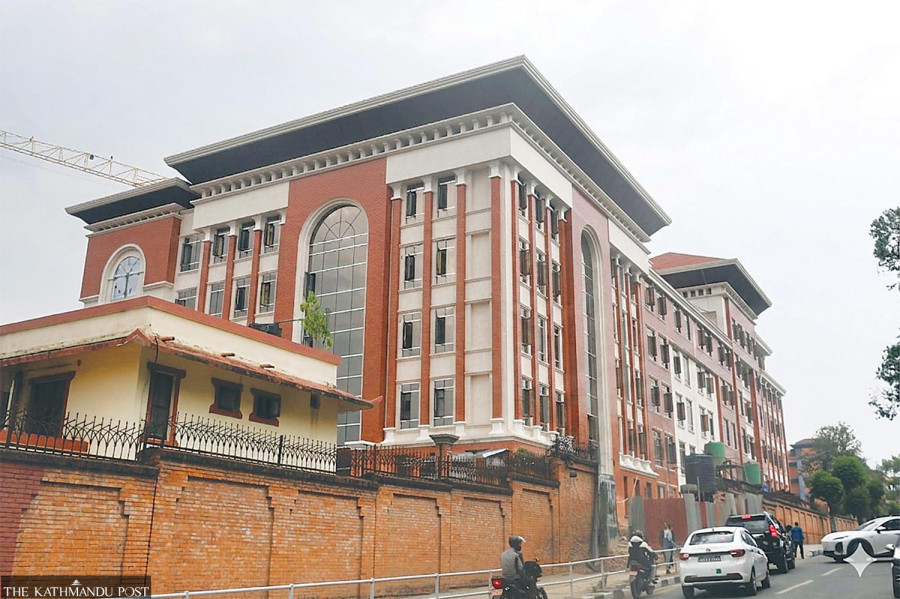
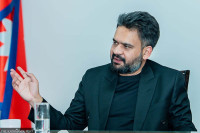
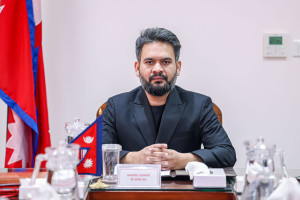
The Supreme Court bench has not been constituted for six weeks as 246 petitions await hearings, including cases filed after the 2025 Gen Z protests. Chief Justice Manoj Kumar Sharma has not constituted the Supreme Court’s Constitutional Bench since October 7, 2026, due to a dispute among justices over how the four other bench members should be selected. Post file photo
Arguments continued throughout the day at the Supreme Court on November 17 in a dispute over government employee trade unions. Around half a dozen lawyers, including former attorneys general and senior advocates, presented their arguments. At the end of the hearing, a bench comprising justices Tek Prasad Dhungana and Chandra Bahadur Saru issued an order: “The dispute appears to involve a serious question of constitutional interpretation. The case should be referred to the Constitutional Bench.”
The order was issued, but the Constitutional Bench to which the case was referred has not been constituted for weeks.
This is the second dispute involving government employees’ trade unions to reach the Constitutional Bench. A separate writ petition on the same issue has already been registered and awaits a verdict.
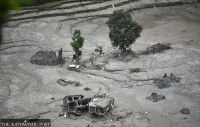
Dozens of other cases were pending before the Supreme Court’s specialised bench even before the latest dispute. The number has grown further since the Gen Z protests of September 8 and 9 last year.
The protests forced then-prime minister KP Sharma Oli to resign, leaving the country with a caretaker government. As efforts began to find a political way out, President Ramchandra Paudel initiated talks to form a government under former chief justice Sushila Karki. Before agreeing to lead the government, Karki insisted that Parliament be dissolved immediately. An agreement was reached towards that end.
Karki was appointed prime minister on September 12, 2025, and recommended the dissolution of Parliament the same day.
Writ petitions challenging the decision as unconstitutional began reaching the Supreme Court on September 14. Around 19 petitions were registered.
On October 29, 2025, a Constitutional Bench comprising then-chief justice Prakash Man Singh Raut and justices Sapana Pradhan Malla, Kumar Regmi, Hari Prasad Phuyal and Manoj Kumar Sharma held the first hearing and issued a show-cause order.
Since then, the case has passed a series of dates without a substantive hearing. Six dates have been set in the dispute.
For the hearing scheduled on July 29, 2026, a bench comprising Chief Justice Manoj Kumar Sharma and Justices Sapana Pradhan Malla, Binod Sharma, Sharanga Subedi and Abdul Aziz Musalman had been constituted. But the case could not be taken up that day. The hearing was postponed without another date being fixed immediately.
The case was subsequently listed for September 23, 2026, and the next hearing has been set for January 6 2027. All parties have submitted their written responses, but the substantive hearing has yet to take place.
As many as 246 petitions are currently awaiting hearings before the Constitutional Bench. The bench has not been constituted since October 7, a stalemate that has now lasted around six weeks.
Chief Justice Sharma last constituted the bench on October 7. But the hearing was adjourned after Justice Hari Prasad Phuyal, who was among the justices listed to sit on the bench, recused himself from the case.
The Dashain holidays followed. Although the court resumed its work after the break, the Constitutional Bench was not formed. It was expected to resume hearings after the Tihar holidays, which ended on November 14.
Since becoming chief justice, Sharma has set a practice of constituting the Constitutional Bench only on Wednesdays. Under that arrangement, the bench was expected to sit on November 18, the first Wednesday in the Nepali month of Mangsir. It did not.
On that day, 263 cases were listed before 11 other benches. Chief Justice Sharma neither sat on a regular bench nor constituted the Constitutional Bench. He had a previously scheduled programme at the Judicial Academy, where he was due to deliver an address, and had opted out of the day's hearing.
Sharma's position is that the bench could not be constituted because the constitution requires the chief justice to be a member of the Constitutional Bench and to appoint the other justices himself.
“Because of a previously scheduled programme at the Judicial Academy, the Constitutional Bench could not be constituted on Wednesday,” Sharma said. “The public holidays are over, and all the justices have returned to court. The bench will now be formed.”
But justices on the Constitutional Bench roster are not convinced that the deadlock will end soon.
According to one justice on the roster who spoke to Kantipur, the delay stems from Chief Justice Sharma's lack of confidence in his ability to preside over the bench. The justice claimed that some discussions had taken place between the chief justice and justices close to him about finding a way out, but no collective initiative had been taken.
The Constitutional Bench roster comprises ten justices, including Chief Justice Sharma. The other nine are justices Sapana Pradhan Malla, Kumar Regmi, Hari Prasad Phuyal, Nahakul Subedi, Sharanga Subedi, Abdul Aziz Musalman, Mahesh Sharma Poudel, Tek Prasad Dhungana and Sunil Kumar Pokharel.
A five-member bench must be formed from this roster. But the justices have yet to agree on how the four members other than the chief justice should be selected.
Chief Justice Sharma maintains that the Constitution empowers him to appoint the justices himself. Other justices favour selecting them on the basis of seniority. A majority of the justices support extending the lottery system used to assign regular benches to the Constitutional Bench as well.
Some justices, however, argue that because the constitution explicitly grants the chief justice the authority to select the members, a full bench of the court cannot take a decision that effectively curtails that power.
The Constitutional Bench is a specialised bench within the Supreme Court, established under Article 137 of the constitution. It comprises the chief justice and four other justices selected by him from a roster prepared on the recommendation of the Judicial Council.
Before 2015, constitutional disputes were heard by a special bench of the Supreme Court. The new constitution introduced a separate Constitutional Bench to adjudicate such disputes. Unlike ordinary cases, these involve major questions of constitutional interpretation and the functioning of the state.
Since the constitution itself authorises the chief justice to select the four other members, the Constitutional Bench is not formed by drawing lots from the names of all Supreme Court justices, as is done when assigning regular benches.
Cases reach the Constitutional Bench in three ways. A petitioner may request that a writ be heard by the bench when filing it. A regular bench may refer a case there through an order. The chief justice may also assign a case to it directly.
Disagreements over the formation of the Constitutional Bench are not new. They have arisen in the past, although justices have eventually found ways to resolve them.
Former justice Ishwar Khatiwada says disputes over the bench have persisted since its very inception, with periods when it functioned and others when it remained inactive.
A similar discord arose during the tenure of former chief justice Prakash Man Singh Raut. The bench began functioning only after justices agreed that its members would be selected from the roster according to their seniority.
Two further incidents under Sharma have deepened suspicion among justices. In one instance, a case against the Property Inquiry Commission, which had already reached a full bench, was withdrawn and assigned to the Constitutional Bench instead.
In another, questions were raised over the selection of a bench to hear a dispute concerning government employees' trade unions. Some suspected that justices had been handpicked to hear the case, resulting in the cancellation of an interim order.
These controversies complicate the deadlock.
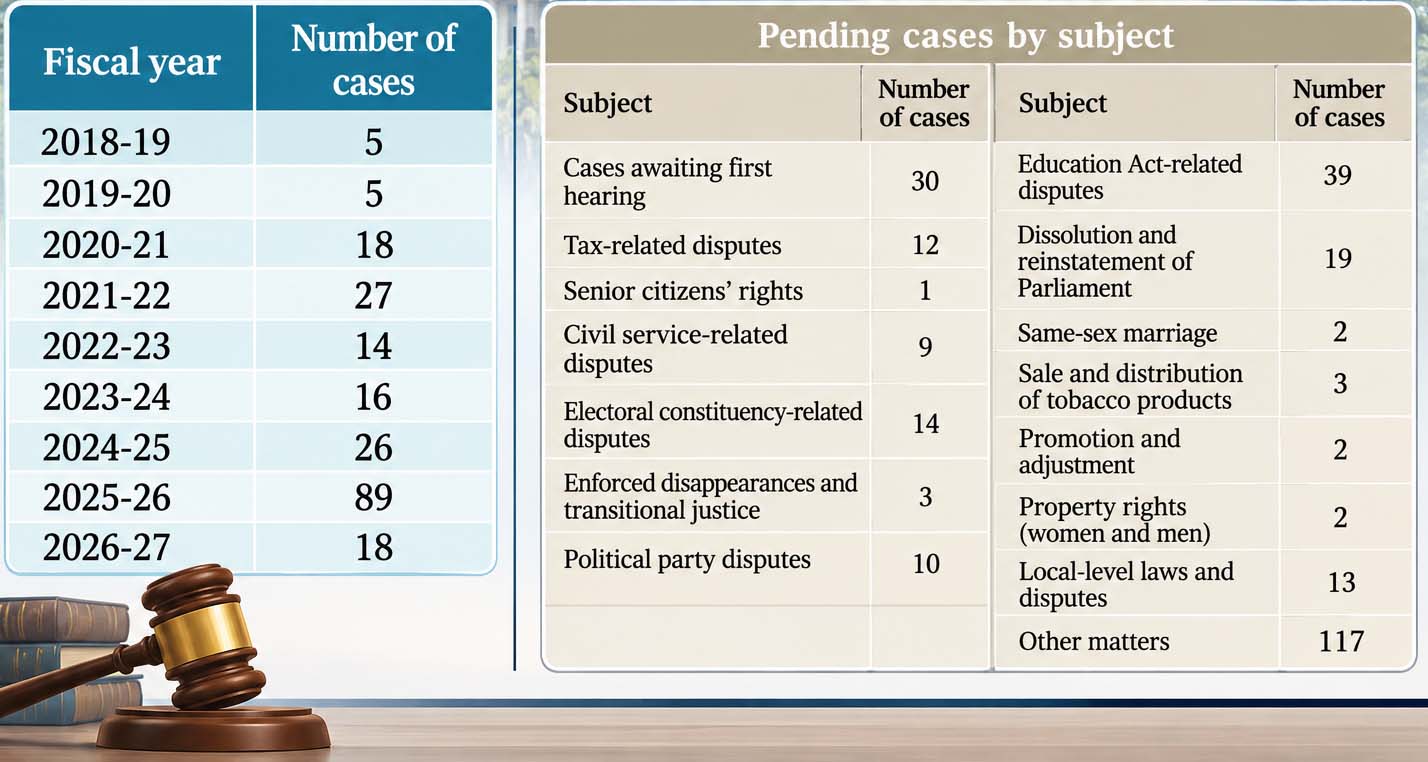
According to Supreme Court statistics, 246 petitions filed since the fiscal year 2018-19 remain pending before the Constitutional Bench. Of these, 38 have been pending for over five years.
The oldest is a writ petition filed by Surya Nepal Pvt Ltd against the Ministry of Health and Population on August 7, 2018.
Around 30 cases have not reached even a first hearing after nearly a year of registration.
The problem is partly structural. Previously, the Constitutional Bench held hearings on Wednesdays and initial hearings on Fridays. More recently, hearings have been scheduled on only one day each week, denying petitions awaiting their first hearing a date.
The pending cases fall into 14 broad categories: taxation, senior citizens' rights, civil service, elections, enforced disappearances and transitional justice, political parties, the Education Act, the dissolution and reinstatement of Parliament, property rights, local government disputes, the sale and distribution of tobacco products, same-sex marriage, promotion and adjustment, and other constitutional matters.
Among the cases filed after the September 2025 protests are 19 petitions challenging the dissolution of the House of Representatives and the formation of the government under Karki. All parties in these cases have submitted their written responses, but the hearings have not begun.
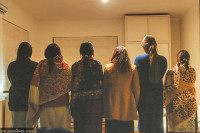
Illustration created with the help of OpenAI's ChatGPT
There are also ten petitions concerning ordinances introduced by the Karki government for the elections and subsequent ordinances issued by the government led by Balendra Shah. Another 39 petitions concern disputes over the Education Act. Two petitions each relate to property rights and same-sex marriage.
Justices within the Supreme Court remain divided over how to resolve the impasse.
Speaking to Kantipur, Chief Justice Sharma said the constitution clearly assigns him the responsibility of constituting the Constitutional Bench and that he could not function outside its provisions.
“The constitution says the chief justice must constitute the Constitutional Bench. How can the bench be formed by going beyond the constitution?” Sharma said. “Doing so could raise a legal question over whether the constitution itself has been violated.”
He pledged that the court will find a way out within the constitution. “I am holding discussions with all sides.”
Sharma has also told justices close to him that he would rather reach an agreement among all justices than take the issue to a full bench for a formal decision.
Former justice Khatiwada disagrees. He argues that the chief justice himself is responsible for the recurring obstructions and must therefore take the initiative to resolve it.
In an interview with Kantipur, Khatiwada said the Constitutional Bench had repeatedly been stalled because of the chief justice, and that only the chief justice could bring it back into operation.
The solution, he said, was to select the four other members from the existing roster on the basis of seniority, as had been done in the past.
Bijay Prasad Mishra, president of the Nepal Bar Association, said the chief justice had only two options: select justices through lottery or appoint them according to seniority.
The Bar has been waiting for Sharma to decide on an early resumption of the lottery system for assigning justices to the Constitutional Bench.
“We are waiting to hear some good news,” Mishra said. “The Bar has already made its suggestions public. Any further delay will make the problem worse. We urge the chief justice to find a way out soon.”




 8.12°C Kathmandu