For 26 years, India has searched passengers at Kathmandu airport. Nepal can’t say why
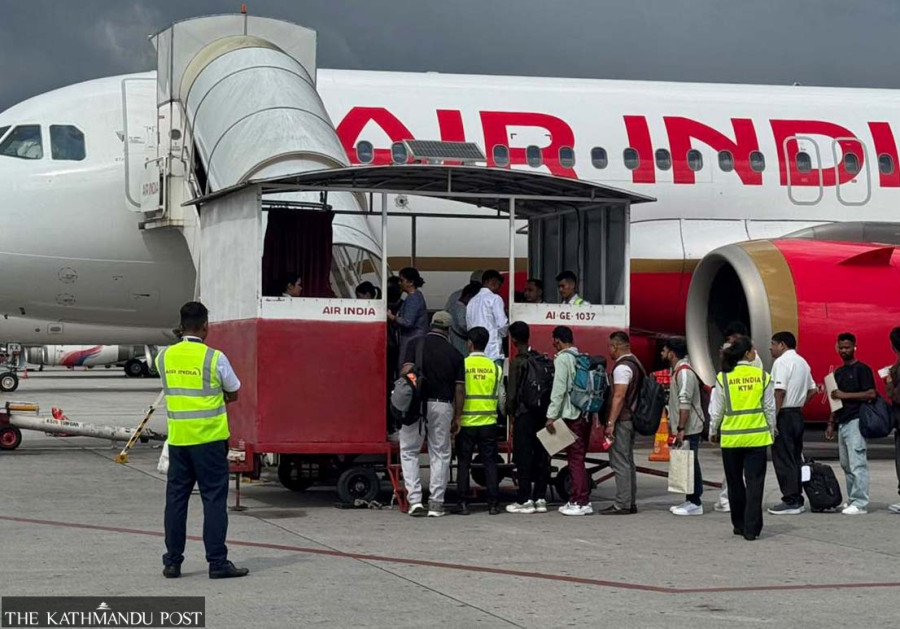
The screening, which has run since the IC814 hijacking, was made public by India, including a record in its parliament, in 2000. In Kathmandu, three separate government agencies say they can’t find a clear paper trail authorising the practice.Passengers flying to New Delhi on an Air India flight go through a second security check at the Tribhuvan International Airport recently. Post file photo
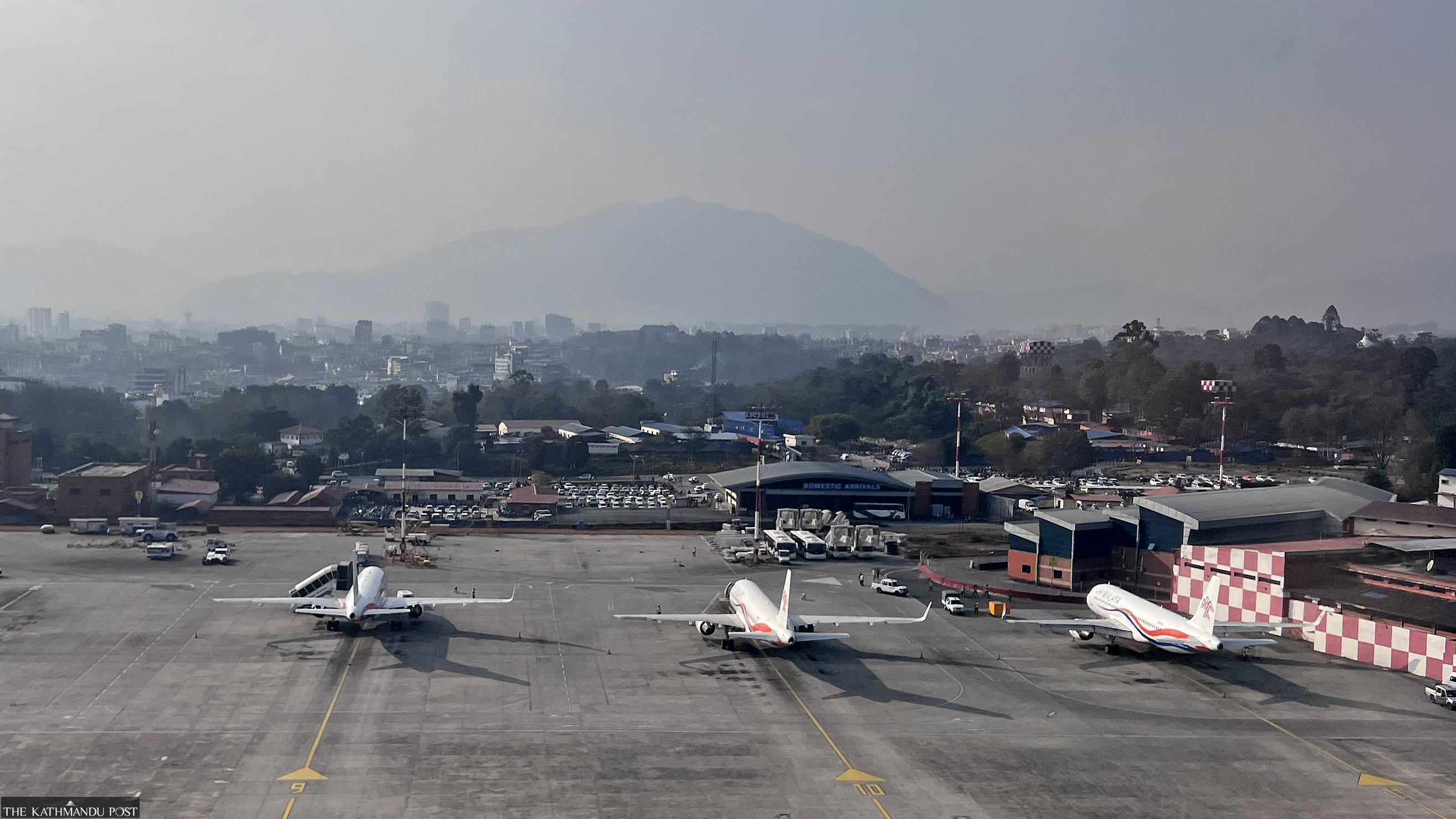
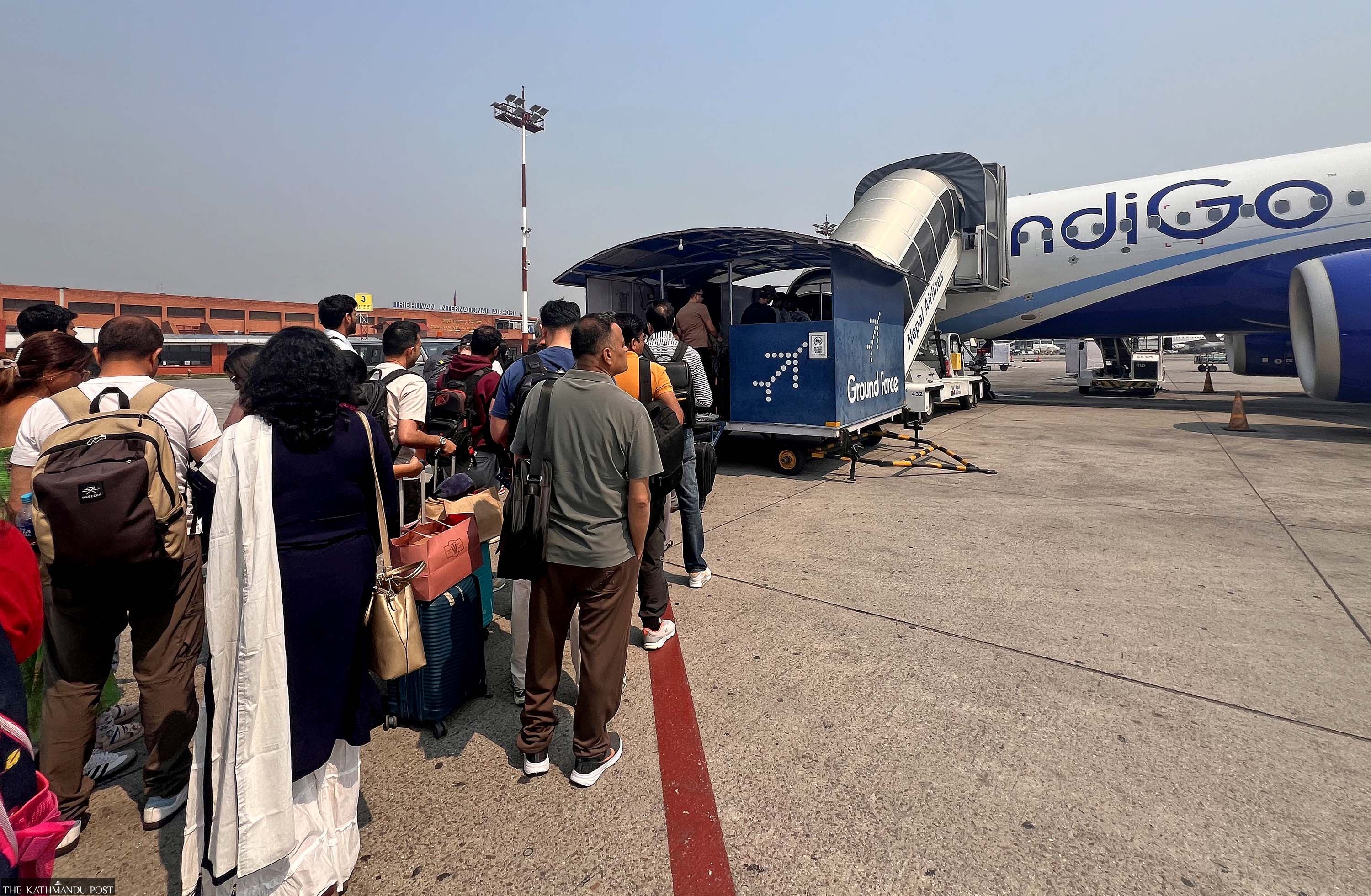
Anyone flying out of Kathmandu’s Tribhuvan International Airport on an Indian-registered aircraft undergoes an additional security screening just before boarding. At a screening point on a raised platform on the airport apron, staffed by Indian security personnel, passengers are frisked, and their luggage is subjected to a thorough hand search. It’s hardly a secret; nor is it new. But after more than a quarter of a century, it is simply part of boarding.
An official at the Civil Aviation Authority of Nepal said Air India and IndiGo both deploy Indian staff at Tribhuvan in three shifts. Of the 12 to 15 people working a single flight, six to eight are Indian employees stationed on the apron. They wear the heavy boots of security personnel. Passengers are directed one at a time into a trolley screened on all four sides, where the Indian staff search their bodies and their hand baggage. Nepali staff assist, but are kept out of the search itself. “Nepali staff are not given a role in the major duty in the apron area for India-bound flights,” the official said, who agreed to provide details about the staffing and search on condition of anonymity.
No Nepali agency can produce any document that originally authorized this. Over several weeks, Kantipur asked officials at the Ministry of Culture, Tourism and Civil Aviation, the Civil Aviation Authority of Nepal, and the Ministry of Home Affairs if they could locate the relevant records. Each time they referred the question to one of the other agencies.
What does exist is on the Indian side. When Indian Airlines resumed its flights to Kathmandu, after a five-month suspension following a hijacking episode, Indian news agencies reported that Nepal had accepted the airline’s demand for an additional X-ray machine and a final check by Indian security personnel at the airport, on top of Nepal’s own screening.
Weeks later, India’s minister of state for external affairs at the time, Ajit Panja, told the lower house, the Lok Sabha, that additional measures required by the airlines had been put in place, that Indian experts had assessed the steps taken by Nepal’s Civil Aviation Authority and were satisfied, and that the security arrangements would be reviewed on an ongoing basis. He did not say who would be conducting the security checks.
Nepal has never publicly acknowledged those terms, or said whether it agreed to anything in writing.
Questions about Nepal’s sovereignty have surfaced from time to time, but none of the successive governments have sought to review the arrangement. India, meanwhile, has repeatedly pressed for more — including permission to place sky marshals on its flights out of Kathmandu. Nepali officials have turned down the demand or quietly shelved it each time.
***
On December 24, 1999, Indian Airlines Flight IC814 took off from Kathmandu. Minutes later, the aircraft, carrying 190 people, was hijacked by five men later identified by Indian investigators as Pakistani nationals linked to Harkat-ul-Mujahideen. It was flown to Amritsar, Lahore and Dubai before being forced to land in Kandahar, Afghanistan. The week-long hostage crisis ended on December 31 after the Indian government handed three jailed militants — including Masood Azhar, who went on to found Jaish-e-Mohammed — over to the Taliban, which then controlled most of Afghanistan, including Kandahar, in exchange for the release of the passengers and crew.
India did not wait for any explanation from Kathmandu. Indian Airlines was asked to suspend its flights to Kathmandu. The suspension lasted five months. No other international carriers stopped flying to Kathmandu during that time.
Following the visit of Chakra Prasad Bastola, the then foreign minister, to India on May 7, 2000, the two countries agreed to restore the suspended flights. Indian Airlines resumed its Kathmandu service on June 1.
The resumption, however, came with unprecedented security measures at TIA — passengers travelling to India on Indian Airlines flights were required to undergo a separate security screening on the airport ramp after clearing Nepal’s own security checks.
Multiple officials, diplomats and foreign ministers told Kantipur that Nepal has never made any formal effort or diplomatic correspondence to remove the arrangement.
Nothing comparable applies to any other international carrier at Tribhuvan Airport. Qatar Airways, Turkish Airlines and Cathay Pacific all fly out of Kathmandu under the Nepal government’s security regimes, and their passengers board the flights after Nepali screening alone. So do passengers on Nepal Airlines flights to New Delhi, Bengaluru, and Mumbai — the same routes, the same destination airports, with no additional search.
In international civil aviation, airport security is fundamentally anchored in sovereignty. Under the framework of the International Civil Aviation Organization (ICAO), the responsibility for screening passengers and securing airport facilities rests with the state in which the airport is located.
While states cooperate closely on aviation security — sharing intelligence, harmonising standards and responding to specific threats — the operational control of passenger screening is normally carried out by national authorities or agencies acting under their mandate.
ICAO’s global standards, particularly Annex 17 on aviation security, do not provide for routine passenger screening by foreign security personnel inside another state’s airport operational areas. Foreign involvement is generally limited to advisory roles, technical cooperation, or onboard security measures such as air marshals. Even in high-security aviation environments, the underlying principle is that the host state retains control over who conducts screening and how it is administered.
Kantipur could not identify another instance of a comparable standing arrangement at a foreign commercial airport.
“The International Civil Aviation Organisation sets out the arrangements required for aviation security, and under it various countries deploy such security officers — in plain terms, sky marshals,” says Bharat Dhakal, a former deputy director of the Civil Aviation Authority of Nepal. “In the case of Indian airline flights, India permits boarding only after conducting an additional security check in the apron area. Both governments need to rethink this.”
Deep Kumar Upadhyaya, Nepal’s former ambassador to India, says he was told that India raised the proposal during a foreign minister-level visit from Nepal, but it was rejected.
According to him, Nepal instead gave a verbal understanding allowing Indian authorities to conduct separate security screening. What exactly that understanding entailed, he says, deserves closer scrutiny.
“After the hijacking of the Indian aircraft, India questioned the security of our airport and levelled serious allegations against Nepal and suspended flights to Kathmandu, and bilateral relations went through a difficult period,” Upadhyaya said, recalling the events that followed the hijacking 26 years ago. “They kept insisting that our airport was unsafe and refused to resume flights. The Nepali side continued to reject those allegations.”
Upadhyaya said India’s anger after the hijacking was understandable, but that New Delhi used the incident to cast doubt on Nepal’s entire security system.
“In reality, that distrust reflected India’s intention to establish a permanent security presence at the airport,” he said. “Through continued negotiations and dialogue aimed at normalising relations after the hijacking, Nepal eventually allowed Indian authorities to conduct additional security screening for Indian flights as a temporary arrangement.”
The temporary arrangement was never revisited. “Nepal never made an effective effort to remove it. That is unfortunate,” he said.
Dhakal believes a narrative was built out of a single hijacking — that Nepal’s airport was unsafe — and that it was not true.
“There is a great deal of difference between the security arrangements of two or three decades ago and those of today,” he said.
***
Former deputy prime minister Kamal Thapa, who has served as both foreign and home minister, said he was unable to establish whether a written agreement authorizing the arrangement exists.
“I had heard that given Nepal’s limitations at the time of the hijacking, the then government granted permission for Indian flights departing from Kathmandu to carry out a separate security check on passengers who had already cleared our airport security,” Thapa said.
“The understanding is that the Indian security checks were introduced with verbal consent at the level of Nepal’s prime minister and foreign minister, without being made public, and that this silence has continued at that level to this day,” a former foreign secretary told Kantipur, requesting anonymity because he was not authorized to discuss confidential deliberations.
Deviram Sharma, a former chief of the National Investigation Department, said Nepal saw India as using its objections to Nepal’s security measures to advance its own objectives.
Sharma said India pressed Nepal on airport security management, and that officials within the Nepal government worked to advance the Indian proposal. He said he found those efforts suspicious at the time, but declined to go into specifics.
“Around 2005-06, I attended the meeting at the CAAN office as the NID chief, along with chiefs of other security agencies, including the Nepal Army’s operations commander,” he told Kantipur in an interview. “Of the several agenda items, one was a proposal to allow Indian sky marshals, which also outlined matters such as baggage and hand-carried luggage screening, as well as the security screening of passengers on Indian aircraft.”
According to him, the proposal, however, was unanimously rejected, as everyone was of the view that Nepal must not compromise on airport security.
“After that, the matter did not move forward,” he said.
What surprises him, he said, is that no Nepali government has ever taken a diplomatic initiative with India to state that the proposal was inappropriate and should be withdrawn.
According to Narayan Kaji Shrestha, a former deputy prime minister as well as foreign and home minister, around 2008, a proposal had also reached the Council of Ministers, through the Ministry of Tourism, to allow Indian sky marshals as requested by India.
The Cabinet, however, adopted a policy of neither approving nor rejecting the proposal, and simply did not take a decision, he said.
Indian security personnel have conducted additional checks on passengers flying from Kathmandu to India since the IC814 hijacking in 1999. Post file photo
According to a Ministry of Tourism official, who spoke on condition of anonymity, after the Cabinet failed to make a decision, then Tourism Minister Hisila Yami issued a ministerial decision on January 21, 2009, citing the need to “strengthen airport security.”
The official said that although the decision did not explicitly mention “Indian sky marshals,” it effectively institutionalised the practice by allowing Indian personnel to conduct security screening of passengers bound for India on the ramp. The ministry now says it cannot locate that decision.
Yami, who served as tourism minister in 2008-09 during Pushpa Kamal Dahal-led Maoist government following the Constituent Assembly elections, acknowledged that she took a favourable view of India's request to allow security equipment to be stationed at TIA so that Indian authorities could conduct separate screening of passengers boarding Indian flights, and that she acted accordingly.
Yami, who is the wife of former prime minister Baburam Bhattarai, said she has often been criticised in the name of “nationalism,” with allegations that she had authorised the deployment of Indian sky marshals. Rejecting that claim, she insisted that the issue during her tenure was not about permitting Indian sky marshals but about installing X-ray equipment.
“The Indian side was already conducting an additional security check using large X-ray machines and other equipment,” Yami told Kantipur. “Transporting those machines to and from the airport for every flight had become cumbersome, so they requested permission to keep the equipment at the airport.”
Though some officials had questioned why equipment used by the Indian side should be kept at the Nepali airport and why India should be conducting security checks, Yami said she saw it as a practical matter.
“I felt that allowing the equipment to remain at the airport would not cause any harm. That was why the decision was made,” she said.
That same equipment that was too cumbersome to move for each flight has now remained at the country’s main international airport for 17 years.
Asked what the decision contained, whether the Home Ministry’s opinion was sought before it was taken, and what operational procedures followed, Jay Narayan Acharya, spokesperson for the Ministry of Tourism, said the ministry could not locate the relevant documents.
“We searched for the files but could not find them. You may want to check with the Civil Aviation Authority of Nepal,” he said.
Kantipur then requested a copy of the decision from Mukesh Dangol, director general of the Civil Aviation Authority of Nepal. A few days later, Dangol responded that the authority could not locate the decision either and suggested contacting the Ministry of Tourism.
Kantipur also asked the Home Ministry for the letter in which the tourism ministry had sought its opinion on the screening arrangement. An official at the ministry said it was not possible to respond immediately because many government records had been destroyed during the Gen Z protests, and efforts to recover and compile older documents were still ongoing.
As a result, neither the ministry that made the decision nor the agencies responsible for implementing it were able — or willing — to produce the documents governing the arrangement.
“India, which had suspended flights to Nepal for nearly five months, agreed to resume operations only after it was allowed to conduct its own security screening,” said a former joint secretary at the Home Ministry.
Former Home Secretary Govinda Prasad Kusum, in his 2021 book Prashasan bhitrako Prashasan, recounts the pressure he says he received from then Indian Ambassador to Nepal Rakesh Sood over airport security arrangements.
India has also sought permission for sky marshals on flights from Kathmandu, but Nepali authorities have repeatedly rejected or shelved the proposals. Post file photo
According to the book and officials serving at the Home Ministry at the time, Ambassador Sood telephoned Kusum in January 2009 to press Nepal to allow Indian sky marshals at TIA. Kusum also writes that he was told the matter was already being taken to the Cabinet for a decision.
An excerpt from the conversation, published in the chapter titled The Indian Ambassador and the Sky Marshal (p. 47), reads in translation from Nepali:
Sood: “Approval should be given for deploying sky marshals on Indian aircraft departing from Tribhuvan International Airport.”
Kusum: “Matters relating to sky marshals do not fall within the Home Ministry's jurisdiction. Since this concerns civil aviation, it falls under the Ministry of Tourism and Civil Aviation. The proposal should be processed there and then taken to the Cabinet.”
Sood: “India has permitted sky marshals on flights in many countries. What political impact would it have in Nepal if Nepal allowed sky marshals on Indian aircraft flying here?”
Kusum: “Indian officials are already allowed to conduct comprehensive security screening near Indian aircraft on the ramp. No passenger can board without passing through your security checkpoint. What more do you need?”
Kusum’s book also recounts another exchange with Ambassador Sood. According to the book, in the final week of January 2009, before the Cabinet met, Ambassador Sood again telephoned the then home secretary.
“The Ministry of Tourism and Civil Aviation has sent the proposal to the Cabinet to approve the deployment of sky marshals,” Sood told him.
“Best of luck, Excellency!” Kusum replied.
The Cabinet, however, never publicly announced any decision on the matter.
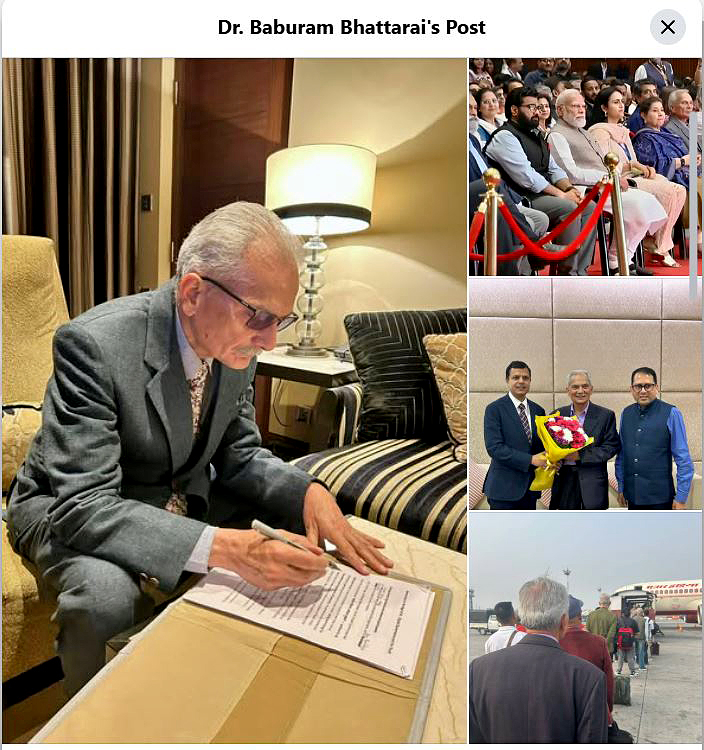
Former prime minister Bhattarai, who was in charge from 2011 to 2013, has himself undergone the additional screening. Recently, a photograph of him, when he was no longer prime minister, standing in line before boarding an Indian Airlines flight from Kathmandu drew public attention.
As prime minister, Bhattarai paid an official visit to India in October 2011. During the visit, he and his Indian counterpart, Manmohan Singh, issued a joint press statement.
According to a former Nepali foreign secretary familiar with the visit, removing the Indian security screening at TIA was not part of the formal agenda. Instead, when Nepal requested three additional international air routes from India, New Delhi sought to institutionalise the Indian security screening arrangement as a condition.
Point 11 of the statement reads: “The Nepalese side requested the Government of India to allow three additional inbound air routes from Janakpur, Bhairahawa and Nepalgunj in view of increased air traffic to and from Nepal and for facilitating international air service from the regional airports of Nepal cost-effectively. The Indian side proposed a meeting of the civil aviation authorities of Nepal and India to discuss and address various issues in this sector.”
The joint statement makes no reference to security screening.
According to the former secretary, the proposal also reflected India’s intention to extend its security screening arrangement beyond Tribhuvan International Airport to Nepal’s regional airports. The proposal never materialised.
But neither did the routes. Nepal and India resumed talks on the same three entry points this year, after more than a decade.
In an interview with Kantipur, Bhattarai said that during his visit to India he had discussed the hijacking and related issues in parts.
Former prime minister Baburam Bhattarai has himself undergone the additional screening and says airport security should be addressed through a broader framework of Nepal-India relations, rather than on a case-by-case basis.
“I had told [the Indian side] that we should resolve the issue in a holistic way; I had even asked them what their security concerns were,” Bhattarai said. “I had even told them that ‘you call Nepal a close neighbour yet you refuse to accept Nepal’s sovereignty.’ I have said publicly that issues such as airport and border security, including security screening by Indian personnel at the airport, should not be handled on a case-by-case basis.”
Bhattarai said those issues should instead be addressed as part of the broader framework of Nepal–India development, security cooperation, and bilateral relations. “I continue to stand firmly by that position,” he added.
***
Almost every major political party in Nepal has at one point risen to power by championing nationalism and sovereignty. Yet none has publicly sought a review of the airport security arrangement with India.
When the Maoists launched their armed insurgency, many of their 40 demands centred on India and what they described as Indian interference in Nepal. They even spoke of taking the fight to India. Yet after coming to power, they took no steps to review the airport security arrangement. Nor has the issue received meaningful attention under successive governments led by the Nepali Congress, CPN-UML or other coalition partners. Governments changed. But the arrangement didn’t.
At present, 30 airlines make international flights from TIA, including two from India — Air India and IndiGo. Only passengers on those airlines face the second screening.
After the hijacking incident, Nepal strengthened airport security management and also mobilized counter-terrorism mechanisms within its security agencies.
Despite major upgrades to airport security over the past 26 years, the additional Indian screening remains in place only for Air India and IndiGo passengers. Post file photo
Nepal has substantially expanded security at Tribhuvan over the past 26 years. At least 500 police personnel are now deployed, against about 100 in 2000. The airport has 30 X-ray machines, 20 walk-through metal detectors and 80 hand-held detectors. Immigration issues printed boarding passes with barcodes, and close to 500 CCTV cameras are installed.
By the standards Nepal’s own auditors apply, that expansion has not closed the gap — and the shortfall is what sustains India’s argument for keeping its own arrangement in place.
A high-level committee report published last year on Nepal’s aviation security found that the security arrangement at TIA remains fragmented, outdated, and lacking effective coordination among agencies responsible for safeguarding the facility. The report, which was overseen by former Supreme Court Justice Anil Kumar Sinha, said that although multiple security bodies operate at the airport, overlapping responsibilities and separate chains of command have created accountability gaps, weakening overall security management.
“Nepal continues to rely on traditional screening practices, including repeated passenger checks and manual frisking, while lacking modern detection technologies used at major international airports,” the report said. The committee also highlighted the limited deployment of specialised aviation security personnel, weak perimeter and landside security, and insufficient preparedness to respond to threats such as terrorism and sabotage.
It recommended the creation of a dedicated aviation security force, stronger oversight under a clearly defined authority, and reforms to align TIA’s security framework with international standards.
Earlier this summer, Foreign Minister Shisir Khanal visited New Delhi from June 5 to 7 this year, the first high-level engagement since Prime Minister Balendra Shah’s government took office.
On June 6, 2026, Khanal said he had held “extensive and productive discussions” with his Indian counterpart S Jaishankar and delegations from both sides. He said the talks covered trade and economic cooperation, connectivity, energy partnership, water resources management, shared security, border management, sports, and the promotion of people-to-people relations.
During the visit, he also met India’s National Security Advisor Ajit Doval. That meeting, according to Khanal, involved an “exchange of views on various aspects of Nepal-India shared security concerns, border management, and different dimensions of the strategic partnership between the two countries.”
Khanal did not say what those security concerns were. Neither the Nepali nor the Indian readout of the Jaishankar meeting mentioned security; both listed trade, investment, connectivity, energy and people-to-people ties. Asked whether the Kathmandu screening was raised in Delhi, Khanal confirmed it was. “There have been talks with Indian officials on all such matters, including airport security,” he told Kantipur. “Beyond that, nothing more can be said at present.”
Former deputy prime minister Kamal Thapa says efforts should be made to remove the arrangement, which was put in place 26 years ago under circumstances that no longer exist.
“Back when the aircraft was hijacked, the security situation at Tribhuvan International Airport was different. There may have been limitations in resources and technological capacity, and the hijackers took advantage of that,” Thapa told the Post. “But the continuation of the arrangement allowing Indian security personnel to conduct security checks on passengers travelling on Indian flights is inappropriate and undesirable for a sovereign nation.”
The Indian Embassy in Kathmandu said Kathmandu’s international airport screening issue has never come up for discussion — neither recently nor in the past.




 13.8°C Kathmandu
.JPG)