



 15.38°C Kathmandu

Wed, Nov 4, 2026
Travel
Everest Base Camp trek: From self-doubt to finding my feet in the Himalayas
A first solo trek along the famous high-altitude trail becomes a journey of quiet discoveries.
bookmark![]()
The road to Namche. ![]()
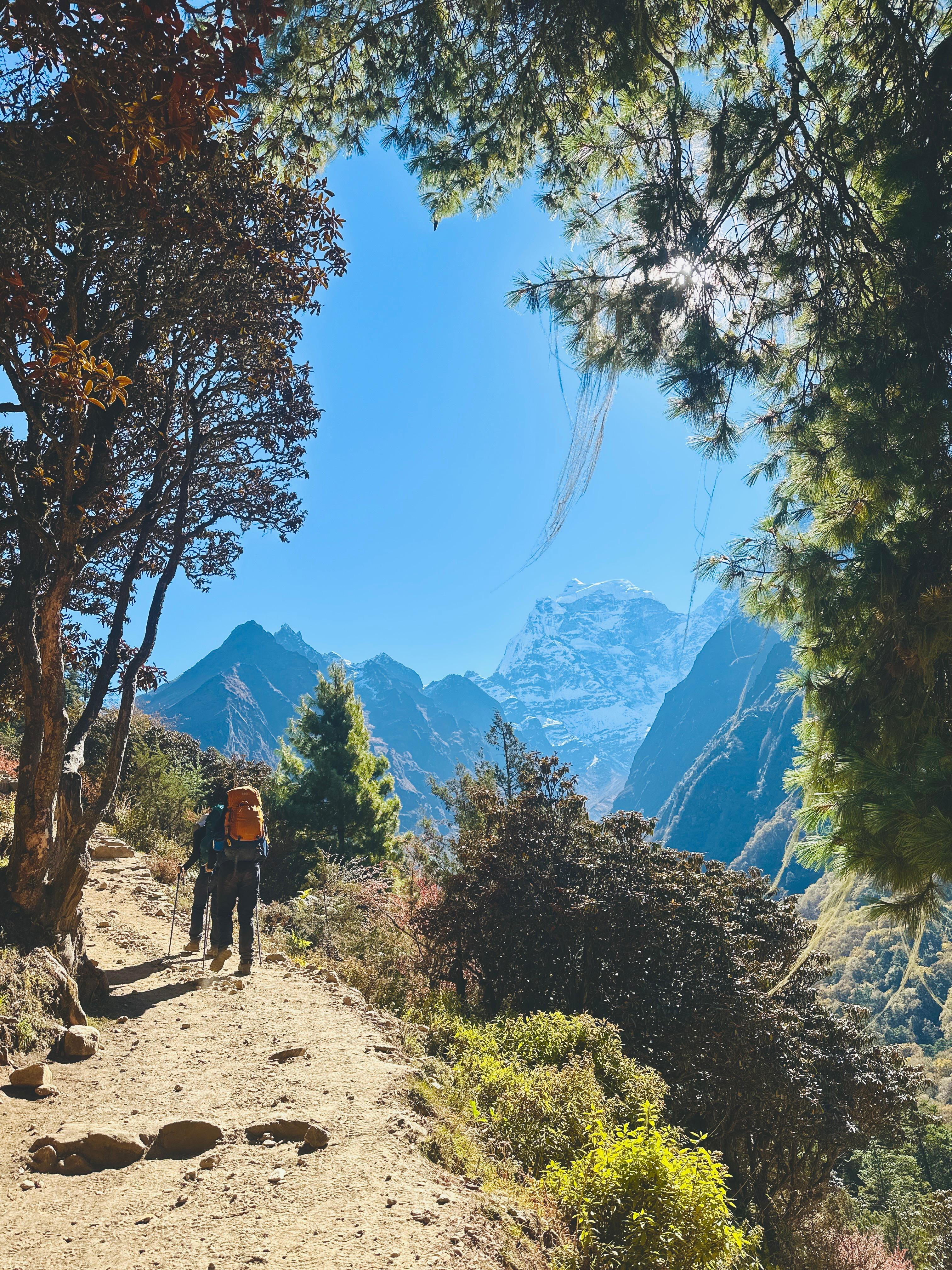
On the way to Tengboche, a village in Khumbu Pasanglhamu Rural Municipality. ![]()
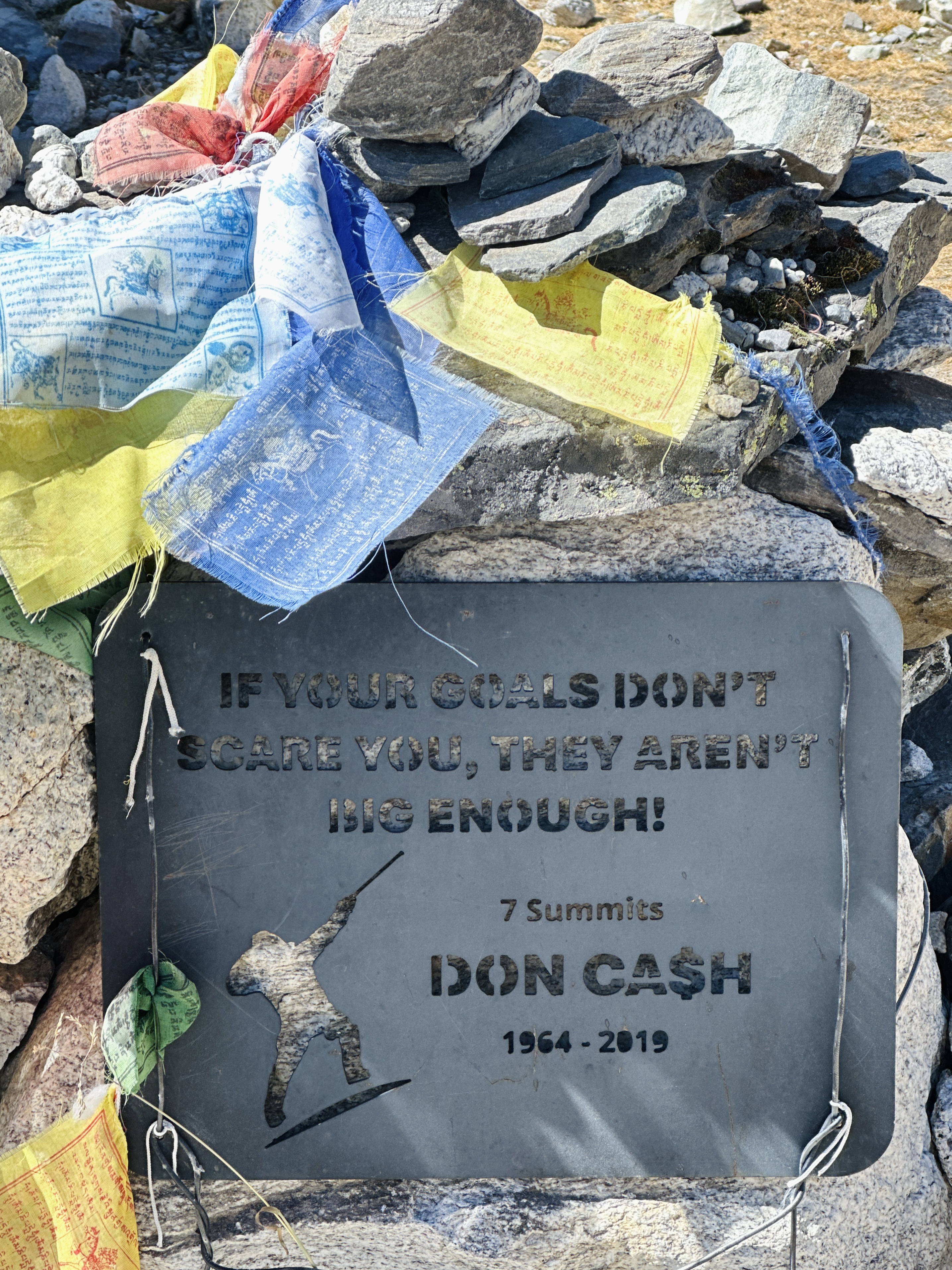
A memorial for Don Cash (1964–2019), an American man who died while descending Everest. ![]()
On the trail.
Dipti Sapkota
Published at : November 4, 2026
Updated at : November 4, 2026 19:56
Kathmandu
On the sixth day of my Everest Base Camp trek, nearly 4,800 metres above sea level, I came across a few words that carried me away. At Thukla Pass, stone memorials stood against a bare landscape, remembering climbers and Sherpa guides who had perished in the mountains. Among them, an inscription on the memorial of mountaineer Don Cash (1964–2019) caught my eye:
“If your goals don’t scare you, they aren’t big enough!”
Before I knew it, tears had welled up in my eyes. Somehow, those words from a stranger seemed to understand a fear I had carried for years. Everest Base Camp had long been a dream I was almost embarrassed to admit. I had never trekked before and was hardly the fittest person. I liked plans, predictability and the reassurance of knowing what came next. The mountains promised none of those things.
I was so afraid of failing that I wouldn’t even tell people I wanted to go. Instead, I secretly researched routes, costs and itineraries, pretending I was asking for a friend. But somehow, the dream outgrew the fear. And soon enough, I was on a plane to Lukla.
The first steps into the Khumbu
Strangely, the famously thrilling landing at Lukla was the least of my worries. I was far more concerned about the mountain trail that lay between me and the place I had dreamed of reaching. But somewhere between takeoff and landing, nervousness gave way to excitement. The flight was exhilarating, the landing unexpectedly smooth, and there I was.
On the walk to Phakding, the Khumbu began revealing itself in fragments: sunlight settling on valley slopes, prayer flags fluttering in the breeze, mani stones beside the path, and yaks negotiating the same narrow trails as us. Mountains appeared between roofs and trees.
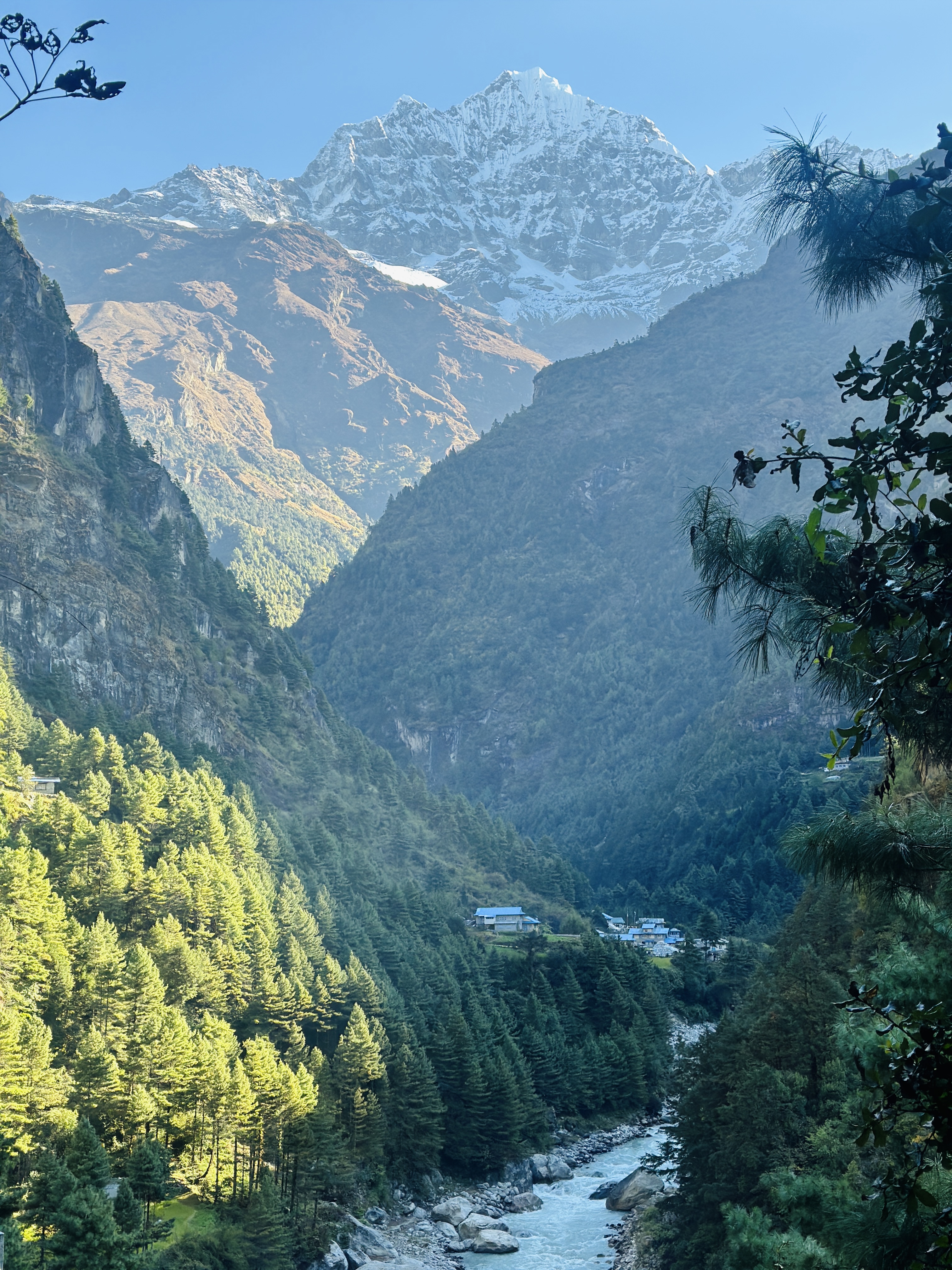
The following morning, we followed the Dudhkoshi river towards Namche Bazaar. Its turquoise water rushed beneath suspension bridges, while the trail wound through forests and past waterfalls cascading down the hillsides. Somewhere along the way, Everest appeared for the first time, a distant summit rising above the folds of the valley. I had imagined that moment countless times. There was something unreal about finally seeing it with my own eyes.
The final climb to Namche was harsh. My legs certainly felt it, but every pause offered something to gaze at. I had expected exhaustion. I had not expected to be so happy inside it. Then Namche came into view, its colourful buildings arranged along the hillside like seats in a great mountain amphitheatre. It felt wonderfully welcoming.
When the mountains became familiar
On the third day, we climbed towards Hotel Everest View to acclimatise. The stairs seemed endless, but at the top, the world opened. Everest, Lhotse, Ama Dablam and Thamserku rose in different shapes and distances against an impossibly vast sky. I sat quietly. Some views make you reach for a camera; others make you forget you own one.
We later descended to Khumjung, beneath the sacred mountain Khumbila. Of all the villages we passed, Khumjung settled most gently into my memory because in Khumjung, mountains were no longer a distant skyline. Until then, I had thought of the mountains as something I was travelling towards. In Khumjung, they began to feel like something I was travelling with.
The next day, we passed through Tengboche towards Pangboche. The monastery rested beneath the peaks, children moved through the village, and the gentle bells of passing yaks accompanied the trail. Life continued here in the most ordinary ways against a background that was anything but ordinary. I was reminded that the Khumbu was not merely a landscape for travellers to admire. Its villages and paths belonged to lives, histories and traditions of which I could catch only fleeting glimpses.
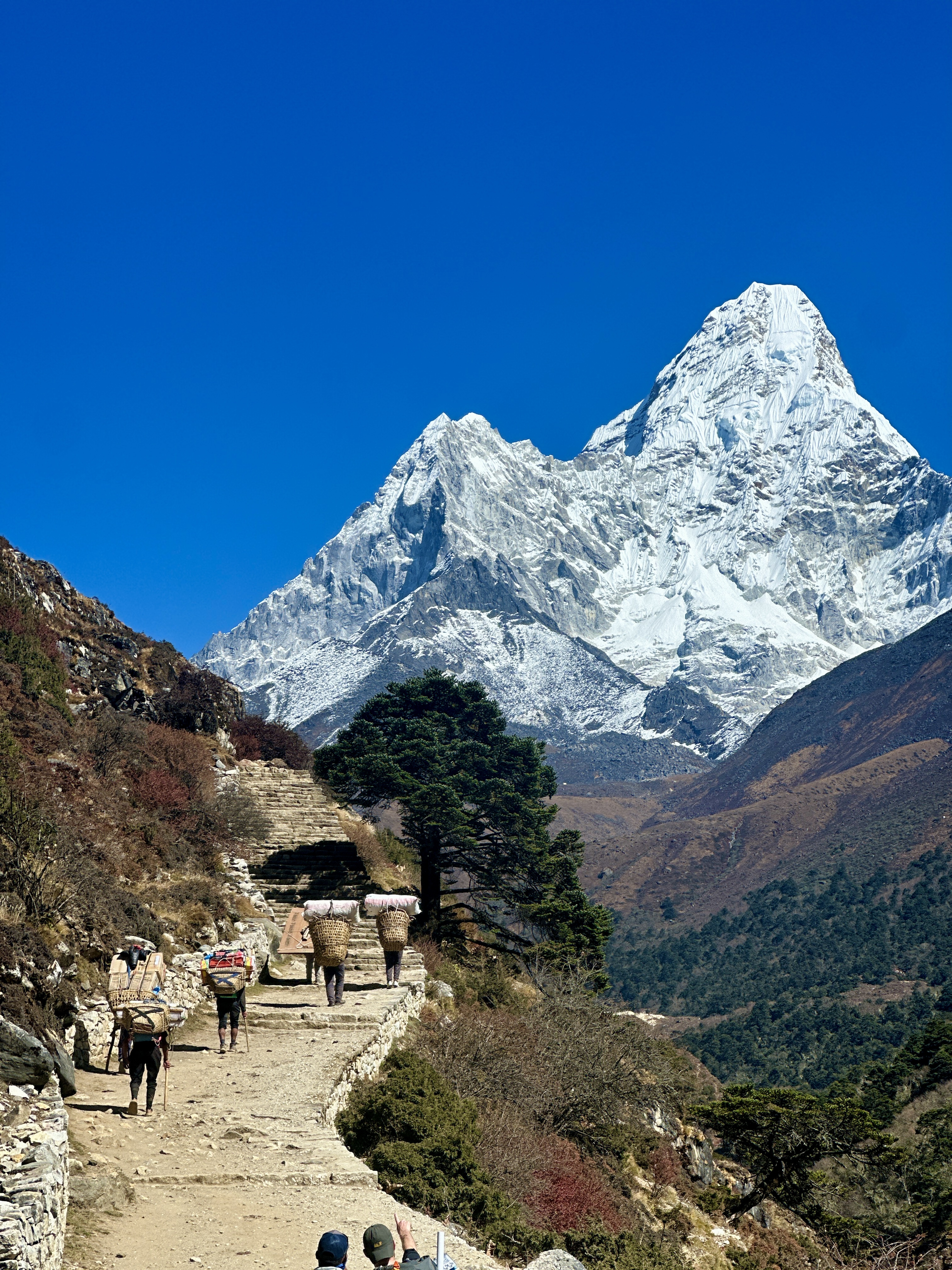
By the fifth day, towards Dingboche, the landscape was changing its language. Forests and lush slopes gave way to low shrubs, scattered rocks and stone walls. And then there was Ama Dablam. With every step, it seemed to come closer. I had grown rather fond of that mountain, searching for it around every bend and smiling whenever it appeared, like spotting a familiar face in an unfamiliar place.
By then, I had also discovered something amusing about myself. Every morning, before we began walking, my heart would race. I worried about the distance, the altitude and the steep climbs ahead. Then we would start. One foot in front of the other, one turn after another, and somehow, I would be fine. The mountains had a way of making my morning worries seem unnecessary by lunchtime.
I was learning to trust my own pace, too. Others walked faster, climbed more easily and seemed to have endless breath. I admired them without needing to keep up. I was walking through a place I had once been too frightened to dream about. That was enough.
Before leaving, my friends had made playlists for me, knowing I would be trekking solo. It was their unique way of keeping me company from afar. But I never once reached for my earphones. I had not expected to find such joy in the mountains’ own company.
The Everest Memorial
On the sixth day, from Dingboche towards Lobuche, the softer edges of the landscape seemed to fall away. No trees or hills to interrupt the views. Mountains stood exposed in every direction, their immense slopes meeting stretches of rock and cold, open air. The sheer scale was overwhelming.
I kept looking back, then ahead, then back again, afraid I might pass something beautiful without properly seeing it.
That day, I was also unusually emotional. Perhaps it was the exhaustion, the altitude or the solitude. I felt grateful, tired and impossibly happy, all at once. I remember thinking, quite distinctly, that I needed a hug.
Then came the steep climb to Thukla Pass. At the top, we reached the Everest Memorial. Standing among memorials to people whose dreams had taken them to far greater heights, I felt humbled by the lives remembered there. My journey was small beside theirs. Still, the words on Don Cash’s memorial reached something deeply personal in me.
I had wanted a hug that morning, and somehow, in that austere place, a few words carved into stone gave me one.
The final walk to Everest Base Camp
On the seventh day, we left Lobuche for Gorak Shep. The landscape had been reduced to rock, ice and immense distances. The trail crossed uneven ground beside the Khumbu Glacier, its rough, broken surface stretching beneath towering mountains. The beauty was no longer gentle. It was stark, almost severe.
I remember the quiet company of other trekkers. At that altitude, everyone moved slowly, one behind another along the stony trail. That unspoken solidarity made the final walk feel a little less daunting.
From Gorak Shep, we set out for Base Camp. Every bend held the possibility of arrival. I looked from the rocks beneath my boots to the glacier, hardly believing my destination was within reach. Then, suddenly, we were there. Everest Base Camp was crowded with people taking photographs, laughing, celebrating and embracing. It was not quite the quiet, dramatic moment I had imagined.
But I was happy. So very happy.
Standing there, my thoughts travelled backwards: the bright trail to Phakding, the Dudhkoshi beneath the bridges, Namche clinging to its hillside, the stillness of Khumjung, the bells near Tengboche, Ama Dablam appearing around every bend, and the memorial stones at Thukla Pass.
I had spent so long dreaming of reaching Base Camp, only to discover that much of what I would treasure had happened before I got there.
And then there were my parents. They had been rather upset when I told them I was going trekking instead of coming home for Dashain. Part of me had felt guilty. But when I finally reached Base Camp, their disappointment had turned into the warmest applause. Hearing the pride in their voices, I felt the distance between us disappear for a moment. I had missed celebrating Dashain with them, but they had found another reason to celebrate me.
What the mountains left with me
I have always found comfort in knowing what comes next. Before the trek, I wanted to calculate each day’s distance, difficulty and weather, and decide in advance whether I could manage it.
Yet the memories I hold closest are the ones I could never have planned: the wonder of seeing Everest for the first time, the unexpected friendship with the porter who carried my bag, sharing a meal with mountains spread out before us, and the joy of seeing a village emerge when my tired legs were longing for rest.
I had spent years dreaming of the mountains, and just as many years doubting whether I could reach them. Somewhere along the way, I realised that the hardest part had never been the mountains. It had been finding the courage to begin.
Dipti Sapkota
Sapkota is a practicing lawyer currently working as a senior associate at Pioneer Law Associates.

Most Read from Travel
Editor's Picks
The police chief who objects, delays—and ultimately complies
How Inam Sapkota tested the state
Kathmandu Film Festival puts Nepali cinema’s past, present and future in focus
How Deepak Bhatta became Nepal’s most influential power broker
What to know about Nepal Premier League’s big-money, star-studded rise
E-PAPER | November 04, 2026

×