National Games put Karnali’s sporting ambitions to test
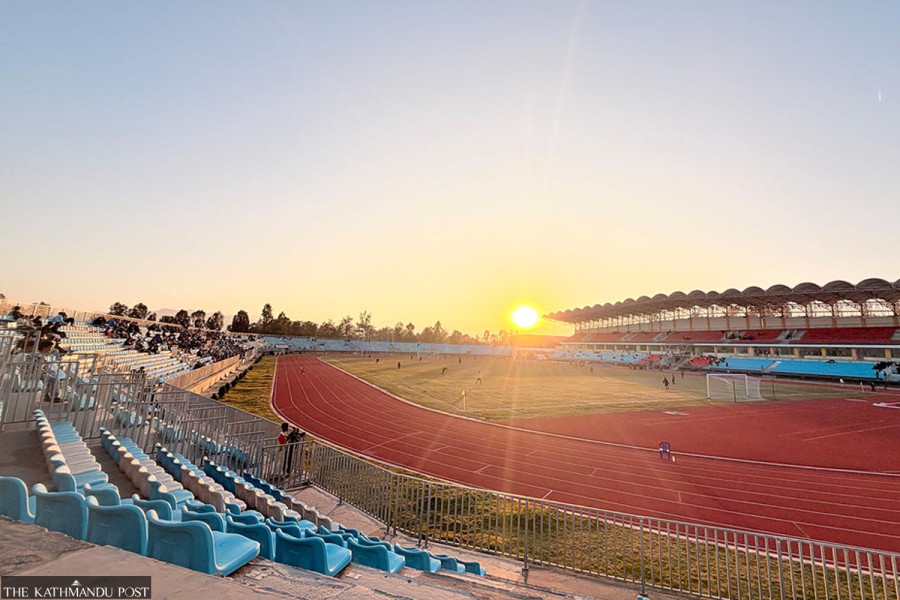
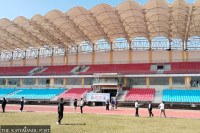
For a province associated with poverty and remoteness, hosting the National Games is a chance to present a different picture. The Karnali provincial stadium pictured in Birendranagar on Tuesday. The 10th National Games open on December 2 and run until December 13. Jyotee Katuwal/TKP
There was a time when spectators in Surkhet climbed onto bus roofs, house terraces and even trees to watch national-level sporting events. With little space around the grounds and few facilities for athletes, watching a match often meant finding an elevated spot from which to catch a glimpse.
The scene is markedly different now. Surkhet now has a provincial stadium with stands for 10,000 spectators, and athletes from across the country have begun competing in the 10th National Games. The shift reflects change in Karnali’s sports infrastructure.
For a province associated with poverty and remoteness, hosting the National Games is a chance to present a different picture. It is Karnali’s first time hosting the National Games since federalism.
Around 6,500 athletes from 11 teams—including the seven provinces, three departmental sides and the Non-Resident Nepali Association—will compete in 384 events across 32 sports. The sporting event runs until December 13, following the December 2 opening. A total of 1,337 medals are at stake.
A flag followed by uncertainty
Karnali’s journey to hosting the National Games has been far from smooth. At the closing ceremony of the ninth National Games in Pokhara in October, 2022, then prime minister Sher Bahadur Deuba handed the hosting flag to Yagya Bahadur Budh Chhetri, then social development minister of Karnali.
The handover raised expectations. The first schedule set the event for November 17-24, 2024. But the Games were postponed because the required infrastructure and preparations were not ready.
The National Sports Council then fixed April 5-12, 2025, followed by May 17-24, 2025. Neither schedule materialised. A fourth date, February 13-19, 2026, was also announced but missed. The council eventually settled on December 2-13, 2026.
Repeated postponements fuelled doubts about whether Karnali could manage the venues, accommodation, transport, security and other arrangements required for a national event. Those doubts have not disappeared, but the start of competitions has moved the preparations from promises to a practical test.
Some events began before the opening ceremony to ease travel, accommodation and food arrangements for participants.
From bus rooftops to stadium stands
Former athlete Nirak KC remembers the limited opportunities available to players in earlier years. School and regional competitions were held, but facilities and event management were basic. Receiving a T-shirt, jersey or tracksuit was itself a significant benefit for many participants.
When the fourth National Games were held in Nepalgunj in 1998, some events, including volleyball, were also staged in Surkhet. Crowds gathered to watch, often climbing onto buses and house terraces. Volleyball attracted many spectators because its rules were easy for the public to follow, KC recalled.
“Over time, opportunities for athletes increased, the scope of competitions widened and sports infrastructure changed,” KC said. “Seeing a modern stadium in our own province and a national-level competition being held here shows how much Karnali’s sports sector has changed.”
A permanent venue also gives athletes facilities for training and competition and allows organisers to stage events without makeshift arrangements.
A major facility built under federalism
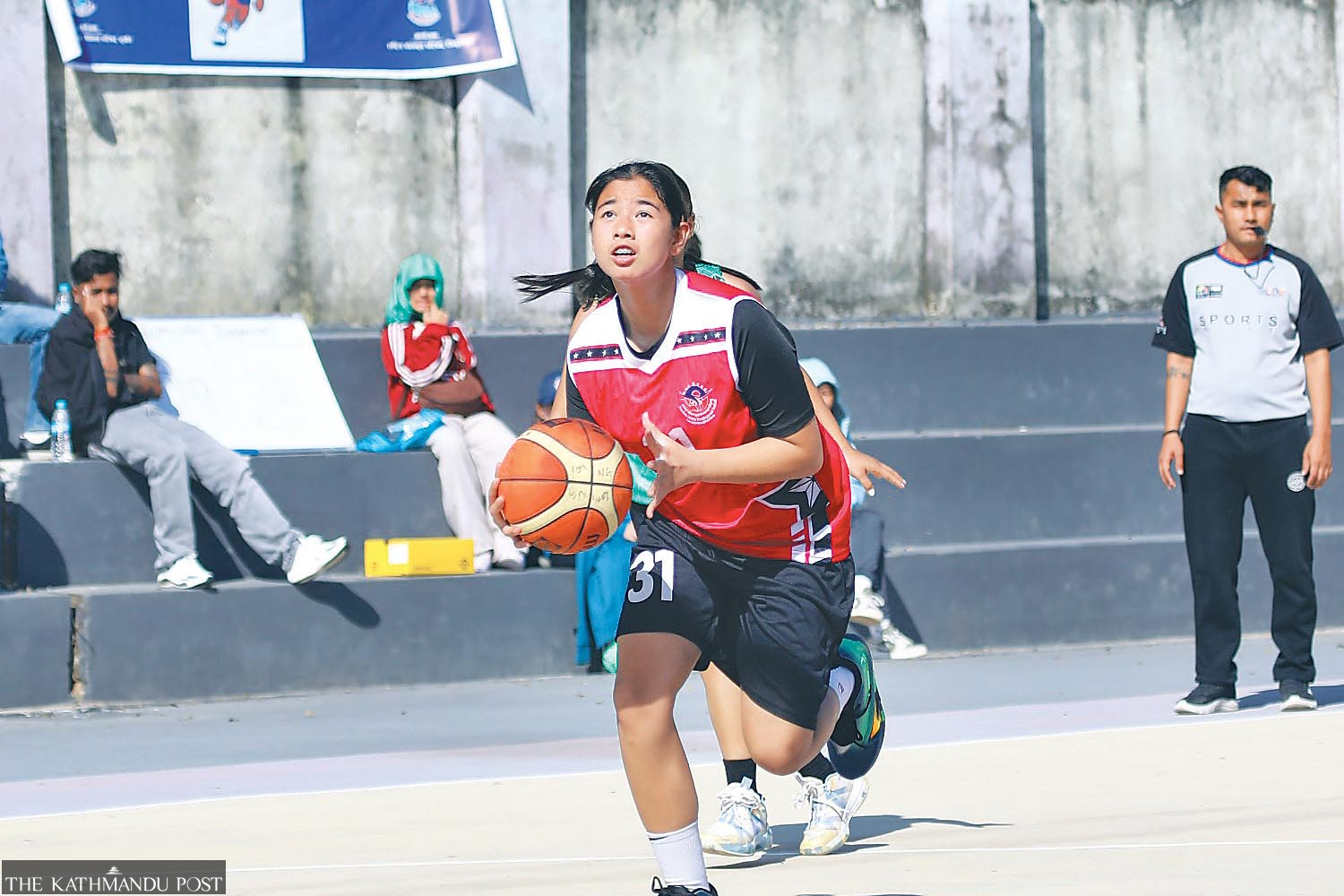
A Bagmati player moves with the ball during a basketball match at the National Games in Birendranagar on Tuesday. Although the Games are officially scheduled to open next month, around a dozen competitions are already underway. Post photo
The Provincial Stadium in Birendranagar is among Karnali’s largest sports infrastructure projects. Built at a cost of around Rs1.59 billion, it has a 10,000-seat stand, an international-standard football ground, an eight-lane synthetic athletics track, a swimming pool and a multipurpose indoor hall with seating for 1,500.
The stadium was handed over to the provincial government on November 23, shortly before the Games. It covers about 15 acres and includes changing rooms, medical and physiotherapy facilities, broadcast infrastructure and underground parking.
Former chief minister Jeevan Bahadur Shahi, who laid the stadium’s foundation stone in 2021, describes it as a “beautiful gift of federalism”. He says the project shows that provincial governments can undertake large infrastructure schemes based on their own priorities.
For Shahi, the stadium demonstrates that a province long seen as lacking resources can plan and complete a major project.
However, construction alone will not secure the project’s value. The stadium needs regular use, maintenance and a clear operating system after the Games. Chief Minister Mangal Bahadur Shahi has acknowledged that running a facility of this scale will be difficult, and said the provincial government and sports council would prepare standards and procedures for its management.
Challenging the image of deprivation
Padam Bahadur Shahi, former president of the Federation of Nepalese Chambers of Commerce and Industry’s Karnali Province chapter, welcomed the Games on behalf of the private sector. He said the provincial stadium was one of the major infrastructure projects made possible by federalism.
Had the province depended solely on the federal government, it would have been difficult to build a facility of this scale in Surkhet, he said. He argued that the event should answer questions often raised about Karnali’s ability to provide drinking water, electricity, hotels and suitable sports grounds.
Shahi said the National Games were also a chance to demonstrate that Karnali can accommodate thousands of players, officials and visitors. He urged government agencies, businesses and residents to help make the event successful.
Facilities are still lacking for some sports. Swimming and shooting will take place in Banke, while tennis and kho-kho are scheduled for Bardiya. Other events are spread across Karnali, with about 70 percent in Surkhet.
Economic opportunities beyond sport
Athletes, coaches, officials and spectators can bring business to hotels, restaurants, transport operators, food suppliers and small shops.
Around 150 hotels across the province have set aside about 5,500 beds for participants, according to provincial officials. Athletes from the Nepal Police, Nepali Army and Armed Police Force will stay at their respective barracks and offices. Local governments and private businesses have also been involved in preparations, including accommodation, food, transport and supplies.
Birendranagar Municipality has upgraded roads linking the stadium with sports venues and improved parks and open spaces, spending around Rs100 million, Mayor Mohan Maya Dhakal said. The work is intended to improve the city for participants and visitors, while leaving public infrastructure that residents can continue to use.
Around 2,000 security personnel will be deployed, with CCTV monitoring at 15 venues. Medical desks, ambulances and health workers will be on standby.
The test after the National Games
Karnali has waited more than four years since receiving the hosting flag. Dates were repeatedly changed, preparations questioned and the province’s capacity doubted. With competitions now under way, it has an opportunity to show what its new infrastructure and institutions can deliver.
But the lasting measure of success will come after the closing ceremony. The stadium must host regular competitions and training; schools and clubs need stronger pathways for young athletes; and facilities must be maintained rather than left idle. The investment must benefit local players and communities.
One tournament cannot erase Karnali’s longstanding challenges of geography, roads and limited services, nor can a stadium alone produce successful athletes or a stronger economy.
The stands are a visible sign of change for spectators who once watched from bus roofs. The lasting test is whether athletes gain sustained access to facilities and whether the Games bring lasting sporting and economic benefits.




 7.12°C Kathmandu