Saudi Arabia restricts foreign workers in 97 tourism and administrative job titles
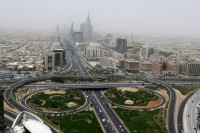
Four types of tourism jobs are now reserved entirely for Saudi nationals, while 12 others require 70 percent local staffing and another 12 need 50 percent. General view of Riyadh city. Reuters
Saudi Arabia has introduced new employment localisation requirements across 28 tourism-related occupations and 69 administrative and support jobs, limiting opportunities for foreign workers in the sectors.
The rules cover jobs in hotels, tourism, travel, hospitality, human resources, public relations and office administration. Employers must meet prescribed quotas for Saudi nationals, with some positions reserved entirely for citizens.
The Ministry of Human Resources and Social Development (MHRSD), in coordination with the Ministry of Tourism, began implementing the first phase of localisation in 28 tourism occupations on April 22. In a notice issued on May 3, the ministry said the decision had come into effect, and employers were required to comply with the prescribed ratios.
Under the new rules, four occupations require 100 percent Saudi staffing, 12 require 70 percent and the remaining 12 require 50 percent. Foreign workers can no longer be appointed to the four fully localised occupations, while employers must maintain the specified proportion of Saudi nationals in the other jobs.
The occupations reserved entirely for Saudi nationals are receptionist, hotel receptionist, telephone operator and information clerk.
The 12 occupations subject to a 70 percent localisation requirement are branch manager, hotel audit manager, hotel audit specialist, hotel inspector, tourism guide, public services supervisor, procurement specialist, public relations specialist, sales specialist, tourism specialist, tourism guidance specialist and health club employee.
The 12 occupations subject to a 50 percent requirement are ticket sales employee, travel ticket clerk, event coordinator, travel agent, tour organiser, marketing specialist, restaurant host, housekeeping supervisor, tourism development specialist, hospitality specialist, procurement representative and sales representative.
The ministry’s procedural guide on tourism localisation specifies the professional titles and occupational codes for these jobs. Employers must meet the localisation quotas based not only on employees’ job titles but also on their actual duties and the occupation codes listed in Saudi Arabia’s unified occupational classification.
The rules apply to private establishments in the tourism sector employing one or more workers. Employers that fail to meet the required ratios face legal action, according to the guide.
Tourism localisation to expand in phases
Saudi Arabia plans to localise a total of 41 tourism occupations in three phases.
The first phase covers 28 occupations. In the second phase, a 30 percent Saudi staffing requirement will apply to chefs from January 3, 2027. The third phase will introduce a 50 percent localisation requirement in 12 managerial occupations from January 2, 2028.
The policy is being implemented under Ministerial Decision No 13744, issued by the Ministry of Human Resources and Social Development on April 21, 2025. The ministry said the first phase took effect on April 22, 2026.
The localisation ratio is calculated based on the total number of employees in each occupation. For example, an employer with five workers in a job subject to a 70 percent requirement must employ at least four Saudi nationals.
Employers are also required to comply even if they outsource the specified work to a third party. The procedural guide makes clear that both the actual duties performed and the job title are taken into account.
69 administrative jobs also reserved for Saudi nationals
Alongside the tourism rules, Saudi Arabia has introduced 100 percent localisation in 69 administrative and support occupations in the private sector.
The Ministry of Human Resources and Social Development said the measure took effect on October 4.
According to a notice issued that day, the occupations include human resources development manager, workforce planning manager, human resources operations manager, recruitment manager, recruitment specialist, human resources operations specialist, workforce planning specialist, recruitment office manager, government relations employee, administrative assistant, customs representative, shipping representative, shipping clerk, inventory record clerk and various public relations positions.
The ministry said the 69 occupations were identified under Saudi Arabia’s unified occupational classification. Private establishments employing one or more workers in the relevant occupations must comply with the 100 percent localisation requirement.
On April 5, the ministry had updated its decision on administrative support occupations, bringing 69 jobs under full Saudization. The decision provided for immediate implementation in some occupations and a six-month grace period for the remaining jobs.
On October 4, the ministry said the decision had been fully implemented across all 69 occupations and that inspections had begun.
The jobs include secretarial work, translation, data entry, human resources, public relations, recruitment and administrative support. The ministry has warned that establishments violating the rules will face action.
What does this mean for Nepali workers?
Saudi Arabia is one of the major destinations for Nepali migrant workers. Nepalis are employed in construction, industry, services, hotels, restaurants, transport, security and domestic work.
The new rules could particularly affect Nepalis working in hotels, travel agencies, reception, public relations, human resources and office administration.
Rajendra Bhandari, former president of the Nepal Association of Foreign Employment Agencies, said the 100 percent localisation requirement would close recruitment opportunities for foreign workers in the affected occupations.
“In occupations subject to 50 and 70 percent localisation, the number of foreign workers will have to remain within the prescribed ratio,” he said. “This could reduce new labour demand and prompt companies to restructure their workforce.”
A Nepali businessperson working in Saudi Arabia said the policy could affect foreign workers’ visa and iqama renewals, as well as employment opportunities for skilled and technical workers.
Companies that fail to meet the required Saudization ratios may fall into the red or yellow categories under the Nitaqat system, which can prevent them from renewing foreign workers’ visas and iqamas. Nepalis employed by such companies could lose their jobs and be forced to return home, the businessperson said.
He said the growing requirement for Saudi nationals in engineering, healthcare, pharmacy, human resources, administration and tourism could put Nepali technicians, engineers and officers at greater risk.
However, the immediate risk to unskilled Nepali workers may be lower in construction, cleaning, packaging and other physically demanding jobs, where Saudi nationals are comparatively less likely to seek employment, he said.
Most Nepali workers go for general labour
According to the Labour Migration Report 2024, the largest share of Nepali workers heading to Saudi Arabia received labour approval for general and elementary occupations.
Workers in this category accounted for 67.6 percent of those going to Saudi Arabia. The jobs include general labour, packaging, loading, delivery and cleaning.
The report said 12.2 percent of workers received approval for jobs as drivers and machine operators, while 8.7 percent went into services and sales and 4.6 percent into construction.
Another 3 percent received approval for manufacturing jobs, 1.8 percent for electrical and mechanical technical work, 0.9 percent for agriculture and animal husbandry, and 0.8 percent for office and administrative support.
Around 400,000 Nepalis are currently working in Saudi Arabia.
Hom Karki is a reporter with two decades experience covering migrant workers issues and the Nepali diaspora. He was previously based in the Gulf for Kantipur Daily.




 12.8°C Kathmandu