



 16.12°C Kathmandu
Fri, Nov 27, 2026
The Long View
Balendra Shah’s India trip: From nationalist posturing to realpolitik
Delhi’s warm welcome and a slew of agreements signal an important opening in ties. But translating diplomatic goodwill into tangible outcomes will take more than one visit.
bookmark![]()
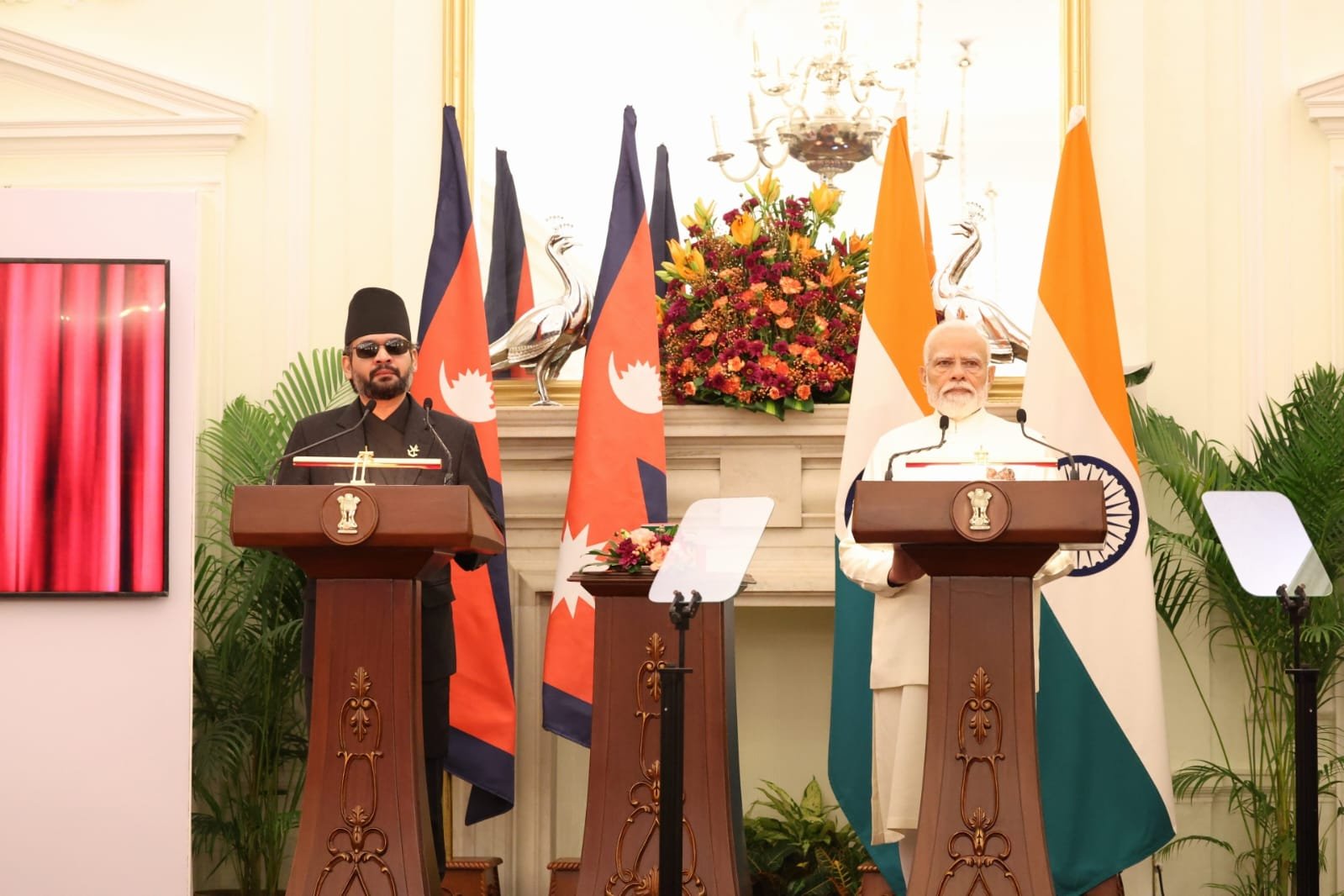
Prime Minister Balendra Shah (left) and Indian Prime Minister Narendra Modi address a joint press conference following their bilateral meeting in New Delhi on November 23. Photo: Courtesy of Ministry of Foreign Affairs/X
Sanjeev Satgainya
Published at : November 27, 2026
Updated at : November 27, 2026 19:07
Kathmandu
This essay was originally published as part of our weekly newsletter, Letter from Kathmandu. Sign up to receive this free newsletter in your inbox every Friday from The Kathmandu Post.
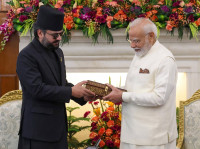
Prime Minister Balendra Shah visited Delhi earlier this week. He spent around 25 hours in the Indian capital, held one-on-one talks with his Indian counterpart Narendra Modi for longer than initially allotted — from 30 minutes to one and a half hours — secured some deals, addressed the delegation in Nepali (something previous prime ministers did not), and took a flight back immediately after meeting Indian President Droupadi Murmu.
Shah’s visit was widely anticipated, given his earlier hardline nationalist stance. After his appointment in March, months after the Gen Z movement that catapulted him into power, he declared he would not undertake any bilateral foreign visit for at least a year. He even refused to hold one-on-one meetings with ambassadors, including the Indian ambassador, a position he later softened. His refusal to give an audience to Indian Foreign Secretary Vikram Misri had led to the cancellation of the latter’s proposed visit to Kathmandu, sending some worrying signals to New Delhi.
But then, in August, the Bhotekoshi floods struck, one of the biggest natural disasters Nepal has faced in recent memory. Things changed. It is anybody’s guess whether Shah would have flown to Delhi had the disaster not happened. However, eight months into power, it was high time he visited India, Nepal’s closest neighbour, one of Nepal’s biggest development partners and largest trading partners, and one of the first responders in times of crisis. The two countries also share civilisational ties and an open border. Ever since Shah came to power, Delhi had intimated its willingness to host him.
Analysts are divided, as they always are. For some, the visit was a success; for others, Shah failed on precisely the same things he used to demand from the old guard when he was not in power, especially Lipulekh and the border issues.
But here are some facts. New Delhi accorded Shah a warm welcome. Modi announced a financial package worth USD 1.62 billion, comprising grants and loans. Nepal secured transit access to two Indian sea ports, Kandla in Odisha and Paradip in Gujarat, the two countries signed eight bilateral MoUs, the Janakpur-Ayodhya rail service was launched, and the Lower Arun hydropower project was advanced. An offshore IIT campus was agreed upon, while one of the most talked-about issues — the air-entry route via Lucknow-Bhairahawa — also received attention.
These are not insignificant outcomes. Yet, what needs to be understood is that all these deals are still on paper. They will start making sense when they move off the drawing board and into implementation.
But for Nepalis at home, Lipulekh and the border issues mattered more than anything else. There are complaints from some sections that Shah failed to move that very agenda, which he had raised with previous leaders in the past, forward. As far as the border issues are concerned, it was clear even before he embarked on the visit that an agreement — or a concession from the Indian side — was going to be a tall order for a single visit. One visit cannot resolve all the problems, nor does one meeting mean a panacea for all ills.
There has been a tendency to talk about a “reset” in ties whenever a Nepali prime minister flies to Delhi. This time too, questions were being asked whether Shah’s visit would mean a reset. This carries significance because ruling Rastriya Swatantra Party leaders, including Shah’s ministers, have been saying that Nepal-India relations should be redefined by “shedding the old baggage.”
But what exactly does a reset mean? A warmer political atmosphere does not, by itself, change the fundamentals of the relationship. The warmth demonstrated by Modi shows that Delhi is willing to work with the current leadership in Kathmandu. But it does not mean that longstanding disagreements and structural problems have disappeared. A change of government in Kathmandu does not automatically change the terms on which Nepal and India deal with each other.
KP Sharma Oli, who was ousted by the Gen Z movement, was left cooling his heels as Delhi showed little willingness to invite him. Oli’s past adventures had vexed Delhi, and the strain in ties was visible. Shah’s reception, therefore, also signals Delhi’s readiness to move past that difficult phase.
The state of play has changed in Kathmandu. For Delhi, tired of restarting relations with frequent regime changes, a strong and stable government makes it easier to deal with Kathmandu. For Modi, too, the developments in Nepal carry significance. Having himself been unsettled by youth-led protests in his own country, which some liken to the youth uprising in Nepal last year, he has reason to welcome political stability in a neighbouring country. The mention of “Vikasit Bharat, Sammunat Nepal” in the joint vision document issued at the conclusion of Shah’s visit reflects this willingness to look ahead and build a more constructive relationship.
For Shah, a relative novice in national politics, this is his first encounter with realpolitik. It is one thing to criticise the old guard for how they handled Nepal’s relationship with India; it is quite another to manage that relationship from the seat of power. The Delhi visit is a beginning. What follows will matter more.
Sanjeev Satgainya
Satgainya is Editor, Features & Investigations for KMG. Previously, he served as the Editor of The Kathmandu Post from February 2020 to September 2022.



Most Read from The Long View

Editor's Picks
Was PM Shah’s visit to India really grand, or was it illusory?
Nepal’s fossil fuel push clashes with its clean energy ambitions
Five lessons in golf—and politics—for Prime Minister Balendra Shah
The killings have a name: Femicide. Nepal’s law does not recognise it
Why buying a first home is becoming a distant dream for young Nepalis
E-PAPER | November 27, 2026

×