Indian Foreign Secretary Vikram Misri’s Kathmandu visit postponed
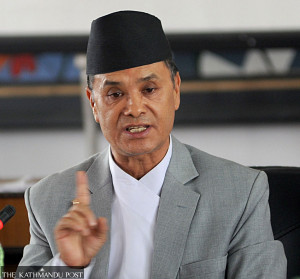
PM Shah’s refusal to meet the Indian foreign secretary and the recent Nepal-India dispute over India and China resuming the Mansarovar Yatra through the disputed tri-junction reportedly led to the deferral. Indian Foreign Secretary Vikram Misri Reuters
The proposed visit of Indian Foreign Secretary Vikram Misri to Kathmandu has been postponed, a top government official told the Post. He was scheduled to land in Kathmandu on May 11 for a two-day visit.
New Delhi had decided to send its foreign secretary to engage with the new government in Kathmandu and understand its priorities. The visit was expected to chart the future course of bilateral ties.
The postponement of the visit and the recent developments in Nepal-India relations have raised questions about the state of bilateral ties.
Observers believe the initial enthusiasm between two sides following the formation of the new government under the leadership of Balendra Shah has cooled off a bit.
But most meetings and visits planned by the two sides at different levels will continue as per the agreed schedule, according to officials.
Citing Misri’s other commitments, the Indian side informed Nepal that the trip had been postponed, at least for now, according to multiple officials who did not want to be named as they are not authorised to speak with the media. The southern neighbour has not given an exact reason for the postponement.
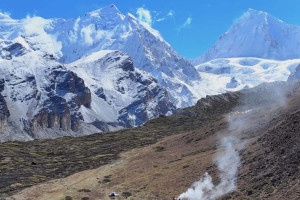
Foreign ministry officials privy to the developments give two possible reasons for the postponement. First, Prime Minister Shah’s refusal to meet the Indian foreign secretary, ignoring India’s repeated requests. Second, the recent dispute between Nepal and India on the boundary in Lipulekh, a pass located near the India-China border that Nepal has historically claimed as its territory.
The Shah administration took serious objection to the decision of India and China to resume pilgrimage to Manasarovar in Tibet from the disputed area.
In the last week of April, the Indian side had communicated that, as per the understanding reached between Foreign Minister Shisir Khanal and his Indian counterpart, S Jaishankar, in Mauritius, Misri would visit Kathmandu. India had sought confirmation from the Nepali side for the proposed May 11-12 schedule.
Accordingly, Foreign Secretary Amrit Bahadur Rai sent a formal invitation to Misri, while the foreign ministry began groundwork for his visit. Misri was also expected to hand over an invitation to Prime Minister Shah for a visit to India.
Khanal announced during his Mauritius trip that Shah had accepted Modi’s invitation and that the two foreign ministries would lay the groundwork for a prime ministerial visit.
Though neither side had officially announced the visit, preparations were in full swing in both Kathmandu and New Delhi.
According to sources at the foreign ministry, even during the May 1 farewell call by Nepal’s ambassador to India, Shankar Sharma, Misri had communicated that his visit to Nepal was on track and that he looked forward to travelling to Kathmandu with renewed enthusiasm.
Shah has been refraining from meeting any foreign officials or leaders below the rank of foreign minister. Ignoring the Americans’ request, he earlier refused to meet US Assistant Secretary of State Samir Paul Kapur and US President Donald Trump’s special envoy for South and Central Asia, Sergio Gor—who is also the US ambassador to India.
He decided to maintain the same policy during Misri’s visit. According to foreign ministry officials, Shah has not heeded the requests of Finance Minister Swarnim Wagle and Foreign Minister Khanal to meet senior officials from India, China and the US.
Experts suggest that these developments do not augur well for the Nepal-India ties.
“There was a sense of enthusiasm [in India] initially after the Rastriya Swatantra Party won a landslide election and formed a strong government under Shah,” said Vijay Kant Karna, a former Nepali ambassador. That enthusiasm has subsided, he suggested.
“But I also do not think that this will lead to a diplomatic standoff between Kathmandu and New Delhi. The postponement of the Indian foreign secretary’s visit is a loss for us.”
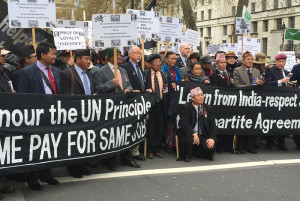
After the decision of India and China to resume pilgrimage via Lipulekh, the government had sent separate diplomatic notes to the neighbours. India reacted immediately and said it was willing to engage in dialogue with Nepal to resolve the old border dispute.
Despite the postponement of the Indian foreign secretary’s trip, the visit of Foreign Minister Khanal to New Delhi is on, according to diplomatic sources. The Indian side has invited Khanal to attend the first International Big Cat Alliance (IBCA) Summit on June 1.
Speaking at a press briefing by India’s Ministry of External Affairs on Thursday, spokesperson Randhir Jaiswal said New Delhi was open to discussions with Nepal.
However, he stated that India does not accept Nepal’s unilateral claims over the areas including Lipulekh and clarified that the Manasarovar Yatra has been going on since 1954.
“We are ready to discuss all outstanding issues between Nepal and India. If there is a border dispute, it can also be resolved through dialogue. However, making unilateral claims over any territory is not an appropriate way,” Jaiswal said.
Responding to New Delhi’s desire to resume boundary talks, Minister for Education Sasmit Pokharel told reporters on Friday that the government has already initiated talks with India on the issue.
“The foreign ministry has already sent a diplomatic note to India. Dialogue between the two countries has begun, and the Ministry of Foreign Affairs is carrying out necessary tasks,” Pokharel said.
The Ministry of Foreign Affairs has also expressed its readiness to resolve the boundary dispute with India through talks.
The government is committed to resolving border issues through diplomatic means, foreign ministry spokesperson Lok Bahadur Paudel Chhetri said on Friday at a briefing at the ministry. “The government is clear about issues concerning the Limpiyadhura, Lipulekh, and Kalapani areas,” he added.
Chhetri said the government has already conveyed its position to India and China through diplomatic channels. Referring to the Kailash Manasarovar Yatra agreement between India and China via Lipulekh, he said, “We have already made our position on Lipulekh public.”
He further stated, “Since the Sugauli Treaty of 1816, the areas east of the Mahakali River—Limpiyadhura, Lipulekh, and Kalapani—have been an integral part of Nepal. The Government of Nepal has consistently emphasised this and remains fully clear and firm on this matter. This has already been conveyed to both friendly nations,” he said.
In Delhi, Jaiswal told the media that Nepal and India share multidimensional relations and the supply of petroleum products and chemical fertilisers would continue in line with existing agreements.
“A few days ago, concerns were raised regarding oil supply due to tensions in West Asia. As per the agreement between the two countries, we are continuing to provide supplies. India is also ready to supply chemical fertilisers,” he said.
Anil Giri is a Chief Sub Editor covering diplomacy, international relations and national politics for The Kathmandu Post. Giri has been working as a journalist for more than two decades, contributing to numerous national and international media outlets.




 15.88°C Kathmandu