Long hours, low pay and fading pride: Disquiet in lower ranks of Nepal Police
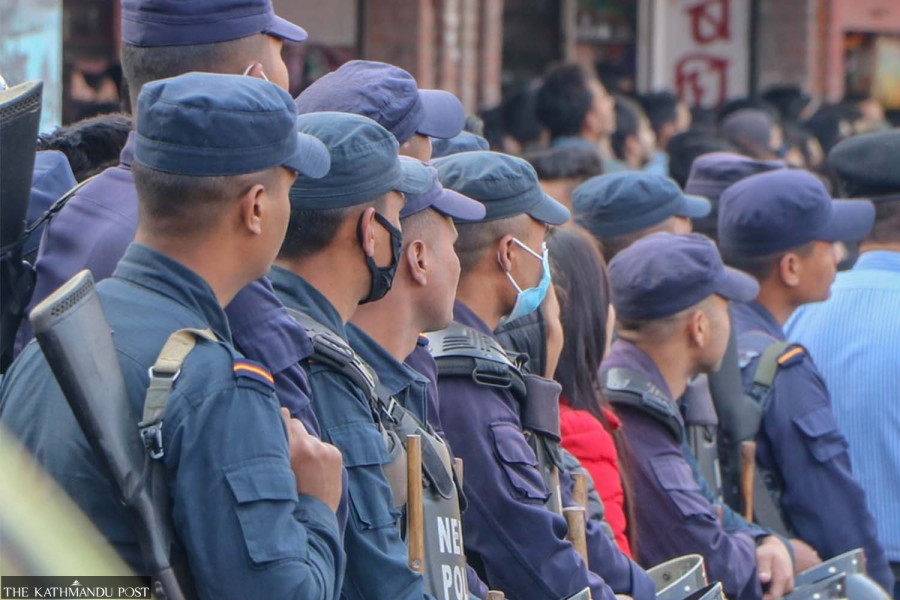
Nepal Police faces a growing morale crisis as low-ranking personnel complain of poor conditions, shrinking respect and widening internal inequality. Nepal Police is currently a 79,541-strong force. Post file photo
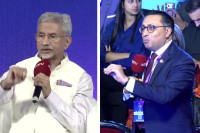
While addressing senior officers at the Nepal Police Headquarters in Naxal on March 30, then home minister Sudan Gurung and Inspector General Dan Bahadur Karki spoke about police uniforms using strikingly different metaphors.
Gurung lamented that Nepal Police personnel looked poorly equipped compared to officers in other countries. “In other countries, one feels police can catch criminals instantly just by looking at their uniforms. Here, we have torn clothes, faded trousers and worn-out boots,” he said.
Promising reforms, Gurung said police uniform should command immediate respect. He even remarked that officers assigned to the special task force responsible for VIP security did not appear formidable enough. “People should feel they are looking at dangerous police officers,” he said.
Senior police officers present at the event responded with loud applause.
When Karki, who had addressed the event before the minister, said he preferred calling the police uniform “black” rather than “blue,” the debate centred only on the personnel’s attire.
But officers close to the IGP’s Secretariat say Karki’s emotional remarks were not merely about fabric quality. According to them, the police chief was speaking about the declining institutional status of the police force, shrinking state support and a weakening public image.
“That statement was about dignity, morale and the low priority the state gives to police. He was trying to say police are increasingly treated like labourers who simply open and close doors at the owner’s command,” a police officer told Kantipur. The officer said Karki was also hinting at the lack of operational autonomy within the force. Yet public discussion remained confined to the issue of uniforms.
***
For retired police head constable Chandra Prasad Rajbanshi, 82, memories of policing in the early 1990s remain vivid. A resident of ward 3 of Gaurigunj Rural Municipality in Jhapa, he recalls how people once trembled at the sight of police officers.
“If a police hawaldar (head constable) walked through the streets, news would spread to neighbouring villages,” said Rajbanshi, who also serves with a former police personnel’s organisation in Jhapa. “When officers carried batons, everyone remained silent.” According to him, politics has now deeply infiltrated the institution. “People no longer fear or respect police the way they used to,” he said.
Nepal Police now promotes community-oriented programmes such as ‘Police My Friend’, ‘smiling police campaigns’ and ‘community police partnerships’ to strengthen ties with citizens. Rajbanshi says such efforts are important, but argues security must also be felt psychologically. “To maintain order, criminals need to feel a certain level of fear towards the police,” he said.
Former IGP Deepak Thapa, who joined Nepal Police in 1995 and became police chief in April 2025, says he too was inspired by the charm of the blue uniform. Thapa, originally from Sipadol in Bhaktapur, had left a teaching job to join the police service after being inspired by senior officers from his village.
“People like Shambhu Thapa, Shailesh Thapa, Pradyumna Karki and Sitaram Hachhethu from the village had already joined the force. The blue uniform attracted me,” he recalled.
Retired Additional Inspector General of Nepal Police Hari Bahadur Pal similarly remembers a time when even police head constable commanded immense authority.
“When head constables or constables carrying batons stood on the streets, criminals would become afraid instantly,” he said. “Now there are places where police themselves face humiliation.”
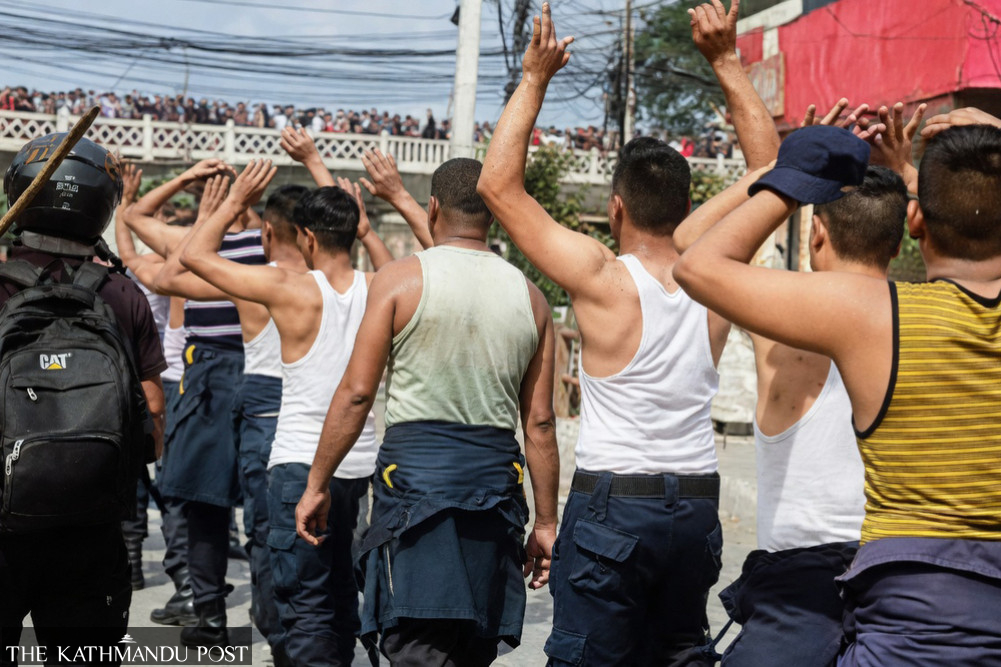
Pal cited the violence that followed the Gen Z protests on September 9 last year as an example. Personnel from the Baneshwar Police Circle were chased and stripped semi-naked, while some officers jumped into rivers to save themselves. Four police personnel lost their lives during the unrest.
“After that incident, people with criminal tendencies became emboldened. Some started believing they could abuse police and get away with anything,” said Pal.
Nepal Police currently has 79,541 personnel. Nearly 78 percent are constables and head constables, around 17 percent are junior officers and only about 3 percent belong to the senior ranks.
“Low-ranking officers face the greatest hardships in service. They are also the primary targets whenever incidents damage morale. Unless their confidence improves, the organisation’s reputation cannot improve,” said former AIG Bhim Prasad Dhakal.
Junior officers lead local police units while constables and head constables handle most field-level responsibilities. Senior officers supervise them from higher command structures.
“They are frontline personnel who interact with citizens every day,” said Dhakal. “Public perception of the police largely depends on how these low-ranking officers behave and perform.”
At the same March function, IGP Karki publicly expressed frustration that the organisation had failed to retain lower-ranking personnel. Internal police studies support his concern.
A 2022 study conducted by the Directorate of Research, Planning and Development at the Police Headquarters found only 53.4 percent of junior officers fully satisfied with their service. Another 41.8 percent said they felt only moderately satisfied, while 4.8 percent described themselves as completely dissatisfied.
A separate study focusing on constables and head constables found that 26.87 percent were unhappy, mainly due to poor working conditions. Respondents cited irregular duty schedules, inadequate leave, discrimination, distance from family, lack of recognition and a poor grievance handling system.
Waves of resignations hit Nepal Police
Interviews conducted by Kantipur with at least 16 serving and retired lower-ranked officers across different provinces revealed similar frustrations. Many alleged that facilities and opportunities are disproportionately distributed among personnel close to senior officers.
One constable working at the Kathmandu Valley Police Office in Ranipokhari described how even canteen operations become sources of privilege. “Those who get control of canteens are exempt from regular duty. In return, they provide free meals and snacks to senior officers, and sometimes even gift alcohol,” he said on condition of anonymity.
Stripped of their uniforms and weapons, Nepal Police personnel raise their hands in surrender as they leave a police station in Kathmandu on September 9, 2025, the second day of the Gen Z protests. Hundreds of police stations, government buildings and private properties were set on fire across the country after police shot dead dozens of protesters a day earlier. Post file photo
According to the salary scale implemented in fiscal year 2022-23, a police constable earns Rs33,032 per month. A head constable receives Rs34,052, an assistant sub-inspector Rs40,521 and a sub-inspector Rs43,732.
“In Kathmandu, rent alone can cost Rs15,000,” said the constable. “Then there is food and everything else. How much can one save?”
For many officers, United Nations peacekeeping missions once served as major financial incentives. Personnel returning from such missions could often buy land or build houses.
But opportunities have dwindled sharply.
Nepal Police has not deployed any Formed Police Unit (a highly trained tactical squad) personnel since its contingent in Haiti returned in 2019. The team returning from Darfur in 2020 became the last deployment from that mission as well.
“Earlier, officers used to say there was always the option of missions,” said former AIG Uttam Raj Subedi. “Now, as opportunities decline, the organisation must create new incentives to retain personnel.”
Even obtaining leave has become a struggle for lower-ranked officers. “One applies for 15 days of leave, but by the time it passes through various desks and commanders, only three days get approved,” said a constable from the Koshi Province Police Office. “When going home itself becomes so difficult, naturally people begin waiting for retirement or resignation.”
Lower-ranked personnel have long demanded pension eligibility after completing 16 years of service. Under the current Police Regulations 2014, personnel qualify for pensions only after 20 years of service.
The demand intensified after increasing numbers of officers resigned to seek employment abroad.
Successive home ministers, from Shakti Bahadur Basnet to Rabi Lamichhane, discussed the proposal. Yet the Ministry of Finance has repeatedly blocked it, citing financial burdens.
The Nepali Army introduced a partial solution in 2020, allowing soldiers and followers to retire voluntarily after 16 years, though they must wait four more years to begin receiving pensions.Police personnel argue a similar mechanism could be adopted for Nepal Police.
Retired superintendent of police Rabindra Regmi says police leadership has failed to adapt to changing social realities. “In the past, officers behaved like feudal masters and juniors obeyed unquestioningly. Society has changed now, but many senior officers still expect the same unquestioning obedience from subordinates,” he said.
A senior head constable at the Kathmandu District Police Range alleged that some lower-ranking personnel are still assigned to domestic work at the homes of retired senior officers.
“Personnel are sent to help build houses, erect tents and do household work,” he said. “This has continued for years.”
Promotion delays have further deepened frustration.
“Senior officers rise rapidly because of political lobbying around top appointments. Meanwhile, constables and head constables remain stuck in the same rank for 18 years,” he said.
Police studies also acknowledge that prolonged stagnation has created an inferiority complex among lower-ranking personnel within families and society. The report noted that many assistant sub-inspectors resign or migrate abroad after observing limited career prospects.
According to data provided by Nepal Police Headquarters, a total of 6,203 police personnel resigned over the past five years.
The largest numbers came from lower ranks. During that period, 894 constables, 2,012 head constables, 1,105 senior head constables and 1,035 assistant sub-inspectors resigned.
By contrast, only one AIG, one DIG, eight SSPs, eight SPs and 18 DSPs resigned.
Although most resignation letters cite personal reasons, officers say many personnel leave after securing pension eligibility and then pursue foreign employment.
“One can become a second lieutenant in the army after completing Grade 12. In the civil service, one can become a non-gazetted first class officer. But in Nepal Police, people remain equivalent to clerks despite huge responsibilities,” said a sub-inspector. “Honest junior officers who avoid corruption are being forced to quit because of poverty,” he added.
Discrimination lies within office itself
Most lower-ranking officers interviewed by Kantipur said humiliation from superiors had become routine.
“I completed my bachelor’s degree but joined as a constable due to circumstances,” said a police officer. “Still, many commanders treat us worse than domestic workers. Who would want to be scolded after working 18-hour shifts even in this day and age?”
He said rank-based discrimination could even be observed in police toilets. “Go look at the separate toilets for senior and junior personnel in traffic police offices,” he said. “Senior officers have clean and scented facilities while juniors get filthy toilets.”
Shambhu Suskera, a former sub-inspector who later joined politics and now serves as a lawmaker from the Rastriya Swatantra Party, said senior officers rarely understand the realities of junior personnel. “Even today, the culture resembles the feudal era. Senior officers ensure perks and benefits for themselves while ignoring vulnerable colleagues,” he said.
According to Suskera, rank should only define responsibility, not human worth. “Some reached higher positions through education and opportunity while others remained below,” he said. “But everyone bleeds the same.”
Most disciplinary actions target lower-ranked officers
Complaints also extend to uniforms and basic logistics. A constable from Kanchanpur District Police Office said the quality of uniforms remains poor.
“Earlier we received cloth and had to tailor the uniforms ourselves. Nowadays, we are issued readymade uniforms, but they fade after one wash,” he complained. He claimed uniforms purchased privately for Rs2,000 lasted years but those supplied deteriorate quickly. “Even after the fabric fades, seniors force us to keep wearing it,” he said.
Personnel complain that the fabric becomes unbearably hot in sunlight and leaves sweat stains.
Although former home minister Gurung had announced plans to establish a domestic police uniform factory, the proposal has made no progress since his departure from office.
A head constable in Morang said even washing machines were unavailable in many police barracks. “After working 18 hours, we still wash clothes by hand. Even simple amenities would help,” he said.
Personnel working in specialised investigative units face different pressures. An assistant sub-inspector serving in criminal investigations said officers in plainclothes units work round-the-clock but receive little recognition.
“Office chiefs get credit for successful investigations. Meanwhile, we struggle even to educate our children,” he said. He also complained that low-ranking officers become immediate targets whenever mistakes occur.
Inspector Dipendra Adhikari, once considered one of Nepal’s finest investigators, voluntarily retired in 2018 under similar frustrations. In an article written a year later, Adhikari explained that his resignation was not part of any prior plan. Despite receiving special promotions for investigative excellence, he said the then police chief had summoned him and questioned his loyalty.
“Officers become disheartened when competent investigators are labelled as someone’s people,” the assistant sub-inspector said.
Many personnel also believe disciplinary action disproportionately targets lower ranks.
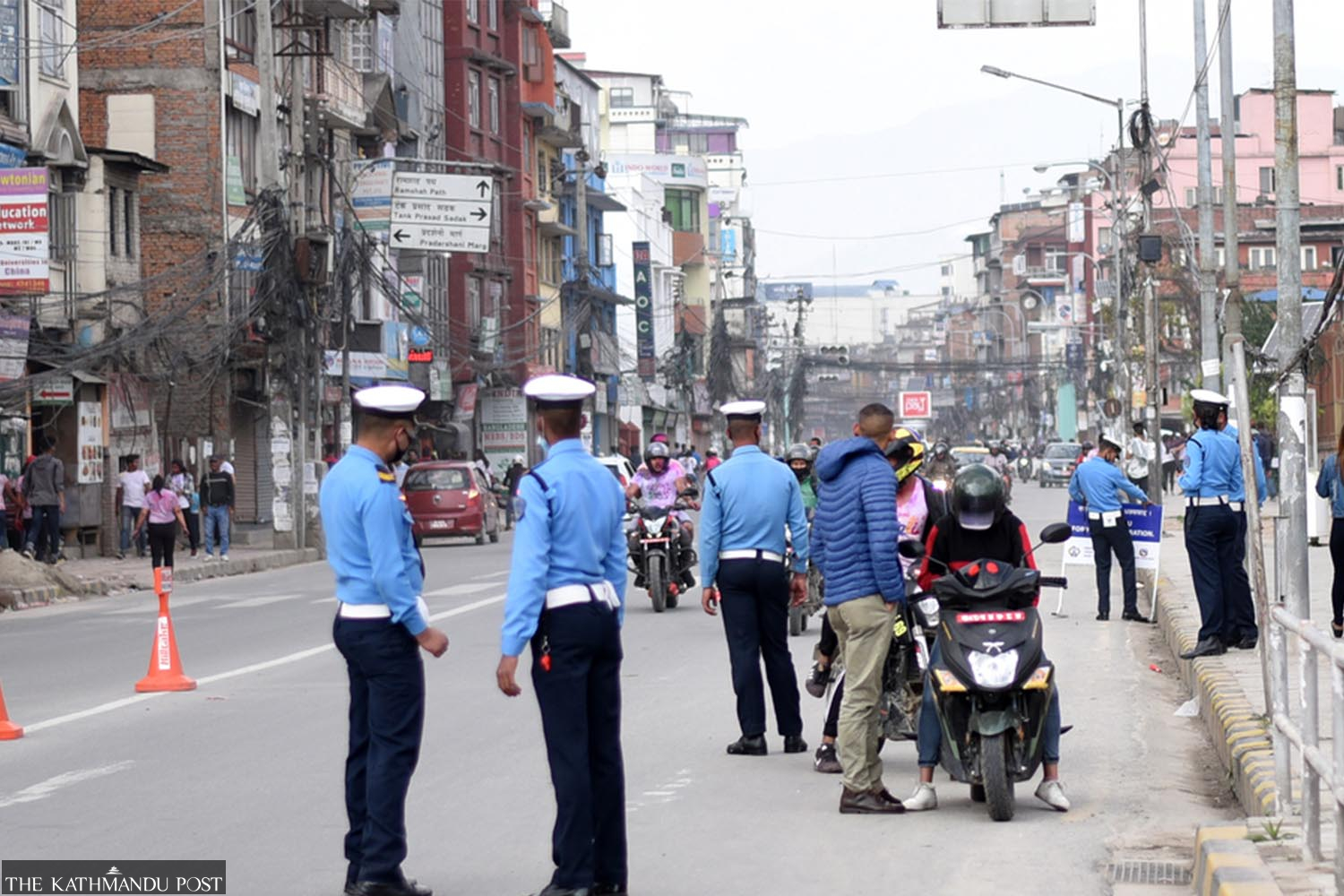
Traffic police check motorists’ licences at Ram Shah Path in Kathmandu. Post file photo
Data from the past five years show that 5,918 police constables faced disciplinary measures between fiscal year 2020-21 and mid-May of the current fiscal year. The figures included 2,270 head constables, 1,862 assistant head constables, 338 senior head constables, 917 assistant sub-inspectors and 401 sub-inspectors.
By comparison, only one DIG, three SSPs, 19 SPs and 36 DSPs faced disciplinary action during the same period. Senior officers argue lower-ranked personnel commit more misconduct.
Former AIG Dhakal accepts that disciplinary procedures often move faster against junior officers. “Anyone who commits wrongdoing should face action. But procedures must be equal for everyone,” he said.
A serving sub-inspector argued that inadequate training and poor resources also contribute to mistakes. “If training were sufficient, would officers have fired recklessly during the Gen Z protest in September last year?” he asked. He also referred to the 2018 rape and murder investigation of Nirmala Pant in Kanchanpur, when police faced accusations of destroying evidence after officers washed the victim’s clothes.
Heavy workload
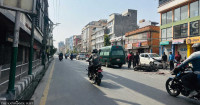
Compared to most government jobs, police personnel often work nearly double the hours. Low-ranking officers commonly work 15 to 16-hour shifts, while traffic police often endure even longer schedules.
“Traffic police stand on roads from morning until evening without even proper drinking water. There are no decent resting places and sometimes not even access to toilets,” said a head constable at the Kathmandu Valley Traffic Police Office. “Among all police units, traffic personnel suffer the most.”
Former AIG Dhakal said police leadership must create fair systems of evaluation, incentives and career growth. “When personnel feel their work is recognised, performance automatically improves,” he suggested.
Traffic police once received additional allowances, but those benefits have since been removed.
Police officials acknowledge that smart policing cannot succeed unless morale improves among the junior officers who first respond to citizens.
As a small effort to boost motivation, Kathmandu police recently introduced an initiative to take low-ranking personnel to the movies on designated days.
Yet most officers interviewed by Kantipur said they needed practical reforms more than symbolic gestures. They demanded salaries that match living costs, predictable transfer and promotion systems, regular training and respectful treatment from superiors.
Krishna Gaire, under-secretary and chief of the Administration Division at the Home Ministry, said a committee led by joint secretary Ananda Kafle is currently studying reforms for Nepal Police and the Armed Police Force.
“The committee is identifying the full range of issues requiring reform. The ministry will move ahead accordingly once recommendations are finalised,” said Gaire.




 14.81°C Kathmandu