



 13.59°C Kathmandu

Thu, Oct 22, 2026
Money
Built for adventure, held back by regulations
From Everest bungee to water parks and ziplines, entrepreneurs say overlapping laws, unclear policies and lengthy approval processes are slowing investment in Nepal’s growing adventure tourism sector.
bookmark![]()
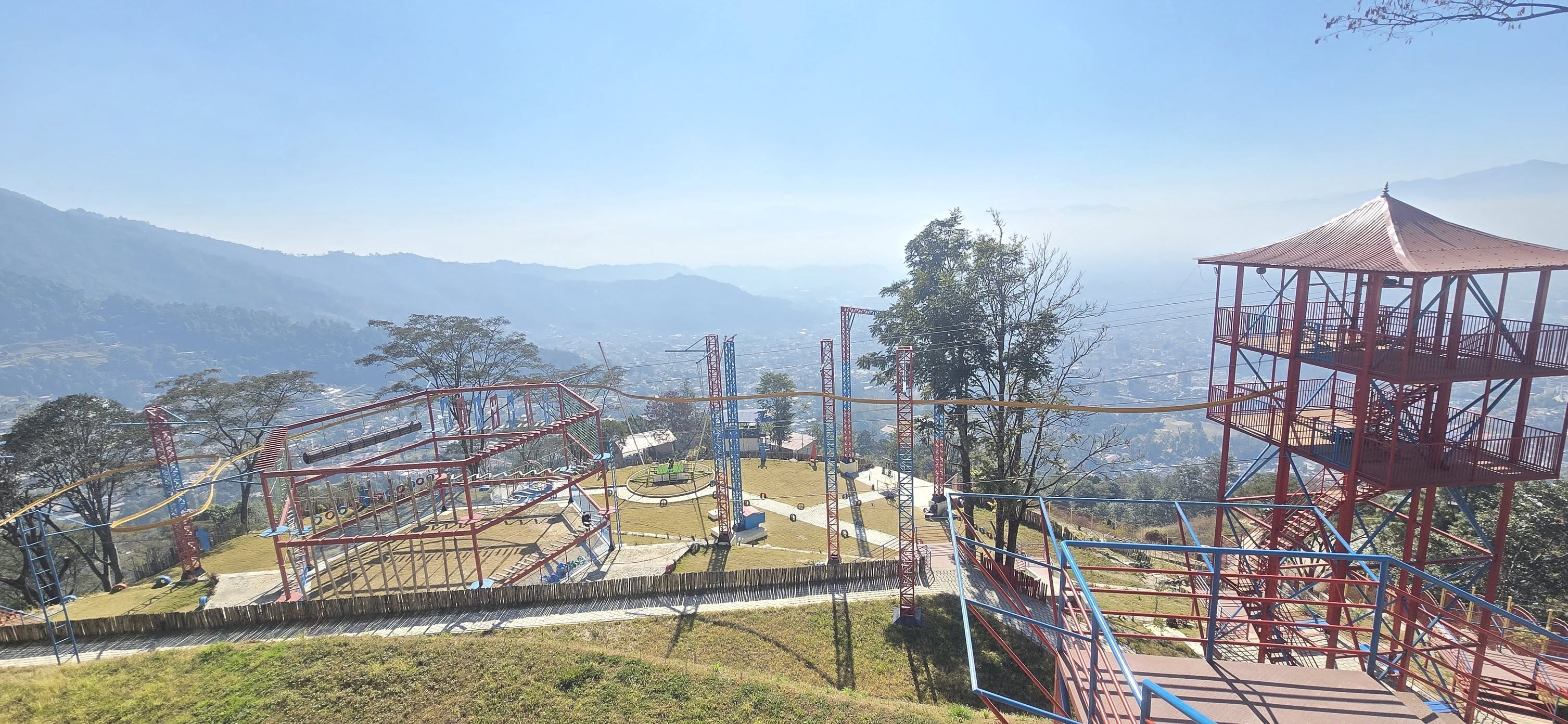
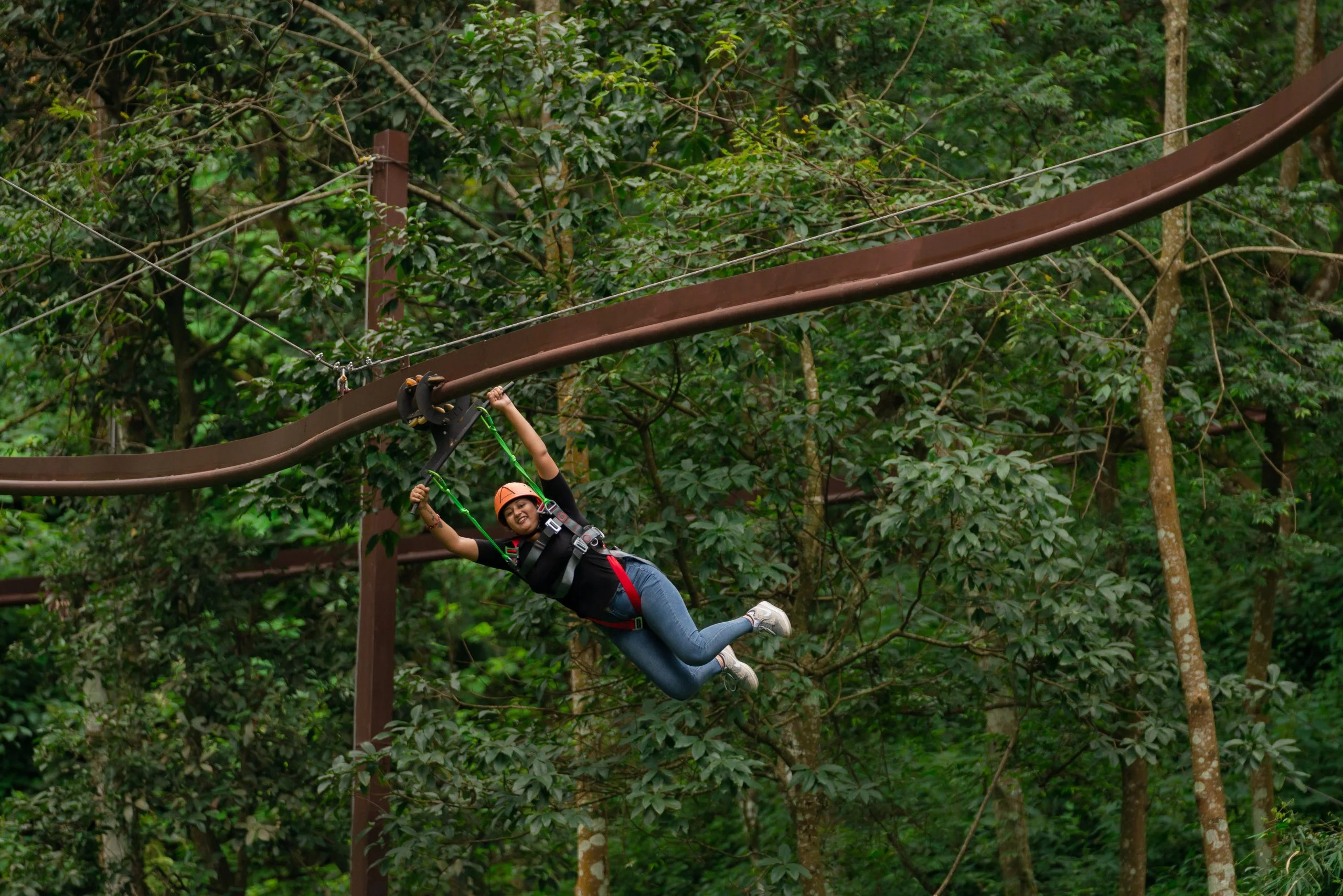
Shivapuri Thrill Adventure Park. ![]()
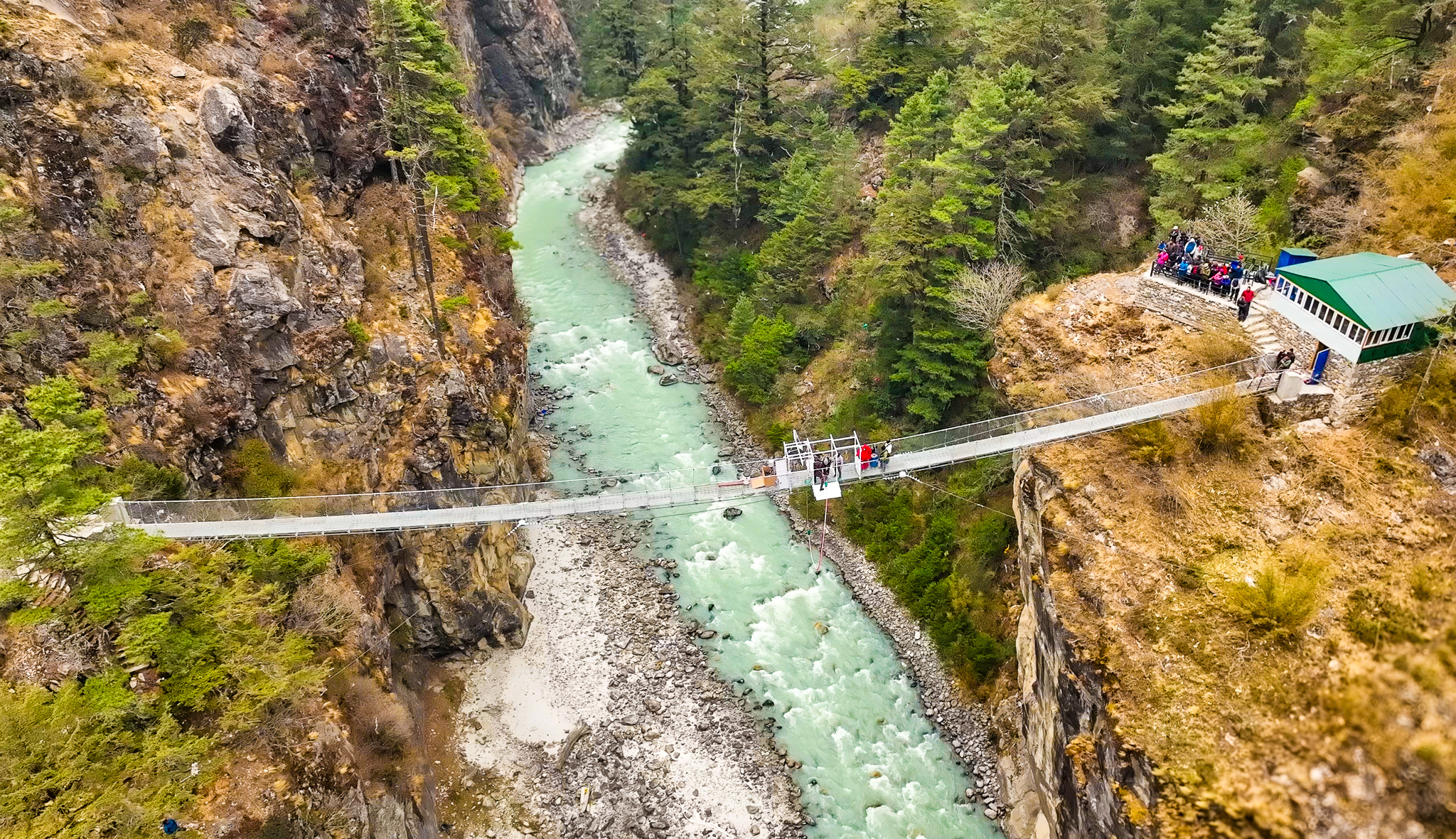
Everest Bungee ![]()
![]()
![]()
Suraj Kunwar
Published at : July 24, 2026
Updated at : July 24, 2026 13:38
Kathmandu
Namche Bazar, the gateway to Mount Everest, sits along the trail to the world's highest peak. Perched at 3,400 metres above sea level, the bustling Sherpa town overlooks the Dudh Koshi river. Suspended above the river on the old Hillary Bridge once stood Everest Bungee run by Chhepal Dorji Sherpa.
In 2024, after securing the required approvals from Khumbu Pasang Lhamu Rural Municipality and Sagarmatha National Park, Sherpa imported specialised equipment from India and France and launched the bungee operation. By then, he had already invested Rs14 million in the project.
Exactly a year after obtaining the permits, the attraction opened to visitors in 2025. Sherpa envisioned giving trekkers and mountaineers heading for Everest a brief but unforgettable thrill: a 145-foot plunge above the roaring Dudh Koshi river.
The business quickly began attracting customers. Visitor numbers were growing, and the future looked promising.
The optimism did not last long.
Someone filed a complaint with the District Administration Office in Salleri, questioning how a private company had been allowed to operate a commercial business from a government-owned bridge over a public river.
Following the complaint, the bungee operation was shut down.
"What exactly was my mistake?" Sherpa said in an interview with Kantipur. "I started the business only after receiving approval from the local government and the national park. Later, however, I was shown different provisions of different laws."
The complaint marked the beginning of a long bureaucratic ordeal.
Sherpa found himself shuttling between the Department of Tourism in Kathmandu, government offices in Lukla and Namche, and a maze of different authorities. The Ministry of Agriculture, Forest and Environment, the Department of National Parks and Wildlife Conservation, the local government, the Department of Tourism, the Cottage and Small Industries Office and the Office of the Company Registrar all had separate procedures, requirements and jurisdictions.
Unable to navigate the overlapping bureaucracy, Sherpa eventually gave up.
"Every government office has its own process," he said. "After exhausting every option, I spent nearly Rs4 million dismantling and removing all the bungee infrastructure."
He is now building a new "single-pillar bungee" on nearby private land. Around Rs50 million has already been invested in the new project.
"I expect to begin operations from the new site within the next three months," said Sherpa, who is currently in Kathmandu. "All the necessary procedures are now in their final stage."
Sherpa's experience is far from unique.
For many investors entering Nepal's growing adventure tourism industry, navigating the legal system has become almost as challenging as building the attractions themselves. Across the sector, entrepreneurs tell remarkably similar stories of regulatory confusion, overlapping jurisdictions and prolonged administrative delays.
The result is not simply procedural frustration. Investors say vague and inconsistent government policies are preventing large investments from generating the returns they were designed to produce.
A similar story is unfolding in the foothills of Shivapuri hill, north of Kathmandu.
Ram Avatar Yadav, operations head of Shivapuri Thrill Adventure Park, has spent years dealing with bureaucratic hurdles much like those faced by Sherpa.
Spread across 24 ropani of land (one ropani equals 0.05087 hectares), the park is already operating, but its licensing process remains incomplete.
Recalling the administrative difficulties involved in building the nearly Rs110 million project, Yadav said entrepreneurs are often forced to submit the same documents repeatedly to multiple agencies.
"We had already obtained approval from Shivapuri Nagarjun National Park to build and operate the park," Yadav said. "Only afterwards did we find out that the law also required a separate operating licence from the Department of Tourism."
The park has already completed its environmental assessment. Yadav has submitted all the required documents listed in the Department of Tourism's licensing checklist and is now waiting for the next step.
"Once the documents are reviewed, officials will conduct a field inspection," a department official said. "If everything meets the prescribed requirements, the operating licence will be issued."
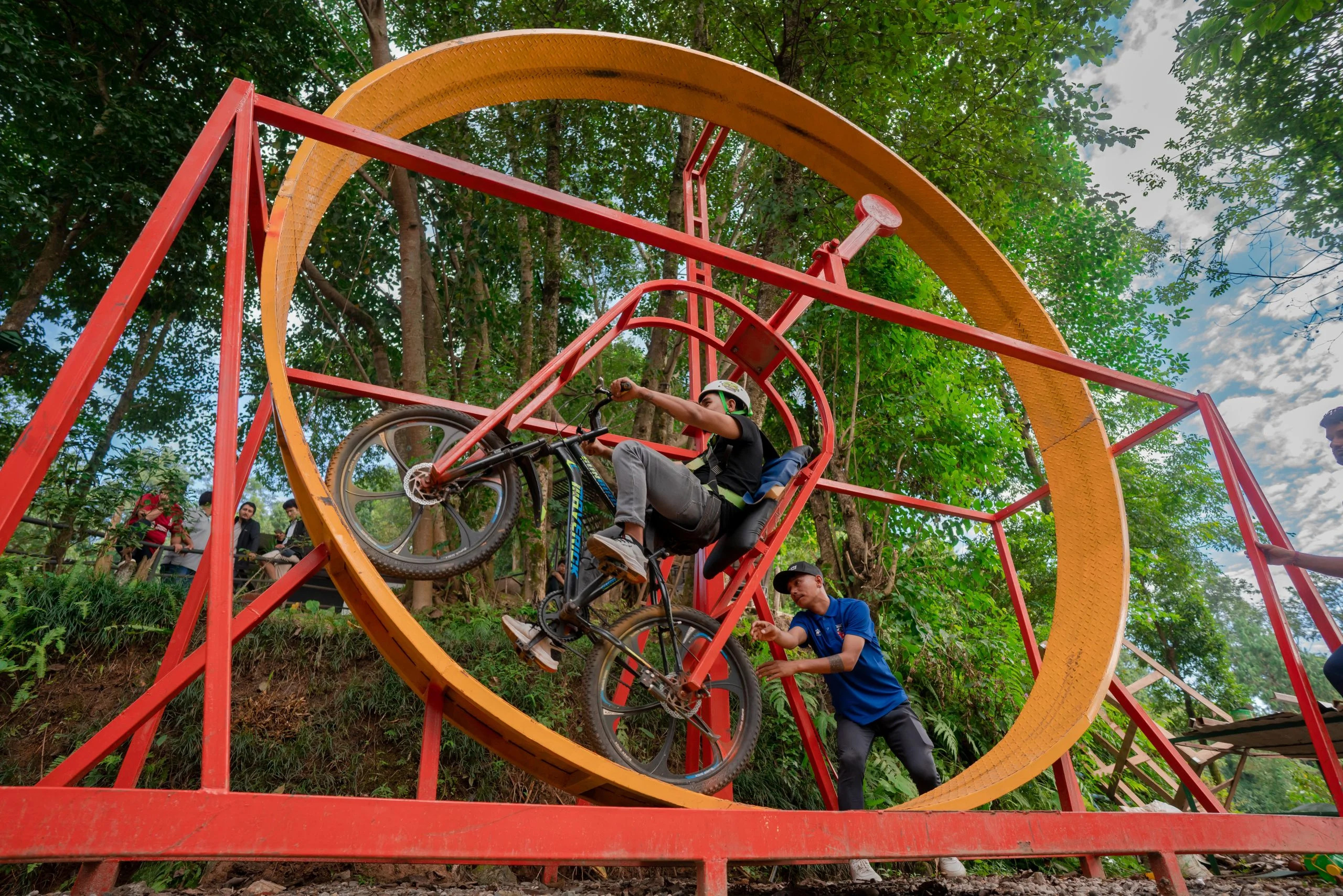
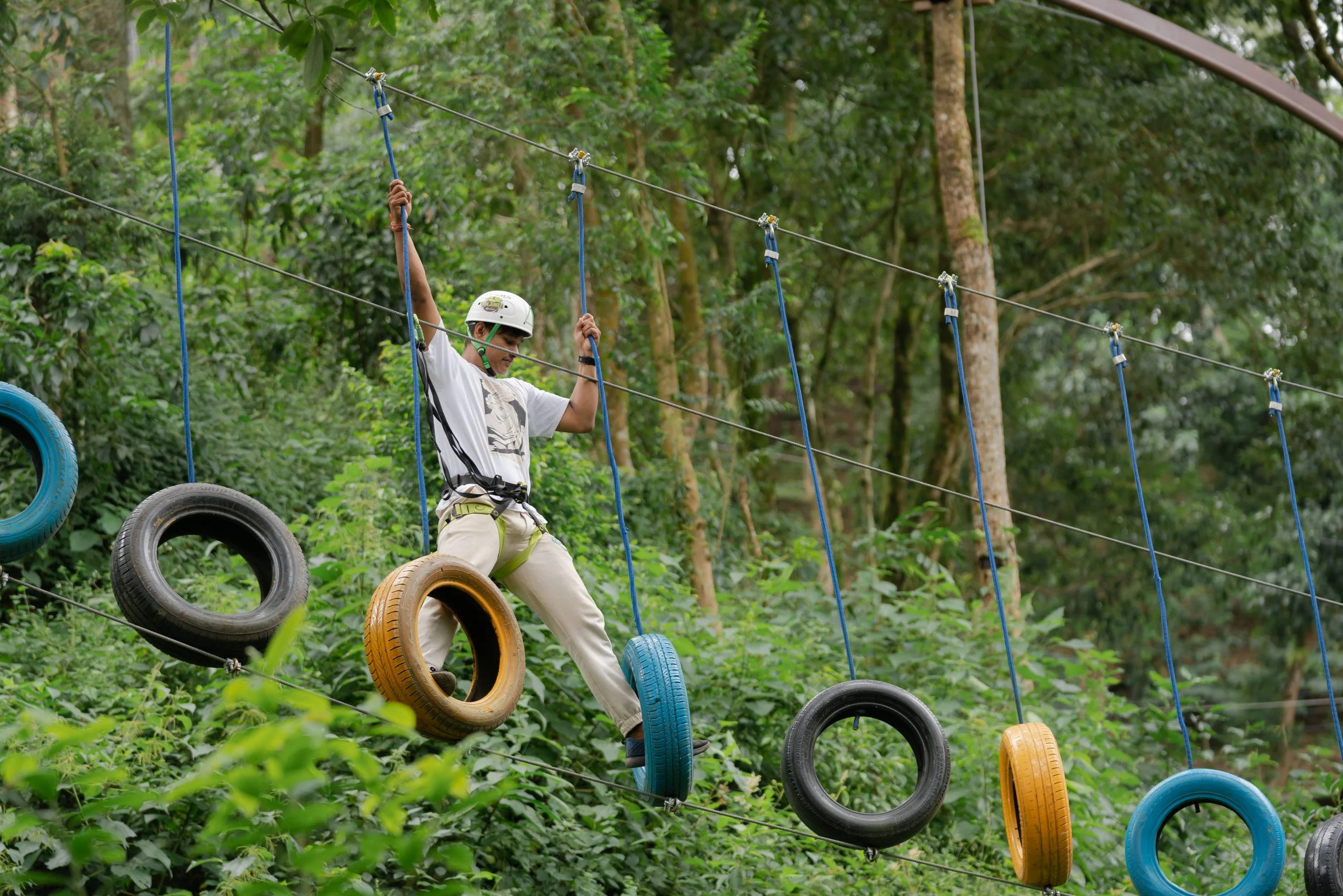
The park currently offers ten different adventure activities and employs 20 people.
Charging between Rs200 and Rs700 per head, it attracts around 300 Nepali and foreign visitors a day.
***
Bungee and adventure parks are only part of Nepal's expanding adventure tourism industry.
Across the country, businesses now operate ziplining, canyoning, heli-diving, skiing, heli-skiing and at least 17 other adventure tourism activities.
Yet entrepreneurs behind these ventures say they face an entirely different kind of challenge, one that has little to do with tourism and everything to do with bureaucracy.
Licensing, permits, regulation and renewals all remain under the Department of Tourism, a federal government agency. At the same time, businesses are also required to complete separate approval processes with local and provincial governments.
Since Nepal adopted federalism, authority to register and regulate hotels, homestays, travel agencies and trekking companies has largely been devolved to provincial and local governments.
Adventure tourism, however, remains an exception.
Under Nepal's tourism laws, only the Department of Tourism has the authority to license adventure sports operations. Although these businesses form part of the broader tourism sector, responsibility for regulating them has remained firmly with the federal government.
The department itself lacks even basic industry-wide data.
It does not maintain consolidated figures showing how many small and large adventure tourism companies are operating across Nepal, how much they have invested or how many jobs they have created.
According to director general Ramkrishna Lamichhane, the department began tightening oversight after receiving complaints that some businesses were operating adventure activities without obtaining official licences.
Lamichhane said only 56 companies nationwide are officially licensed to operate adventure tourism businesses.
After complaints emerged that several operators were bypassing government procedures, the Department of Tourism issued a public notice on May 4 requiring all operators of unregistered adventure activities, including bungee jumping, canyoning, rock climbing, ziplining, speedboats, skywalks, ultra-trails and fun parks, to register their businesses and obtain licences by mid-June.
That deadline has now expired.
According to the department, however, the response fell well short of expectations.
"Even after giving operators more than one month to register, most of them did not enter the department's licensing process," one department official said. "Only five or six businesses came forward to begin the approval process. It appears many more are still operating without licences."
The Department of Tourism has made environmental assessments a mandatory part of the licensing process, with the level of assessment determined by the size of the investment.
Projects with investments exceeding Rs20 million are required to complete a Brief Environmental Study, while those involving infrastructure worth more than Rs50 million must undergo an Initial Environmental Examination.
The irony, however, is that environmental approvals do not fall under the Department of Tourism's jurisdiction. They are handled by the Ministry of Agriculture, Forest and Environment, adding another layer to an already cumbersome approval process. Environmental assessments cannot be completed within days. They often take months, delaying projects long before tourism authorities can begin processing operating licences.
The Tourism Act, 1978 classifies adventure activities under the broad category of "other tourism businesses". But entrepreneurs and officials alike say the definition has failed to keep pace with the industry's rapid evolution.
Modern attractions such as motorboats, skywalks, sky cycling and amusement parks are not specifically covered by the law.
To address the gap, the Department of Tourism had begun drafting separate regulations that would formally recognise and regulate these emerging activities. The effort, however, stalled after the new Tourism Bill was approved by the National Assembly but became stuck in the House of Representatives.
As new technologies and adventure sports continue to emerge, Nepal's legal framework has struggled to keep up, leaving regulators uncertain about how many of these businesses should be governed.
The consequences are already evident.
One example lies along the Babai river in Dang district.
In April 2024, Hanshraj KC, together with Dipak KC, Umesh Dangi and Jeet Bahadur Dangi, invested Rs6 million to launch two motorboats on the Babai river at Motipur. The partners hoped to build a business that would allow them to remain in their village while earning a livelihood through agriculture and tourism.
They constructed a small reservoir by building a weir near a suspension bridge used by residents to cross the river and began operating the boats.
Then the pattern that had played out in Sherpa's case repeated itself.
The entrepreneurs initially tried to register their business with the Department of Tourism. Following advice from the department, they instead submitted an application to the Nepal Shipping Office in Ekantakuna and began operating.
Soon afterwards, someone lodged a complaint with the District Administration Office.
Acting on the complaint, the chief district officer ordered the operation to shut down.
"We operated for only 15 days," said KC. "Around 10,000 people had already used the service, but after the complaint we were forced to close immediately."
According to Rajan Pradhan, acting registrar at the Nepal Shipping Office, a new Shipping Bill drafted by the office proposes making official approval mandatory for all motorised water transport services.
Although the previous government succeeded in passing the bill through the National Assembly, it has remained pending in the House of Representatives following a change in government.
Without a clear legal framework, Pradhan said, the office has been unable to process applications such as the one submitted by KC.
Most adventure tourism businesses in Nepal are not located in cities. They are typically built in forests, along rivers, beside lakes, or on remote hillsides far from urban centres.
Most adventure tourism businesses in Nepal are not located in cities. They are typically built in forests, along rivers, beside lakes, or on remote hillsides far from urban centres.
To operate such businesses, private investors often need to lease government land or public assets, including rivers, forests, lakes, ponds and bridges, for a fixed period.
Those leases must be processed through the Ministry of Land Management, Cooperatives, Federal Affairs and General Administration.
However, officials at the Department of Tourism say another layer of uncertainty emerged after the government scrapped the Working Policy on Registration, Usage and Leasing of Government Land, 2022 in mid-june 2026.
The decision has created fresh uncertainty for adventure tourism businesses operating on public land, those awaiting approval and those still in the planning stage.
"Whether it is a river, a stream or a waterfall, any adventure activity that involves investment on public property requires approval from the federal government," said Himal Gautam, director at the Department of Tourism.
"Even relatively small investments connected to public property must ultimately be approved by the federal Cabinet under the current legal framework."
Gautam acknowledged that while many entrepreneurs approach the department seeking licences, the department itself often lacks the legal tools needed to process their applications.
"Even when people come to us intending to comply with the law, we cannot always provide them with a legal pathway," he said. "Multiple laws administered by multiple agencies apply simultaneously, while many of the required regulations have yet to be drafted."
Faced with unclear policies on the one hand and an exhausting bureaucratic process on the other, many entrepreneurs now hand over the entire licensing process to legal and consultancy firms after spending months navigating government offices themselves.
These firms prepare environmental assessments, coordinate with government agencies and obtain the various approvals required under the country's regulatory system.
Yadav, operations head of Shivapuri Thrill Adventure Park, said overlapping jurisdictions and conflicting rules across government agencies have become one of the biggest obstacles facing investors.
"Many different laws apply to a single project," he said. "The same work has to be repeated over and over. It becomes much easier to hand everything over to professional consultants."
The experiences of Sherpa in Solukhumbu, KC in Dang and Yadav in Kathmandu were echoed by other entrepreneurs and stakeholders interviewed by Kantipur.
Some described becoming trapped in overlapping federal, provincial and local procedures. Others said they learned about key legal requirements only after making substantial investments.
The confusion is affecting not only private investors but also local governments.
Manebhanjyang Rural Municipality in Okhaldhunga offers another example.
For the past two years, the local government has been operating a zipline at Kettuke in Manebhanjyang without obtaining approval from the Department of Tourism.
Rural Municipality Chair Gyanendra Rumdali said the municipality built the attraction with a budget of Rs5 million after consulting local elected representatives as part of efforts to promote tourism.
"We had no idea at the beginning that we also needed approval from the Department of Tourism under the federal government," Rumdali said. "Only later did we realise that several legal requirements had not been fulfilled."
After the Department of Tourism issued its public notice requiring operators to obtain licences, the municipality began the legal process to secure official approval.
Rumdali added that because helicopters also fly through the area where the zipline is located, the municipality has formally informed the Civil Aviation Authority of Nepal about the installation to minimise the risk of accidents caused by the zipline cables.
Along the Janakpur-Dhalkebar road at Ramdaiya stands Wonderland Water Park, one of Madhesh province's newest leisure destinations.
With water slides, artificial wave pools and fountains, the park has become a popular attraction not only for residents but also for visitors from across the nearby Indian border.
Spread over 300,000 square feet, the park was built with an investment of Rs120 million and has been operating since 2025.
For its owner, Janakpur entrepreneur Guddu Jain, however, running an adventure and recreational tourism business has proved far more challenging than building one.
"In India, my friends are operating similar facilities after obtaining approval from a single government office," Jain said. "Here, you have to run from one office to another, from the local unit all the way to the federal government, for registration, licence renewals and other approvals. The procedures involving both local and federal authorities are unnecessarily complicated."
According to Jain, the problem lies less with the regulations themselves than with the fragmented way government agencies implement them.
Operating a water park requires trained lifeguards capable of rescuing visitors at risk of drowning. Nepal, however, has only a limited pool of qualified personnel, forcing him to recruit lifeguards from India.
That is where another bureaucratic obstacle emerges.
"All employees, including lifeguards, must be paid through bank transfers," Jain said. "But foreign workers cannot easily open bank accounts in Nepal. First, you have to travel to Kathmandu and obtain approval from the Labour Office. Even that is not enough. They now also have to be enrolled in the Social Security Fund."
Most of the Indian workers he hires come to Nepal for only six months.
"They simply don't want to get caught up in all these government procedures," Jain said. "They want to receive their wages easily. They have no interest in spending their time running from one government office to another."
Jain said the communication gap between different levels of government became evident when the Department of Tourism issued a public notice in May requiring unregistered adventure tourism businesses to obtain licences.
"The provincial tourism office in Janakpur wasn't even aware of the notice," he said.
"I learned about it through a news report and went to the Madhesh tourism office to ask about it. They had no information whatsoever."
For Jain, the episode exposed a deeper problem: weak coordination between federal, provincial and local governments in regulating Nepal's adventure and recreational tourism industry.
***
According to Gautam, information officer at the Department of Tourism, federalism has changed the way tourism businesses are established, but not the way adventure tourism is regulated.
Since the introduction of the federal system, many tourism businesses have been registered through local governments. However, the authority to license and regulate adventure activities remains exclusively with the federal government.
The problem, Gautam said, is that the legal framework has failed to keep pace with the industry's rapid expansion.
"Today, almost every hotel and resort wants to offer some form of adventure activity to enhance the visitor experience, and new facilities continue to be built," he said. "But the existing laws were not designed to regulate all of these emerging activities."
"What Nepal needs now is legislation that reflects the realities of today's adventure tourism industry. Once the legal framework is in place, we can register businesses, regulate them and renew their licences accordingly. But without clear laws, how are we supposed to do that?"
Suraj Kunwar
Suraj Kunwar is a senior correspondent with over two decades experience covering Aviation, Tourism and Mountaineering. He received the IFJ Tolerance Award in 2005.



Most Read from Money

Nepal travel agents threaten to stop selling Thailand trips over visa rules

Why does an hour long flight to Dhangadhi cost more than a flight to New Delhi?
Malaysia rejects Nepal’s demand to open recruitment to all manpower agencies

No school, but a graduation cap for women dairy farmers
Nepal arrests four medical service providers as Malaysia recruitment row deepens
Editor's Picks




E-PAPER | October 22, 2026

×