Nepal’s tourism industry keeps absorbing one crisis after another — and keeps coming back
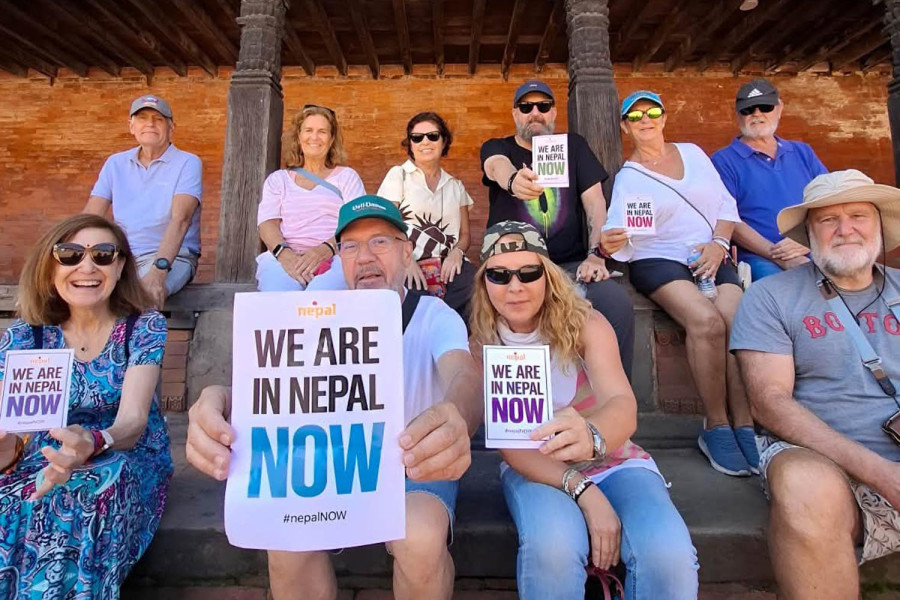
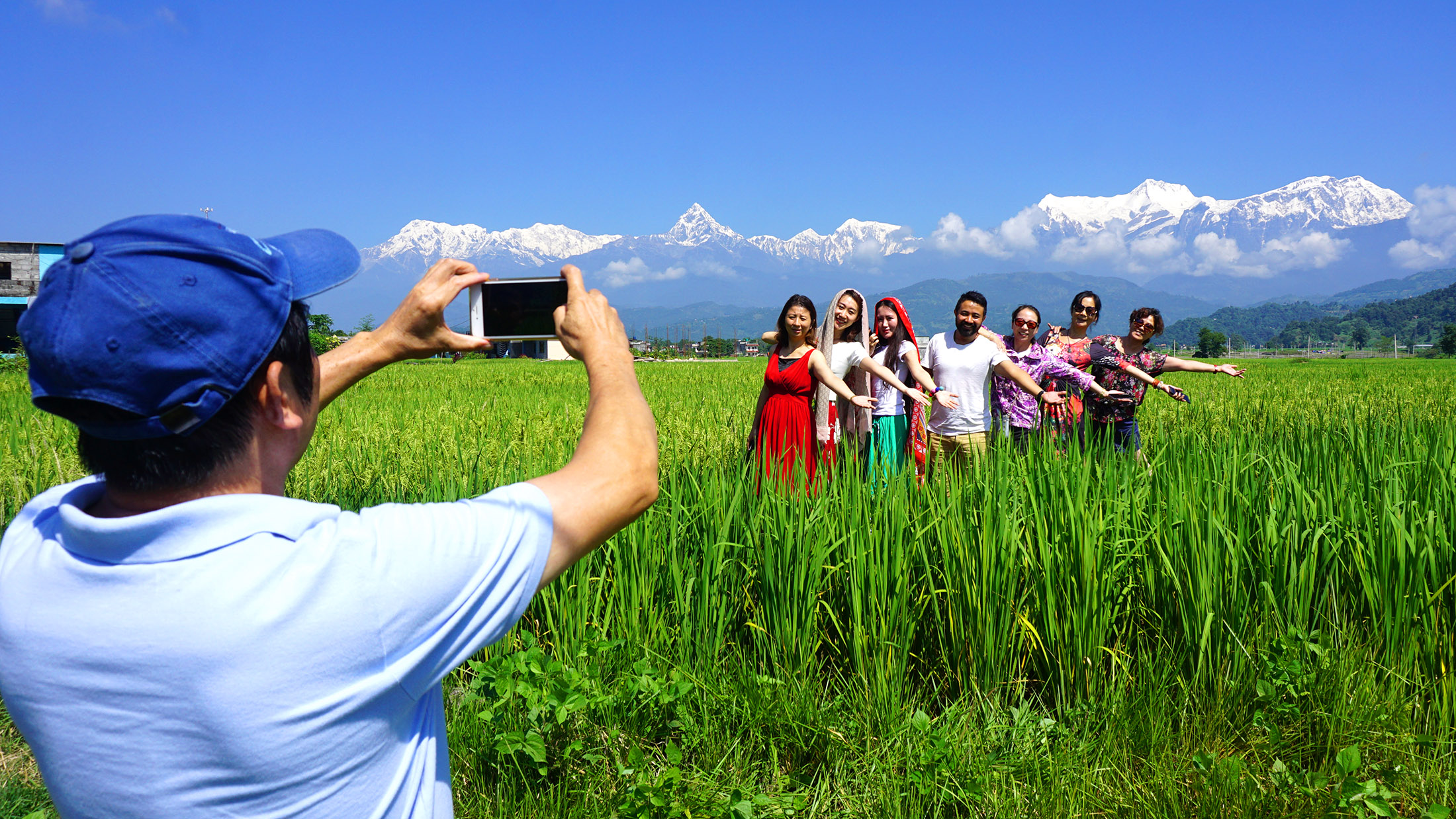
Despite the pandemic, political unrest and natural disasters, Nepal’s tourism industry has endured, with visitors returning after each shock. But is that resilience masking the need to build a safer, more diversified tourism industry? Tourists in Bhaktapur. Foreigners themselves have often promoted Nepal as a safe destination. Photo: Courtesy of Bijay Amatya
Nepal’s peak trekking season had just begun, but the Chinese guide, who works for Yeti Mountain Adventure, was at home, waiting for his company to send him an assignment.
“I am jobless again. Last year too, I failed to get a client. It’s difficult to eke out a living,” Lama said earlier this month. “If this trend continues, all guides will leave the profession and go for foreign jobs.”
The August 26 disaster in Rasuwa came just as Nepal was entering its busiest tourism months. The disaster, involving a rock-ice avalanche and subsequent flooding in the upper Bhotekoshi watershed, sent images of destruction far beyond the affected area.
Then came cancellations.
It was another shock for an industry that has become accustomed to recovering from shocks.
Nepal’s tourism story has followed a familiar cycle for decades: disaster, cancellations, anxiety, recovery—and then another disaster.
Last year, just as the peak tourism season was about to begin, Gen Z protests erupted. On September 9, the second day of the protests, government buildings, businesses, hotels and private houses were set on fire. More than 70 people were killed in the two-day unrest.
Cancellations came in large numbers.
Yet what followed surprised even those accustomed to Nepal’s ability to bounce back.
Nepal welcomed about 1.15 million international visitors in 2025, crossing the one-million mark for the third consecutive year. The International Monetary Fund said arrivals rebounded quickly after the September unrest, with annual arrivals approaching pre-pandemic levels.
The industry recovered. But recovery is not necessarily the same thing as stability.
For a trekking guide, recovery is not measured in annual arrival figures. It means a phone call, a trekking assignment and an income.
Chhingha Sherpa, another trekking guide with Active Sherpa Trekking, said clients cancelled Nepal visits in the days after the August disaster. He, too, waited to hear from his company.
“If they get clients, they call me,” he said.
Now he is more optimistic. He said his company had told him that October bookings had rebounded.
For the tourism industry, that is recovery. For workers such as Lama and Sherpa, it is recovery only if the work lasts.
Nepal’s tourism industry has faced this uncertainty before.
In 2015, earthquakes devastated heritage sites, trekking routes and tourism infrastructure. From 2020 to 2022, the Covid-19 pandemic virtually shut down international tourism. International arrivals collapsed from nearly 1.19 million in 2019 to roughly 230,000 in 2020.
More recently, floods, landslides, road disruptions, bad weather, aviation concerns and political unrest have repeatedly interrupted travel.
Shutterstock
The disasters were different. The pattern was not.
“Obviously, the industry will suffer post-disaster,” said Sunil Sharma, spokesperson for the Nepal Tourism Board. “We have estimated that the effects could last for a few months.”
But, he said, experience showed that Nepal’s tourism industry was highly resilient. “We have recovered in a short span of time no matter how big the disaster unfolds,” he told the Post.
Deepak Raj Joshi, former CEO of the Nepal Tourism Board, worked on tourism resilience projects following both the earthquake and Covid-19.
“After the 2015 earthquake, Nepal initially faced a very large fall in arrivals, but the sector was assessed as having significant medium- and long-term recovery potential,” Joshi said. “Nepal tourism faced more hardship in Covid-19, with arrivals going to rock bottom, but it recovered. This shows Nepal's tourism is highly resilient.”
That resilience is real. The more difficult question is what repeated recovery does to the people and businesses that make up the industry.
A 2021 analytical study by the then Central Bureau of Statistics estimated that tourism employed 371,140 people, or 11.5 percent of people engaged across all industries.
When a foreign traveller cancels a trip, the impact moves quickly through the economy. A lost booking can mean a hotel room left empty, a guide without work, a porter without wages, a restaurant without customers or a transport operator without a passenger.
The effect extends far beyond Kathmandu. Hotels, lodges, restaurants, trekking companies, airlines, transport operators, souvenir sellers and small businesses in mountain communities all depend, to varying degrees, on the flow of visitors.
Nepal’s accommodation and food-service sector alone generated about Rs326 billion in service output, according to the National Statistics Office’s National Hotel and Restaurant Survey. The survey counted more than 142,000 establishments and nearly 388,000 people engaged in the sector.
The industry has expanded alongside the growth in tourist arrivals.
International visitors increased from about 464,000 in 2000 to 1.17 million in 2018, before the pandemic interrupted that growth. Investment has spread beyond the Kathmandu Valley, with hotels, resorts and tourism businesses popping up in other parts of the country.
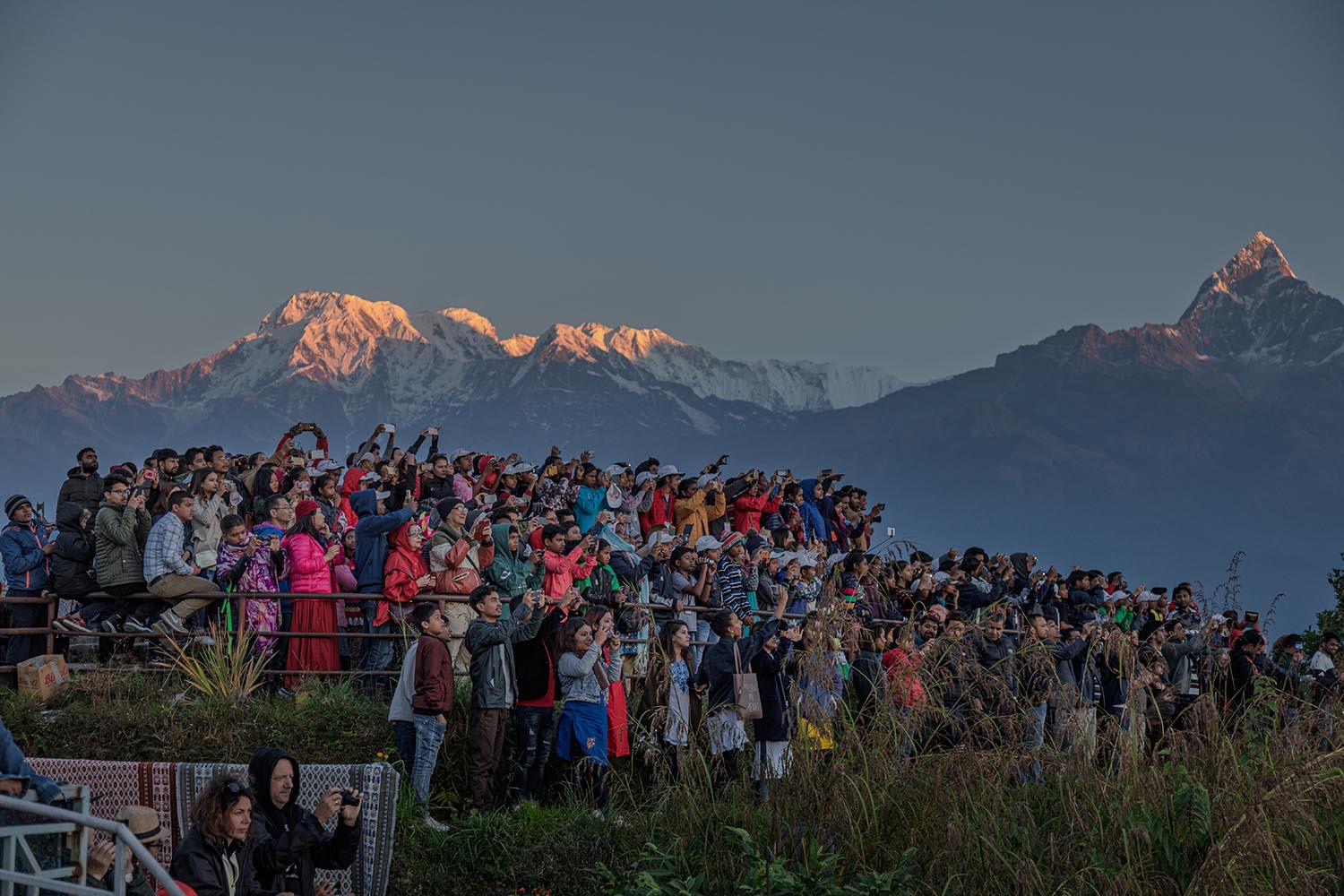
But the industry remains heavily dependent on a few months of the year. That makes timing critical.
A disaster striking just before or during the autumn season can have an outsized economic impact. Businesses have only a limited window to generate the revenues that sustain them through quieter months.
One bad season may be survivable. Repeated bad seasons are different.
Shutterstock
Hotels can respond by competing more aggressively for the visitors who do arrive. Deep discounts put pressure on margins, even when occupancy begins to recover.
Average tourist spending tells another part of the story. Average daily spending by international visitors fell to $33.09 in 2025, according to government statistics, down from $54 in 2017. It was even higher during some earlier periods of political instability.
The figures illustrate why tourist arrivals alone cannot tell the whole story.
More visitors do not necessarily mean more secure livelihoods.
Yogendra Shakya, chairman of Ace Hotels and Resorts, has spent five decades watching Nepal’s tourism industry struggle through political instability, the Maoist insurgency, earthquakes, the pandemic and other disruptions.
He has survived them all.
“Sympathy selling works here,” Shakya said. “We actually haven’t grown in tourism due to recurring disasters.”
The distinction matters. An industry can recover in aggregate while individual businesses struggle, workers leave, and returns on investment weaken. It can record more visitors without returning to the same economic position. And it can reopen without becoming less vulnerable to the next shock.
There is another problem: perception.
After the latest disaster, tourism officials again moved to reassure foreign visitors that Nepal remained open. Familiarisation trips brought foreign travel agents to the country, while officials promoted trekking routes and destinations unaffected by the disaster.
But perception travels faster than geography. Yalamber Rai, Intrepid Travel’s general manager for Nepal, has seen different events affect tourism over the years—from the 2015 earthquake and recurring floods and landslides to road disruptions, bad weather affecting Lukla flights, aviation incidents, political strikes and protests.
Photo: Courtesy of Pasang Lama
Even when an incident is confined to one area, he said, news and images travel quickly and can make travellers sitting overseas question whether it is safe to visit Nepal.
That happened after the Gen Z protests, he said, when unrest erupted just as the main tourism season was beginning.
The same perception problem followed the Rasuwa disaster. Images of washed-out roads, damaged bridges, stranded people and bodies recovered from rivers travelled far beyond the affected area. For someone sitting thousands of kilometres away, the distinction between Rasuwa and Kathmandu, Everest or Pokhara can disappear.
Rai said travellers had not lost interest in Nepal.
“The bigger concern is uncertainty and predictability,” he said. “People still want to come, but they want to have confidence that their plans can go ahead as expected.”
That may be the deeper challenge now.
Nepal cannot prevent every earthquake, flood, landslide, aviation disruption or political crisis. But it can improve how it prepares for them, how quickly it communicates with travellers and how effectively businesses and workers can respond.
The climate question makes that challenge more urgent.
Glaciers are retreating, temperatures are rising, and glacial lakes are expanding in parts of the region. Experts have identified potentially dangerous glacial lakes across the Himalayas, including dozens in the Koshi basin.
When natural dams fail, large volumes of water, rocks and debris can move rapidly downstream, threatening settlements, roads, bridges, hydropower projects and tourism infrastructure.
“Our tourism practically depends on mountains,” said environment expert Vijay Kumar Singh. “There is also risk associated with it, which needs to be assessed properly to prevent future disasters.”
The danger is not confined to remote mountain valleys. The Kathmandu Valley suffered one of Nepal’s most severe recent urban flood events in September 2024, killing hundreds of people and displacing thousands of families.
Post File Photo
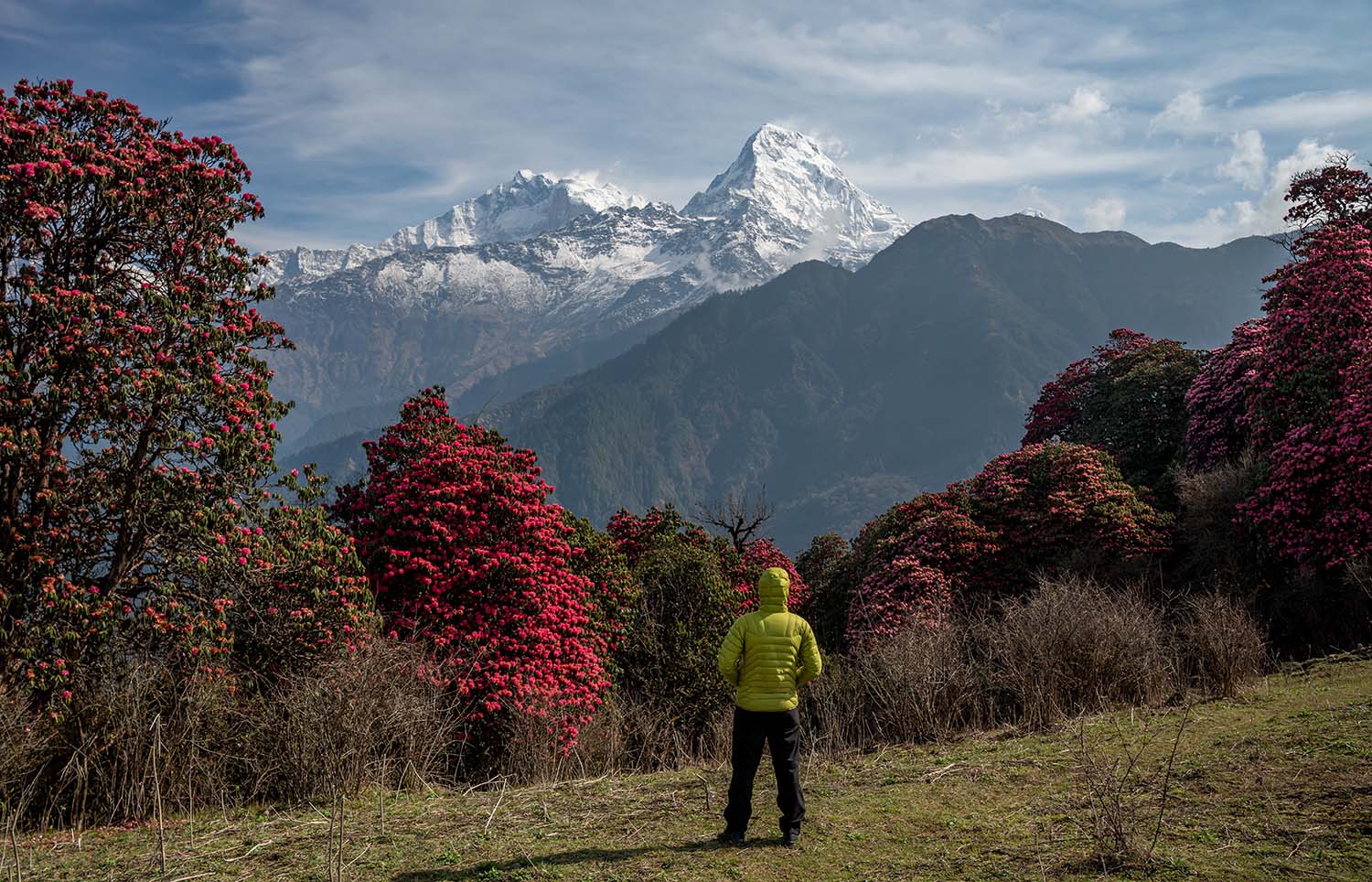
For a country whose tourism economy depends heavily on its mountains and landscapes, this creates an uncomfortable paradox. The same geography that attracts visitors also exposes the industry to hazards that can disrupt tourism with little warning.
Nepal’s response, therefore, cannot simply be to tell the world that the country is open after every disaster. The country needs better early-warning systems, reliable communications in mountain regions, stronger infrastructure, clearer information for travellers and greater diversification of tourism destinations and seasons.
It also needs to think about the workers who absorb the uncertainty.
Repeated disruptions do not simply mean temporary losses of income. They can change career decisions. A trekking guide who cannot count on enough assignments may eventually leave the profession. A trained hotel worker may seek employment abroad. A young person entering the workforce may decide that tourism is too unpredictable to build a future around.
Once they leave, bringing tourists back does not automatically bring them back. That is the hidden cost of repeated crises.
Nepal’s tourism industry has proved remarkably capable of recovering from extraordinary shocks. Tourist arrivals return. Hotels reopen. Trekking routes become busy again. Investors continue to build.
But recovery itself has become part of the cycle. A disaster hits. Travellers cancel. Businesses absorb losses. Workers wait. Officials reassure. Tourists return. The industry declares recovery. And then another shock comes.
For Lama, resilience has nothing to do with an annual arrival figure. It is a phone call. If bookings return, he will return to work. If they do not, he may eventually join the thousands of Nepalis who leave the country in search of a more predictable income.
Nepal may have learned how to recover from disasters, but as Shakya, who has spent five decades in the industry, put it: “From ground zero, I have bounced back. But that’s not the case for all.”
Sangam Prasain is Business Editor at The Kathmandu Post, covering tourism, agriculture, mountaineering, aviation, infrastructure and other economic affairs. He joined The Kathmandu Post in October 2009.




 22.29°C Kathmandu