Malaysia rejects Nepal’s demand to open recruitment to all manpower agencies
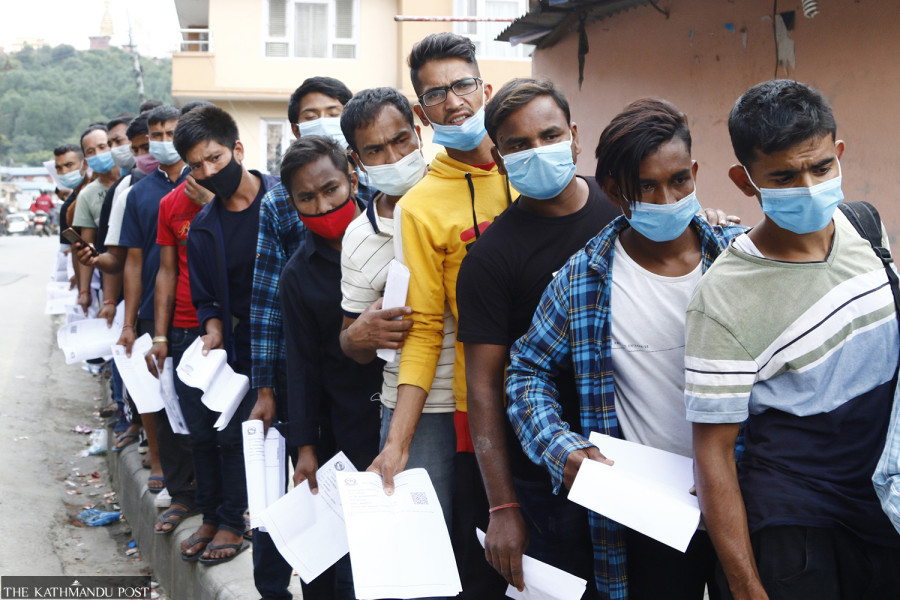
Kuala Lumpur will retain its list of 25 primary agencies and 250 sub-agencies, leaving the recruitment of new Nepali workers in limbo as Malaysia also announces a minimum wage hike to 2,000 ringgit from June 2027. Until the dispute over agency selection is resolved, the recruitment of new Nepali workers to Malaysia remains effectively stalled. Post file photo
Malaysia has rejected Nepal’s request to allow all government-licensed manpower agencies to recruit and send Nepali workers to the Southeast Asian country, insisting that it will retain its curated list of 25 primary agencies and 250 sub-agencies.
In a diplomatic note to the Nepali government, Kuala Lumpur reaffirmed its commitment to the Foreign Workers Centralised Management System (FWCMS), under which recruitment agencies not included on the approved list will be barred from sending workers to Malaysia starting November 5.
Malaysia says the system is intended to make recruitment more transparent and protect migrant workers from exploitation.
Officials at Nepal’s Ministry of Labour and Employment said they were holding internal consultations following Malaysia’s response.
“We had requested Malaysia to reconsider its decision. We are in favour of all licensed manpower companies in Nepal having an equal and competitive opportunity to supply workers,” ministry officials told Kantipur.
“Malaysia’s diplomatic note, however, did not align with our expectations.”
The officials said high-level discussions were underway to determine Nepal’s next course of action. An official response would be made public after the consultations conclude, they said.
Nepal has sent three formal letters expressing serious concern over Malaysia’s restrictive recruitment mechanism. Malaysia, meanwhile, has issued two diplomatic notes defending its position and refusing to revise its decision.
The dispute intensified after Nepali recruitment agencies sought to withdraw from the FWCMS platform, alleging unfair practices and cartelisation. Following an application submitted in the third week of August, the Ministry of Labour and Employment forwarded the matter to Malaysia through the Ministry of Foreign Affairs.
Two weeks ago, Labour Minister Ramji Yadav held a telephone conversation with his Malaysian counterpart, Human Resources Minister Ramanan Ramakrishnan, conveying the concerns of Nepali agencies listed on the FWCMS that wanted to opt out of the system.
Yadav also argued that restricting recruitment to 25 primary agencies and 250 sub-agencies violated Nepal’s foreign employment laws.
“Legally licensed institutions in Nepal operate under provisions designed to ensure free and fair recruitment,” Yadav told his counterpart, according to officials. He urged the Malaysian government to include all recruitment agencies licensed by Nepal.
In response, the Malaysian minister said both countries had agreed to continue dialogue through bilateral channels to strengthen labour cooperation and protect workers’ welfare.
Malaysia has consistently defended the FWCMS as a mechanism for bringing recruitment under direct government oversight, curbing illegal fees, eliminating middlemen and preventing fraudulent practices.
“Our stance on labour matters is clear. The system we have instituted must ensure workers’ safety, streamline processes for employers, and prevent exploitation and abuse,” Ramakrishnan said on social media following his talks with Yadav.
The recruitment standoff comes after discussions between Prime Minister Balendra Shah and his Malaysian counterpart, Anwar Ibrahim. Both leaders had agreed on the need to make foreign employment dignified, transparent and free from exploitation.
Until the dispute over agency selection is resolved, the recruitment of new Nepali workers to Malaysia remains effectively stalled.
Although Malaysia has directed employers to recruit foreign workers through FWCMS-listed agencies, Nepali authorities have stopped attesting demand letters submitted by those agencies. The Department of Foreign Employment is also conducting a detailed investigation into the listed recruitment firms.
Under Malaysian regulations, employers must obtain prior approval from the Ministry of Human Resources before hiring foreign workers. The approval process must be conducted through the FWCMS, where employers are required to select their preferred recruitment agency.
In a separate development with significant implications for Nepali migrant workers, Malaysia has announced plans to raise its monthly minimum wage to 2,000 ringgit (around Rs75,000) from June 2027, up from the current 1,700 ringgit.
Prime Minister Anwar Ibrahim announced the increase on Friday while presenting the 2027 budget in parliament. He said the measure would benefit more than four million workers across the country.
Malaysia’s minimum wage rules apply equally to foreign workers. Employers are prohibited from paying non-citizen workers, including Nepalis, Bangladeshis and Indonesians, less than the statutory minimum basic wage.
Malaysia introduced a minimum wage of 900 ringgit per month in 2013. It rose to 1,000 ringgit in 2016, 1,100 ringgit in 2019, 1,200 ringgit in 2020, 1,500 ringgit in 2022 and 1,700 ringgit in 2025. The increase between 2013 and 2025 amounted to 88.9 percent.
However, micro, small and medium enterprises with annual turnover of less than 50 million ringgit will be exempt from implementing the new minimum wage immediately, giving smaller businesses time to adjust their operations.
Anwar said the measure was necessary to address the widening gap between wages and living costs.
“It is necessary to narrow the gap between worker productivity and wage. Wage growth has failed to keep pace with rising prices, increasing the cost-of-living burden on workers,” he said during his budget presentation.
Malaysia also plans to introduce a minimum starting salary of 2,500 ringgit per month for semi-skilled workers and university graduates as part of efforts to restructure its compensation framework.
To curb the employment of undocumented foreign workers, the government will also tighten tax regulations. Companies other than micro, small and medium enterprises will be allowed to claim tax deductions on employee wage expenses only if payments are made through verified bank accounts in accordance with approved methods under the Employment Act.
Around 400,000 Nepali workers are currently employed in Malaysia. The planned wage increase could boost earnings for a substantial number of them, but the delayed implementation and exemptions for smaller businesses mean that the benefits will not reach all workers at the same time.
Hom Karki is a reporter with two decades experience covering migrant workers issues and the Nepali diaspora. He was previously based in the Gulf for Kantipur Daily.




 14.1°C Kathmandu