Explainer: How are airfares set in Nepal, and who regulates them?
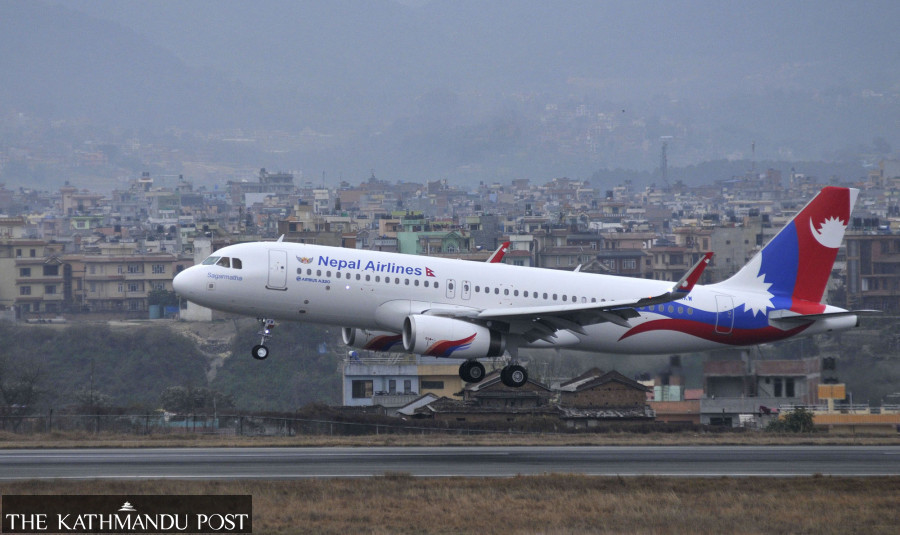
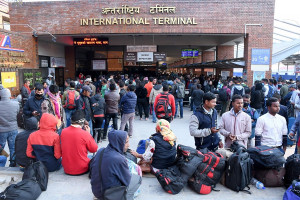
Airfares depend on demand, seat availability, operating costs and competition. While domestic fares must stay within prescribed limits, international ticket prices are largely determined by market forces and bilateral air service agreements. File Photo
Airfares in Nepal can vary sharply by route, travel date and seat availability, with domestic flights sometimes costing more than international journeys to neighbouring countries. Here is an explainer on how airlines set fares, how domestic ticket prices are regulated and why international airfares are largely determined by market forces.
How do airlines set airfares?
Airlines consider operating costs, fuel prices, airport charges and market demand and supply when setting fares. Their costs include direct fixed costs, direct variable costs and indirect operating expenses.
Fares can vary depending on passenger demand and the number of seats available on a flight.
Why can a Kathmandu-Dhangadhi ticket cost more than a flight to Delhi?
Airfares are not determined by distance alone. Passenger demand, seat availability and competition between airlines also influence prices.
During festivals, demand for flights from Kathmandu to Dhangadhi can rise sharply, while demand for return flights may be lower. This imbalance can result in different fares in the two directions. International fares also fluctuate according to demand and seat availability.
What are the minimum and maximum fares for flights to Delhi?
There is no single fixed minimum or maximum fare for international flights. Prices vary by airline, travel date, seat availability, ticket class and demand.
The Civil Aviation Authority of Nepal says the fare for a Kathmandu-Delhi flight once rose to as much as Rs60,000 when Nepal Airlines was not operating the route. That was a market price at the time, not a fixed maximum fare that applies in all circumstances.
Do airlines charge higher fares during festivals?
The Civil Aviation Authority of Nepal says fare fluctuations in response to demand and supply are normal in the airline industry. When demand is high, cheaper ticket categories may sell out, leaving passengers with more expensive options.
Domestic airlines, however, must keep fares within the prescribed lower and upper limits. Several fare categories operate between these limits. Airlines determine prices within that range based on market demand, seat occupancy and competitors’ fares.
How are domestic airfares regulated in Nepal?
Domestic fares are governed by the Civil Aviation Regulations, 2002, and the Civil Aviation Authority of Nepal’s directives on domestic airfare regulation. The country’s aviation policy also provides for fare-setting arrangements.
The government can determine fares on the recommendation of the authority.
The total amount passengers pay comprises the basic fare, fuel surcharge, airport charges and applicable value-added tax (VAT). Although the basic fares have not been revised for years, changes in fuel surcharges can cause the total ticket price to fluctuate.
Can airlines charge more than the prescribed maximum fare? What happens if they do?
No. According to the Civil Aviation Authority of Nepal, domestic airlines cannot charge more than the prescribed upper fare limit.
If an airline is found to have breached the limit, the authority can investigate and initiate action. It also has the power to ground an airline.
Passengers can lodge complaints with the authority, providing evidence of the fare shown on their tickets and the amount they actually paid.
How are international airfares determined?
International fares are driven mainly by demand and supply, competition between airlines, seat availability, travel dates and ticket class.
Competition on a particular route also matters. Routes served by several airlines may have lower fares because of competition, while routes with fewer alternatives can be more expensive.
What do bilateral air service agreements cover?
Bilateral air service agreements between two countries set out the routes airlines can operate, the designated carriers, flight capacity or frequency, traffic rights and arrangements for setting fares.
The provisions on fares vary between agreements. According to the Civil Aviation Authority of Nepal, most of Nepal’s bilateral agreements allow market forces to determine international airfares.
Nepal has signed bilateral air service agreements with 42 countries, the authority says.
Can the Nepal government regulate international airfares on its own?
The extent to which Nepal can regulate international fares depends on the terms of its air service agreements with other countries.
Where an agreement leaves fares to market forces, Nepal has limited scope to impose prices unilaterally. Any attempt to regulate fares must therefore take account of the relevant agreement and its provisions.
Have domestic airfares gone without revision for years?
The Civil Aviation Authority of Nepal says domestic basic fares have not been revised since 2016.
Airlines have argued that the existing fare-setting method and criteria need to be reviewed. Although basic fares have remained unchanged, fuel surcharges and other applicable charges can still affect the final amount passengers pay.




 18.97°C Kathmandu