From Pashupatinath offerings to supermarket tills, Indian tourists go cashless in Nepal
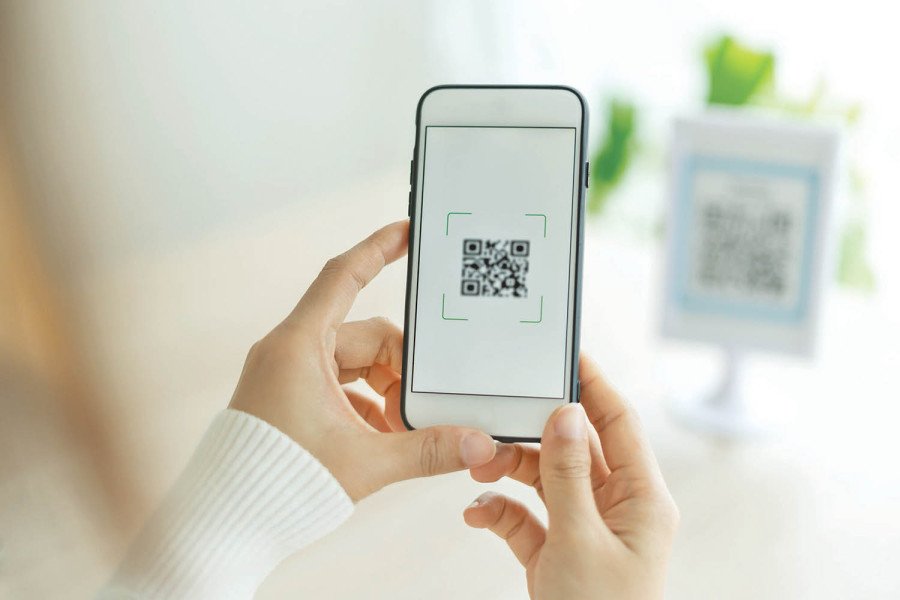
UPI-powered QR payments are making it easier for Indian visitors to spend at religious sites, restaurants, supermarkets, resorts and nightlife venues across Nepal. Shutterstock
Two years ago, when Anujeet Verma visited Nepal, he withdrew cash from an ATM in New Delhi and exchanged it for dollars at Indira Gandhi International Airport before flying to Kathmandu. Working in financial technology, he found the process cumbersome and time-consuming.
This time, he arrived in Kathmandu for Fintech Expo 2026 without carrying cash, ready to pay for his purchases using his phone. “Since UPI and QR technology were introduced in Nepal, transactions here have become much easier and faster for Indians like us,” Verma told Kantipur on Friday, beside his stall at the expo, which is being held at Heritage Garden in Sanepa. “It is great that we can use the same UPI system we use in India to make payments directly in Nepal.”
Verma is director of customer solutions at ZIGRAM, a technology company specialising in anti-money laundering, financial crime compliance and financial risk management.
India is Nepal’s largest source market for international visitors. In 2025, Nepal received 1.162 million foreign tourists, including 293,000 Indians who arrived by air. Indians accounted for about 25 percent of total foreign tourist arrivals. No agency systematically records the number of Indian visitors entering Nepal by road, meaning the actual figure is considerably higher.
Data from India's Unified Payments Interface (UPI), which has enabled Indian visitors to pay by scanning QR codes in Nepal since March 2024, offers a glimpse into their spending patterns. Transactions indicate that Indian visitors spend not only at major religious sites such as Pashupatinath Temple, but also at quick-service restaurants such as KFC and Pizza Hut, entertainment destinations such as Chandragiri Hills, The Cliff, LOD and Catwalk, and retailers including Bhat-Bhateni, Big Mart and SalesBerry. Other spending goes towards services at Drishti Eye Hospital, handicrafts and souvenirs. Indian visitors can now scan QR codes to pay at more than two million merchants across Nepal through UPI.
Ritesh Shukla, managing director and chief executive officer of National Payments Corporation of India (NPCI) International, which operates India's international payments network, shared his own experience of using the system at Pashupatinath on August 18. He said he had made an offering at the temple by scanning a Fonepay QR code and using his Indian Google Pay app to debit his Indian bank account.
The spending patterns suggest that Indian visitors combine religious travel with entertainment, sightseeing, cable-car rides, resort stays and nightlife, he said.
Surya Bhat, administrative chief of the Pashupati Area Development Trust, said the number of Indian visitors to the temple complex had risen sharply over the past year. Indians accounted for about 60 percent of visitors to the Pashupati area in the past six months, he said. “Indian tourists have increased significantly over the past year,” Bhat said.
He said visitors from southern India had been particularly numerous recently, although Nepal had also seen a notable influx from Rajasthan. According to Bhat, a programme by the Rajasthan government encouraging residents to spend their money in nearby countries rather than use foreign currency in more distant destinations had also helped draw visitors to Nepal.
Much of the QR payment activity around Pashupatinath, however, takes place outside the temple itself. Bhat said transactions at rudraksha bead shops, hotels, eateries, retail shops and guesthouses in the surrounding area had contributed to the growing use of QR payments. “There are many rudraksha shops, hotels, retail outlets, eateries and guesthouses around Pashupatinath, which explains why QR transactions are so visible in the area,” he said.
Bhat estimates that between 30,000 and 40,000 people visit the wider Pashupati area each day, of whom about 10,000 enter the temple.
Chandragiri Hills is another major attraction for Indian visitors. Prabhakar Khadka, the company's head of sales and marketing, said arrivals from India peaked in mid-March through mid-June. The period coincides with summer holidays in India, bringing more visitors to the hilltop destination. Most Indian visitors to Chandragiri come from Uttar Pradesh, followed by Bihar, Khadka said. Many travel overland. “The largest number of our Indian visitors come from Uttar Pradesh, followed by Bihar,” he said. “Many arrive by road.”
Indians account for about 29 percent of all visitors to Chandragiri Hills, Khadka said. The attraction receives an average of more than 2,500 visitors a day, with daily numbers exceeding 5,000 during busy periods. Their share is higher at the resort. When occupancy is high, Indian guests account for around 40 to 45 percent of those staying there, Khadka said. Most stay for just one night.
A large proportion of Indian visitors arrive through travel agencies on packages lasting seven to eight days. Their itineraries often include destinations such as Muktinath and Lumbini, Khadka said. Chandragiri is therefore not necessarily a stand-alone destination, but one of several attractions featured in organised tours of Nepal.
Arun Pradhan, general manager of Chandragiri Hills, said the high volume of QR transactions by Indian visitors was an encouraging sign for the tourism industry. The popularity of destinations such as Pashupatinath, Chandragiri and LOD in Thamel also points to growing Indian tourist activity in Kathmandu, he said.
Khadka estimated that women account for about 60 percent of Indian visitors to Chandragiri, compared with 40 percent for men. Visitors aged 30 to 40 make up the largest age group, while older travellers account for a smaller share, he said.
Entertainment is another part of the experience for Indian visitors to Kathmandu. LOD, a nightclub in Thamel, is among the venues recording substantial QR transactions by Indian customers.
Rabin Shrestha, an operator of LOD, said the number of Indian customers had increased noticeably over the past three to four months. Although Indians had visited the club last year too, their numbers had risen further this year. “For the past three or four months, the flow of Indian customers has been very good,” Shrestha said. “This year, Indian visitors have made up a much larger share of our customers.”
An analysis of UPI data suggests that 35 percent of Indian visitors to Nepal travel for holidays and entertainment, while 15 percent come on religious pilgrimages.
The QR payment network, initially introduced in Kathmandu, is now being expanded to Pokhara and other major tourist cities.
Shukla of NPCI International said the first phase had enabled Indian citizens to make QR payments in Nepal. Preparations are underway for a second phase that would allow Nepali citizens to scan QR codes and pay at more than six million merchant locations in India.
A cross-border remittance service using UPI and Nepal's National Payments Interface (NPI) has also been launched, allowing funds to be transferred instantly through formal channels between the two countries, Shukla said.
The services are expected to benefit citizens and businesses in both countries, while supporting their wider economies, he said.
Suraj Kunwar is a senior correspondent with over two decades experience covering Aviation, Tourism and Mountaineering. He received the IFJ Tolerance Award in 2005.




 20.13°C Kathmandu