How Nepal’s tile makers have gained ground against Chinese and Indian imports
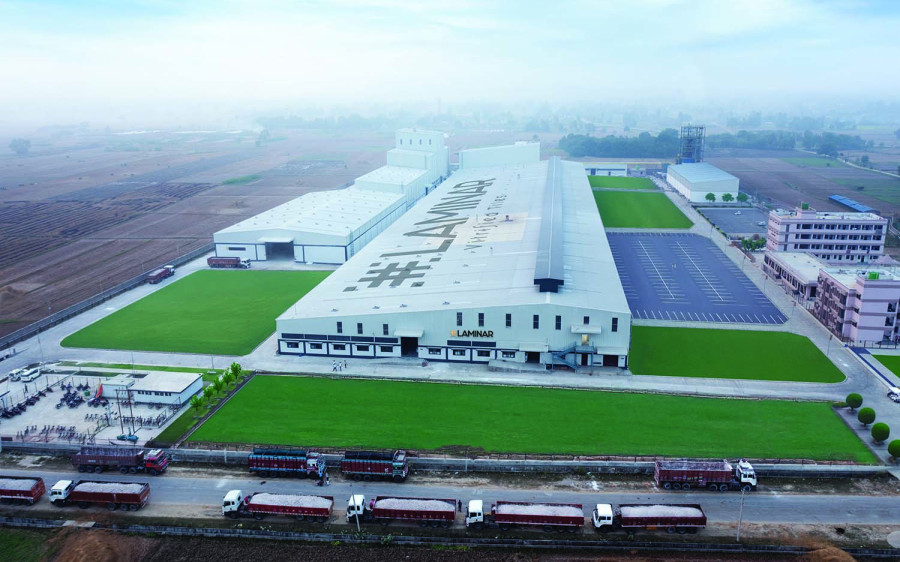
Local manufacturers have expanded their share of the domestic market through shorter delivery times, product certification and investment in production technology. Handout photo
Tile Wars, a Spain-based publication covering the global ceramic tile industry, has published an analysis of Nepal’s ceramic tile sector, examining how domestic manufacturers have established a presence in a market long dominated by imports from China and India.
The analysis looks at how manufacturers in landlocked Nepal have competed with large-scale Chinese producers and low-cost factories in Morbi, a ceramic manufacturing hub in Gujarat, India.
It features Lumbini Ceramics, which produces fully vitrified tiles under the Laminar brand at its factory in Gulariya, Bardiya. The company has also started exporting tiles to Uttar Pradesh in India.
Shorter delivery times have helped domestic manufacturers compete with imported products, the publication says. Imported tiles must cross the border and clear customs, while local producers can replenish stocks more quickly when retailers place new orders or contractors need additional tiles of the same design to complete projects.
Product certification has also helped build confidence in locally manufactured tiles. The Nepal Bureau of Standards and Metrology has certified Laminar as fully vitrified and Lumbini Ceramics’ Cresta line as porcelain under NS 617:2082.
The bureau's certification register also lists Prime Ceramics in Rautahat and Kajaria Ramesh Tiles in Nawalparasi under the ceramic tile standard.
Lumbini Ceramics managing director Ashutosh Khetan told the Post that imports from India once accounted for nearly 99 percent of Nepal's tile demand. He estimated that imports now make up around 20 percent of the market, while his company's share of domestic sales stands at about 25 percent.
The Gulariya factory uses digital printing technology to apply designs to tile surfaces. The company sources printing ink from Spain and glaze from Italy.
In a LinkedIn post accompanying the analysis, Tile Wars also highlighted the contribution of European materials and technology to Nepal's domestic tile production, alongside local manufacturing and distribution.




 16.12°C Kathmandu