It’s a bird … it’s a plane … it’s the Indian ambassador’s farewell tweets
After four years of being watched, India’s departing ambassador to Nepal spent his final weeks birdwatching. Ambassador Naveen Srivastava and a pair of rose-ringed parakeets inside the Indian embassy.
For just over four years, Naveen Srivastava was among the most closely observed residents of Kathmandu. As the Indian ambassador to Nepal, he moved through a city where journalists tracked his movements, rival envoys his meetings, and every handshake was parsed for its meaning. When he wasn’t inside the embassy, he would travel across the country, often on hiking trips.A Nepali diplomat who worked closely with him called him “a simple man” who preferred to not wear a suit and a tie.
But it turns out that in all that time, nobody thought to ask his excellency what he was watching.
Srivastava, an electrical engineer by training who joined the Indian Foreign Service in 1993, arrived in Kathmandu in the summer of 2022. This week, his term ended, marked by a series of farewell parties hosted for, and by, him. Srivastava retired from foreign service and left for New Delhi.
He leaves having stayed clear of controversy — something he made it a point to mention in one of his farewell addresses — and having helped smooth the high-level visits between the two countries. That includes laying the groundwork for Prime Minister Balendra Shah’s expected trip to New Delhi in November.
A statesman’s exit, in other words. Then came the birds.
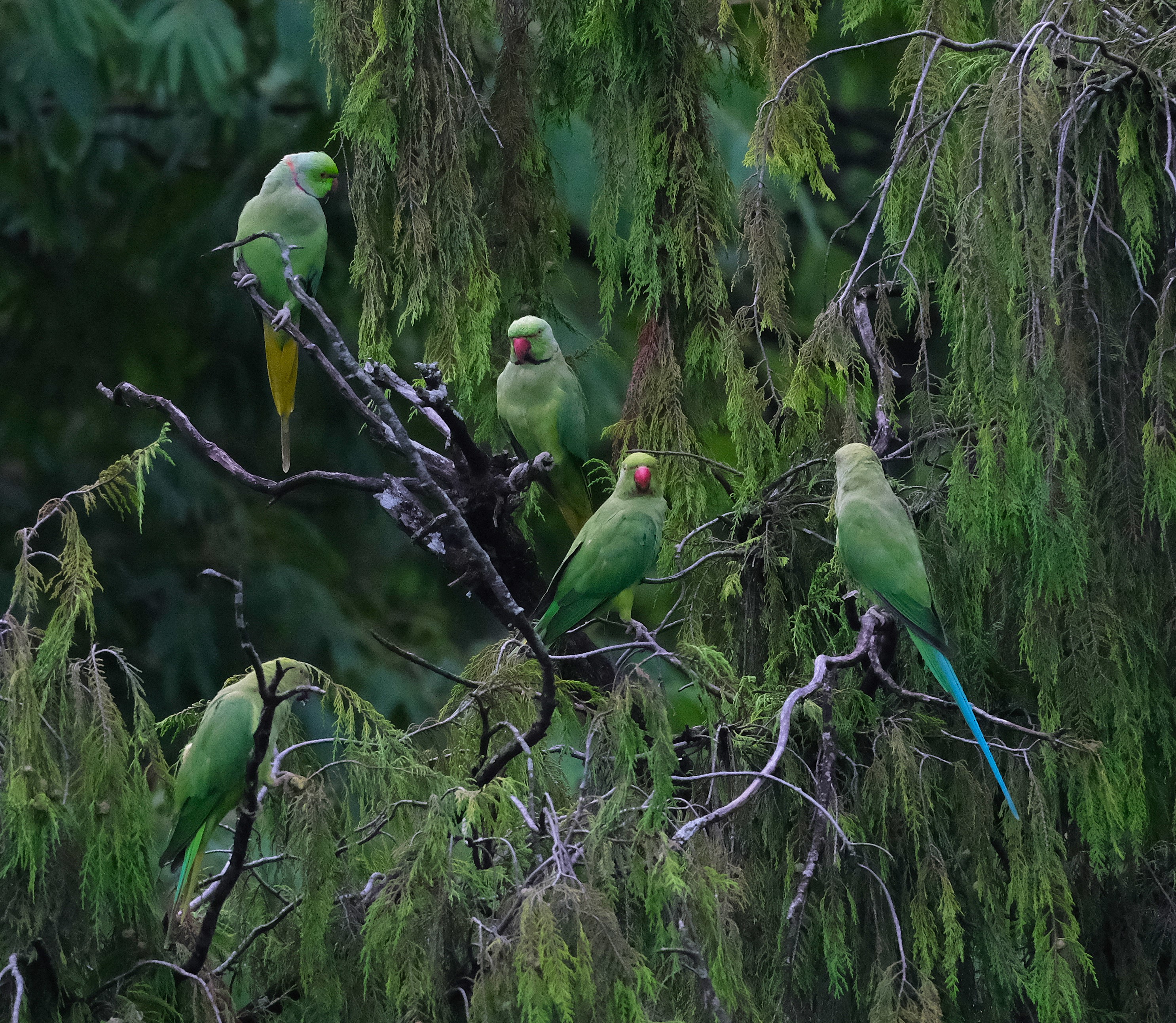
The embassy is home to more than 200 rose-ringed parakeets. All photos via Naveen Srivastava's Twitter
On September 24, eight days after his first farewell call, Srivastava began a series on X: “Birds of Indian Embassy.” The compound, he said, not only hosts diplomats but also a large number of birds given its green cover. “Many are permanent residents unlike diplomats who are birds of passage,” he wrote. “I had the good fortune of living with them.”
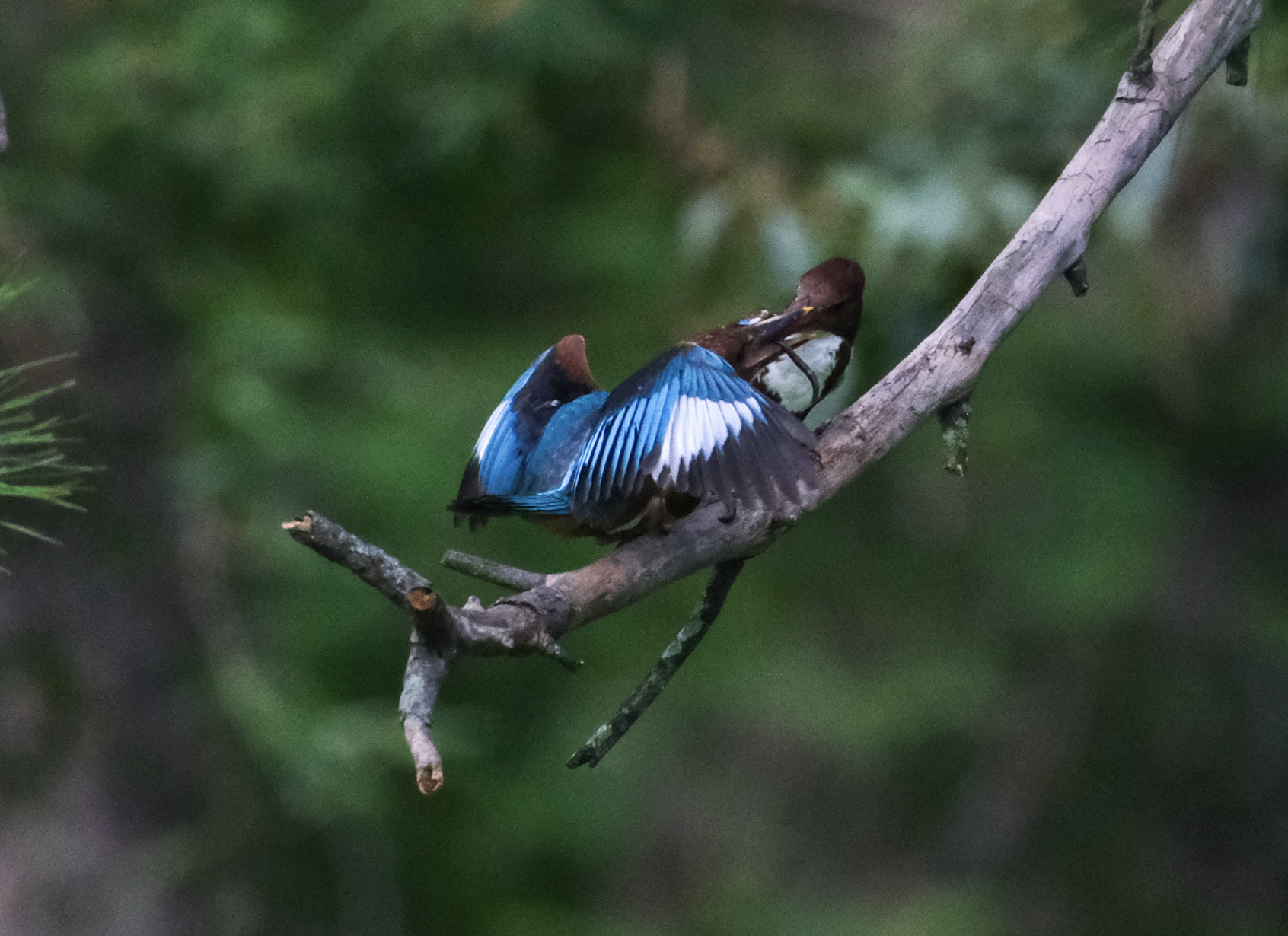
The roll call was long. More than 200 rose-ringed parakeets leave each morning for Shivapuri Nagarjun National Park and return at sunset — “flying by as aircrafts in flypast.” Two pairs of rufous treepies, he noted, have a Nepali name — Kokale — that imitates their metallic call, “as per Google,” a source he cited with admirable candour. A pair of white-throated kingfishers, who “usually each stays alone,” acquired a brown-beaked juvenile this year, and he posted photographs of a parent feeding it.
White-throated Kingfishers are also permanent residents of the embassy.
To nobody’s surprise, Srivastava felt the need to point out that the embassy also has its own security detail. But it turns out, they’re the unarmed kind. Unarmed and loud, “hundreds of crows who generally tend to mob other avian species.” In one photograph he shared, a jungle crow harasses an Alexandrine parrot. In another, black crows mob a peregrine falcon perched on a pine top. That pecking order is likely familiar to anyone who has worked a diplomatic reception.
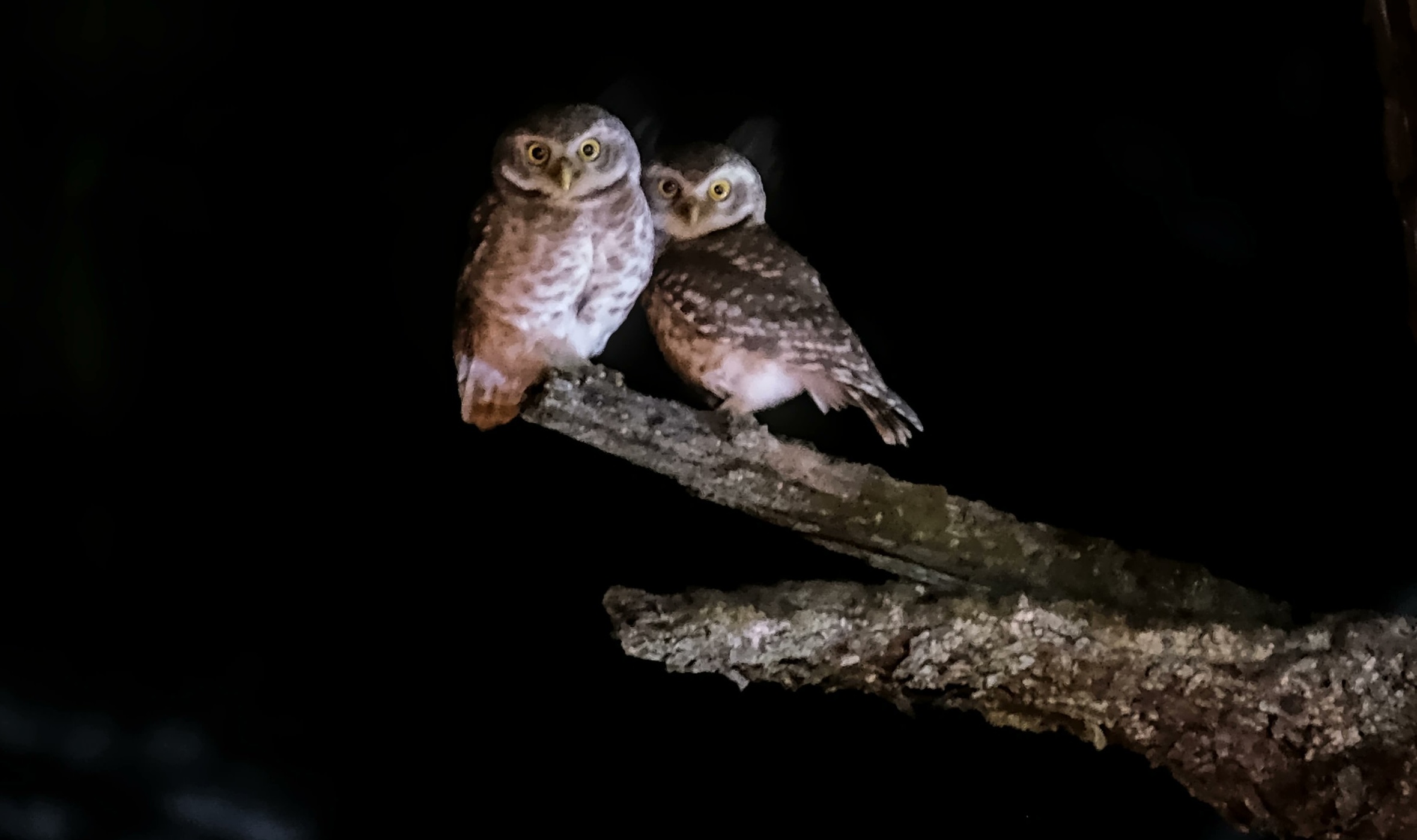
Night duty at the embassy belongs to the owls. Three species live in the compound, including the spotted owlet, which is “most active from dusk to early night.” He said he could hear the other two, the brown boobook and the collared scops owl, very often, but was unsuccessful in capturing them on his camera. Even an ambassador, it turns out, has sources he cannot get on the record.
Spotted owls are on duty at night.
On October 1, he turned to the trees. The compound is home to trees that have lived through massacres, dictatorship and treaties — although not in that order. The oldest tree, a 223-year-old Himalayan cypress, dates to around 1803, more than a decade before the Treaty of Sugauli ended the war between Nepal and the East India Company. The 181-year-old hoop pine dates to about 1845, a year before the Kot massacre brought Jung Bahadur Rana to power. The cypress appears in old watercolours of India House sold in local shops. It has outlasted every ambassador the embassy has sent and is expected to outlast the next.
Then, on Friday, came the aeroplanes. The embassy, he wrote, was also a good spot for plane-spotting. He posted photographs of a few jets — Buddha Air, Yeti Airlines and Air India, the latter likely the one that flew him back home.
In Kathmandu’s diplomatic circles, the guessing game over his successor is well underway. New Delhi has yet to decide between a political appointee and a career diplomat.
When reached for a possible hint, the birds declined to comment.
Anup Kaphle is the Group Editorial Director of Kantipur Media Group. He previously served as the editor-in-chief of Rest of World in New York, where he led award-winning coverage of technology's impact in the emerging markets. He has spent nearly two decades in U.S. newsrooms covering international affairs and national security, including roles at The Washington Post, BuzzFeed News and The Atlantic.
Anil Giri is a Chief Sub Editor covering diplomacy, international relations and national politics for The Kathmandu Post. Giri has been working as a journalist for more than two decades, contributing to numerous national and international media outlets.




 23.87°C Kathmandu