Nepal’s psychedelic mushrooms need experts, not hype
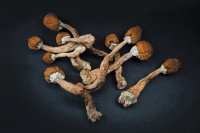
Psilocybin holds medical promise, and Nepal could become a safe destination for it. That depends on putting qualified experts in charge, with government support, before an unregulated trade takes hold. Photo: Courtesy of Amrit Baral
Two small brown mushrooms can look almost identical. One may contain psilocybin, a psychedelic compound now in late-stage clinical trials for treatment-resistant depression. The other may carry toxins that destroy the liver and even cause death. Telling them apart takes training, not a photograph on social media.
That distinction captures Nepal’s problem. Experts estimate that more than 30 Nepalis die each year after eating wild mushrooms, though no agency keeps an official count. Psychedelic mushrooms now add a new concern. A foreign drug-information site has billed Nepal as “Asia’s top psychedelic tourist destination”, and a mushroom website calls these fungi “not illegal yet”. What happens when shops selling them open in our tourist towns before the regulator or the expert arrives? I have found no published data on how widespread use has become. We risk drifting towards a psychedelic market without ever deciding to have one.
As a physician-scientist who studies classic psychedelics and their health effects, I see neither miracle nor menace. I see a potent pharmacological tool, a country with a genuine opportunity, and a shortage of what makes that tool safe: expert knowledge backed by legal authority.
A drug shaped by its context
Psilocybin is the active compound in so-called magic mushrooms. One major review counts 144 hallucinogenic species in the genus Psilocybe alone. Psilocybin is a prodrug: the body converts it into psilocin, which acts chiefly on serotonin 2A receptors and can, for several hours, profoundly alter perception, emotion and the sense of self. Unusually, in medicine, outcomes appear to depend not only on molecule and dose but on the person’s state of mind and surroundings, i.e., setand setting. Clinical protocols therefore surround each dose with screening, preparation, monitoring and follow-up.
Promise, read critically
Compass Pathways has reported two phase 3 trials of synthetic psilocybin for treatment-resistant depression. In the first, a single 25 mg dose outperformed placebo by 3.6 points on a standard depression scale at six weeks. In the second, 39 percent of patients given two 25 mg doses improved by at least 25 percent, on average sustaining that benefit through week 26. Smaller studies suggest possible benefits in cancer-related distress and alcohol use disorder, and research extends to post-traumatic stress and obsessive-compulsive disorders, where evidence remains preliminary.
Scepticism remains a scientific duty. These results are company-reported, and the 3.6-point difference is modest. Because participants can usually tell whether they received a psychedelic, blinding often fails and placebo comparisons can mislead. A March 2026 meta-analysis in the Journal of the American Medical Association (JAMA) Psychiatry, drawing on only eight psychedelic trials, found psychedelic therapy no more effective than antidepressants taken by patients who knew what they were receiving.
Nor do these findings transfer to a bag of dried mushrooms. Trials give screened patients an exact dose of a purified compound. A 2025 review in JAMA Psychiatry warned that such results do not generalise to public use, and cited more than 20-fold differences in potency among mushroom samples. Psilocybe cubensis is easy to grow at home, so informal supply can spread quickly.
Where the harm lies
Psilocybin has relatively low physical toxicity, which makes its risks easy to underestimate. Documented dangers include agitation, confusion, a racing heart, and psychiatric destabilisation, particularly in people with a personal or family history of psychotic symptoms, whom most psychedelic trials exclude. A recent preprint from licensed services in Oregon and Colorado, not yet peer-reviewed, reported large short-term improvements but flagged possible risk of increased suicidality. That signal matters in Nepal, where 6.5 percent of adults in the national survey reported current suicidal thoughts.
Nepal adds a hazard that trials never measure: misidentification. Studies count 1,291 wild mushroom species here, more than 100 of them poisonous. Some deadly Galerina species resemble psilocybin mushrooms while carrying the same toxins as the death cap. Symptoms may appear only after many hours, and our health posts are poorly equipped for severe poisoning. Someone seeking a spiritual experience could end up with liver failure.
The Narcotic Drugs (Control) Act, 1976 does not name psilocybin, but covers any psychotropic substance the government specifies in the Nepal Gazette. Its status is therefore unclear, and silence is not permission.
The expertise already here
Nepal need not import all the knowledge it requires. During my recent visit to Nepal, I spent some time with Tikaram Aryal, president of the Himalayan Mushroom firm in Pokhara, who holds a master’s degree in plant science and has 25 years of experience in mycology. In my assessment, he is an expert on psilocybin mushrooms, and precisely the kind of Nepali specialist any serious policy discussion should include. Such expertise needs a formal channel to inform the state.
Mycological and medical expertise must also meet. A mycologist can establish what a mushroom is, and how to grow it consistently. A clinician can judge who should not take it, and manage what goes wrong. License and authority to cultivate, distribute, and guide should rest with experienced, vetted experts in these fields, and with no one else.
Nepal’s opportunity
Under such a framework, this could benefit the country. Nepal is a natural paradise, with Himalayan landscapes, rich fungal diversity, and deep traditions of meditation and healing. More than 1.15 million foreign tourists visited Nepal in 2025 alone. Licensed psychedelic retreats, offering screening, guided sessions, and follow-up, could attract visitors who stay longer and spend more. In Jamaica, week-long retreats were charging $2,300 to$10,500 per person as early as 2020.
But ‘retreat’ guarantees nothing. A January study in JAMA Network Open examined 49 retreat organisations and found wide variation in safety practices. A session in a remote valley, hours from a hospital, is a liability. Nepal should compete on safety, not permissiveness.
Revenue needs an explicit model. The state could collect annual license fees from cultivators, laboratories, retreat centres, and guides, plus a tax on each supervised session. A fixed share should fund public mental health services, since official 2020 data counted only about 200 psychiatrists in Nepal, and retreats must not draw them away from Nepali patients. Projections should stay sober: Oregon taxes psilocybin products at 15 percent, yet regulators there projected a two-year shortfall of about $3.8 million without higher fees.
Exports are a longer-term prospect. Psilocybin sits in the strictest schedule of the 1971 UN Convention on Psychotropic Substances. The mushrooms themselves are not listed, leaving each government to decide, and many control them nationally. Article 32’s exception for wild plants covers only small groups’ traditional rites, and not international trade, so it offers no shortcut. The realistic market is therefore tested, with research-grade material shipped under permits to authorised laboratories. A company has reported exporting about 20 kg from Jamaica to Canada for clinical trial production. Nepal should first document its native strains and secure benefit-sharing for its communities.
What the government must do
None of this will happen without government support. Working with the tourism, agriculture, and commerce ministries, the Ministry of Health and Population should focus on the following:
Clarify and inform: Settle the legal status, stop unlicensed sales, and launch an expert-led public campaign on risks, benefits, and myths.
Convene experts: Bring together mycologists, physicians, pharmacologists, toxicologists, lawyers, and community representatives.
Build the science: Create a licensed research window, with ethics review by the Nepal Health Research Council. Fund species surveys, potency testing, and training in controlled cultivation.
Educate health professionals: Doctors, nurses, and pharmacists need training on benefits, contraindications, drug interactions, and emergency care.
License experienced experts: Require tested batches, medical screening, informed consent, and mandatory adverse event reporting, and revoke licenses for breaches.
Nepal has the fungi, the landscape, and, in people such as Aryal, some of the knowledge. What it lacks is a system that puts that knowledge in charge.




 10.12°C Kathmandu