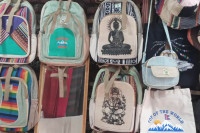
These days, if you are so inclined and have the means, you can be dressed head to toe in thoughtfully designed, sustainable apparel, all made in Nepal. If you are a woman, your jewellery would be made here — traditional, fusion or cutting-edge stuff crafted by recent Kathmandu University BFA graduates. For men, too, there are hand-tooled, embossed leather belts, cufflinks, shoes, T-shirts, and natural fibre button-downs. Work-out and adventure gear for all genders are available for the conservative and the wild.
All your food could be locally sourced, and your toiletries, including your bamboo-made toothbrush with charcoal-stained bristles. Luxuries like homegrown, hand-loomed silk saris, the finest quality pashmina and cashmere shawls, sweaters, gloves, winter hats, and Gurkha-coveted Nepali tweed woven from local wool are all here for those who are interested in buying domestically produced items.
The main issue with accessing most of these remarkable items is pricing, followed by distribution platforms. Most Micro, Medium and Small Enterprises (MSMEs) are working with small margins and high-priced source ingredients, without economies of scale. Additionally, there is little aid from the State, and often unfriendly tax rules that discourage, instead of support, Nepal-made goods. So prices remain high and are often geared for export, as this is the only way such companies with high intellectual property (IP) value and high-cost production can survive.
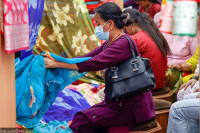
Nepal is full of would-be entrepreneurs: people who want to start a pickle making business based on their mother’s and grandmother’s recipes, women who knit and embroider and want to make more than just pocket money, some who want to make furniture or start an organic farm, youth who want to write and tell stories in their native languages to make a living, others who want to start small publishing houses for local writers in indigenous languages, and musicians who make their own instruments out of local wood and sell them.
The main hurdle here is the labyrinth of bureaucracy involved in opening such enterprises, along with the opacity, the unfriendliness, the corruption, the paperwork, in difficult, formal Nepali that is a second language to some, not to mention the real dangers of defaulting on hard-to-understand tax filings after registration, resulting in such high fines that will eventually, inevitably, drag a small business under.
Nepal struggles with employment, even more so with meaningful employment. We talk about FDI for large infrastructure projects like mixed use storage and hydropower dams costing billions, which we urgently need for enhancing our own expertise as well as for water security, electricity generation, export and balance of trade. However, to truly bring parity, Nepal must make it easier for people from across disciplines, abilities, genders, ethnic groups and income strata to start businesses, gain access to finance, and, most importantly, be able to unlock government support when it comes to the fundamental tools required to run a business.
There are depressing reports from the financial sector that indicate that micro-credit loans, prioritised by the government for women and the marginalised, often default. This is a major failure on the part of the lenders as well as the government. Not to mention, it is bad for the future of this kind of crucial lending.
Every female advisor we spoke to while drafting our civil society-led Policy Brief on how this government can use existing policies across the education, culture, tourism, commerce and industry and foreign policy sectors to support the Creative Economy said the same thing: policies exist, but enactment and essential corollary support is lacking. The government cannot keep saying there are policies that benefit women who start businesses without actually providing tools with which these women can run these enterprises. Without this kind of support, MSMEs become debt and tax traps.
Development professionals, macro-economists, creatives who want to start businesses, tech people, designers and writers all recognise the need to invest in intellectual property. However, when it comes to practicalities, the country is falling short. Goodwill seems to be present at top leadership, but confusion, lack of education and coordination continue at bureaucratic levels, compounded by natural disasters, world wars, and lack of access to basic business skills which must be introduced at school level.
Nurturing home-grown industries, and tending to the Made in Nepal brand is not easy. Ideas pervade; Nepalis are essentially creative people. Government coordination across the education sector for vocational and business training, and access to learning about local cultures to feed home-grown businesses would revolutionise the landscape for young, would-be entrepreneurs.
Incentivising the tourism industry to pivot towards highlighting local culture for strengthening grass-roots businesses like community homestays, artisanal gift shops and regional cuisine-based eateries is essential. The added benefits of soft power and diplomacy via vibrant culture-based tourism seem both obvious and intuitive, and yet it is like pulling teeth in terms of actual execution. To allow for MSMEs across sectors to have a real shot requires Nepal’s various line ministries to see the bigger picture and coordinate across sectors instead of working in silos.
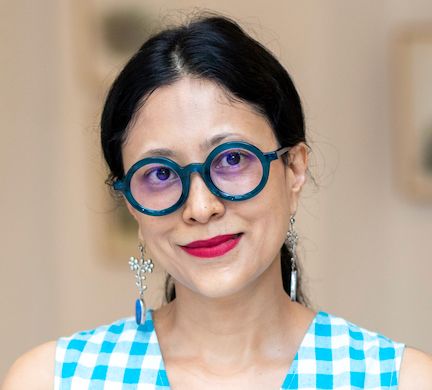
Manufacturing in Nepal is a must if we are to break away from a remittance-dependent economy. The spectacles that I wear are made out of eco-acetate, and are designed and made in Nepal. There are now at least two different businesses that make international-standard spectacles and sunglasses in Nepal. These could, with the right support, be expanded to become a much bigger industry. Italy is home to EssilorLuxottica, a behemoth in the sunglasses industry. They make sunglasses from brands such as RayBan, Bulgari, Gucci and Persol. The business is worth $91.5 billion, and employs over 200,000 people.
There is no reason why such an industry cannot exist in Nepal. Even more important is the need to nurture industries that are completely vertically integrated so that no raw materials need to be imported. It may seem impossible to develop a textile industry in Nepal against giants like neighbouring Bangladesh, India, China, and even Sri Lanka, but Nepal can and does grow its very own hardy, indigenous variety of cotton.
There were government-supported projects in parts of the country for cotton farming that have now been defunded due to lack of a market and challenges in supply chains; similarly with silk farms, of which only a few remain. Nepal can also harvest kullu, the soft yak down that can easily compete with cashmere (usually imported from Mongolia) in both buttery softness and warmth, but the few people who are trying to do these things cannot get any financing and are stymied by declining herds, low harvests, no subsidies, and transportation bottlenecks.
For supporting the Made in Nepal label, it can’t just be intrepid entrepreneurs giving it their best shot. The government has to be a part of these endeavours, understanding how such businesses can save communities by preventing migration, creating meaningful employment, helping our foreign exchange reserves, as well as providing a soft power tool with a label to be proud of internally and internationally, rooted in real achievement instead of false, conservative national pride.
Pandé is a writer, art-historian and filmmaker advising on the economic and social potential of the Cultural and Creative Industries, Education Outreach, and Sustainable, Strategic Planning. She has consulted for IFC and UNESCO. She is Director of Development at the Kathmandu Valley Preservation Trust, and Founding Director of The Kalā Salon, a non-profit space for the arts. In the past, she has been a long-running columnist for The Kathmandu Post and the Nepali Times.




 16.66°C Kathmandu