International recognition is no proof of serving global capital
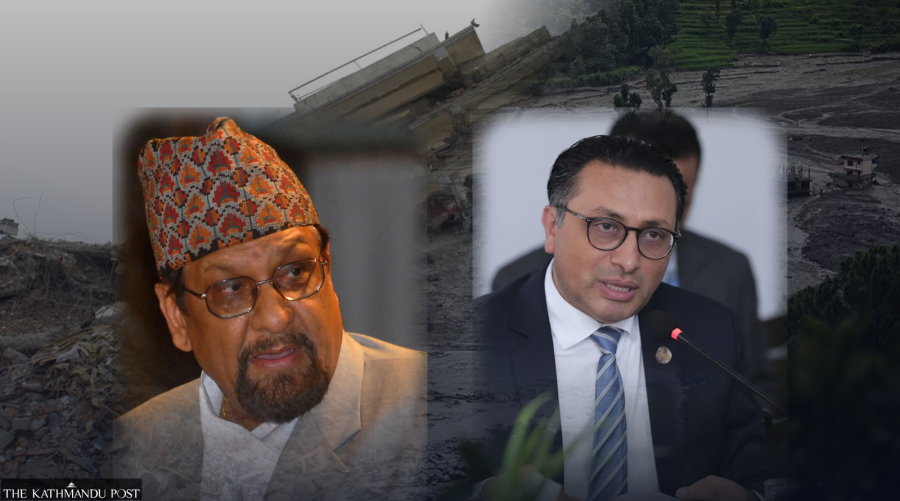
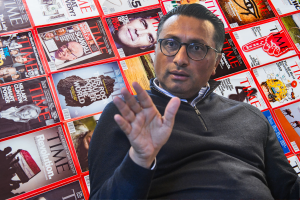
The record of Nepal’s finance and climate policymakers complicates claims that they are simply advancing Western economic interests. Ram Sharan Mahat (left) was named Global and Asia-Pacific Finance Minister of the Year 2016 by The Banker, while Swarnim Wagle was included in TIME's 100 Most Influential Climate Leaders of 2026. Post Illustration
A recent op-ed in this newspaper ‘Are Nepal’s celebrated technocrats serving the country or global capital?’ argued that international honours for two of our finance ministers, The Banker’s 2016 award to Ram Sharan Mahat and Swarnim Wagle’s name on TIME’s 2026 list of climate leaders, are “soft-power stamps of approval”. This narrative claims that these awards go to local stewards who keep developing countries like Nepal tied to Western capital and its policy trends and priorities.
In the interest of full disclosure: Wagle previously chaired the Institute for Integrated Development Studies (IIDS), where I am currently a Distinguished Fellow.
Let me say at the outset that the author of that piece is one of the more articulate voices in our public debates and usually has the courage to speak plainly and raise issues of great importance in our society. But in this particular case, my concern is that the narrative of the op-ed is not supported by evidence. On the contrary, the facts are mostly pointing the other way.
Take the awards first. The Banker gives its prize to finance ministers it judges (based on known criteria) to have stabilised their economies, and Mahat’s citation referred to his handling of the aftermath of the 2015 earthquakes. Many Nepalis questioned the choice at the time. But The Banker, edited in London and owned ultimately by Japan’s Nikkei, does not seem to have a panel of high-powered Western saints deciding which loyal stewards get its medals.
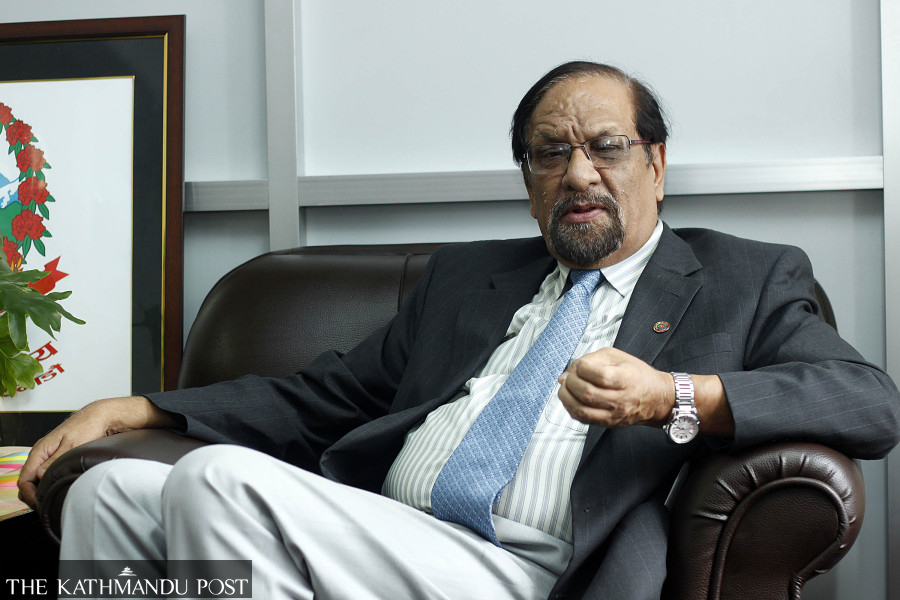
Former finance minister Ram Sharan Mahat pictured in 2019. Post File Photo
TIME is an even poorer fit. This is the magazine that named Gandhi its Man of the Year in 1930, while he sat in a British jail, and Ayatollah Khomeini in 1979, in the middle of the hostage crisis in Tehran. This year’s climate list includes the head of a Chinese solar company and the chief of a Kenyan electric bus company, and in 2023 it honoured Barbados Prime Minister Mia Mottley, whose Bridgetown Initiative openly challenged the IMF and the World Bank. If this is how global capital rewards its obedient servants, this is a strange way of showing it.
Let’s also read carefully what TIME actually said about Wagle. It credited him for taking Nepal’s climate vulnerability, and our demand for compensation, to the world stage after the August glacial floods that killed about 1500 people (with many more missing) and devastated so many of our communities. The op-ed says polluters operate unchecked, yet the minister it criticises is the one raising these issues. That is a very Nepal-first position, not selling oneself to an invisible global hand.
But the biggest hole in the argument is this: If we had truly stayed aligned with the West since the liberalisation of the early 1990s, in which Mahat played a central role, and through his years as finance minister up to 2015, we would have far more to show for it. FDI fell from $185 million in 2019 to just $57 million in 2024, about 0.1 percent of GDP and near the bottom of the world. We did not follow the orthodoxy too closely. We started, then stalled, with reforms left half done and policies reversed every time a government changed, which was too many to count as the musical chairs kept playing. Little wonder that in February 2025 the Financial Action Task Force (FATF) grey-listed us for the second time.
But the column’s central claim deserves a direct answer. The 2015 recovery was not an ideological and exclusively extractive project on the part of the varied groups of financiers. Look at what was actually built and how. Housing, the largest single part of reconstruction, was not handed to contractors at all. The government chose an owner-driven model: families received grants in tranches through our own National Reconstruction Authority, released as each stage passed inspection, and rebuilt their own homes. More than 700,000 houses went up this way.
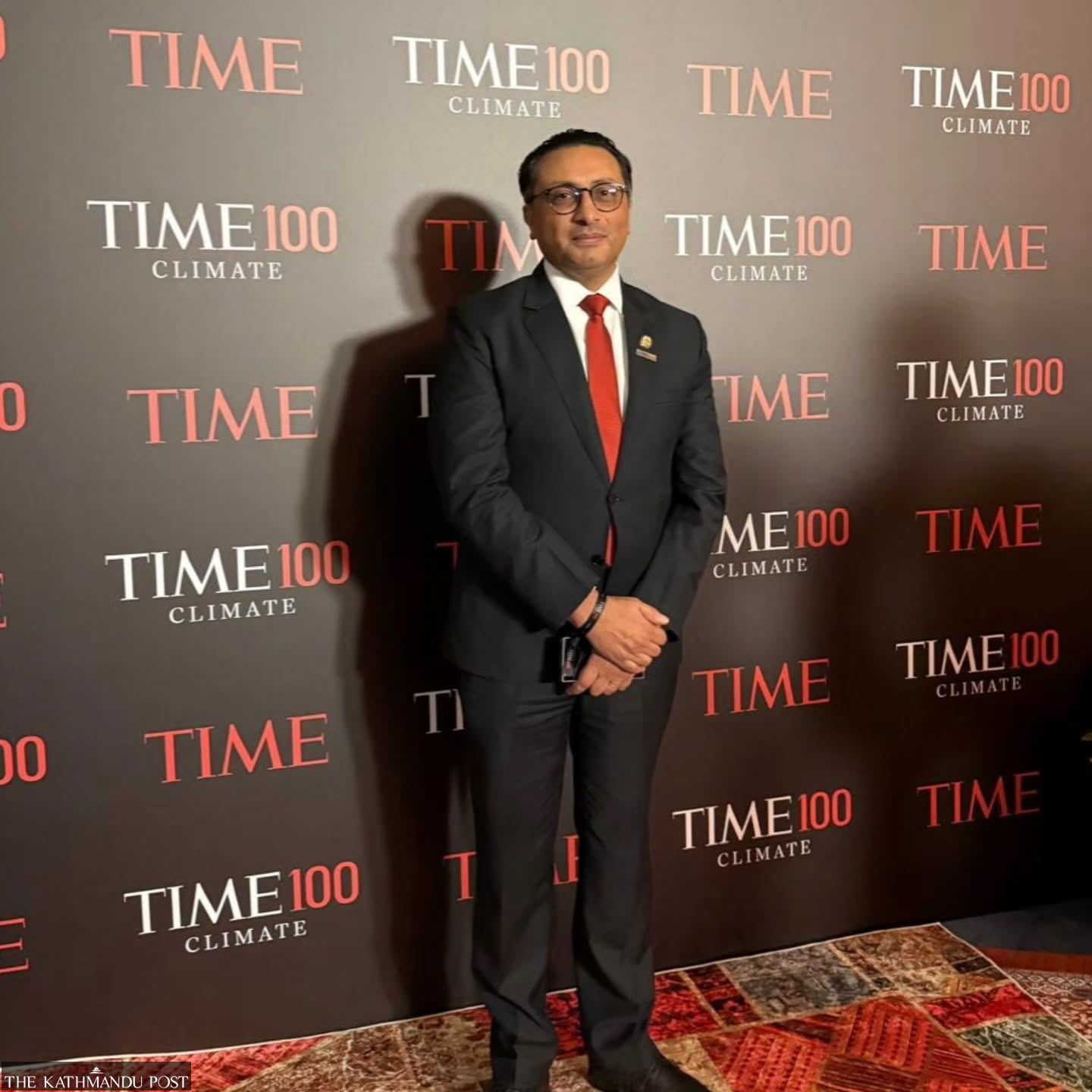
TIME magazine has credited Finance Minister Wagle for taking Nepal’s climate vulnerability to the world stage after the August floods. Courtesy of Wagle's Instagram
Nor were the loans “bound to strict fiscal restraint and deregulation”. The World Bank’s housing money was a project credit whose conditions governed how houses were built and grants paid, not budgets or markets. The only policy-based credit in its June 2015 package, $100 million, continued a series begun in 2013 to stabilise the banking system, hardly deregulation. And nearly half of the $4.1 billion pledged was grants. The same is true of the new climate instruments. Our main carbon deal, signed with the World Bank’s Forest Carbon Partnership Facility in 2021, pays for emissions cut by forests protected under our own community forestry movement, a homegrown success over the past three decades. The record above, stalled reforms, collapsing FDI, a second grey listing, shows a country that took the loans and then failed to follow through, not one marching in step.
As for the claim that there is no such thing as a neutral economist: every economist works within assumptions, of course. Gunnar Myrdal made that point nearly a century ago, and asked them to state their values openly and test their claims against the facts. If no economist is neutral, neither is any political scientist, gender scholar or columnist, the author and myself included. A condition everyone shares cannot be a charge against anyone in particular. And we also know that economics is not a church with one creed.
Of course, Nepal, like all nations, must decide its own destiny. But it can only do that in the global context, not in isolation. I agree that ‘Western’ currents have been sweeping the global landscape for centuries now, and it is time to critically examine our identity, relationships, transactions, financing and policies through our lens. But fortunately, for the first time in our history, we also have a group of young leaders who are highly educated, grounded, and articulate, and able to converse with the world out there, on our terms. They should be held to account and deserve scrutiny, but scrutiny built on evidence, not on a magazine list and a quotation from Milton Friedman.




 16.12°C Kathmandu