



 9.12°C Kathmandu

Wed, Nov 18, 2026
Columns
How crony capitalism keeps Nepalis poor
Since 1990, favouring connections over competence may have kept Nepali incomes a third below their potential.
bookmark
Chandra Thapa
Published at : November 17, 2026
Updated at : November 17, 2026 23:05
Each year, hundreds of thousands of young Nepalis leave home, most of them reluctantly, to work abroad. In 2024-25 alone, the government issued 839,266 labour permits, including renewals.
Many are escaping not just poverty but a system that rewards connections over effort. This is an extension of crony capitalism, a market economy in which success depends on who you know, not what you contribute. Politicians hand out licences, contracts, cheap loans and protection to connected businesses. In return, business owners fund parties and campaigns.
Economists call the gains from this game rents: the extra income someone receives simply because they control something scarce, not because they work harder, create something new or add value. Often the scarcity is artificial, created by political favours such as regulatory privilege or exclusive access. Over time, regulators and politicians end up serving the firms they should police rather than the public.
The pattern of cronyism repeats across emerging markets. In Indonesia, shares of firms linked to Suharto fell sharply whenever rumours spread about his health. In Pakistan, politically connected firms borrowed 45 percent more from state banks and defaulted 50 percent more often, costing the economy up to 1.9 percent of GDP a year. In Tunisia, firms owned by the Ben Ali family took 21 percent of all private-sector profits while producing only 3 percent of output. Across countries, higher corruption goes with lower investment and slower growth.
Nepal shows all of these symptoms. It scores 34 out of 100 on Transparency International’s index and ranks 109th of 182 countries. Business associations often act as cartels and syndicates that block new entrants, despite a competition law dating from 2007. The board set up to enforce that law stayed inactive for almost a decade. In public transport, for example, bus committees long decided who could run on each route, and newcomers had to join one to get in. Many large business houses grow through political ties. Parties need money to fight elections, and tycoons need favours, each side keeping the other in place.
In Nepal, cronyism also sends credit, contracts and licences to the best-connected firms, not the most productive ones. When resources flow to weak firms, the whole economy produces less. Studies show that moving resources to the best firms in China and India could raise factory productivity by 30 to 60 percent. Nepal likely pays a similar price in lost output every year. Meanwhile, about one in five Nepalis still lives below the national poverty line.
What would Nepal look like without this rigged game? No one can know for sure, but published evidence allows a rough estimate. A well-known cross-country study finds that cleaning up a corrupt bureaucracy to a moderately honest level raises investment by almost five percentage points of GDP and yearly growth by over half a percentage point. Cartels, misdirected credit and stolen public funds add further losses. These partly overlap with the corruption effect. Even allowing for that overlap, an extra 1 to 1.5 percentage points of growth a year is plausible. Compounded over the 35 years since 1990, that would lift income per head by about 40 to 70 percent. Nepal’s current per capita income is about $1,536. With far less cronyism, it would likely be around $2,200 to $2,600 today. Consequently, far fewer Nepalis would live in poverty, and young people would also be less likely to queue for labour permits. This is a rough estimate, but even the low end of the range means a much richer country.
The poor also lose the services meant for them. In Uganda, schools once received only 13 percent of a central grant. In Indonesia, at least 18 percent of subsidised rice went missing. The result is weaker schools, poorer clinics and thinner safety nets.
Cronyism can even cost lives. Earthquakes are natural, but many of the deaths they cause are not. Most people killed by collapsing buildings die in countries that are unusually corrupt for their income, where building rules are ignored or bought off. Nepal, hit hard in 2015, cannot ignore that link.
Ordinary Nepalis also pay higher prices for transport, fuel, housing and basic goods. Honest entrepreneurs face closed doors, public projects run late, quality suffers, good jobs at home stay scarce, so the young leave. Remittances now equal well over a quarter of GDP. Families survive, but the home economy does not build new firms or skills.
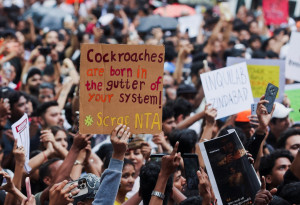
Cronyism also erodes trust. In September 2025, youth-led protests against corruption left at least 77 people dead and brought down the government. In March 2026, voters handed a new party 182 of 275 seats. The message was clear: people are tired of a rigged game.
However, anger alone does not fix a system. Decades of research offer four simple practical steps.
First, make audits random, frequent and public. In Indonesia, raising the chance of an audit cuts missing funds in village road projects. In Brazil, publishing audit results helps voters remove corrupt mayors and boosts local business activity. Nepal’s auditors need that reach, and their reports must reach the public quickly. Second, move all public procurement online, since electronic procurement improves road quality and reduces delays. Nepal already has an e-bidding system, run by the Public Procurement Monitoring Office. Now it must cover every contract and publish full data.
Third, give the competition regulator independence, skilled staff and real power to fine cartels. Entry rules in transport, fuel and trade should be cut back. Fourth, clean up political money by requiring parties to disclose every large donation. Firms should reveal their real owners, and officials should declare their assets each year, with a credible body verifying the declarations.
The new government promises an inquiry into leaders’ assets since 1990, which is a good start, but it also carries a risk. A probe aimed solely at old rivals could appear to be revenge rather than reform, as critics already question the integrity of some new leaders. If the rules apply to friends as well as foes, then Nepal can finally reward effort over access. If not, the cronies will change their faces.
Chandra Thapa
Thapa is a Professor of Finance in the Department of Accounting & Finance, Strathclyde Business School.




Most Read from Columns

Are Nepal’s celebrated technocrats serving the country or global capital?

International recognition is no proof of serving global capital
Nepal’s 250-year-old foreign policy still works. Why does no one use it?

Why the NPL can turn Nepal’s promises into wins
Can Nepal cook dal bhat on its own electricity?
Editor's Picks

For NPL cheerleaders, cold nights, catcalls and modest pay
Gen Z is on the streets everywhere. What do they want?

Why did Nepal’s mountain agenda stall at COP31? A delegation insider explains
Nepal’s stolen Uma-Maheshvara statues belong back in their shrines

Nepal’s psychedelic mushrooms need experts, not hype
E-PAPER | November 18, 2026

×