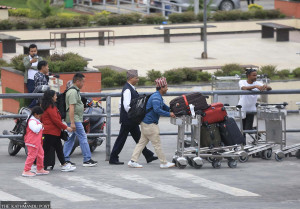
Migrant workers share joy of coming home for Dashain after years away
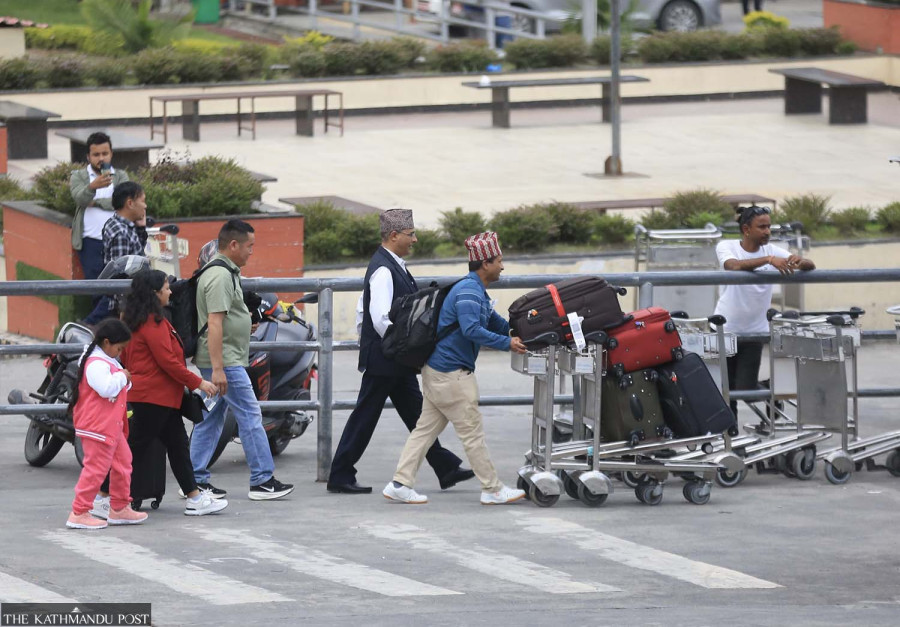
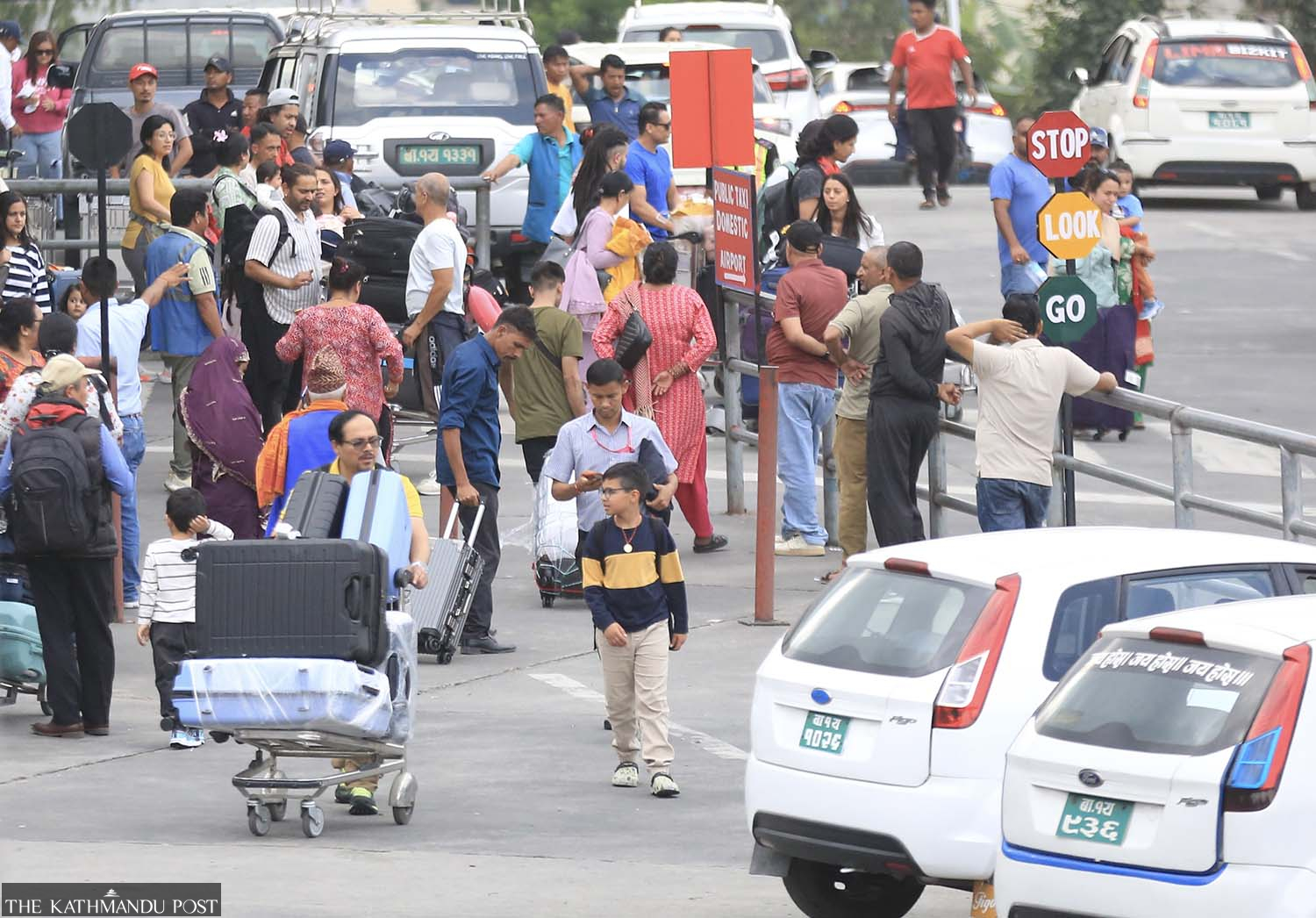
Some are returning after over a decade, while others will mark the festival in workers’ compounds far from home. For migrant workers, Dashain is a time of reunion for those who make it home and a reminder of what they miss for those who cannot. Post file photo
The sky was clear, and snow-capped mountains gleamed in the distance.
As the Qatar Airways flight descended over the Kathmandu Valley, Deepak Bhandari, 38, of Nawalparasi, looked out of the window. It was the first time in four years that he had seen the view of home from above. The sight of Kathmandu brought back memories of his village, his home, his mother’s face.
“You don’t realise how much you miss home until you’ve been away for a while,” Bhandari said.
Bhandari has worked as a salesman at a supermarket in Qatar for seven years. Since leaving Nepal, he had not been able to receive tika and jamara from his family during Dashain. “I’m really excited that this year, I’m finally here to receive tika from my mother,” he said.
Nearly 2.8 million Nepalis are currently working abroad, mainly in the Gulf, Malaysia and Europe. Qatar alone hosts around 400,000. But only a few thousand of them manage to return home for Dashain. Dashain, Nepal’s biggest Hindu festival which commemorates goddess Durga’s victory over the demon Mahishasura, begins on Sunday with Ghatasthapana, when devotees sow jamara, the sacred shoots that are later used in the festival’s tika rituals.
For migrant workers, returning home for Dashain is about more than a break from work. It is a chance to reconnect with family and the memories of home.
Some workers returning from the Gulf this year brought home not just the joy of reunion, but a sense of relief. Tensions between Israel and Iran, and Houthi attacks had raised fears among Nepalis working in the region, making even the journey home more unsettling.
Rohit Kumar Magar, who is from Jhapa and now works in Saudi Arabia, said he was uneasy even after booking his flight home. “I’ve lived in Saudi Arabia for 15 years and always felt safe,” he said. “But lately, with the attacks and talk of airports being targeted, I started to worry. I was nervous the whole way home.”
He hopes that by the time he returns after Dashain, things will have become as quiet as before. “My only wish for this Dashain is that peace returns to my workplace,” he said.
For eight years, Rajan Khadka of Jhapa could only join his family’s Dashain celebrations through video calls. But this year, he has arrived home to join the celebrations in-person. Khadka, who returned from Johor Bahru, Malaysia, called his 85-year-old mother as soon as he cleared immigration at the airport. “When you’re away from home, Dashain doesn’t feel like Dashain,” Khadka said. “Sometimes, you just wish the festival would not come, because you know you’ll be missing your family.”
For Ganesh Rai of Khotang, meanwhile, this Dashain means celebrating with his children after a decade. “They had even stopped asking when I would come home,” he said. “This year, I asked for leave four months in advance and offered to cover my own travel costs. The company agreed.”
Santosh Jha of Dhanusha, who returned from the UAE, said Dashain takes him back to his childhood, flying kites, playing on swings, wearing new clothes, and visiting relatives. “When you’re abroad, those memories come flooding back,” he said. “Your body may be away, but your mind is always back home.”
Not everyone, however, gets to make the journey home. At the Ras Laffan gas plant in Qatar, Morang’s Bal Krishna Bortel will spend yet another Dashain away from home. He has not received tika from his family in seven years. “I’m happy when I see photos of my friends going home,” Bortel told Kantipur over phone. “But at the same time, they remind me of what I’m missing.”
Many migrant workers are returning home for Dashain after a long, long time away. Hari Narayan Neupane of Sunsari, for instance, has returned home for the festival after 12 years. Neupane works for Gulf Contracting Company, Qatar’s largest construction company that employs thousands of Nepalis. Everyone wants to be home for Dashain but only a few can get leave at a time.
But even when he could not make it home, Dashain was still a big occasion at the workers’ compound, Neupane said. “Of course, we miss our families but celebrating together with Nepalis from different parts of the country has its own joy,” he said. “We get the day off, and the celebrations start early. Last year, we slaughtered 72 goats.”
Hom Karki is a reporter with two decades experience covering migrant workers issues and the Nepali diaspora. He was previously based in the Gulf for Kantipur Daily.




 16.01°C Kathmandu