Editor’s note: This story contains graphic details from courtroom testimony, including descriptions of a death and the dismemberment of a body. Some readers may find it distressing.
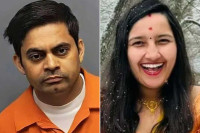
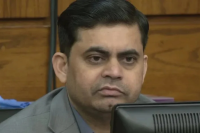
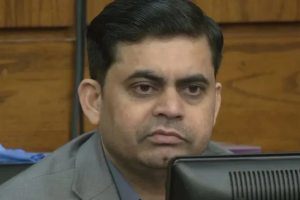
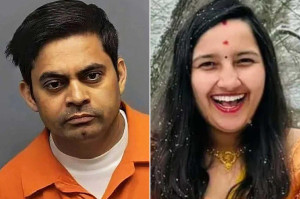
Naresh Bhatt, a Virginia man on trial for murder, admitted on Thursday that he dismembered his wife Mamta Kafle’s body with a saw and disposed of it in trash bags, but denied killing her, telling jurors she died by suicide.
Bhatt, 39, testified in Prince William County Circuit Court that he found Kafle dead in their Manassas Park home in July 2024 and hid her death because he feared being blamed. His account contradicts what he told police at the time: that she had left home and was likely in New York or Texas. Her body has never been found, and the cause of her death has not been established in court.
Prosecutors, who rested their case on Monday, say Bhatt killed Kafle on or about July 30, 2024, dismembered her and discarded her remains in trash bags across Northern Virginia. He has pleaded not guilty to first-degree murder, defiling a dead body and concealing a dead body. Bhatt now admits dismembering and disposing of the body but says Mamta died by suicide, making how she died the the central question for jurors.
Here’s what you need to know about the case so far. This explainer covers testimony from October 19 to November 5.
What did Naresh Bhatt tell jurors?
Bhatt took the stand on November 4 as the first defense witness. Speaking through an interpreter who translated questions, he described a difficult childhood in Nepal, said he met Mamta through Facebook, and portrayed their marriage as close and mutually reliant, WJLA reported.
He said Mamta became withdrawn after their daughter’s birth, and that the two had stopped being kind to each other and he had been emotionally cruel. He said they threatened each other during arguments, he with divorce and she with suicide. He repeatedly denied physically abusing her. He told jurors he was angry when she called police to report he had taken her identification documents, because he feared it could jeopardise his government job, Courthouse News reported.
He also addressed the “Colombian woman” messages, saying he was not seeking a new wife or relationship and it was just a part of fun as he was instead trying to make Mamta jealous. He testified that Mamta had two miscarriages, contrary to earlier witness accounts.
On November 5, Bhatt gave a sharply different account of July 30, 2024. Bhatt testified that he found Mamta unresponsive on the bedroom floor, saw vomit containing pills and open pesticide containers nearby, and tried to revive her for 45 minutes to an hour, WTOP reported. He said he did not call 911 because he was scared and panicking. He also testified that he considered killing himself at home after finding Mamta’s body.
Bhatt admitted that he later dismembered Mamta’s body with a saw and disposed of it in trash bags over the following day or so.
What happened during cross-examination?
Prosecutors Matthew Sweet began cross-examining Bhatt that afternoon by telling him, “You’re a liar!” Bhatt agreed. Sweet asked whether Bhatt had lied to Mamta’s relatives, friends, neighbours and police; Bhatt said yes to each. Bhatt denied killing Mamta and said the searches on his phone were not necessarily about her.
Sweet also showed jurors photographs Mamta had sent Bhatt around December 2023 that appeared to show injuries to her face and a bloody hand. Prosecutors also played a December 2023 video in which Mamta said, “This is the second time”; Bhatt’s text response said, “I will sign divorce papers. I don’t want this again.”
Where does the trial stand?
Prosecutors called their final witnesses on Monday and rested their case after calling more than 80 witnesses. Jurors had heard from about 56 witnesses by October 26 and 65 by October 27, according to WJLA. The defense then asked Judge Kimberly Irving to dismiss the case. She denied the motion and allowed all three charges to go to the jury, pointing to evidence of problems in the marriage and scientific evidence supporting that Mamta is dead, WJLA reported.
Court does not sit on Fridays, so testimony resumes on Monday, November 9. The defense told the court it would resume with redirect questioning of Bhatt that day, call one more witness and rest. Prosecution rebuttal witnesses are also expected on Monday. Closing arguments are likely Tuesday, November 10, and a verdict is possible by Thursday, November 12, a week before the original end date, InsideNoVA reported.
A green Ryobi saw was collected as evidence which Naresh bought. Photo: Courtesy of 7 News
What forensic evidence did prosecutors present?
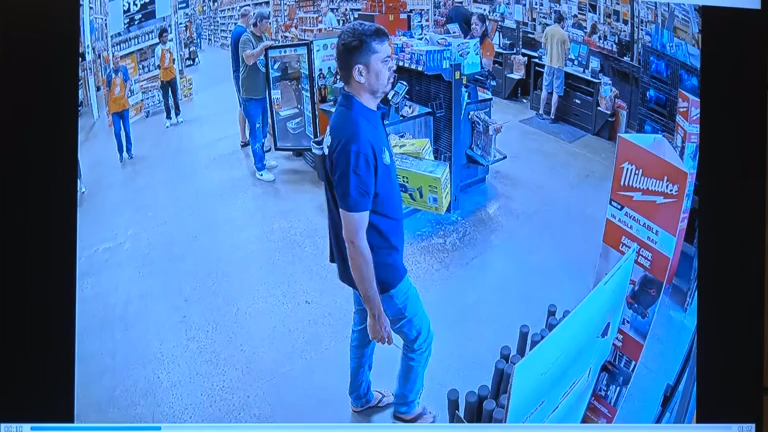
The saw. Mark Hernandez, a Home Depot security investigator, testified that a Ryobi saw, blade and battery kit were bought at a Fairfax store on June 2, 2024, and that footage shows someone resembling Bhatt carrying them.
Jose Barajas Ayala, a landscaper, testified through a Spanish interpreter that Bhatt gave him the saw with two extra batteries and a charger, as payment for yard work on August 1, 2024 and that he turned it over to the Loudoun County Sheriff’s Office on September 9, about two and a half weeks after Bhatt’s arrest.
Andrea Feldman, the lead crime-scene investigator, testified she found reddish-brown stains she believed were blood and hair-like strands on the saw. She swabbed the saw herself to speed up testing, WJLA reported. Bhatt has now acknowledged using it.
The DNA. Lori Prugh, a forensic scientist at the Virginia Department of Forensic Science, testified that DNA profiles from items that tested presumptively positive for blood, including swabs from inside the saw, were consistent with Kafle’s profile. And that Bhatt and the couple’s daughter were excluded as contributors. Investigators had no confirmed sample from Kafle and built her profile from a hairbrush found in the home. The defense noted that no one could say it was hers.
To address that, Catherine Colombo , a former state forensic scientist, testified that the DNA on the brush had a 99.9999 percent probability of coming from the mother of the couple’s daughter.
On November 2, forensic scientist Susan Greenspoon testified that DNA from a stained section of the primary-bedrooms carpet strongly supported Mamta and the couple’s daughter as contributors to a mixture. NBC4 reported she called it “beyond likely” that blood on the carpet was Mamta’s. On cross-examination, defense lawyer Laurel Rodewald asked whether the DNA could show how it got there, and Greenspoon agreed it could not, WTOP reported.
Elkin Howard, a trace-evidence scientist testified that he found three human hairs on the saw that may be suitable for nuclear DNA testing but could not say whose they were or how they got there. No test results have been reported.
What do phone and vehicle records show?
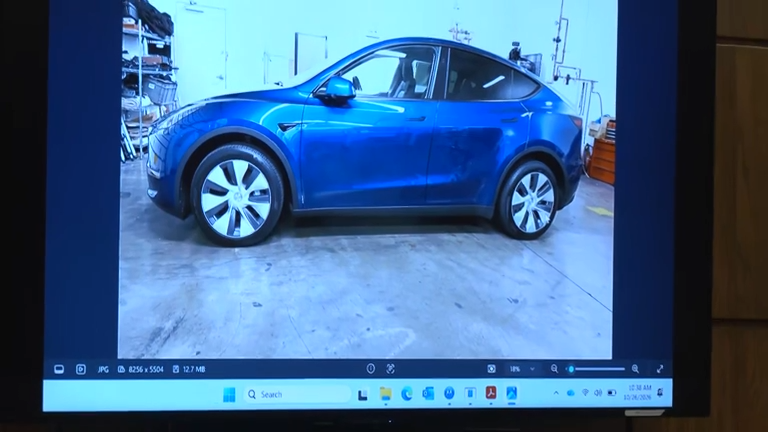
Timothy Judah Pent, an FBI special agent, testified that Bhatt’s phone and his Tesla were usually in the same places, including on trips to trash compactors. But Bhatt’s phone was off the network when the Tesla pinged a tower near a Liberty gas station in Chantilly on the afternoon of August 1. Kafle Bhatt’s phone connected to a tower in the same area then, and prosecutors said it was the last time it connected. InsideNoVa reported that Bhatt told police on August 5 that Mamta had destroyed her own phone.
Prosecutors say Bhatt left a bag at a clothing donation bin near the gas station on August 1. Police later recovered bags from the bin, including one containing a white bath mat with light pink and reddish-brown staining that tested positive for blood.
What did surveillance show of his movement?
Store employees identified Bhatt in footage at a Manassas Home Depot on the morning of July 30, asking about glove prices. They placed him at Manassas Lidl that morning and evening, buying 40 trash bags, and at a Fairfax Walmart from about 2 pm on July 31, where he bought carpet cleaner, cleaning supplies and body wash. The July 30 purchases occurred on the day prosecutors allege Kafle was killed.
A city public-works official testified that the Bhatt home used about 160 gallons of water in two hours on July 31; he acknowledged he never inspected the house for a leak and reviewed only about a month of records.
What searches and messages did jurors see?
Katherine Zaimis, a Prince William County police digital-forensics investigator, testified about Google searches on Bhatt’s phone. In March 2024, months before the disappearance, they included “what happens if a spouse disappears,” Fox 5 reported. At 12:13 am on July 30, 2024, there was a search for a “human brain diagram”, and at 8:13 am one for “chicken farm near me.” After police began investigating, a search read “can I donate my baby to my friend,” the Prince William Times reported.
Daniel Charles Moore, a Navy veteran assigned to the White House Military Office, testified that searches on Bhatt’s work account on April 12, 2024 asked how long it takes to marry after a spouse dies. The defense noted that many searches lacked timestamps.
Evidence shown on Day 11 of the Naresh Bhatt murder trial. Photo: Courtesy of 7 News
Jurors also saw messages that prosecutors argue show Bhatt discussing a future relationship after a divorce. In a March 2024 exchange, prosecutors said, Bhatt asked a contact to introduce him to a Colombian woman and later said he wanted to start a new life after finalising a divorce from Mamta. The Prince William Times said it was the first time jurors had heard evidence suggesting a motive.
What did Mamta’s brother, friends and records say about the marriage?
Her brother, Mahesh Kafle, the prosecution’s last witness, testified through an interpreter that he told his sister not to marry Bhatt. In February 2024, he said, she sent him a photograph showing what appeared to be a facial injury, said she had not eaten in two days and wrote, “I am not safe,” WTOP and DC News Now reported. He also said that Mamta and their mother had shifted from video calls to audio-only-calls that month, which raised his concern.
Judge Irving had ruled on October 29 on which of 12 statements from Kafle he could repeat to jurors, over defense hearsay objections. She allowed some, including that Kafle felt unsafe, but excluded other specific statements about what Bhatt did to her, WUSA 9 reported.
Ashish Sangroula, a family friend, testified that Bhatt acknowledged marital problems; on cross-examination, he said he never saw violence between the couple. His wife, Deepa Oli, testified that Bhatt told her he no longer wanted the relationship. Neighbors, including Rajeev Dhakel, testified that Bhatt spoke about divorce but never mentioned that his wife was missing.
A realtor from the Nepali community testified Bhatt asked about selling the house off-market and had been out of work, and that he declined to help, WJLA reported. Mandira Shrestha, a longtime friend of Bhatt, testified about jewellery belonging to Mamta that Bhatt had given her. Courthouse News described the testimony as concerning Bhatt’s request that the jewellery be returned.
Bank records showed Kafle opened her own accounts on February 14, 2024; Jurors learned Mamta called police to the home that day over a domestic dispute, WJLA reported. A $710 payment to the federal immigration agency came from her savings in June 2024. A CarMax manager testified that Bhatt sold the couple’s Tesla on August 16, 2024. After the loan was paid off, he received a bank draft for $3,771.09.
Have investigators found her remains?
No. A Manassas Park detective testified that in August 2024 he asked U.S. Immigration and Customs Enforcement to flag Kafle’s information in case she had left the country, and that the agency had not told him she did. Courthouse News reported that the Page County solid-waste director testified about the cost and environmental impact of excavating the landfill, and that jurors heard finding her remains there is unlikely.
What does the defense say?
The defense’s case now rests on Bhatt’s account that Mamta died by suicide and that he panicked and hid her body, NBC4 reported. In opening statements, Lenox told jurors the prosecutors would fill gaps in the evidence with guesses rather than fact. Before Bhatt testified, the defense used cross-examination to question the forensic work, noting that officers entered the bedroom without gloves before the scene was processed and that the lab did not test everything. It has also argued that Nepali-language communications may have been mistranslated, Fox 5 reported.
What remains unproven?
Bhatt’s account overlaps with the prosecution's on the saw and on dismemberment and disposal of the body. It diverges on how she died and on the bags: Prosecutors say footage shows him discarding her remains in dumpsters and compactors, while he said the bags held her belongings.
Whether Mamta died by suicide, as Bhatt now claims, or was killed remains open. Her body has not been found, so there is no medical evidence on the cause of death, and it is unclear whether anything other than Bhatt’s own testimony supports his account. Whether the three hairs on the saw can be tied to anyone, how the carpet DNA got there, also remains open. The jury must decide whether prosecutors have proved beyond a reasonable doubt that Bhatt killed her.
Aarya Chand is a reporter at The Kathmandu Post covering social issues. Before moving to the social beat, Chand was an intern covering culture and lifestyle for the Post.




 22.43°C Kathmandu