



 22.39°C Kathmandu
Mon, Oct 19, 2026
Money
Malaysia weighs raising minimum wage to RM2,000
Any increase would directly benefit eligible Nepali workers employed in Malaysia. About 400,000 Nepalis work in the country.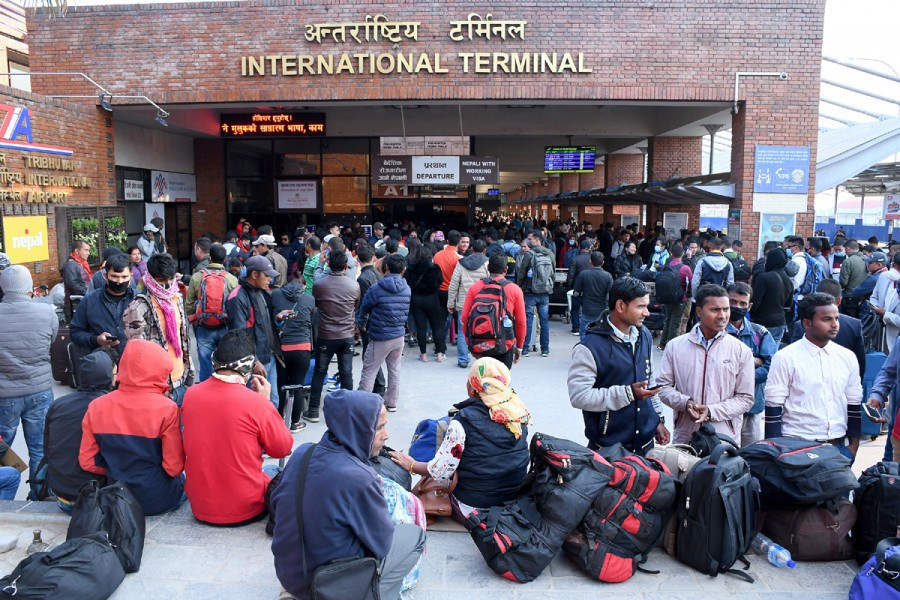
bookmark
Hom Karki
Published at : September 28, 2026
Updated at : September 28, 2026 22:12
Kathmandu
Malaysia is considering another increase in the minimum wage for low-paid workers, with the debate entering its final stage ahead of the 2027 budget.
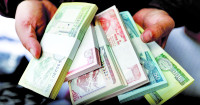
The current minimum wage per month is RM1,700 ($404, or around Rs63,000). The government is discussing whether to raise it to RM2,000 ($476, or around Rs75,000), while workers’ representatives are seeking a much larger increase. The government has yet to decide on the new rate or when it would take effect.
Economy Minister Akmal Nasrullah Mohd Nasir said any decision on a possible increase to RM2,000 would depend on Prime Minister Anwar Ibrahim’s announcement when he tables Budget 2027. He said the government also needs to consider the impact of a wage increase on small business owners and micro, small and medium-sized enterprises (MSMEs).
“We are taking into account several segments and how the implementation can be balanced so that we can continue to support our workforce while ensuring the survival of employers, particularly small business owners and MSMEs,” Nasir told reporters on Monday.
Anwar has already linked a minimum-wage increase to the upcoming budget. Speaking at an event for former students of Universiti Teknologi MARA on September 26, he said it was untenable for companies to make billions of ringgit in profits while workers continued to earn just RM1,700.
As productivity and company revenues rise, workers should also benefit through higher wages, he said.
“If productivity is soaring and companies are making billions in profits, but workers are still earning RM1,700, then we have not raised the floor,” Anwar said at the event on Saturday. “We need to discuss this issue amicably. I will announce some initiatives on this during the budget.”
Malaysia introduced its minimum-wage policy in 2013, when the monthly minimum was set at RM900. It rose to RM1,000 in 2016, RM1,100 in 2019, RM1,200 in 2020, RM1,500 in 2022 and RM1,700 in 2025.
That represents an 88.9 percent increase between 2013 and 2025.
The RM1,700 rate took effect on February 1, 2025, for specified categories of employers and was extended nationwide from August 1, 2025, regardless of the number of employees. Domestic workers are excluded. Malaysia’s labour authorities list RM1,700 as the current minimum wage.
The minimum wage also applies to foreign workers. Non-Malaysian workers from Nepal, Bangladesh, Indonesia and other countries are entitled to at least the statutory minimum basic wage.
Any increase to RM2,000, or another new rate, would therefore directly benefit eligible Nepali workers employed in Malaysia. About 400,000 Nepalis work in the country.
Ishwori Dahal of Sindhupalchok, who works in Johor Bahru, said the rising cost of living was making it increasingly difficult to save money.
“We earn around Rs80,000 a month including overtime. Food prices here have been rising,” she said. “After covering my expenses, I can send around Rs60,000 to Nepal each month. But if there is no overtime, it is difficult to save that much.”
Malaysian law requires the minimum wage to be reviewed at least once every two years. The National Wages Consultative Council is required to assess the impact of the minimum wage on social and economic development when reviewing the minimum wage order.
The government’s pre-budget statement for 2027 also places emphasis on its “Decent Wage Agenda”. It notes that the minimum wage has risen to RM1,700 and that government-linked investment companies and government-linked companies have adopted RM3,100 a month as a living-wage benchmark.
The 13th Malaysia Plan aims to move the economy towards higher income and productivity by 2030.
While the public discussion at present has centred on the possibility of raising the minimum to RM2,000, the Malaysian Trades Union Congress has called for a minimum wage of RM3,100, which would be more than 82 percent higher than the current RM1,700.
Some government-linked companies have already adopted RM3,100 as a living-wage benchmark. However, the government has not formally proposed RM3,100 as the new statutory minimum wage.
A direct increase from RM1,700 to RM3,100 would raise the wage floor by more than 82 percent, prompting concerns among employers about higher labour costs. Business groups have warned that smaller businesses operating on thin margins could face higher costs, which could feed into prices or affect hiring.
Akmal has said that sustainable long-term wage growth will require improvements in productivity, workers’ skills and technology. He has also stressed that wage increases need to be accompanied by productivity gains.
For Nepali workers in Malaysia, a higher minimum wage would have a direct impact. Under the current rules, migrant workers are also covered by the RM1,700 minimum wage. If a new rate is set, eligible Nepali workers would be entitled to the same statutory minimum basic wage.
Foreign workers are also facing another change in their employment costs. From wages paid in October 2025, both employers and foreign workers have been required to contribute two percent each to Malaysia’s Employees Provident Fund.
Hom Karki
Hom Karki is a reporter with two decades experience covering migrant workers issues and the Nepali diaspora. He was previously based in the Gulf for Kantipur Daily.

Most Read from Money
Nepal travel agents threaten to stop selling Thailand trips over visa rules

Why does an hour long flight to Dhangadhi cost more than a flight to New Delhi?
Malaysia rejects Nepal’s demand to open recruitment to all manpower agencies
No school, but a graduation cap for women dairy farmers
Nepal arrests four medical service providers as Malaysia recruitment row deepens
Editor's Picks




E-PAPER | October 19, 2026

×