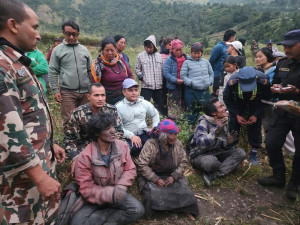
Flood took his home. His old citizenship photo is denying him relief
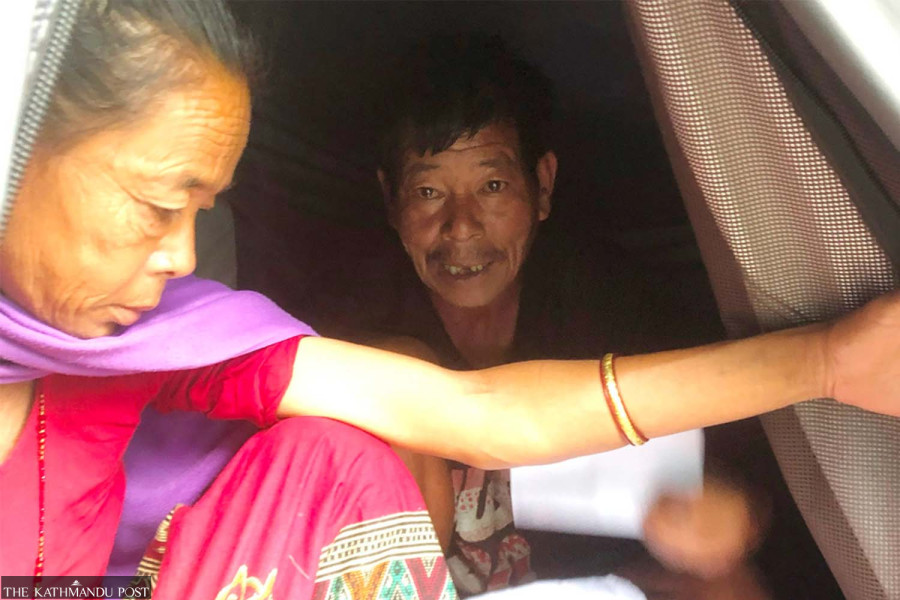
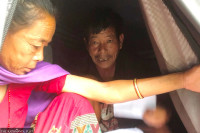
Juthe Tamang is living under a tarp in Nuwakot after losing his shelter and work, but the image on his citizenship certificate has been an issue for opening a bank account, a must for receiving relief money. Juthe Tamang, 52, and his wife, Shobha, are sheltering under a tarpaulin near Bidur in Nuwakot. Post Photo
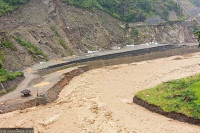
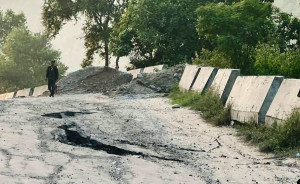
The Trishuli river runs beside the Shree Karma Dhechenling Monastery in Bidur, Nuwakot. The two concrete bridges that connected Dhunge to the other side of the river were swept away by the August 26 floods.
A suspension bridge is now being prepared nearby. Workers have pitched tents along the riverbank, and three plastic tarpaulins have been stretched beside them.
Under one of those tarpaulins, 52-year-old Juthe Tamang and his wife, Shobha, are trying to put their lives back together.
They cook over firewood, eat and sleep beneath the makeshift shelter. Their utensils and clothes have come from neighbours and relief supplies.
Shobha’s 77-year-old mother-in-law cannot fit into the cramped space, so Tamang sends her to sleep at a relative’s house. He normally earns a living carrying gravel, sand and other heavy loads, but the flood has halted the work he depends on to get through each day.
Even as the couple struggle to find shelter and a source of income, another problem is keeping them from the government assistance meant to help flood victims: the photograph on Tamang’s citizenship certificate.
The government has arranged to provide Rs15,000 a month in housing assistance to affected families, with the money to be deposited directly into their bank accounts. After his ward chair told him the payment would be made this way, Tamang went to Sanima Bank in Bidur to open an account.
He carried his citizenship certificate and the receipt for his national identity card, which has not yet been issued.
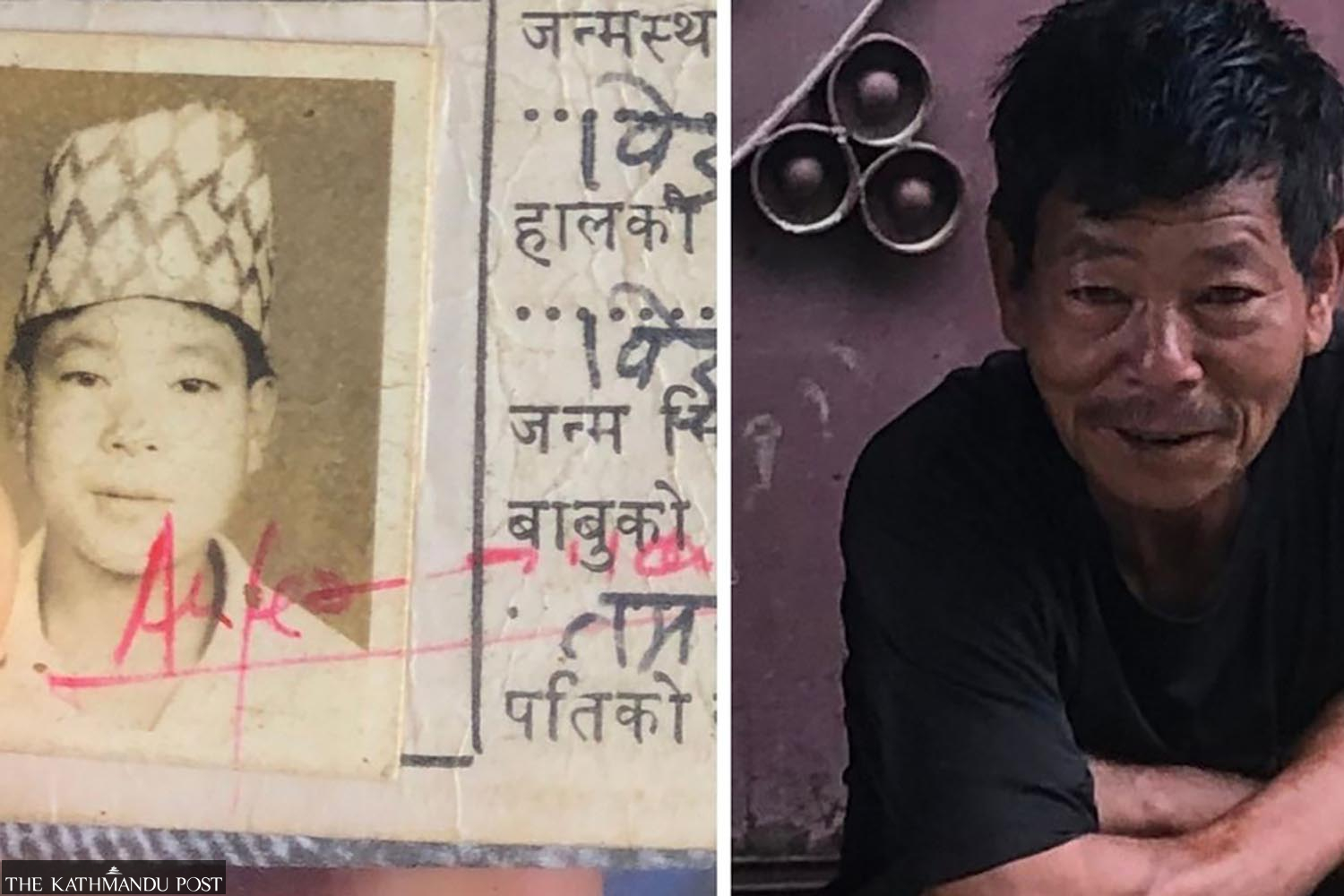
The bank turned him away after looking at the photograph on his citizenship certificate, Tamang said.
“They told me, ‘The photo on your citizenship certificate does not match your face. You are a different person,’” he said.
Tamang’s certificate was issued in 1986, when he was 16.
“I got this citizenship when I was 16. Now that I’m over 50, my face has changed,” he said. “The bank sent me back saying my face does not match the photograph.”
He also showed the bank the document confirming his application for a national identity card, but said staff did not accept it.
Sanima Bank’s Bidur branch returned Juthe Tamang saying the photo on his citizenship does not match his face, hence his bank account can’t be opened. Post Photo
For Tamang, the rejection has left government relief out of reach just when he needs it the most. With his home gone and his income cut off, the assistance was meant to help him cope with the immediate aftermath of the floods.
Tamang had opened an account at Sunrise Bank, now Laxmi Sunrise Bank Limited after the merger, during the 2015 earthquake to receive government relief. He still has the cheque book, but has not used the account since withdrawing the money.
Tamang said he was told the new Rs15,000 assistance would be deposited only into an active account, prompting him to seek a new one at Sanima Bank.
Ramesh Pandit, Sanima Bank’s branch manager in Bidur, said many flood victims were coming to the branch because other banks had moved their outlets to Battar.
He said the bank had rarely encountered cases where a mismatch between a customer’s documents and appearance prevented an account from being opened.
“We have been trying to facilitate them by opening accounts even based on photocopies,” Pandit said. “The bank is being somewhat flexible and lenient in providing services so that relief reaches flood victims.”
After Kantipur described Tamang’s case to him, Pandit said a new employee may have sent him away without fully understanding the circumstances while he was absent. He asked Tamang to return and meet him.
“Most of the flood victims who come to us already have bank accounts,” he said. “Even when they do not have original documents, we are providing services free of charge and issuing new cheque books.”
Pandit said distribution of the Rs15,000 assistance through banks had not yet begun and the process was only about to start.
Tamang, however, says the uncertainty is difficult to bear.
Shobha said the family had already gone through a similar struggle after the 2015 earthquake, when the government promised housing support that they never received.
“Even after the earthquake, the government said it would provide houses. We went to the ward office again and again, but we got nothing,” she said. “Now that the Balen government is here, we hope things will improve, but we don’t have much hope. In the end, the rich get everything. For poor people, nothing changes.”
The difficulty faced by Tamang is not an isolated case, according to district officials. Flood victims who have lost documents or are unable to immediately open bank accounts may face similar obstacles to accessing assistance.
Dhruba Prasad Adhikari, assistant chief district officer of Rasuwa, said the district administration had proposed to the central command post that cash be handed directly to people who had lost their documents and could not immediately open bank accounts.
“The chief district officer has sent a proposal to the central command post saying the process needs to be facilitated. If a decision is made there, it will make things easier for the victims.”
Krishna Prasad Humagain, assistant chief district officer of Nuwakot, said the administration would discuss the issue with banks, financial institutions and other agencies and write to the home ministry seeking ways to speed up services for affected people.
“In cases where people cannot establish their identity or have lost their documents, the relevant ward office can recommend them and certify their identity so that banking and other procedures can be made easier,” Humagain said.
He said the administration had also received complaints from people whose present appearance did not match the photographs on citizenship certificates issued many years ago.
“Banks should facilitate such cases in line with their own standards and the directives of Nepal Rastra Bank,” Humagain said.
For Tamang, the issue is more immediate than banking rules or administrative procedures. He needs the Rs15,000 housing assistance to move out of the tarp and into a room before Dashain.
He and Shobha have three daughters and a son in Kathmandu, but Tamang does not want to rely on them. He said all four are labourers and living in rented homes.
“If we cannot move to a room somewhere before Dashain, we will stay here under this tarp,” Tamang said. “The flood washed away our shelter, but it didn’t wash away our hands. We will work again.”
Aarya Chand is a reporter at The Kathmandu Post covering social issues. Before moving to the social beat, Chand was an intern covering culture and lifestyle for the Post.




 17.79°C Kathmandu