



 16.32°C Kathmandu

Thu, Nov 5, 2026
Food
Beyond sushi and sukiyaki, a taste of Japanese culture in Kathmandu
The week-long Japanese Food Festival goes beyond authentic cuisine, introducing diners to the etiquette and traditions behind the food.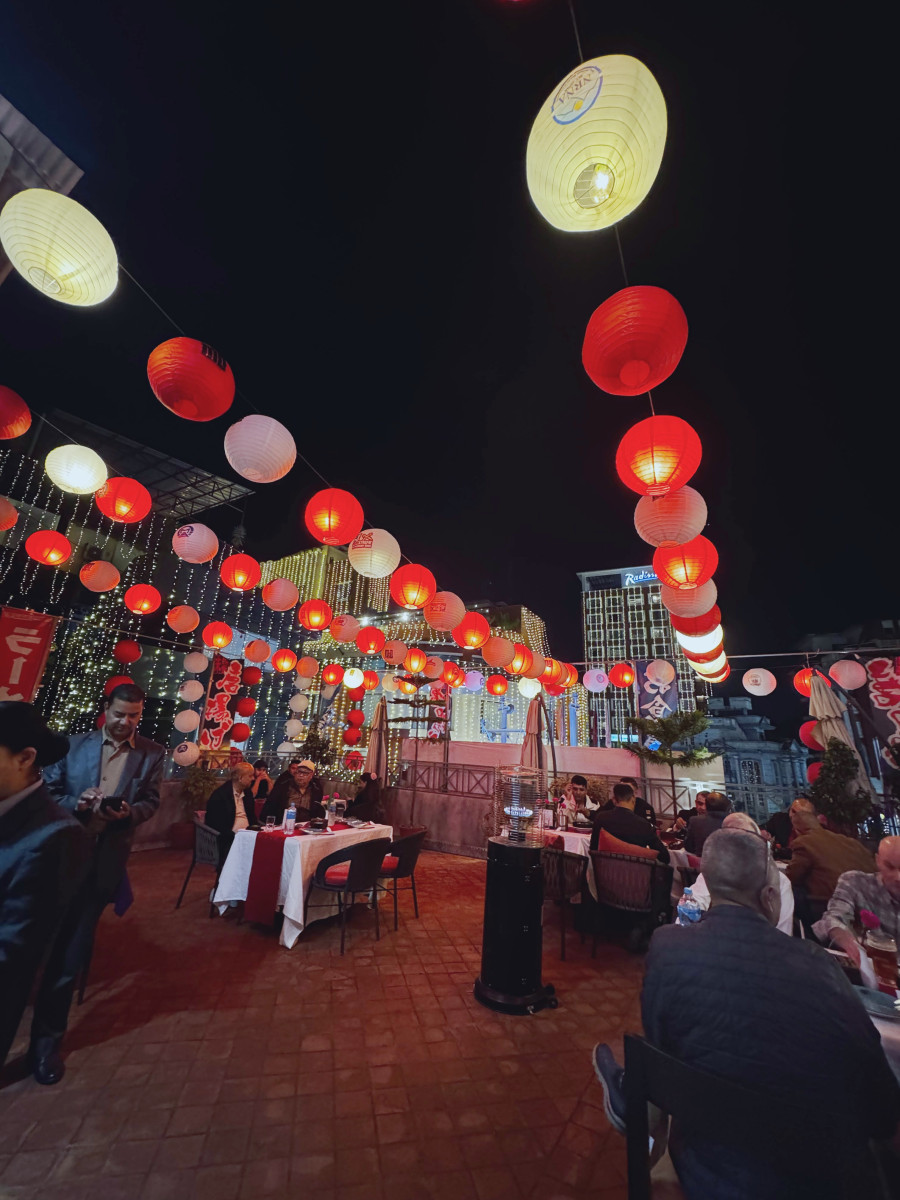
bookmark![]()
Some of the best-selling dishes at the festival. Bhumika Shrestha/TKP ![]()
Major three sushi: seared salmon, seared medium-fatty tuna and hosomaki rolls. Bhumika Shrestha/TKP ![]()
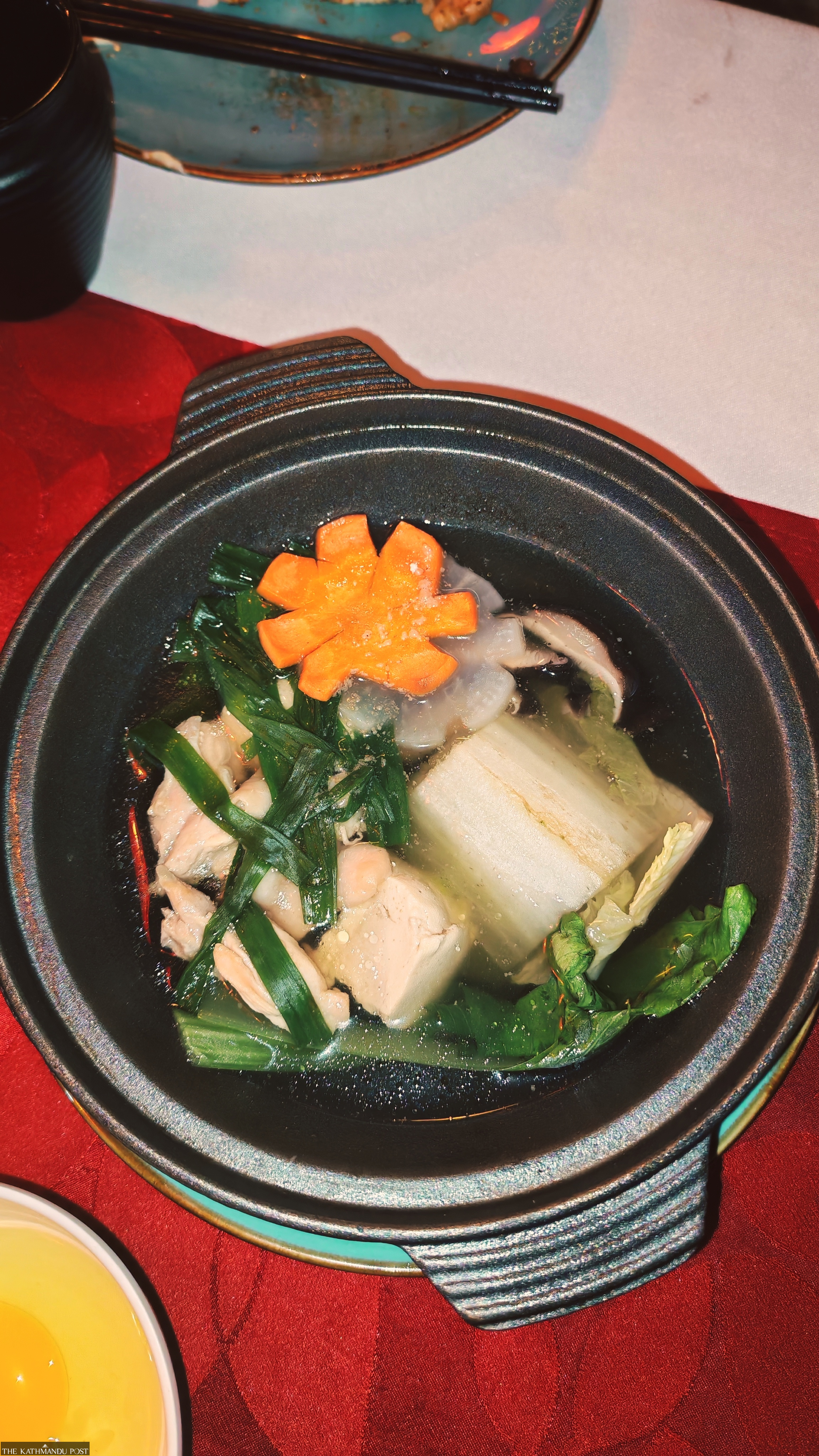
Chicken sukiyaki, a Japanese hot-pot dish. Bhumika Shrestha/TKP ![]()
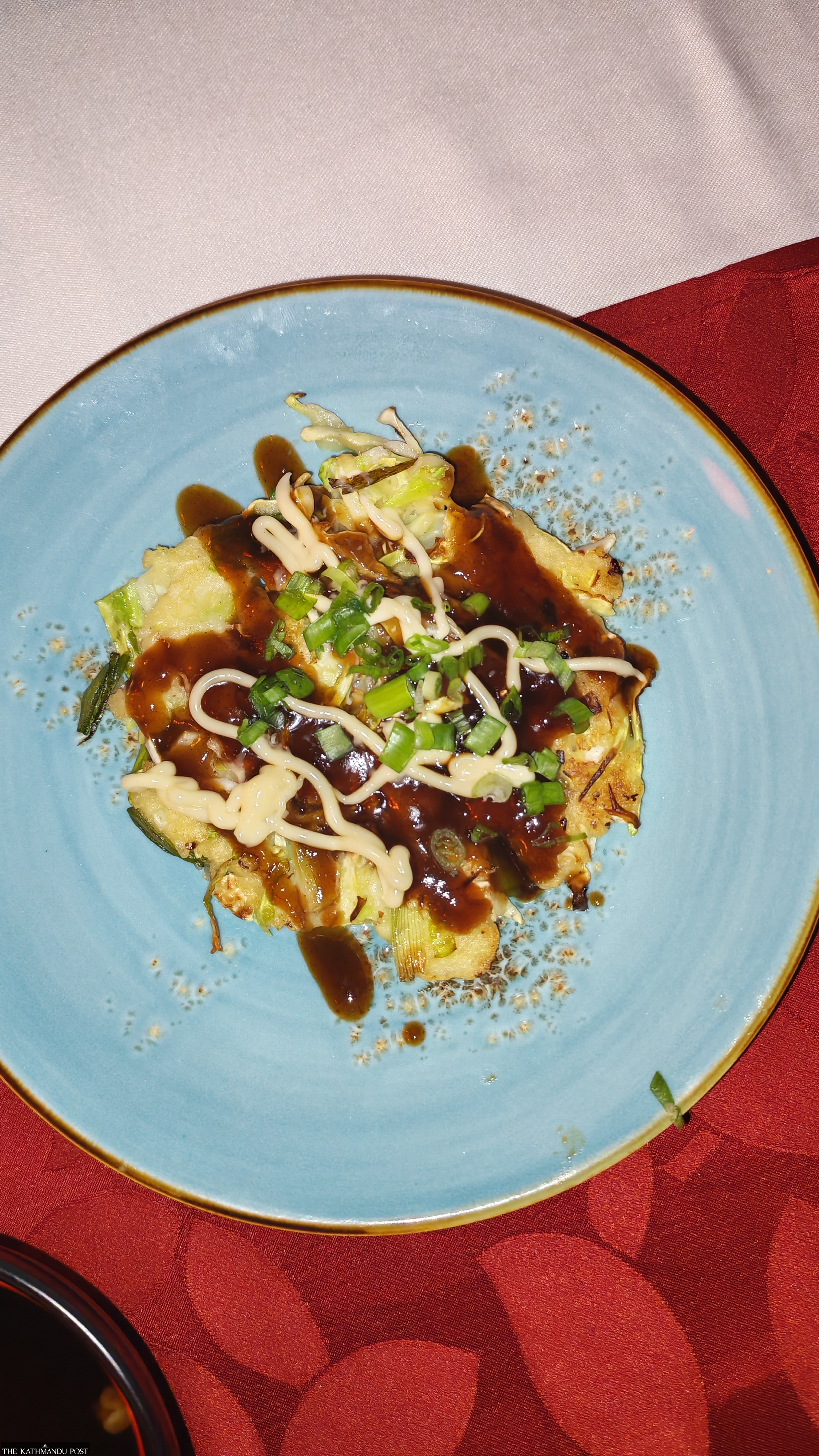
Vegetable okonomiyaki, a Japanese cabbage pancake. Bhumika Shrestha/TKP
Bhumika Shrestha
Published at : November 5, 2026
Updated at : November 5, 2026 21:00
Kathmandu
Irasshaimase!
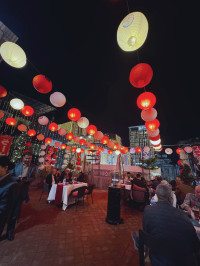
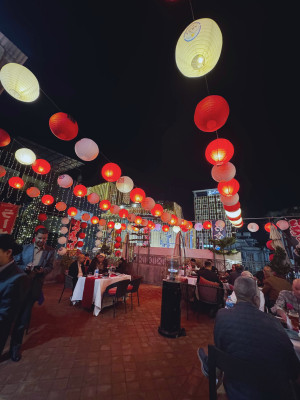
The Japanese greeting echoed through the venue as staff welcomed guests. Stepping inside felt like leaving the bustle of Kathmandu behind and entering Japan. Warm lighting and Japanese music filled the room, and words such as ‘ramen’, written in katakana, and ‘yakitori’, in hiragana, adorned the walls. The space was decorated in such a way that one could be forgiven for mistaking it for a local Japanese restaurant.
The Japanese Food Festival, currently being held at Radisson Hotel Premises Kathmandu, offers more than a buffet of Japanese dishes. It creates a space for cultural exchange bringing Japanese culinary traditions closer to Nepalis.
The festival marks the seventh anniversary of Hokkaido Group, a company specialising in Japanese cuisine and hospitality in Nepal. For the first edition of the food festival, it has brought a Japanese sushi chef, Kazunori Hayashi, to Nepal. The chef is introducing diners to authentic Japanese culinary practices through sushi preparation, matcha tea and calligraphy demonstrations.
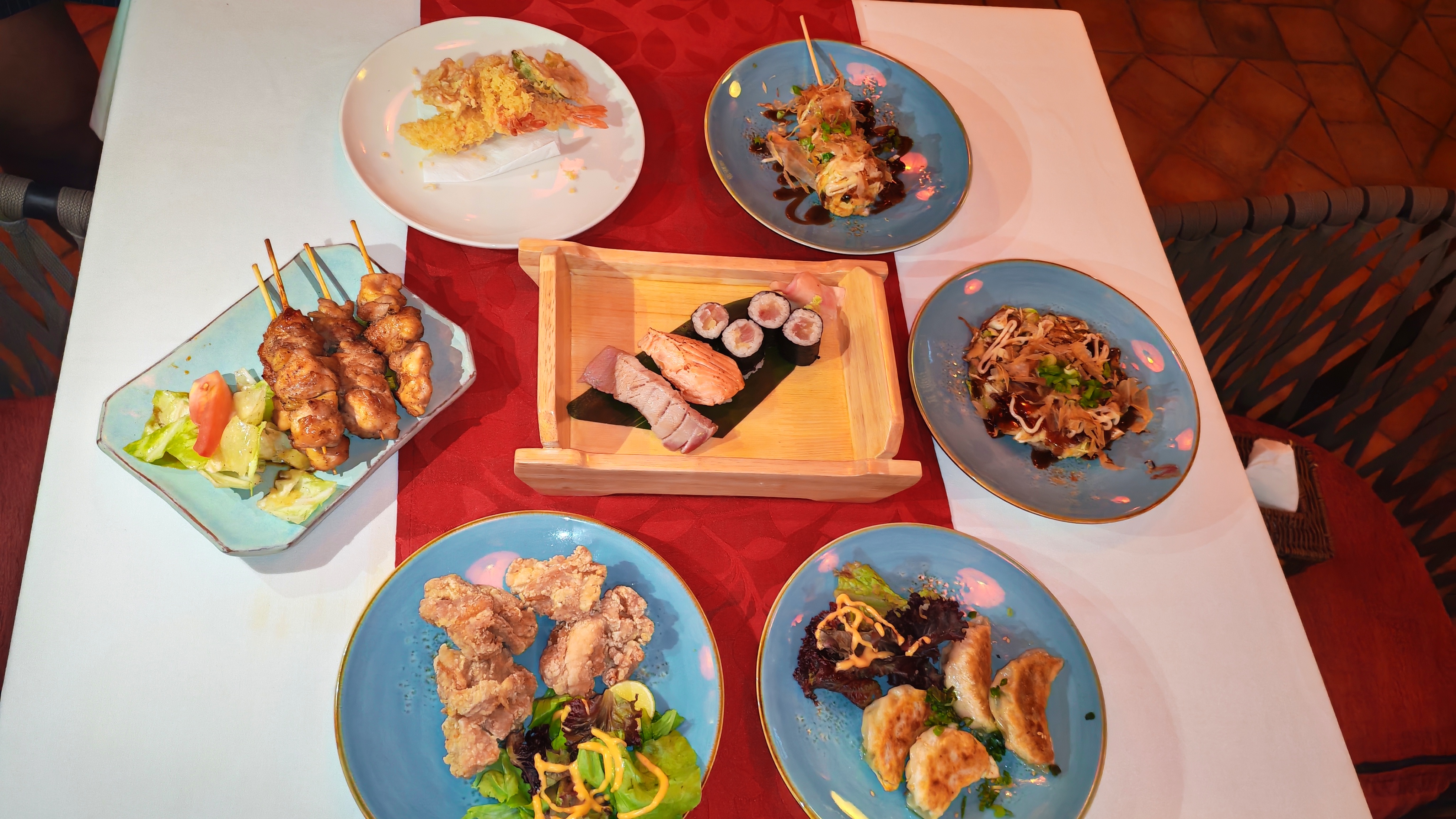
The festival’s menu features 48 dishes across nine categories, including nigiri sushi, hosomaki rolls, teppanyaki and sukiyaki. In Japanese dining culture, serving tea to guests is a gesture of hospitality. At the festival, guests were welcomed with ocha (Japanese green tea), served in black ceramic cups before the meal. At first, I found it almost tasteless, but with each sip, I began to notice its subtle, savoury umami flavour.
At the sushi counter was chef Hayashi. He brings years of experience to Kathmandu. He has trained apprentices at Tokyo’s Sushi Kimura, a premium sushi restaurant in Tokyo. He has also organised exclusive dining experiences involving high-profile clients, including Meta CEO Mark Zuckerberg. I asked him what he considered the most important ingredient in making sushi. “Japanese mind and heart,” he said, matter-of-factly.
Among the nigiri sushi selections, the seared medium-fatty tuna stood out for its rich flavour. A thin slice of tuna rested on a small mound of vinegared rice, with a little bit of wasabi. Medium-fatty tuna, known as chūtoro, is prized for its balance of lean meat and fat, which gives it a rich flavour and tender texture. Priced at Rs2,000 per piece, its soft texture and flavour blending with the slightly tangy rice made it worth trying.
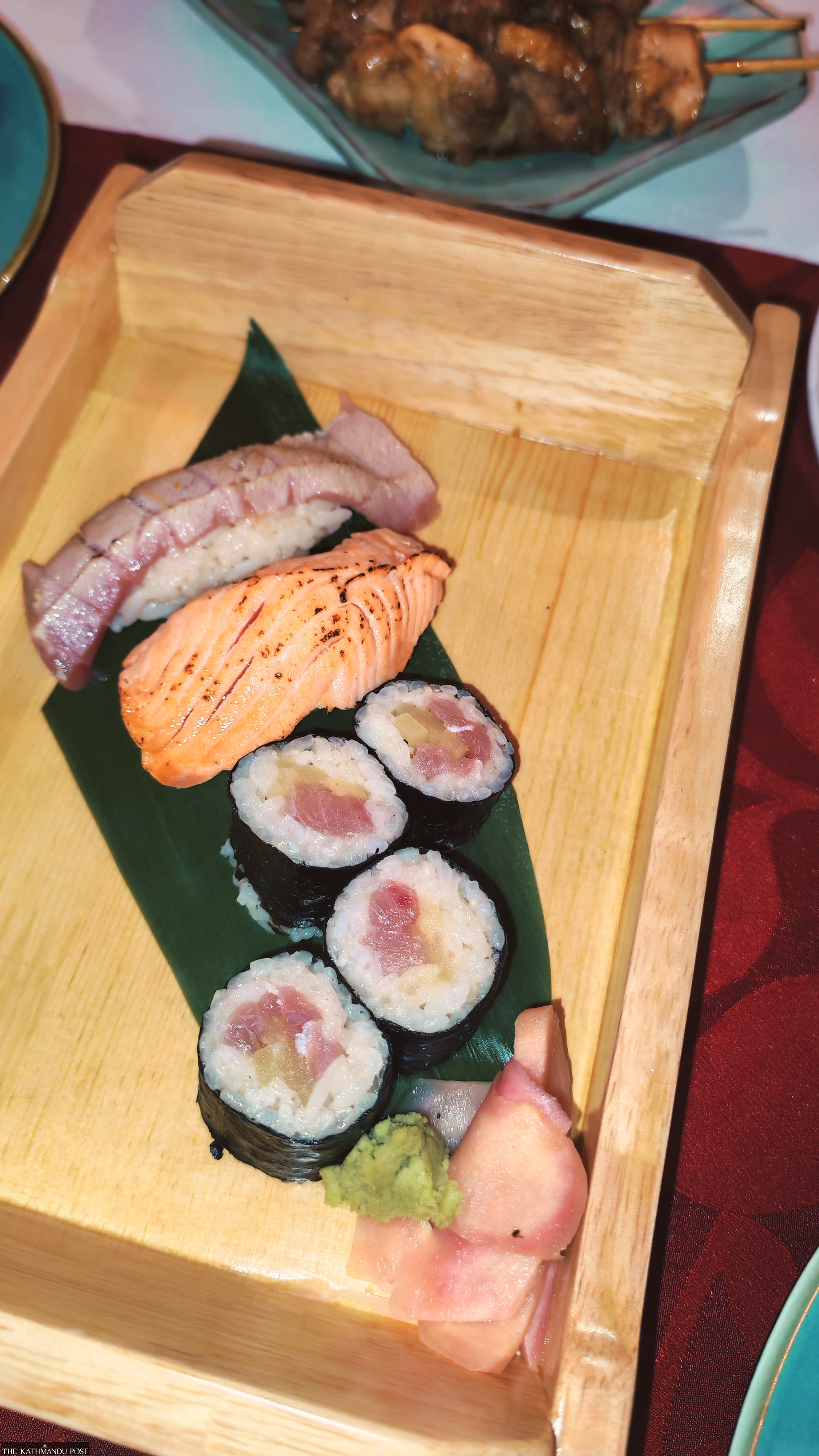
The hosomaki rolls offered another form of sushi. Wrapped in seaweed, the thin rolls contained rice and fillings, cut into bite-sized pieces. When asked about common misconceptions among Nepali diners, Hayashi said many associate sushi mainly with rolled varieties such as hosomaki. He explained that Japanese sushi comes in different forms, including nigiri, which has a cylindrical shape and is traditionally eaten by hand. Hosomaki, meanwhile, is commonly eaten with chopsticks.
The chicken sukiyaki made for a warm, comforting dish for a cold November evening. Served in a savoury, soy-based broth, it came with tender slices of chicken, soft tofu, carrots and vegetables. The chicken was as tender as the tofu that had absorbed the flavour of the broth. The vegetables added a slight crunch, balancing the softness of the other ingredients. What I found interesting was the addition of the raw egg, to be mixed into the sukiyaki before eating.
The vegetable okonomiyaki was another interesting dish on the menu. The savoury cabbage pancake had a lightly browned surface and was topped with a thick, dark sauce, mayonnaise and chopped green onions. Its round shape and pancake-like texture made me think of Bara, the traditional Newari lentil pancake. However, unlike bara, okonomiyaki uses cabbage as its main ingredient and is finished with a combination of sauces and toppings. This offered a different flavour from the delicate sushi and the savoury broth of the chicken sukiyaki.
Alongside the dishes, chef Hayashi introduced the guests to Japanese tea culture through a Sado (matcha) ceremony. He had brought matcha powder and traditional tea-making utensils from Japan and demonstrated its preparation using a bamboo whisk, a tool used to mix the powder with hot water. The tea was served in a Japanese ceramic bowl known as chawan. Ingesting matcha also followed a particular etiquette, rotating the bowl twice clockwise before drinking and wiping the part that touched their lips before setting it down.
Hokkaido Group, the organiser of the festival, was founded by Arjun Adhikari in 2019. Adhikari first visited Hokkaido, Japan, in 2001 on a tourist visa, where he received training in hospitality. Recalling those days, he said, “At the end of the day, we would miss our hometown.” He considered what he could build in Nepal. After researching business opportunities, he founded the group, aiming to introduce Japanese food and hospitality practices to the country.
Starting with Ramen House at Park Village Resort in 2019, Hokkaido Group has now expanded to 11 outlets, including eight in the Kathmandu Valley, one in Pokhara and one in Chitwan. One other outlet is under development. The company now employs more than 200 people, Adhikari said.
He added that the group aims to make Japanese food accessible and affordable to Nepali diners, who make up around 95 percent of its customers.
Adhikari said that he has banked on authenticity above anything else. “Our company’s chefs follow Japanese cooking techniques as the foundation of its dishes,” he said. “But we allow chefs enough room to experiment with toppings and other additions.”
Adhikari’s ambitions, however, go beyond food. “Our vision is to connect Japan and Nepal through food, culture and hospitality,” he said, “while creating jobs.”
The festival will run until November 9 every day at 5-8pm. Tickets are priced at 3,000 per person.
Bhumika Shrestha
Shrestha is an intern at the Post's Culture and Arts desk.




Most Read from Food
Editor's Picks





E-PAPER | November 05, 2026

×