AI detection woes drive students to court. Universities search for answers
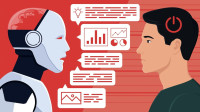
Students fear that even their original work could be flagged as AI-generated. This has also raised questions about how much trust should be placed in detection software. Shutterstock
For Nirjala Thapa, a recent computer science graduate, artificial intelligence has become a double-edged sword. It is both a useful academic assistant and a source of anxiety. While AI tools help her research and complete assignments, she worries about becoming too dependent on them and about her college rejecting work that detection software wrongly identifies as AI-generated.
Her predicament reflects a wider dilemma in higher education. Inconsistent results from AI-detection platforms and software have raised concerns among students about the reliability of academic assessments, with some taking their universities to court. Universities, meanwhile, are struggling to formulate clear rules on a technology they increasingly recognise they cannot simply exclude.
“AI tools are extremely useful for research, especially when deadlines are tight. They make it easier to find relevant papers and understand their key arguments,” Thapa says. “But as a computer science student, I sometimes feel I have become too dependent on AI for coding. Earlier, I would try to identify and fix errors myself, which helped me learn. Now, I tend to turn to AI as soon as something goes wrong. That has weakened my habit of solving problems independently.”
Thapa’s college has a policy of automatically rejecting assignments if AI use exceeds 20 percent. She says students are constantly worried because software such as Turnitin sometimes flags even work they have written entirely on their own as AI-generated.
“The lack of transparency about how much AI use these colleges detect in individual assignments creates further confusion,” she says. “Our college does provide orientation on how to use AI. We are not told to avoid it altogether, but teachers advise us to use it as a learning aid, rather than passing off its work as our own, and to rely on our own thinking when writing.”
The uncertainty surrounding the use of AI-detection software in college assignments and research papers has now reached Nepal’s Supreme Court.
Law students at Nepal Law Campus, affiliated with Tribhuvan University, have filed a writ petition demanding a clear legal distinction between the use of AI and plagiarism. They accuse the university of putting students’ academic futures at risk by relying on AI-detection software without adequate research or a sound evidential basis.
Six law students, Vivek Chaudhary, Roshan Auji, Ashish Keshari, Bikesh Kumar Yadav, Pradhyuman Kumar Singh and Nikesh Nepal, jointly filed the petition on November 13, seeking certiorari and mandamus, and prohibition writs.
The court had earlier dismissed their petition, but following repeated attempts by the students, the Supreme Court agreed to register the case on Tuesday. A preliminary hearing is scheduled for Wednesday.
Vivek Chaudhary, one of the lead petitioners and a ninth-semester cyber law student at Nepal Law Campus, says his own experience illustrates the problem.
When he submitted an article on a public promise review that he had written himself, the iThenticate software flagged 4 percent of it as AI-generated. However, when he tested the same article using other commercially available tools, the results showed no AI use or only a negligible amount.
He became even more concerned when he tested Supreme Court judgments using detection software and found that the tools classified 70 to 80 percent of their content as AI-generated.
“When the text of Supreme Court judgments themselves is fed into AI-detection software, the tools flag 70 to 80 percent of it as AI-generated. Such software cannot be considered reliable for academic decisions,” Chaudhary says. “iTurnitin itself, which is used at Tribhuvan University, states in its official report that the phrase ‘likely AI-generated’ should not be treated as an incontrovertible or final conclusion and that human assessment is essential. Yet our universities have incorporated provisions in their regulations that allow them to reject students’ research papers and even take disciplinary action on the basis of these indicative results.”
Chaudhary also argues that the collection and storage of students’ emails, personal opinions, and research papers by Turnitin, a privately owned foreign company, raise concerns about their right to privacy.
The petitioners further contend that introducing disciplinary provisions of this nature is contrary to legal principles, arguing that the Tribhuvan University Act does not explicitly grant the university the authority to formulate such regulations.
Amid the students’ dissatisfaction and legal challenge, university leaders appear reluctant to ban AI altogether.
Professor Bhola Thapa, vice-chancellor of Tribhuvan University, says AI can no longer be excluded from academia. He told Kantipur that the university was preparing to train both teachers and students about the ethical use of the technology. Guidelines are being developed for certain disciplines, including medical sciences, while the university plans to follow international practices in other fields as well.
Thapa said the university uses technologies available in the market, including open-source tools and iTurnitin, rather than relying exclusively on software it has purchased or developed itself. He believes universities need to take a flexible approach to AI-detection tools and adopt assessment systems that encourage students’ creativity. The university’s legal team will examine the petition and advise on the next steps, he said.
“Our position is that AI should be integrated into education in line with global trends, and both teachers and students should be trained to use it ethically,” Thapa said. “I have not yet been fully briefed on the petition filed by students at the Supreme Court. We will move forward based on the good practices adopted by leading academic institutions internationally.”
He added that Tribhuvan University had long used iTurnitin, a widely adopted tool at academic institutions around the world, to check for plagiarism.
Yagyaraj Pandey, an assistant professor in the Department of Artificial Intelligence at Kathmandu University, compares the arrival of AI to the introduction of calculators.
Just as calculators made mathematical work easier, he argues, AI should be treated as an aid rather than a replacement for human thinking. Kathmandu University drafted a policy framework about a year ago, drawing on international practices, that would allow AI use of up to around 20 percent, Pandey says.
He acknowledges that AI-detection software currently available in the market is not completely reliable and can wrongly classify human-written material as AI-generated.
Rather than trying to restrict the technology, Pandey says universities need to rethink traditional approaches to questioning and assessment.
“If universities develop assessment systems that test students’ problem-solving and analytical abilities instead of simply asking them to recall facts, the misuse of AI will gradually diminish on its own,” he says. “AI use by young schoolchildren could affect their originality and critical thinking. But for undergraduate, postgraduate and doctoral students using AI for in-depth analysis, it can be a useful and supportive tool.”
The debate over AI use and regulation in higher education is not confined to Nepal. Academic institutions worldwide are grappling with how to embrace the technology while guarding against its potential to undermine independent thinking and learning.
As technology reshapes workplace demands, concerns are also growing that excessive reliance on AI could weaken students’ ability to think critically and study independently.
In a BBC report published on November 16, journalist Josh Day quoted Dr Louise Misselke, executive principal of the Guernsey Institute, as saying that students would have to adapt to changing employer expectations as new technologies and AI reshape the workplace.
“People will need to change and adapt and upskill and retrain, but I actually think there's a lot of opportunity in those changes,” Misselke said.
More than 80 percent of responses to an earlier survey of the finance sector by the Guernsey International Business Association had mentioned AI. The BBC report also highlighted the shrinking lifespan of workplace skills, underlining the need for young people and adults alike to continually update their knowledge and retrain.
A report published by The New York Times in September on an MIT study, meanwhile, said a committee at the Massachusetts Institute of Technology had warned that excessive AI use could lead to what it called “cognitive surrender”, creating an illusion of learning rather than genuine understanding.
The study found that students who routinely turned to chatbots whenever they encountered difficulty risked weakening their memory and their ability to engage in deeper learning.
Against this backdrop, the University of California, Berkeley School of Law has imposed strict restrictions on AI use. The University of Sydney in Australia, meanwhile, has adopted a two-track approach, combining compulsory in-person examinations with assignments that explicitly require students to use AI.




 7.12°C Kathmandu