Delayed ordinances signal a rift between Nepal president and prime minister
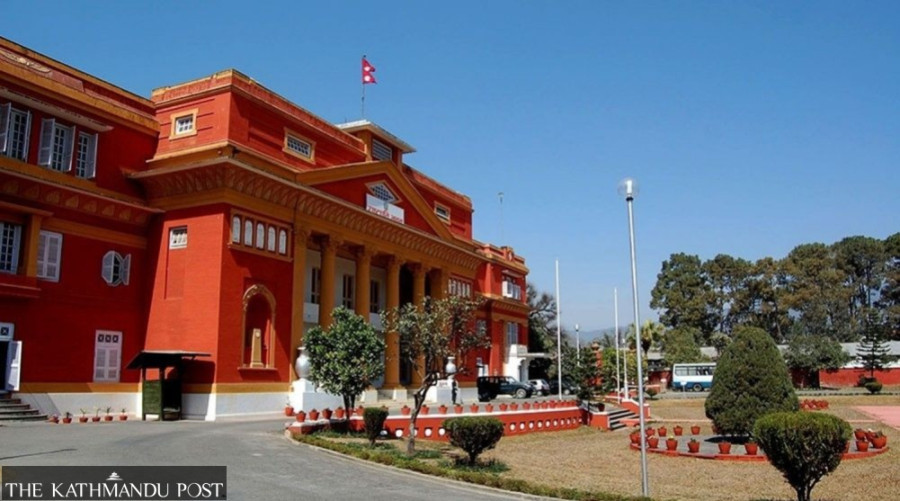
Sheetal Niwas questions the urgency of bypassing Parliament to amend the Press Council Act and Nepal Airlines Corporation Act, as constitutional experts warn against indefinite delays. Office of the President at Sheetal Niwas, Kathmandu. Post File Photo
President Ramchandra Paudel has been delaying two ordinances that the government recommended nearly three weeks ago, citing both constitutional principles and reservations over their specific provisions.
The Cabinet decided on November 3 to forward the Ordinance to amend the Press Council Nepal Act, 1992, and the Ordinance to amend some Nepal Acts, which include the Culture and Civil Aviation. According to sources at Sheetal Niwas, the documents reached the President’s Office three days later, on November 6.
Sources close to Paudel said that he is reluctant to promulgate the ordinances immediately because he believes fundamental issues such as press freedom and routine executive appointments should be settled through regular parliamentary legislation rather than executive decrees.
Under Article 114(1) of the Constitution, the President may issue an ordinance on the recommendation of the Council of Ministers if immediate action is necessary when neither House of the federal parliament is in session. While such ordinances automatically lapse unless approved within 60 days of the commencement of the next parliamentary session, the charter sets no specific deadline for the head of state to act upon a recommendation.
Minister for Law, Justice and Parliamentary Affairs Sobita Gautam dismissed suggestions of a rift, insisting the President cannot indefinitely block government recommendations.
“Several public holidays fell after the ordinances were recommended, so there may not have been enough working days,” said Gautam. “The President is likely studying them. We have not received further updates on the matter.”
Baburam Kunwar, senior advocate and legal adviser to the President, confirmed that Sheetal Niwas is still reviewing the drafts. “We will examine them within a day or two, after which we will know the exact details,” said Kunwar.
However, sources at the President’s Office indicated that Paudel’s hesitation stems from pushback against the proposed amendments to the Press Council Act. On November 6, a delegation led by Federation of Nepali Journalists (FNJ) President Nirmala Sharma met Paudel and urged him not to issue the ordinance, warning that it aims to curtail freedom of expression.
“Instead of taking it to Parliament for thorough deliberation, what is the reason for bypassing everyone and bringing an ordinance?” said Sharma. “We asked the President to halt it because its sole intention is to shrink press freedom and the freedom of expression.”
According to her, Paudel assured the delegation that he would consult constitutional experts before making a decision.
The second ordinance targets Section 12 of the Nepal Airlines Corporation Act, 1962, to facilitate temporary appointments at the debt-ridden national flag carrier. Currently, the government can appoint an acting general manager or board director only if the incumbent is unable to work due to illness, leave, or similar temporary absences. The proposed amendment adds the post of executive chair and allows temporary appointments even when the position is entirely vacant, until a permanent appointment is made.
The move follows prolonged leadership uncertainty at Nepal Airlines. In 2025, a selection committee led by then tourism secretary shortlisted 10 candidates for general manager through open competition. However, the Supreme Court issued an interim order on January 29 this year, halting the recruitment due to the election code of conduct, leaving the process stalled.
Subsequently, on July 14, the government appointed Maheshwar Bhakta Shrestha as executive chair with authority to act as general manager. The Supreme Court annulled his appointment on August 20, ruling that he had exceeded the 65-year age limit. On September 4, the ministry assigned Janak Raj Kalakheti as acting general manager.
Shital Niwas officials argue that since the election code of conduct is no longer a barrier, the government can resume the regular recruitment process rather than invoking emergency constitutional powers.
Constitutional experts, meanwhile, caution both the executive and the head of state against overstepping their bounds. Senior advocate Chandra Kanta Gyawali noted that while ordinances serve as an ‘emergency light’ for urgent governance, the government must justify their necessity rather than using them to sidestep Parliament on policy matters. Yet, he maintained that the President cannot keep recommended ordinances on hold indefinitely.
“The President performs the role of head of state and should not carry the burden of the executive’s credit or blame,” said Gyawali. “Once an ordinance is issued, Parliament decides whether to endorse or reject it, and the judiciary can test its constitutionality. Therefore, it is not for the President to stop it.”
Despite commanding a nearly two-thirds majority in the House of Representatives, the Shah administration has already had 13 ordinances promulgated since taking office. Alongside the two stalled ordinances, the Cabinet also recommended a third ordinance to implement an agreement reached with the Gen Z movement, leaving three ordinances currently pending at Sheetal Niwas.
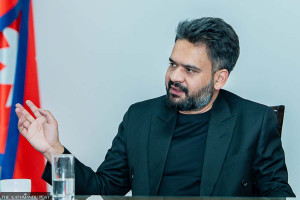
Since Shah took office in March, his dealings with Paudel have stayed almost entirely formal. Instead, Rastriya Swatantra Party chair Rabi Lamichhane has been the one briefing the President. The strain has also shown in public. On May 11, Shah abruptly left the joint sitting of the parliament while President Paudel was reading the government’s policies and programmes.
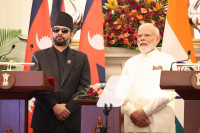
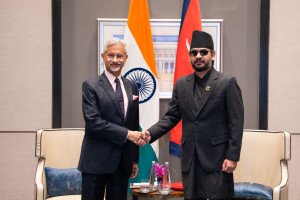
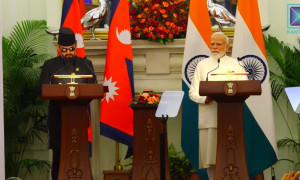
The prime minister has rarely updated the President on governance matters. The absence of regular meetings became glaring when Shah did not see Paudel before undertaking a state visit to India on November 22-23.
The standoff has now moved to ordinances. The source close to the President said that a communication breakdown has worsened the standoff.
“Unlike previous administrations, where prime ministers regularly briefed the President in person to explain the rationale behind ordinances, no such meeting has taken place between Shah and Paudel, deepening misunderstandings between the two institutions.”




 13.12°C Kathmandu