Seven takeaways from Prime Minister Balendra Shah’s India visit
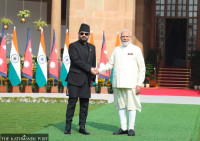
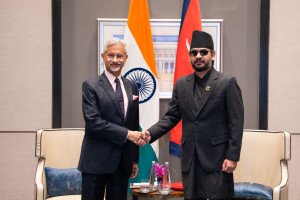
From a two-way air route to an eight-MoU haul, here is what Kathmandu got from Delhi, what it left on the table and what went missing altogether. Nepal and India exchanged eight MoUs, issued a 10-point vision document and broke ground on multiple projects during Shah's state visit. Photo: Courtesy of Prime Minister Balendra Shah
Prime Minister Balendra Shah spent 25 hours in New Delhi and flew home with a windfall of Rs240 billion in Indian promises, an inbound air route, a train to Ayodhya, access to two ports and an eerie silence on the border.
The social media-savvy prime minister’s first bilateral trip since assuming premiership was heavy on things one can cut a ribbon on and light on things often raised during his mayoralty.
His one-on-one with Indian counterpart Narendra Modi, pencilled in for 30 minutes, ran for about an hour and a half. The two sides exchanged eight MoUs, issued a 10-point vision document and broke ground on projects from the Lower Arun to a pipeline in Jhapa, the district where Shah thumped over former prime minister KP Sharma Oli during March snap polls. Notably, India also agreed to make the B345 Bhairahawa-Lucknow air route two-way. It remains to be seen how the agreements pan out.
What the visit lacked, quite glaringly, was fresh political commitment on the boundary, the Eminent Persons Group report and the Pancheshwar report. Here are seven highlights of the visit, starting with the all-important money.
Rs240 billion, with a cautionary tale attached
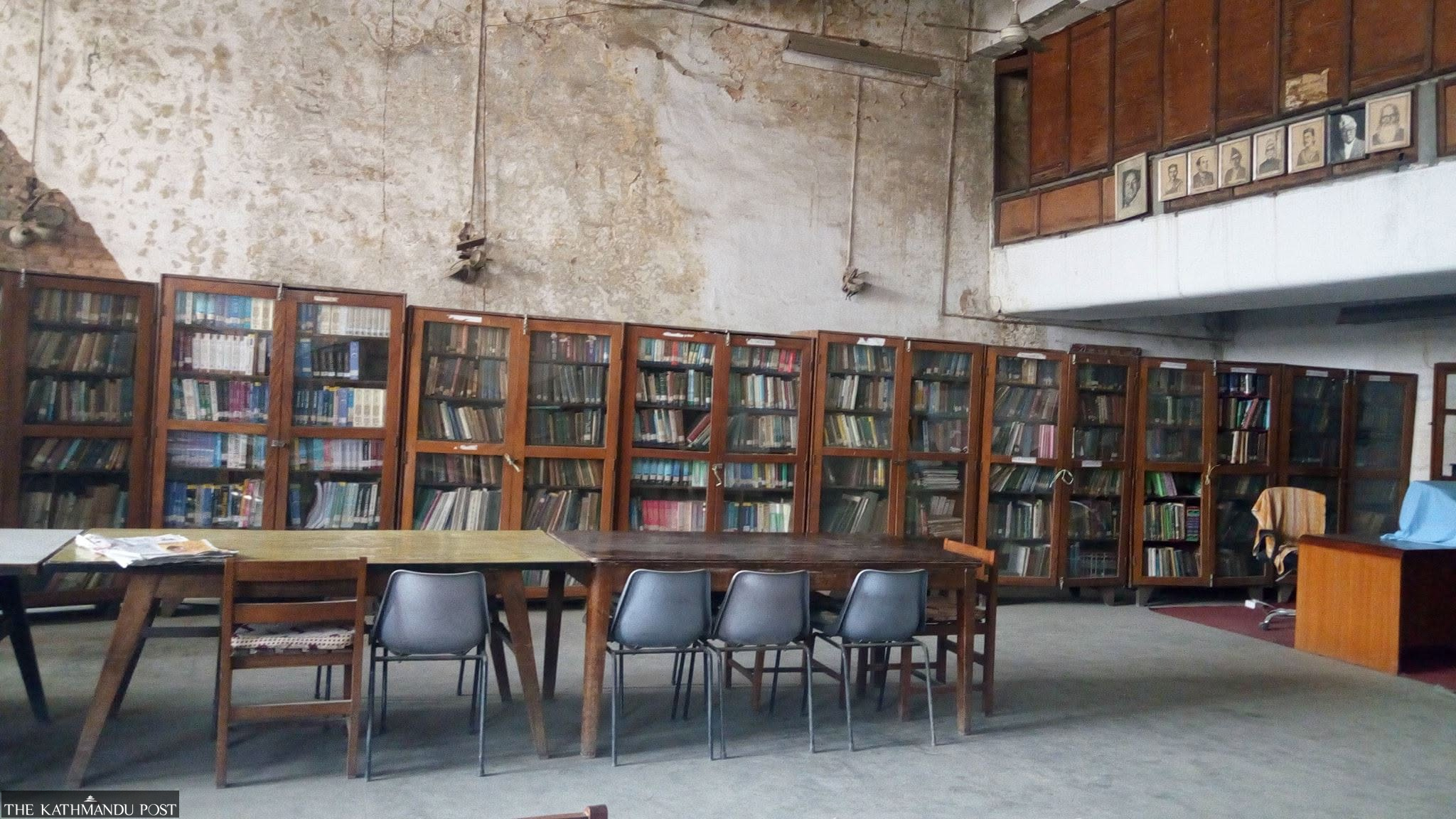
Indian Prime Minister Modi announcedRs56 billion in grants and Rs184 billion in concessional loans for energy projects, with the details to be thrashed out later. Nepal has seen how this plays out. After the 2015 earthquakes, India pledged $1 billion in assistance, $750 million of it as loans through Exim Bank, on terms requiring at least 75 percent of materials, equipment and services to come from India. The grant got spent on rebuilding. The loan mostly sat there.
Although the Amrit Science Campus was included in the list of institutions to be rebuilt with Indian assistance after the earthquake, it has been unable to construct the buildings due to an agreement with India’s Exim Bank. Photo: Courtesy of Amrit Science Campus
A vision document that name-checks the 1950 treaty
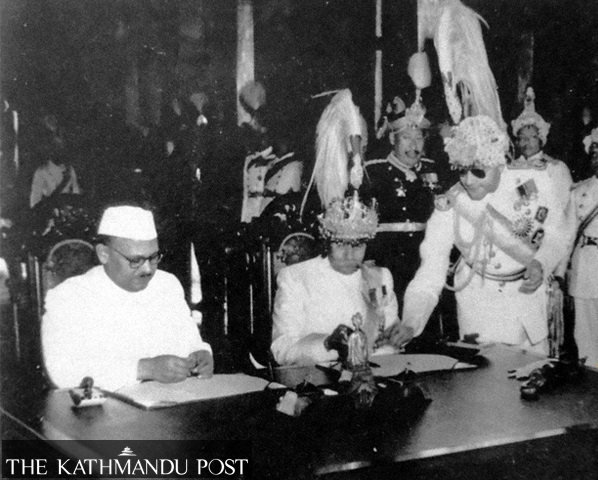
The 10-point vision document says existing agreements, including the 1950 Treaty of Peace and Friendship,may be reviewed on mutual consent. Ironically, India has yet to accept the Eminent Persons Group report, which proposed replacing the treaty and has gathered dust since 2018. The leaders also exchangedeight MoUs on forensic science, security, health, satellite communications and urban development.
Nepali PM Mohan Shumsher and India's ambssador to Nepal CPN Singh sign the Nepal-India Treay in 1950. Photo: Wikipedia
One air route finally gets a return ticket
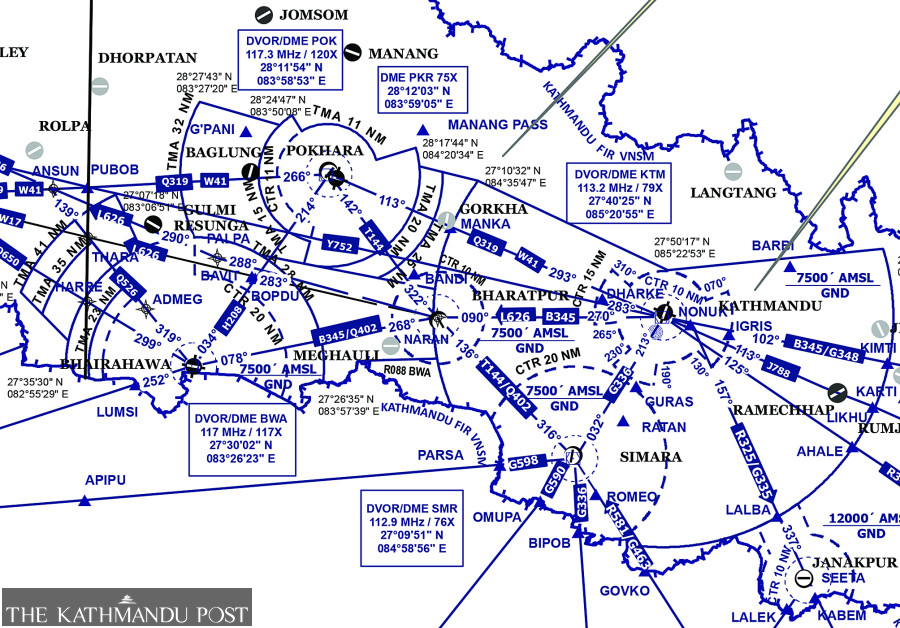
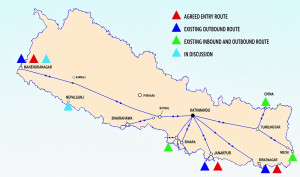
In perhaps the biggest achievement of the visit for Nepal, the joint press release published after the visit mentions that the one-way B345 Kathmandu-Bhairahawa-Lucknow air routewill become two-way, 17 years after Nepal first asked. Planes bound for Bhairahawa from the west currently detour about 300 km through Simara, which burns fuel and, consequently, money. The catch is altitude. If India holds outbound flights on B345 at the same 21,000 feet altitude it uses on the Simara route, aircraft will have to circle before landing. An official says six months is possible if fast-tracked. The 2014 communiqué promised six months too. No new routes were agreed.
India has agreed to open outbound flights on B345 air route. File Photo
Two ports, neither the one requested
Nepal asked for access to two ports—Dhamra and Mundra, both run by Modi’s favourite tycoon Gautam Adani. India offeredKandla and Paradip instead, Kandla first and Paradip once the infrastructure is ready. Both aregovernment-operated. Birgunj traders say the value hinges on regular freight trains to the Sirsiya dry port, competitive rates and simpler transit procedures. That is the diplomatic equivalent of ordering an espresso on the rocks and being handed a perfectly decent filter coffee.
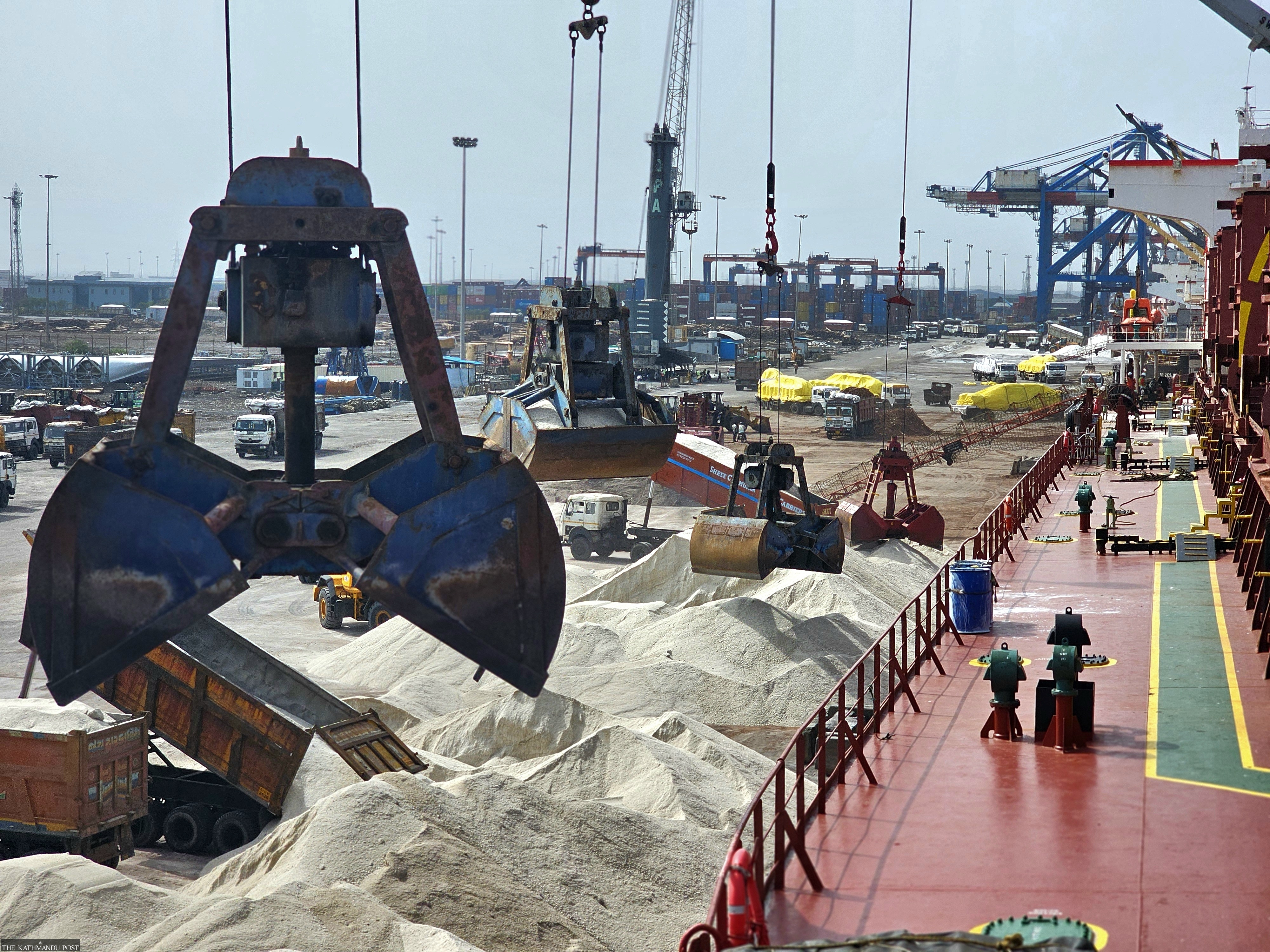
Heavy machinery is used to load freight ships with salt products at Kandla port. Shutterstock
A train, a bridge and a few pipes
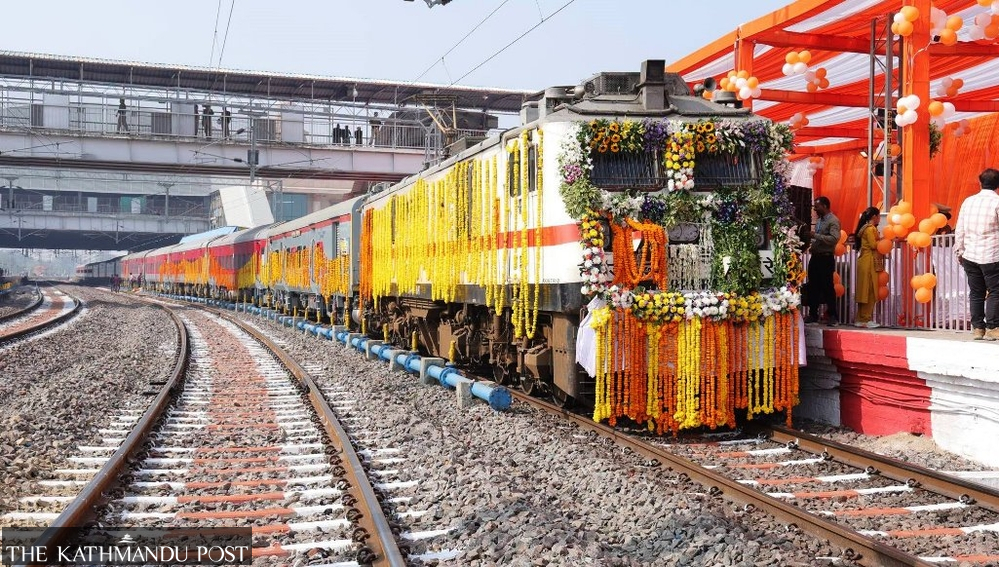
Shah and Modiflagged off the Sarayu-Kamala Express, a weekly Janakpur-Ayodhya service, and opened a motorable bridge across the Mahakali at Darchula. Regular service starts November 28, and the inaugural train reached Janakpur on Tuesday with an estimated 1,000-plus pilgrims.
Foundation stones went down forLower Arun, a Rs92.67 billion, 669MW hydropower project. They also went down for theSiliguri-Jhapa pipeline, an Indian-grant Rs11.14 billion project with a 54-month target that Indian Oil hopes to beat by 18 months. Foundation stones, also laid by multiple former leaders, have always been the easy bit; the hard bit is how long the projects take to complete.
The Saryu-Kamala Express arrived in Janakpur from Ayodhya on Monday, carrying around 1,000 passengers. Post Photo
Lo and behold! The prime minister spoke Nepali
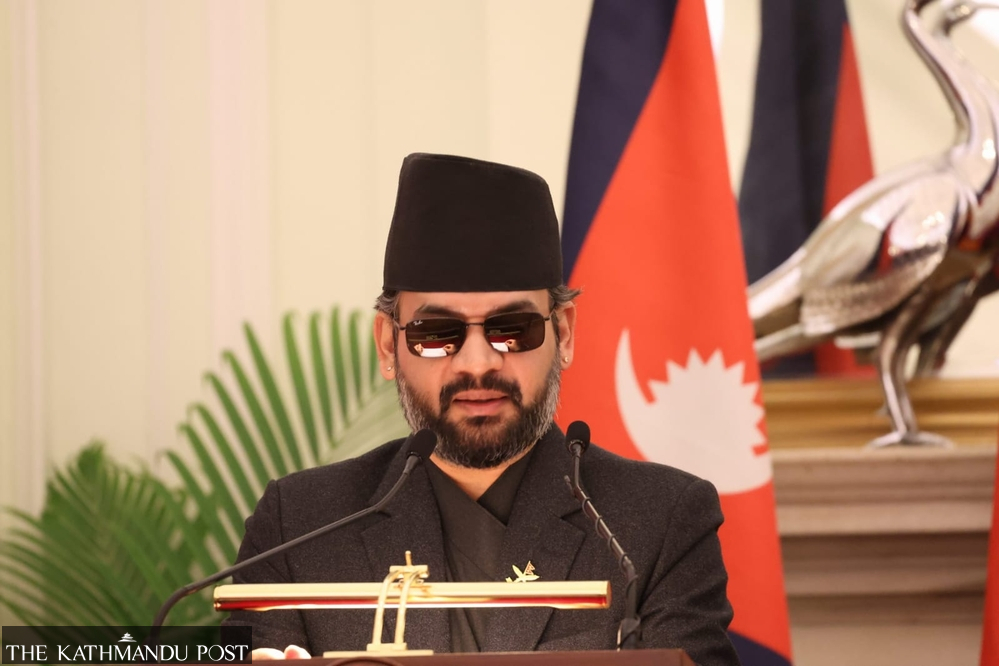
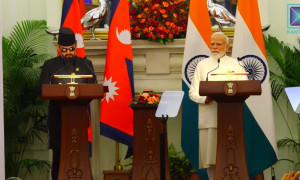
At Hyderabad House, Modi read his statement in Hindi and Shah replied in Nepali, withEnglish audio for the room. Nepali prime ministers hadmostly spoken English at such press meets. Shah opened with the blessings of Pashupatinath, Janaki and Matsyendranath, then invited Indians to visit Muktinath and witness the living goddess Kumari. The break with English was a joint effort as Modi closed his remarks with some Nepali words. That the use of a mother tongue made news and was one of the most popular talking points says something about the visit.
Prime Minister Shah has been lauded by social media users for speaking in Nepali at the joint press conference. Photo: Screengrab from livestream of the joint press conference
The conversations that stayed home
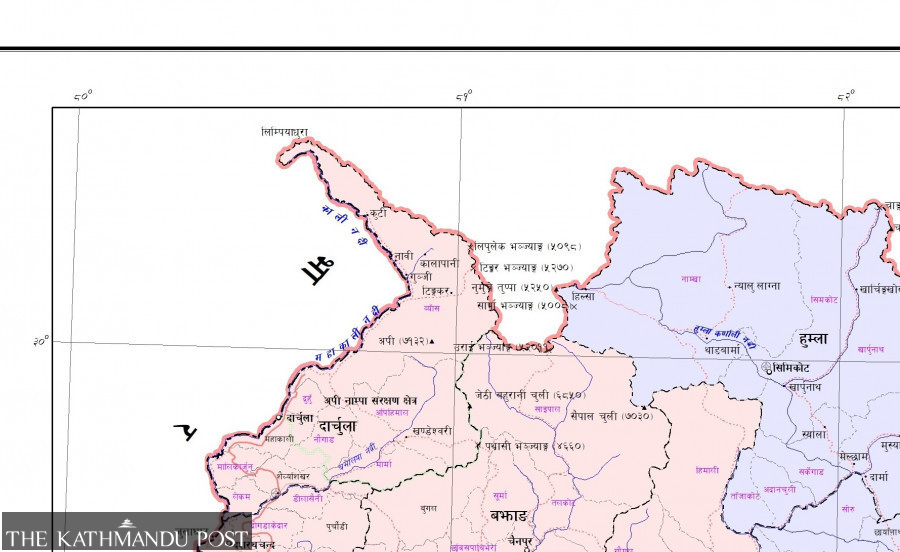
Prior to the visit, the Post reported that both sidesagreed not to raise outstanding border issues. The joint statement instructs foreign secretaries of both states to ‘work on boundary matters’, wording that also appeared in the statement issued after Modi’s 2014 Nepal visit.Lipulekh and Gurkha recruitment did not feature in the talks either. This is the same Shah who, as mayor on August 30, 2025, asked then prime minister KP Sharma Oli to remind Beijing that Lipulekh was Nepal’s.
The disputed areas of Kalapani, Lipulekh and Limpiyadhura did not feature in the talks. File Photo
Other topics of widespread interest that were flagged before the visit—the EPG report, the Pancheshwar project report, SAARC and the trade deficit—fared no better.




 12.12°C Kathmandu