Balendra Shah’s thumping win caps another big day for RSP
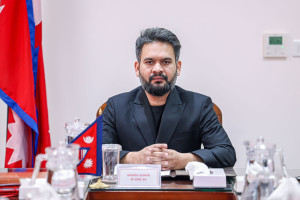
Kathmandu’s former mayor secured 68,348 votes, defeating Oli by nearly 50,000 votes and bolstering his chances of becoming prime minister. Balendra Shah waves the national flag outside the vote counting centre at Jhapa-5 after being declared the winner. Angad Dhakal/TKP
Jhapa-5 was the most keenly-watched constituency in Nepal’s March 5 elections. In this race, the widely popular Balendra Shah, the former mayor of Kathmandu Metropolitan City, was up against KP Sharma Oli, the former prime minister ousted by the Gen Z uprising back in September 2025.
The contest held a symbolic weight, anchoring the broader old vs new narrative—a septuagenarian former prime minister was battling a 35-year-old millennial. The animosity between the two was well known and had intensified after the deadly uprising that saw 77 unarmed people killed on Oli’s watch. Ahead of elections, Shah had refused to debate Oli, saying he wouldn’t share the stage with a “murderer”.
Many expected a tight race. But as soon as the counting began after midnight on March 5, the race took a rather anticlimactic turn. From the get go, Shah led the count by a wide margin.
The results of the constituency were announced on Saturday evening. Shah, touted as Rastriya Swatantra Party’s prime ministerial candidate, didn’t just win the seat; he did so by a thumping margin of 49,614 votes, the most in Nepal’s parliamentary election’s history. Shah secured a whopping 68,348 votes against Oli’s 18,734. It was a dismal showing for the former prime minister who had bagged 52,319 votes in the same constituency, his home turf, in the 2022 general election.
For Shah, the result means he will now be Nepal’s next prime minister, given the RSP is well on course to securing a majority, if not an outright two-thirds ‘supermajority’.
Angad Dhakal/TKP
A rapper and structural engineer, Shah shot to fame after he pulled off an upset in the 2022 local elections as an independent, defeating candidates from legacy parties by overwhelming margins to become the mayor of Kathmandu, the country’s most populous metropolis.
Shah served as mayor of Kathmandu Metropolitan City from May 2022 until his resignation in January 2026 and entered national politics by formally joining the RSP at the end of 2025.
Many have credited Shah with bringing about the ‘RSP wave’ in the recent elections. The party, formed barely four years ago, continued to dominate the first-past-the-post (FPTP) vote count on Saturday, building on its leads and wins on Friday. It also surged steadily ahead on the Proportional Representation (PR) votes.
Angad Dhakal/TKP
Alongside Shah, other RSP leaders have also secured dominant victories. Party chair Rabi Lamichhane has been charged with cooperative fraud but that didn’t seem to dampen his electoral showing. Lamichhane, the former TV host, has been elected from Chitwan-2, securing 54,402 votes against Nepali Congress’s Mina Kumari Kharel’s 14,564 votes.
Similarly, another RSP candidate Dr Lekh Jung Thapa claimed a victory in Rupandehi-3. None of the 35 other candidates, including high-profile representatives from the Nepali Congress and CPN-UML, reached the 10 percent valid vote threshold necessary to reclaim their security deposits in that constituency, a fact that underscored the scale of the ‘wave’.
In another notable result, RSP’s Sobita Gautam was elected from Chitwan-3, securing 59,277 votes. She defeated her nearest rival, Nepali Communist Party candidate Renu Dahal, by a margin of 38,662 votes.
RSP continues to dominate the FPTP vote count, winning 80 seats and leading in 42 other constituencies, as of press time.
Legacy parties, meanwhile, are left licking their wounds, having been handed an unprecedented drubbing.
The Nepali Congress has secured a meagre 12 seats and is leading in another 6 constituencies, while CPN-UML has won 5 seats and is ahead in 7 constituencies. The Nepali Communist Party has won 4 seats and is leading in 4 constituencies. The royalist Rastriya Prajatantra Party (RPP) has won 1 seat, while the Shram Sanskriti Party is leading in 3 constituencies. Independent candidate Mahabir Pun has won from his Myagdi constituency.
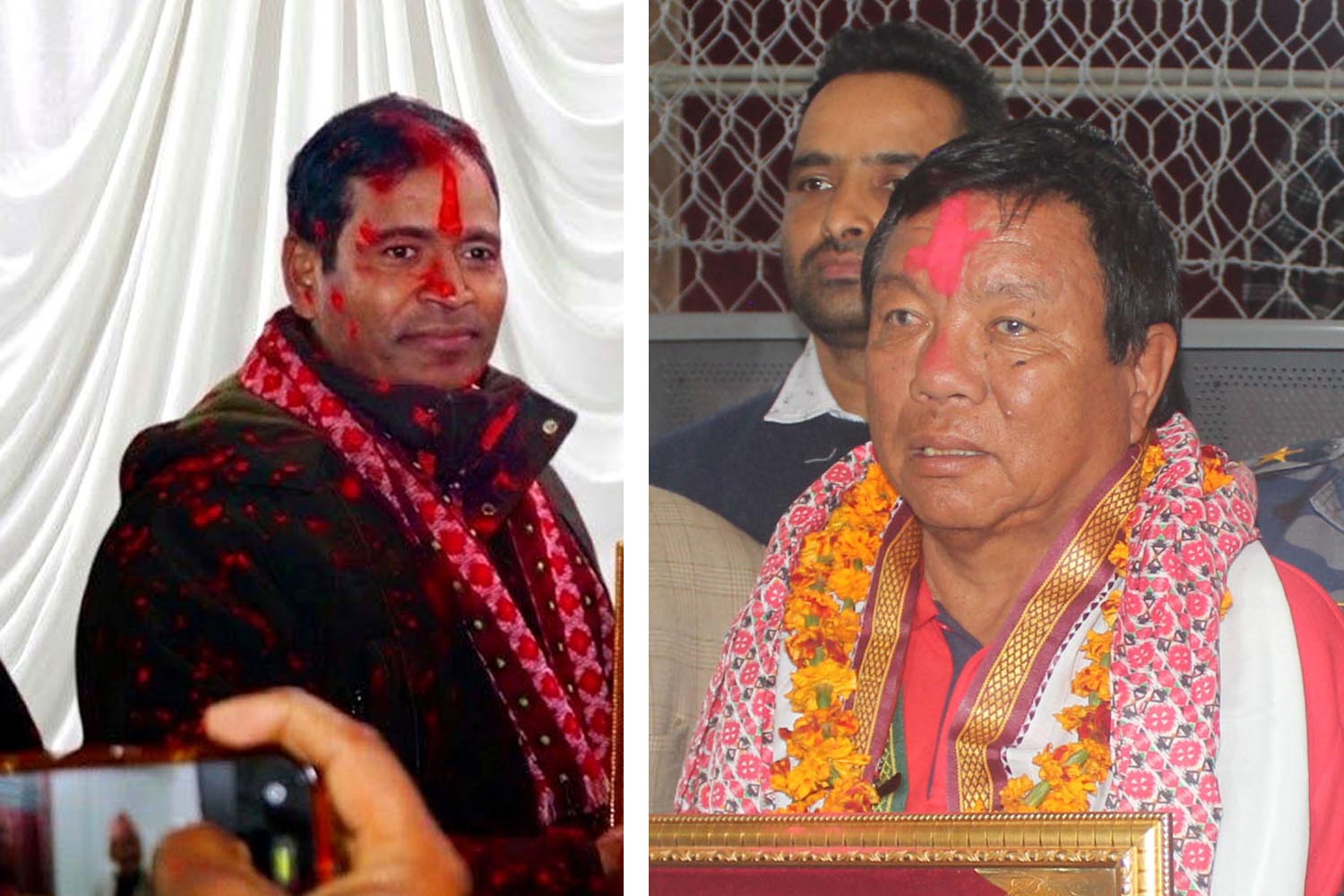
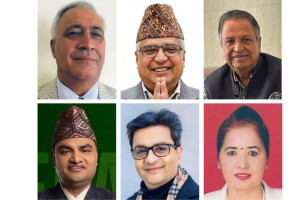
Mahendra Bahadur Shahi (left) of Nepali Communist Party won election in Kalikot while independent Mahabir Pun won the Myagdi seat on Saturday. Rss
In the PR vote count, RSP is leading with over 580,000 votes with about 1,130,000 votes counted so far. The Congress has received 193,916 votes, followed by UML with 153,552 votes and the Nepali Communist Party with 76,495 votes. The RPP has secured 41,808 votes, the Shram Sanskriti Party 20,605 votes, and the Rastriya Pariwartan Party (Ujyalo Nepal Party) 16,052 votes.
The highlight of the day, however, was Shah's decisive victory over Oli.
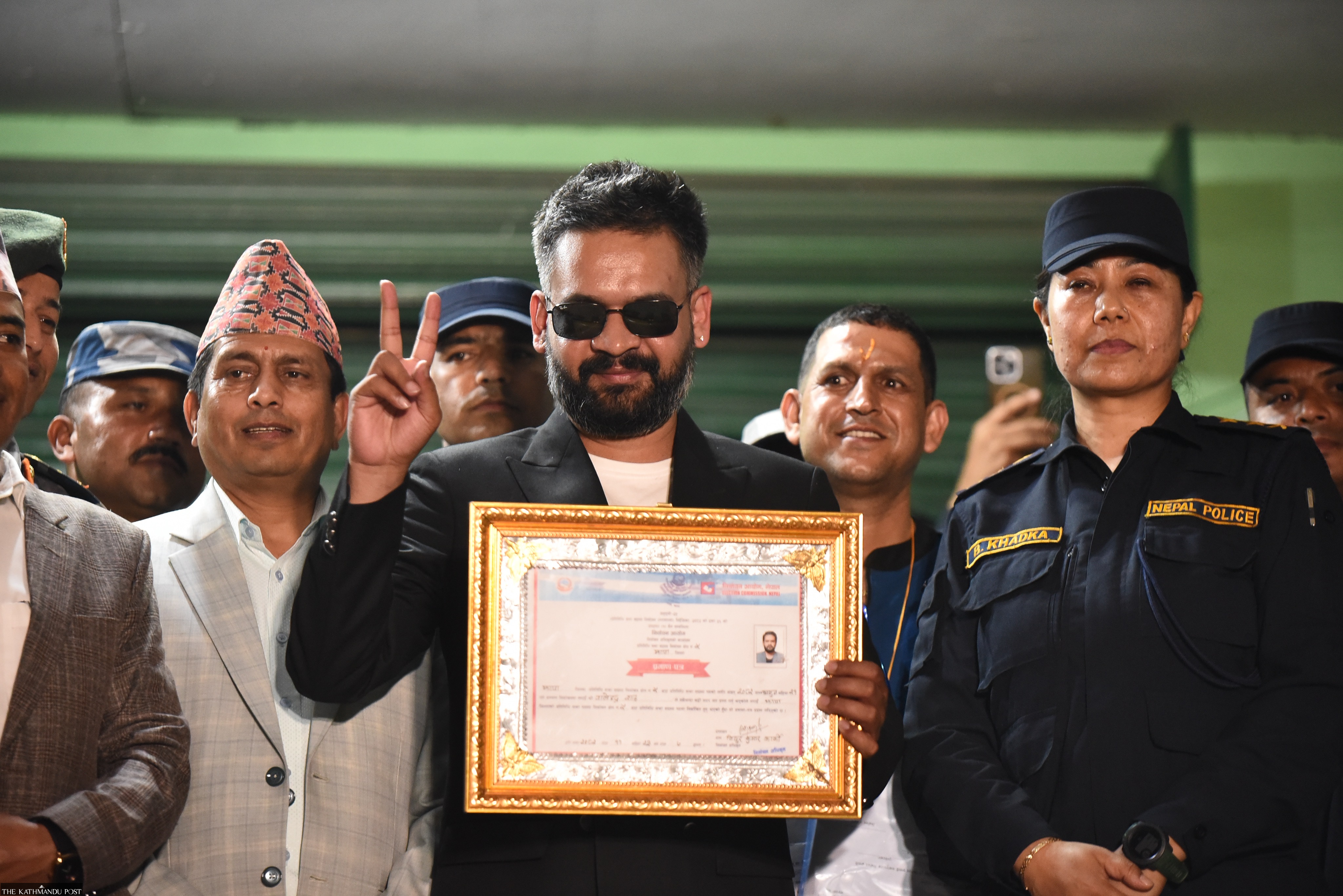
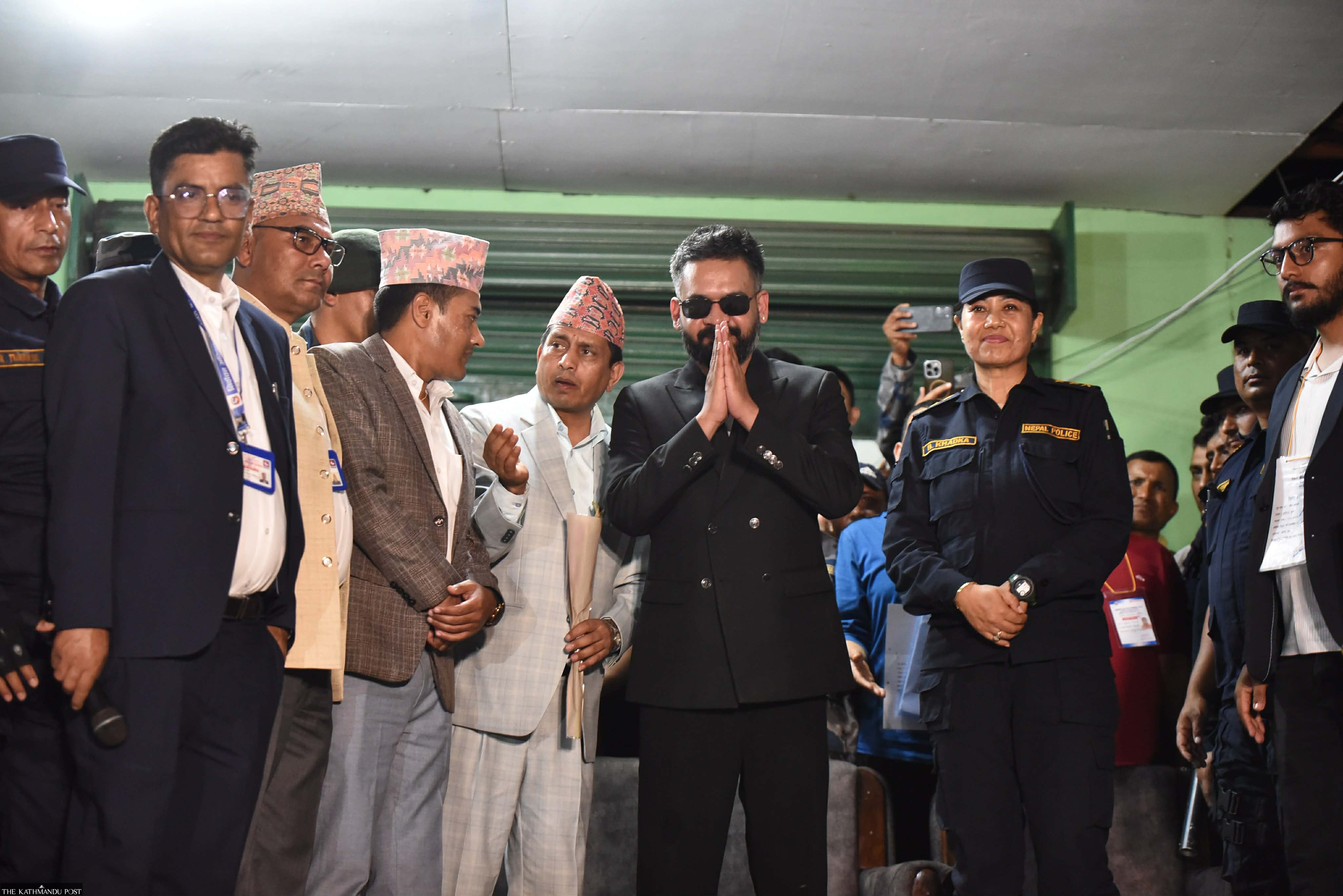
On Saturday evening, Shah visited the poll office in Jhapa to receive his victory certificate. He also held a victory rally, welcomed by an eager, expectant crowd. “Congratulations to you all,” Shah displayed a banner, standing atop a car. “You have won.” Messages of congratulations poured in on social media.
Oli, too, chimed in, shortly after the race was called.
“Balen Babu, congratulations on your win,” Oli captioned a grainy photograph of the two together, taken in the good old days. “May your five-year tenure be smooth and successful—best wishes!”
Timothy is a copy editor for The Kathmandu Post. Previously, he was a reporter on the Features desk and deputy editor on the National News desk. He joined the Post in 2015.




 14.81°C Kathmandu