Acute shortage of platinum-based drugs disrupts chemotherapy treatment across Nepal
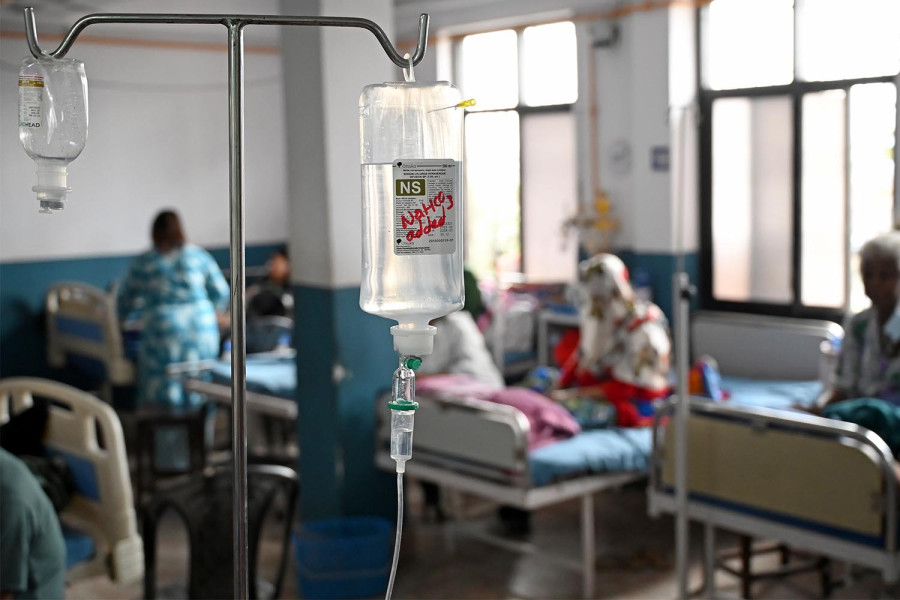
A nationwide shortage of platinum-based chemotherapy drugs is forcing patients’ families to source medicines from the black market amid disrupted supply and government price controls. Every day, around 60 cancer patients seek chemotherapy at Bhaktapur Cancer Hospital. Post Photo
Doctors at Patan Hospital instructed the family of Mithu Kumari Sapkota, a lung cancer patient, to bring both the patient and carboplatin, a chemotherapy drug, on Tuesday.
As the country is facing an acute shortage of platinum-based chemotherapy drugs, including carboplatin, which is used in the treatment of various solid tumours, including ovarian, lung, head, neck, and breast cancers, her family members faced a tough time arranging for the medicine.
“My husband and his elder brother struggled a lot to find a single dose of carboplatin," complained Shova Devkota, Sapkota’s daughter-in-law. “They used various channels, requested many, to find a single dose of medicine at Kuleshwar.”
This is a common problem faced by hundreds of relatives of cancer patients, who have been struggling hard to find a single dose of chemotherapy drugs, as the medicines are neither available in the hospital’s pharmacy nor in private drugstores outside.
Due to a rise in raw material prices, drug manufacturers have reduced production and increased drug prices. Suppliers in Nepal have stopped bringing the medicines, due to a price cap set by the government, which has affected hundreds of cancer patients.
Devkota said that price does not matter in a crisis, as obtaining chemotherapy medicines has become a major issue at present. “Definitely price matters, but continuing treatment is even more important,” said Devkota.
Multiple oncologists the Post talked to said that platinum-based carboplatin, cisplatin and oxaliplatin chemotherapy medications used to treat various types of cancers are not available in hospital pharmacies nor in private pharmacies, but relatives of patients have been paying exorbitant prices on the black market.
“We do not have medicines in our pharmacy, and our suppliers have told us that they cannot supply at the price set by the government,” said Dr Ujjwal Chalise, executive director at the Bhaktapur Cancer Hospital. “But relatives of patients have been bringing the medicines for treatment. Black markets have flourished in the ongoing crisis. You can call it black, grey or brown marketing, but the fact is medicines are not available at the price set by the government.”
Every day, around 60 cancer patients seek chemotherapy at Bhaktapur Cancer Hospital. The hospital administration said that even suppliers contracted through open bidding had stopped supplying medicines, citing price hikes by manufacturers.
“What I understand is that the price of raw materials for platinum-based chemotherapy medicines has increased manyfold due to the West Asia conflict and the rise in the dollar exchange rate,” said Chalise. “Some companies have reduced production and raised prices. Due to the government-imposed price cap, suppliers in our country have been unable to supply medicines at the old price.”
Chemotherapy medicines—carboplatin, cisplatin, and oxaliplatin—are used to treat various types of cancer. The medications damage the DNA of cancer cells and prevent them from dividing. Oxaliplatin is used primarily in the treatment of advanced colorectal cancer.
Oncologists say these medications need to be administered in combination with other medicines. They warn that the medication's efficacy will diminish if it is not included in the treatment.
“I have been personally requesting multiple suppliers every day for chemotherapy drugs,” said Dr Sandhya Chapagain, a consultant oncologist at Bir Hospital. “Young cancer patients, who have every chance of survival, are being deprived of chemotherapy medicines.”
The Chitwan-based BP Koirala Memorial Cancer Hospital said that the hospital pharmacy still could not get platinum-based chemotherapy medicines even if the suppliers and officials at the Ministry of Health and Food Safety agreed to resume delivery some ten days ago.
“We do not have those medicines, but relatives of patients have been managing by paying additional costs in the black market,” Dr Umesh Nepal, acting director of the hospital, told the Post over the phone from Chitwan. “The quality of the medicines has been compromised. We found that cold-chain storage was not maintained, and the seals of some medicines were broken. Relatives of patients have been facing a difficult time due to the crisis.”
The hospital had also written to the World Health Organisation’s Nepal office requesting an emergency supply of medicines, after its efforts to procure them in the country had failed. The UN health body, however, has not responded to the hospital.
Every day, 150 to 200 patients with various cancers involving different organs seek chemotherapy at the BP Koirala Memorial Cancer Hospital. Doctors say the medication is necessary to treat all cancers.
“Relatives of cancer patients are forced to pay up to Rs15,000 for a vial of medicine, which used to cost around Rs1,300 earlier; some have even gone to India for medicine,” said Anupa Thapa, head of the nursing department at the Chitwan-based BPKM Cancer Hospital. “Some patients, who could not afford to buy medicines in the black market, are taking whatever medicines they can get. If all regimens are not given in proper amounts, treatment will not be effective.”
Officials say that relatives of patients bring the medicine but cannot bring bills, as suppliers do not issue them, since the medicines may have been imported illegally without paying taxes.
“Most patients seeking care at our hospital cannot afford to buy medicines from the black market. They come to the hospital for treatment, selling their cattle and taking a loan,” said Thapa. “An entire family suffers when one member suffers from cancer. The medicine shortage has deepened the crisis, leaving patients and their families in even greater distress.”
Some patients are forced to purchase higher doses of medicines than they actually require.
“Many patients are bringing 450 ml carboplatin, even if they require 150ml, 200ml or 300 ml,” a nursing staff member at Patan Hospital said, asking not to be named, as she is not authorised to speak to the media. “We use only the required dose and discard the rest.”
Experts have warned that a prolonged shortage of medicines will affect treatment outcomes.
Suppliers complain that they can no longer supply medicines by incurring huge losses.
“My company has not imported chemotherapy medicines for the last three months, as the manufacturing companies have told us that they could not provide us the medicine at the older price,” said Krishna Murahari Karki, executive director of Yetichem, a supplier of pharmaceutical and surgical items. “Every day, around half a dozen people inquire about the availability of medicines, and we have the same answer, which is ‘no’.”
The Association of Pharmaceutical Producers of Nepal said that Nepali drug manufacturing companies have not shown interest in producing platinum-based medicines because the government has set a price cap and has not revised it for years.
“Why would anyone show interest in producing medicine to sell at a price less than the manufacturing cost?” questioned Biplab Adhikari, president of the association. “Those who have been importing such drugs will be forced to stop, due to the government policy.”
The Department of Drug Administration, the national regulatory body for the drug market, said that the Ministry of Health and Food Safety held discussions with suppliers to facilitate the resumption of cancer drug supply.
“We expect the ministry to invite us soon and make a decision about the price cap,” said Shiwani Khadgi, acting director general at the department. “We are working to address the ongoing crisis at the earliest.”
The department said that the Cabinet meeting has to make a decision on the price hike, and the decision should be published in the national gazette for implementation.
There is no exact census of cancer patients in Nepal, but the Global Cancer Observatory estimates over 22,000 new cancer cases and 14,000 deaths every year in the country. Around 60 percent of cancer patients are believed to undergo chemotherapy.
Arjun Poudel is a health reporter for The Kathmandu Post. Before joining the Post, he worked for Sagarmatha Television, Naya Patrika, Republica and The Himalayan Times.




 14.5°C Kathmandu