Patients denied treatment as doctors across Nepal shut outpatient care over assaults on medics
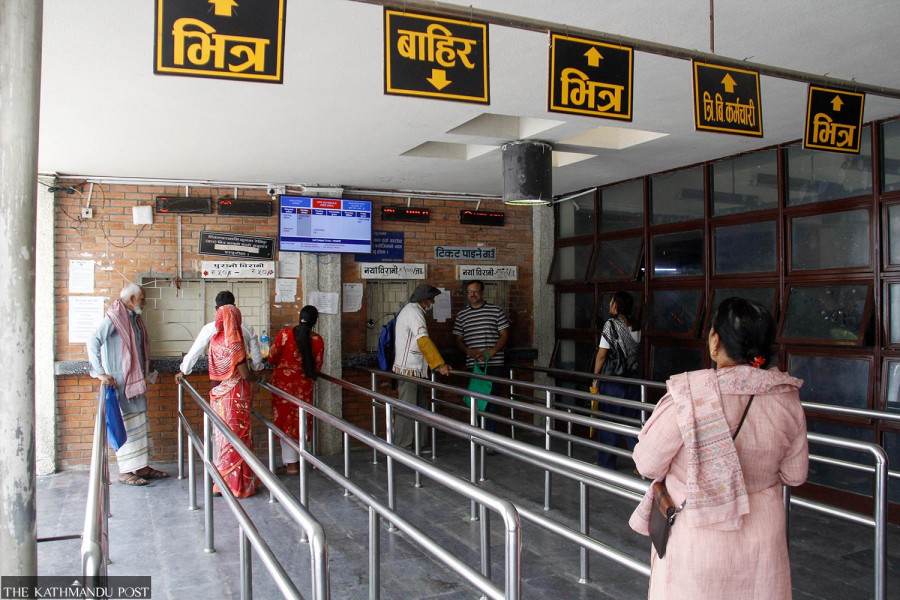
The Nepal Medical Association says aggression against doctors has increased, with more than 90 cases of physical and verbal abuse registered over the past 10 months. A scene at the Tribhuvan University Teaching Hospital in Kathmandu on Tuesday during a nationwide protest called by the Nepal MedicalAssociation to protest attacks on doctors. All OPD services, except emergency, were shut in government, private and community hospitals. Dipesh Darshandhari/TKP
Hundreds of thousands of Nepalis were deprived of medical care on Tuesday as doctors across the country boycotted services except emergency care to protest against rising incidents of assaults and verbal abuses against health workers.
The nationwide protest of medical doctors was triggered by a Saturday incident at Narayani Hospital in Birgunj, where Dr Pramod Ram was assaulted. After the death of a 45-year-old heart patient in the hospital’s emergency ward, relatives of the patient stormed the hospital, vandalised property and attacked and terrorised doctors and health workers.
The injured Dr Ram was brought to Kathmandu and admitted to the National Trauma Centre. Doctors say he is out of danger.
The Nepal Medical Association, an umbrella organisation of medical and dental doctors, has expressed disappointment that the authorities failed to show urgency in arresting those involved in the incident and taking legal action even after four days of the event.
The association declared a boycott of all non-emergency services across the country, depriving thousands of ailing patients of medical treatment. Doctors and health officials at Narayani Hospital have tendered mass resignations, demanding strict legal action against those responsible and stronger security measures to ensure a safe working environment in hospitals.
“Halting medical care is not our choice,” said Dr Sanjeeb Tiwari, senior vice president of the association. “Physical assaults, and verbal abuse, on our fellow doctors have become frequent. We feel insecure as people threaten to attack wherever they find us while the authorities concerned do not provide proper security.”
Officials said that each week two to three cases of physical assaults, verbal abuse, threat to life and defamation of doctors through Youtube or other social media platforms are reported to the association.
“Over 90 incidents of physical assault and abuse have been reported to the association,” said Tiwari. “Many cases of physical attacks or verbal abuse go unrecorded, as not all doctors file complaints and some incidents are resolved locally.”
The association issues press releases only in cases where complaints have been formally lodged regarding incidents of assault or abuse.
According to the association, Dr Kamlesh Prasad Yadav, acting medical superintendent of Lamkichuha Provincial Hospital in Kailali, was verbally abused and threatened by Lamkichuha mayor Sushila Shahi a few weeks ago.
In Udayapur, the medical superintendent of Katari Hospital, Dr Gaurav Shah, was verbally abused and threatened by some individuals over a postmortem report the hospital had prepared.
In Nepalgunj, a group of people entered the premises of Bheri Hospital, verbally abused doctors and health workers, recorded videos of the incident, and issued death threats against medical professionals.
A doctor serving at the Karnali Academy of Health Sciences was verbally abused by a group of youths while he was having lunch. The incident was recorded and uploaded on YouTube, Facebook and other social platforms.
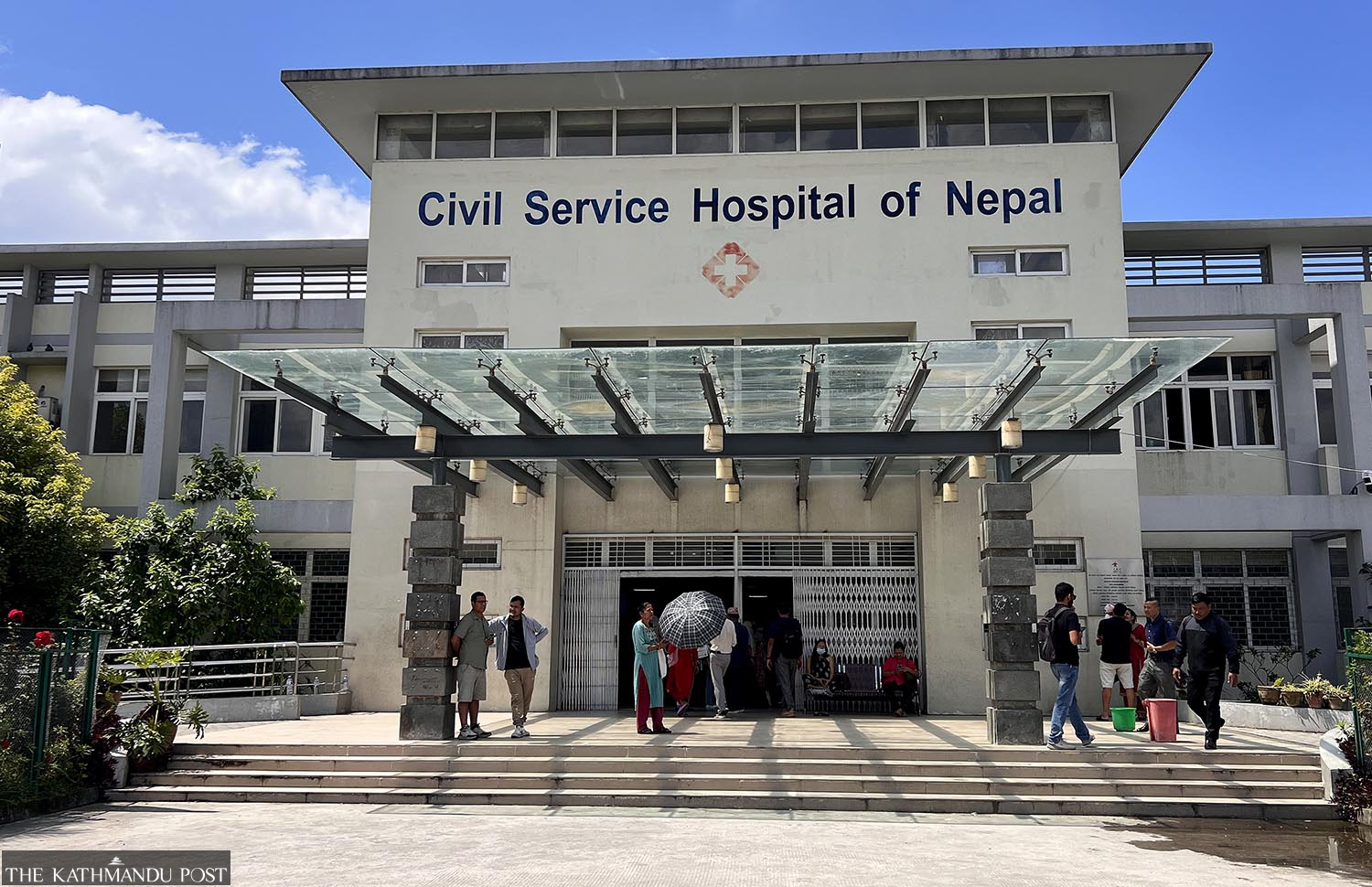
The entrance to the Civil Service Hospital at Minbhawan on Tuedsay. Angad Dhakal/TKP
The suspension of medical services by doctors left thousands of patients across the country without care. While some were forced to return home without treatment, those who had travelled to major cities and the national capital for consultations were compelled to extend their stay by renting hotel rooms or taking refuge with relatives.
Bel Bahadur Shrestha, a trauma patient, was found waiting outside the Emergency Department of the National Trauma Centre until 1pm on Tuesday afternoon, hoping to see the doctor who treated him before.
The 59-year-old resident of Chautara Sangachokgadhi Municipality-9 in Sindhupalchok had arrived at the hospital in the morning for an examination of his fractured leg, which had metal implants and had swollen due to an infection.
“The doctor, who treated my father, sees the patient in the out-patient department only on Tuesdays and Fridays,” complained Kumar, Shrestha’s son. “We could not meet the doctor today and have to come on Friday again. Health workers serving in the local health facility have warned of gangrene if the treatment is not started immediately, and we do not know if the doctor will be available on Friday.”
Usha Yadav, 23, another trauma patient from Bishnupur Rural Municipality-4, Siraha, who underwent surgery due to a rupture of the Achilles tendon some two weeks ago, had taken an appointment with a doctor at the same hospital on Tuesday for dressing the wound. She could not meet the doctor.
“I am worried about suppuration of the wound if dressing is not done today,” complained Yadav. “Employees at the hospital asked me to visit the hospital after the doctors’protest ends.”
Along with Shrestha and Yadav, hundreds of thousands of patients across the country were deprived of treatment on Tuesday. The Bir Hospital alone provides outpatient care to around 4,000 patients a day while the number of patients seeking care at the Tribhuvan University Teaching Hospital exceeds 4,000. Around 3,000 patients seek care at Patan Hospital in a day.
Officials at the Ministry of Health and Food Safety said that the number of patients seeking treatment at all health facilities across the country including health posts and primary health centres exceeds 300,000 in a day.
Meanwhile, services at the Narayani Hospital in Birgunj remained suspended for the third day in a row following the incident. Demanding strict legal action against those responsible and stronger measures to ensure a safe working environment in hospitals, doctors and health the hospital submitted their resignations collectively in protest.
Various rights organisations, condemning the acts of attacks on doctors and medics, have also asked the association to refrain from obstructing the health services.
The Consumer Rights Protection Forum said that attacks on hospitals and doctors is a serious criminal act and has urged the government to take strict legal action against those responsible.
“Attacks on doctors and health institutions are criminal acts that are extremely serious in nature and strict legal action must be taken against those involved,” said Bishnu Timilsina, general secretary of the forum.
“However, doctors also commit another offence by halting services and depriving thousands of patients of healthcare. They should adopt other creative forms of protest,” he added.
The National Human Rights Commission also expressed serious concern over the halt to health care services throughout the country. The commission, which carried out on-site monitoring of the incident, said that attacks on doctors and health facilities are condemnable acts, as such actions not only encourage anarchy but also pose a challenge to the rule of law.
The commission also stressed that patients have been affected by the suspension of services and reminded protesting doctors of the citizens’ right to health care.
“The closure of essential services such as healthcare is against the fundamental right to health guaranteed by Article 35 of the Constitution of Nepal,” reads the statement issued by the commission. “It is also against universally accepted principles concerning consumer rights, and prevailing laws. Such actions have infringed upon the health rights of ordinary citizens.”
Meanwhile, the Nepal Medical Association on Tuesday evening decided to give continuity to its protest on Wednesday as well.
Arjun Poudel is a health reporter for The Kathmandu Post. Before joining the Post, he worked for Sagarmatha Television, Naya Patrika, Republica and The Himalayan Times.




 21.66°C Kathmandu