



 21.42°C Kathmandu
Thu, Nov 5, 2026
Health
Nearly 10 million Nepali children exposed to unhealthy air, UNICEF warns
Millions more face drought, extreme heat and landslides, with overlapping climate and environmental hazards threatening children's health, education and protection, a new report says.
bookmark
Post Report
Published at : November 5, 2026
Updated at : November 5, 2026 10:55
Kathmandu
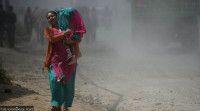
Nearly 10 million children in Nepal are exposed to unhealthy levels of air pollution, while millions more face risks from drought, extreme heat and landslides, according to a new UNICEF report highlighting the growing toll of climate change and environmental hazards on children's lives.
The advocacy brief, Growing Up in a Climate Hotspot: The Risks Shaping the Lives and Futures of Nepal's Children, draws on national and global data to show how climate change, pollution and disasters are threatening children's health, nutrition, education and protection. It calls for children's rights and needs to be placed at the centre of climate policies, financing and action.
The findings show that 9.9 million children are exposed to unhealthy air pollution, 7.3 million to drought and 5.7 million to extreme hot days. Another 2.9 million face exposure to rainfall-triggered landslides, while an estimated 2.4 million are exposed to multiple high-intensity climate hazards, compounding their risks and making recovery harder.
Beyond direct exposure to hazards, climate change is putting growing pressure on essential services that children depend on, the report says.
Despite Nepal's development gains, only 47.5 percent of the population has access to safely managed drinking water. One in four children under five is stunted, while 22 percent of children live in multidimensional poverty. Climate-related shocks are also increasing the risks of child labour, child marriage, disease outbreaks and disruption to education.
“The climate crisis is increasingly becoming a child rights crisis,” said Alice Akunga, UNICEF representative to Nepal.
“Children have contributed least to climate change, yet they are among those bearing its greatest consequences. Every flood, drought, heatwave and pollution episode threatens children's health, nutrition, education and protection,” she said.
With Nepal preparing to participate in global climate discussions at COP31, Akunga said the country had an opportunity and responsibility to put children at the centre of climate action, financing and adaptation.
The risks are not evenly distributed. Children living in poverty, girls, those with disabilities, children from historically marginalised communities and those in remote, climate-vulnerable areas face disproportionately high risks and have fewer resources to cope with and recover from disasters.
In a step towards more child- and youth-responsive climate action, the government endorsed the Declaration on Children, Youth and Climate Action at the National Climate Summit on October 29.
Launched at COP25, the first-of-its-kind global declaration has been endorsed by 78 countries. It commits governments to climate action that recognises the rights, needs and contributions of children and young people.
The endorsement builds on Nepal's global recognition for having one of the world's most child-responsive climate plans. The signed declaration will be formally handed over to UNICEF representatives at COP31 in Türkiye.
Ahead of the summit, UNICEF Nepal has urged the government to integrate children's rights and needs into climate policies, adaptation plans, disaster risk reduction strategies and climate financing.
It has also called on governments, development partners and climate finance institutions to increase investment in child-responsive adaptation and loss and damage, particularly in resilient health, nutrition, water, sanitation and hygiene, education, child protection and social protection services. Access to these services should take account of age, gender and disability.
The agency has further urged national and subnational governments to use disaggregated, child-focused climate risk data to guide planning and prioritise vulnerable communities. It wants the private sector to invest in climate-resilient infrastructure, clean energy and innovations that protect children's wellbeing.
UNICEF has also called on all stakeholders to ensure children and young people have meaningful roles in climate decision-making at local, national and global levels.
The report stresses the importance of listening to young people, who are already leading local climate initiatives and advocating stronger action.
“Climate change is not a future problem for children; it is already affecting our lives today,” said Jayanti Bam, UNICEF Nepal Youth Advocate for Climate Action.
“When floods damage schools, children don't just lose classrooms. We lose learning opportunities, routines, friendships and a sense of safety,” she said, urging decision-makers to invest in climate-resilient schools and services, listen to children's voices and give young people meaningful opportunities to shape their future.


Most Read from Health
Editor's Picks

The police chief who objects, delays—and ultimately complies

How Inam Sapkota tested the state

Kathmandu Film Festival puts Nepali cinema’s past, present and future in focus
How Deepak Bhatta became Nepal’s most influential power broker
What to know about Nepal Premier League’s big-money, star-studded rise
E-PAPER | November 05, 2026

×