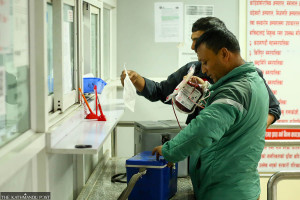
Daily demand exceeds 400 pints, but collections have fallen to around 20. Patients needing urgent surgery are among the hardest hit. Blood shortages are a recurring problem during Dashain, when colleges close, students return to their villages. Dipesh Darshandhari/TKP
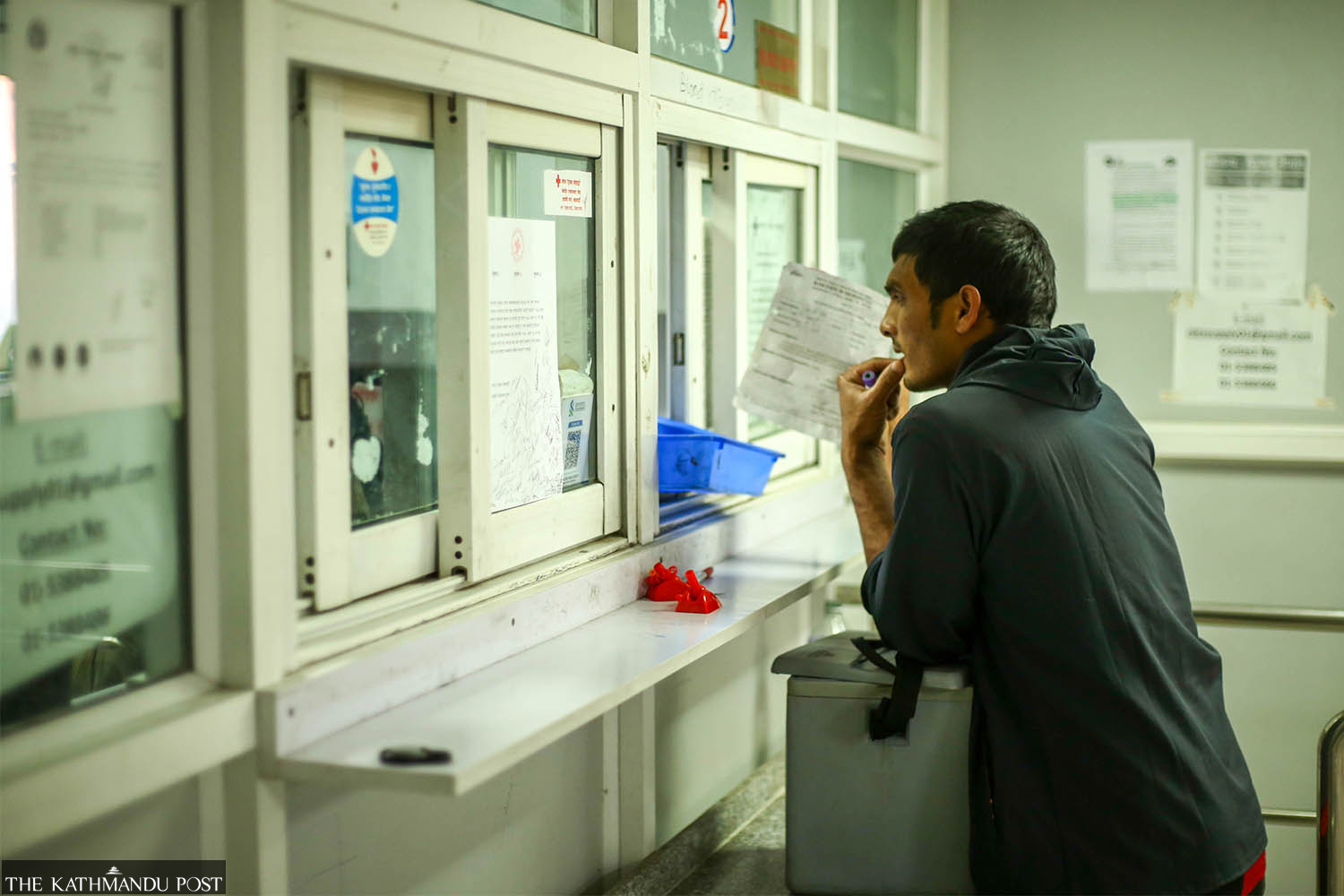
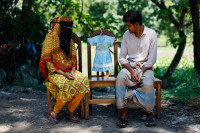
Parek BK waited all day on Wednesday at the Central Blood Transfusion Service, popularly known as the blood bank, hoping someone would donate blood for his ailing one-year-old daughter.
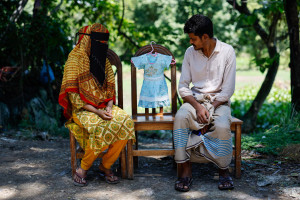
BK, a resident of Naraharinath Rural Municipality in Kalikot district, travelled to Kathmandu for his daughter's treatment at Kirtipur Hospital, where she is being treated for serious burn injuries. But with another surgery scheduled for Thursday morning, he faced a fresh challenge: arranging two pints of blood by Wednesday evening.
“I’ve been waiting for hours at the blood bank and couldn’t find a single donor,” BK said. “I don’t know anyone in this city who can donate blood for my daughter. I’ve just been waiting for someone to come.”
BK is among hundreds of relatives of critically ill patients struggling to arrange blood for their loved ones. With most blood banks in the Valley, including the Central Blood Transfusion Service, running out of stocks, relatives of seriously ill patients are scrambling to find donors.
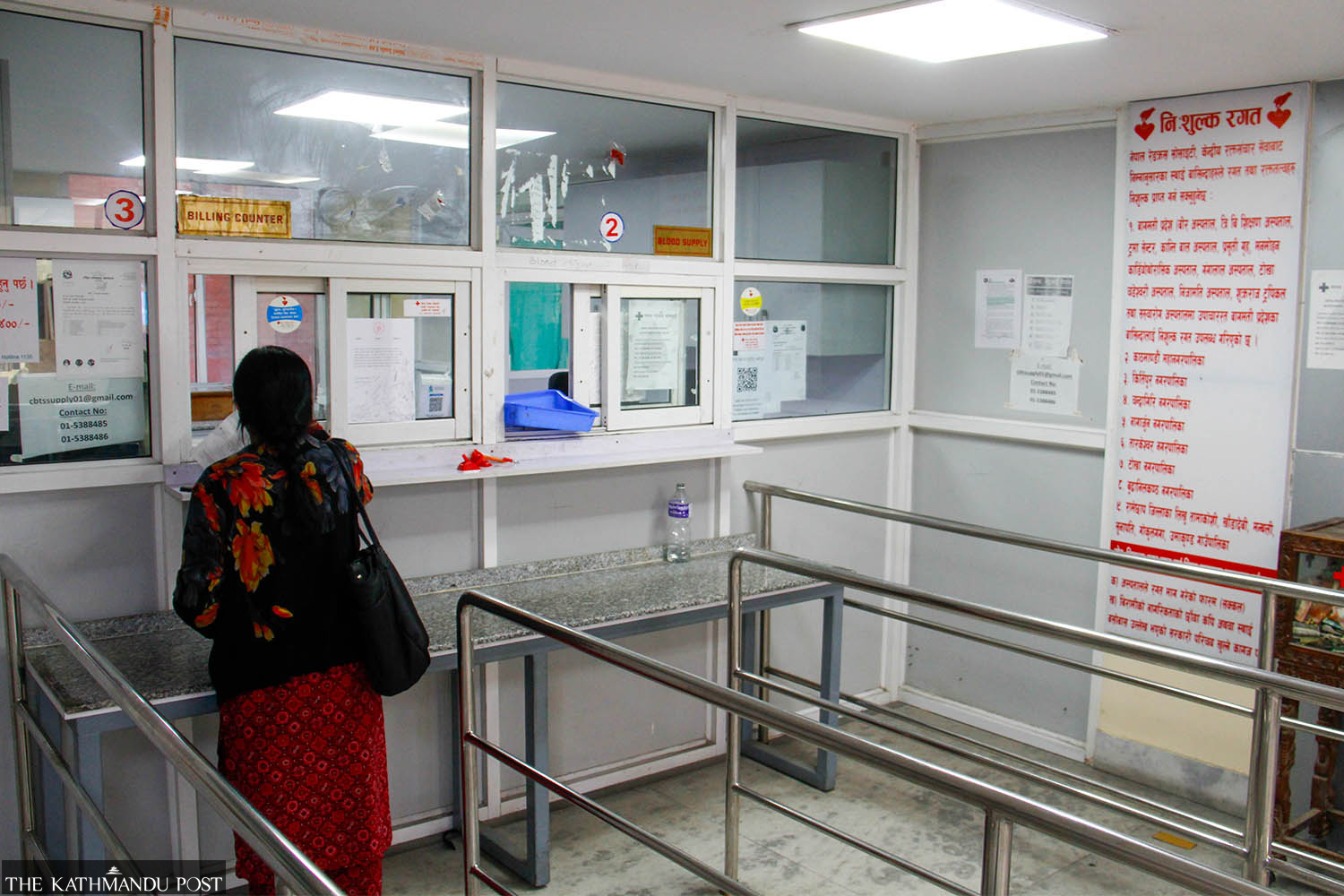
Officials at the blood bank run by Nepal Red Cross Society’s Bhaktapur branch said they get phone calls from patients' relatives round the clock but have been unable to help them. Dipesh Darshandhari/TKP
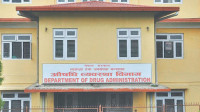
“We’re out of stock of all blood components, including fresh blood, whole blood or packed cells,” said Dr Prakash Kumar Yadav, director at the blood bank. “Along with us, most blood banks in the Kathmandu Valley have run out of stock.”
To address the shortage, Nepal Red Cross Society on Wednesday appealed to prospective donors and organisations to organise blood donation drives. Such drives have been suspended since the start of Dashain holidays, while demand for blood at hospitals continues to rise, according to bank officials.
Blood shortages are a recurring problem during Dashain, when colleges close, students return to their villages. The Dashain holidays began on October 11 and most colleges are not scheduled to reopen until after Chhath festival, more than two weeks away.
“Hundreds of relatives of patients visit us every day for blood, but we can help only a few,” said Sanjeev Kumar Yadav, another official at the blood bank. “Even my mother has to undergo heart valve replacement surgery at Shahid Gangalal National Heart Centre, but I’m not sure if I can arrange blood for her.”
Officials point to empty refrigerators at the blood bank as evidence of the severity of the shortage and urge the public to understand the urgency. They attribute the decline in collections to the closures of colleges across the Valley and the suspension of regular blood donation camps.
Although a few camps are held each day, turnout has remained low, with few donors showing up.
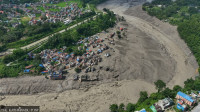
“Many people gave blood in the aftermath of the August 26 Bhotekoshi flood and are not yet eligible to donate again because three months have not passed since their last donation,” Yadav said.
The blood bank has appealed to organisations and institutions, such as banks and government offices to encourage their members and employees to donate blood.
The blood bank has appealed to organisations and institutions, such as banks and government offices to encourage their members and employees to donate blood. Dipesh Darshandhari/TKP
Officials at the blood bank run by Nepal Red Cross Society’s Bhaktapur branch said they get phone calls from patients' relatives round the clock but have been unable to help them.
“We don’t even have a donation camp scheduled until Saturday, and we don’t know how many donors will turn up that day,” said Nabaraj Khatri, an official at Bhaktapur blood bank. “Demand for blood is very high from hospitals in the district as well as from Kathmandu and Lalitpur.”
Officials at the Central Blood Transfusion Service said they have even requested blood banks in Kavrepalanchok, Dolakha, Dhading, Makawanpur, Dhanusha, and other districts to organise blood donation drives, but none had managed to do so.
“We’ll even go to Birgunj for collection if they organise a donation camp,” Yadav of the Kathmandu blood bank said. “We’ve also requested security agencies, Army, Police and Armed Police Force for help. The ongoing crisis could be eased if those agencies organised blood donation drives.”
Officials warn that a prolonged shortage could put patients with kidney failure, those undergoing routine surgery, people with thalassemia, women requiring Caesarean sections, and cancer patients at risk.
“My husband’s haemoglobin level has dropped to 5.4, while it should be above 7. Doctors at Bir Hospital asked me to arrange two pints of blood immediately,” said Radha Sharma of Rupandehi. “But I couldn’t find blood either at the hospital or at the blood bank.”
Doctors say patients who have travelled to Kathmandu from outside the Valley for treatment will face additional expenses if their surgeries are postponed.
Arjun Poudel is a health reporter for The Kathmandu Post. Before joining the Post, he worked for Sagarmatha Television, Naya Patrika, Republica and The Himalayan Times.




 16.91°C Kathmandu