



 22.94°C Kathmandu

Thu, Oct 22, 2026
Money
How Ribdikot built a Rs460 million farming economy
Investment in agriculture, livestock, market access and production-based subsidies is helping farmers, including returnee migrants and women, expand commercial farming in the Palpa local unit.
bookmark![]()
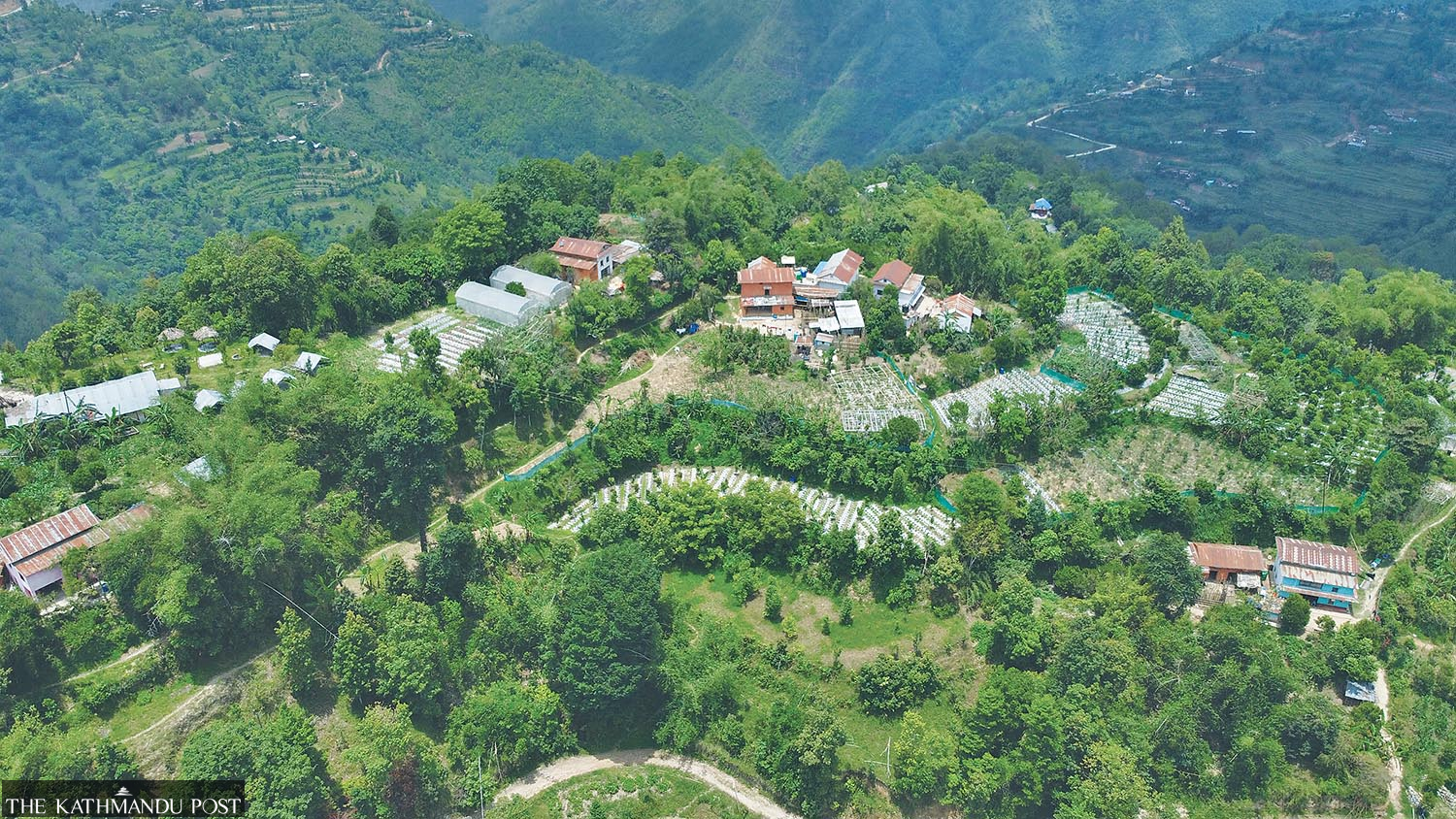
An overview of red cherry pepper farms in the rural municipality. These pictures were taken recently.
Madhav Aryal
Published at : August 13, 2026
Updated at : August 13, 2026 07:35
Palpa
Bhim Bahadur Raut of ward 8 of Ribdikot Rural Municipality in Palpa returned to his village six years ago after quitting foreign employment and has since been raising buffaloes and growing vegetables.
He generates Rs500,000 to Rs700,000 in sales each season from milk and vegetables alone.
“I am more satisfied and earning more by working in my own village than I did abroad,” he said.
He is among the young farmers who have found success after returning from abroad.
Sita Kunwar, another farmer in Dabaka in ward 7 of the rural municipality, keeps four cows and two buffaloes and sells more than 50 litres of milk a day. This season alone, she generated more than Rs1 million in sales from cucumbers, tomatoes, other vegetables and milk. She has also leased additional land and expanded her farming operations to increase production.
“Vegetable farming is generating good income now because access to markets has become easier,” she said.
There are more than 1,000 farmers like Kunwar and Raut in Ribdikot.
Commercial agriculture and livestock farming are expanding across all eight wards of the rural municipality. Data show that both production and turnover have more than doubled in the past four years after the rural municipality steadily increased investment in agricultural and livestock development.
The investment made by the rural municipality has also boosted farmers’ incomes significantly.
In a single year, Ribdikot generated more than Rs460 million in income from agricultural and livestock products.
Along with increased production of vegetables, fruits, milk, meat and eggs, farmers’ incomes have risen significantly, while youths returning from abroad and women are increasingly taking up commercial farming.
Narayan Bahadur Karki, chairman of the rural municipality, said agricultural and fruit products generated more than Rs260 million in turnover in the last fiscal year, 2024-25, while livestock and poultry products generated Rs204.037 million.
Akabare chillies (red cherry peppers) alone generated Rs77.5 million, tomatoes Rs70 million, oranges Rs60 million, vegetables and climbing crops Rs30 million, and cucumbers more than Rs10 million.
Other crops, including ginger, turmeric, coffee, Myrica rubra, plums, bananas, mangoes and litchis, generated around Rs20 million.
According to Geeta Nepali, chief of the municipality’s livestock development section, milk sales alone generated Rs36.5 million across the municipality. Goat meat generated Rs11.645 million, pork Rs19.38 million, and eggs around Rs31.7 million.
The data, prepared on the basis of annual production, local consumption and exports, show that the municipality’s investment in agriculture has been effective, she said.
Kanta Adhikari, vice-chair of the rural municipality, said the turnover of agricultural and livestock products stood at Rs236 million in fiscal 2022-23. It rose to Rs310 million in 2023-24 and crossed Rs460 million in 2024-25.
Investment through groups, development of pocket areas, utilisation of fallow land and production-based subsidy programmes implemented across all eight wards have contributed to a significant increase in production, she said.
The municipality’s agriculture project has been a key foundation of this success.
With support from Heifer Project Nepal and facilitation by the Rural Economic Development Association (REDA), the project has provided farmers with subsidies for seeds, fertiliser, mulching plastic (a sheet of plastic spread over the soil around crops to keep moisture in and control weeds) cows and buffaloes, goats, shed improvements, and the construction of permanent and temporary tunnels, among other support.
Starting this fiscal year, the municipality has also launched a programme called “One Tree, Hundred Rupee Note”.
More than 32,000 fruit saplings have been planted under the programme. Farmers have also been provided with subsidised green nets to reduce damage caused by wildlife.
Commercial vegetable farming and livestock rearing have now expanded in Bhairabsthan, Deurali, Somhar, Thimure, Khasyauli, Kusumkhola, Khyaha and Falungmainadi areas of Ribdikot.
Women in Falungmainadi alone sell more than Rs10 million worth of cucumbers annually. Farmers have become more encouraged as access to markets for vegetables, fruits, milk and other products has improved.
Lila Karki, executive director of REDA, said that commercial farmers in Ribdikot are now able to earn more than Rs20,000 to Rs25,000 a month.
Kamala Pokhrel Neupane, a farmer from Khyaha, said the availability of markets for farm produce has made it easier to expand cultivation.
An organic fertiliser plant established in Kusum Khola has also helped promote organic production.
According to the municipality, investment focused on agriculture and livestock has made Ribdikot an example of a successful rural economy.
“An environment has been created for agriculture to be pursued as a business. This has increased employment in the village, helped retain young people in the area and established Ribdikot as a model local government for agricultural production,” the rural municipality said in a statement.
Madhav Aryal
Madhav Aryal is the Palpa correspondent for Kantipur Publications.

Most Read from Money

Nepal travel agents threaten to stop selling Thailand trips over visa rules

Why does an hour long flight to Dhangadhi cost more than a flight to New Delhi?
Malaysia rejects Nepal’s demand to open recruitment to all manpower agencies
No school, but a graduation cap for women dairy farmers
Nepal arrests four medical service providers as Malaysia recruitment row deepens
Editor's Picks




E-PAPER | October 22, 2026

×