Nepal’s game developers seek tax relief, Google access to scale globally
Industry leaders say high taxes and restrictions on Google Play merchant accounts are stifling local developers, as the prime minister pledges to create conditions for a home-grown technology unicorn. Shutterstock
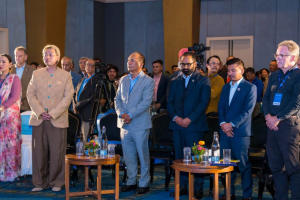
Prime Minister Balendra Shah recently brought Nepal’s gaming industry into the spotlight when he invited representatives of game development companies and software developers to Singha Durbar to discuss the sector’s prospects and challenges.
During the meeting, Shah asked how games developed in Nepal were performing and showed interest in globally popular titles such as Clash of Clans. He also brought up GTA VI, the much-anticipated release from US gaming giant Rockstar Games, and asked about its potential impact.
The sixth major instalment in the best-selling Grand Theft Auto series, GTA VI is among the most anticipated video game releases worldwide. Its predecessor, GTA V, came out in 2013, and the new edition, arriving 13 years later, is reportedly the most expensive video game ever made, with development costs estimated at more than $1 billion.
The discussion has raised hopes among Nepali game developers that the government may finally address longstanding policy and regulatory obstacles holding back an industry with the potential to earn foreign currency and create high-value jobs.
Following the meeting, Shah wrote on Facebook on Saturday that his government would work to create conditions for Nepal to produce a global unicorn in the gaming and information technology sectors.
In technology and startup terminology, a unicorn is a privately held new venture valued at $1 billion or more, equivalent to over Rs151.3 billion.
Shah said the government had begun work to address tax and policy hurdles facing the gaming and IT industries. He also pledged investment in game jams, startup events, and hackathons (intensive collaborative coding competitions), alongside regular dialogue between industry representatives, Nepal Rastra Bank, and the finance ministry.
“We must review the rules and create an environment that makes it easier to build a global unicorn from Nepal,” Shah wrote. “IT products and exports are already in a promising position. We will ease taxes and reform policies, including the rules governing international earnings, so that talented young people and companies can earn more easily and reinvest their money.”
But industry leaders say ambitious promises alone will not be enough. They want the government to address a combination of high taxes, restrictions on cross-border payments, limited access to international digital payment platforms, and inadequate investment.
Developers say the tax burden on payments for overseas servers, advertising, and campaigns to attract international users can exceed 30 percent, and this significantly raises operating costs and leaves companies with less money to reinvest in product development and expansion.
Sujan Shakya, chief of Teslatech, the company behind globally popular game Callbreak, which has recorded more than 150 million downloads, says the high cost of international payments is undermining the competitiveness of Nepali developers.
“When we pay for overseas servers, advertising, and user acquisition, and on top of these we have to pay additional taxes of nearly 30 percent,” Shakya said. “That makes it extremely difficult to compete with foreign companies.”
The tax burden comprises 13 percent value-added tax, 15 percent tax deducted at source and 2 percent digital services tax.
Shakya wants the government to ease taxes on payments for international servers, advertising and user acquisition, which are essential for reaching and retaining users in overseas markets.
Another major obstacle is the inability of Nepali companies to open merchant accounts on the Google Play Store, developers say.
The restriction prevents local companies from selling in-app purchases, through which users pay for additional services, virtual items and other digital content while using a game or mobile application.
Without access to Google Play merchant accounts, Nepali developers are largely restricted to earning revenue through advertising, rather than tapping into the potentially more lucrative market for paid digital content.
Developers want the government to engage with Google and introduce the necessary policy changes to allow Nepali companies to access the merchant service.
Asim Basnet of Dark Matter Game Productions, which has developed games including Sprite Ninja, Ninja Hattori, and the children's game Kidsage, says the industry will struggle to scale up without a more supportive policy environment.
“Companies need to reinvest their foreign earnings to grow,” Basnet said. “But nearly 30 percent is lost to VAT and tax deducted at source. The government should ease the tax burden on an industry that earns foreign currency and allow companies greater freedom to reinvest their earnings.”
For developers, the problem goes beyond taxation. They say Nepal's policies do not adequately distinguish between companies providing outsourced software services and those developing and owning their own intellectual property.
NJ Subedi, founder of Yarsa Labs, whose Ludo game has surpassed 200 million downloads worldwide, says the distinction is important when designing policies to support the country's technology industry.
“Outsourcing businesses have limited scope to scale because they do not own the intellectual property they work on. They also bring little long-term value to Nepal and potentially accelerate brain drain,” Subedi said. “Companies that develop their own products retain intellectual property in Nepal, have greater growth potential and create opportunities for local talent at home.”
Subedi welcomed the prime minister’s interest in the industry, saying Nepali developers are already competitive with their counterparts in developed countries in areas such as artificial intelligence and developer tools.
They have access to similar platforms and technical capabilities, he said, adding, “What they lack are the capital and policy conditions needed to turn their technical expertise into globally competitive businesses.”
“Nepal has few investors with the capital to back companies at that scale, and local venture capital alone cannot provide sufficient funding,” he said. “Foreign investors are also reluctant to invest in Nepal-registered companies because of the country's policy and business environment.”
Subedi believes Nepal needs more open and investor-friendly policies, similar to those in Singapore or Dubai, to attract the international capital required to build technology companies capable of competing globally.
The lack of access to foreign investment is particularly significant for game developers, whose businesses often require substantial upfront spending on product development, marketing, infrastructure, and user acquisition before generating significant returns.
Industry leaders argue that allowing companies to retain and reinvest more of their foreign earnings, simplifying international transactions and opening access to global digital payment platforms would give them a better chance of scaling up.
They also want the government to recognise locally developed products as a distinct economic opportunity rather than treating all IT companies under the same regulatory framework.
Prime Minister Shah's renewed interest in gaming and esports is not entirely new. As Kathmandu mayor, he had pledged to support the esports industry. The Kathmandu Metropolitan City allocated Rs10 million for competitions in its 2022-23 budget.
The programme, however, was never implemented after the proposed spending attracted widespread criticism and controversy on social media and in public debate.
His latest pledge has once again raised expectations among developers. But they say the real test will be whether the government can translate its ambition of creating a global technology unicorn into concrete changes in taxation, foreign exchange rules, digital payment access and investment policy.
For an industry already producing games with hundreds of millions of downloads worldwide, developers say Nepal's challenge is no longer simply about whether local talent can compete globally. It is about whether the country's policies will allow them to do so.




 11.63°C Kathmandu