Q&A: Before we get high on the cannabis law, let’s measure the plant
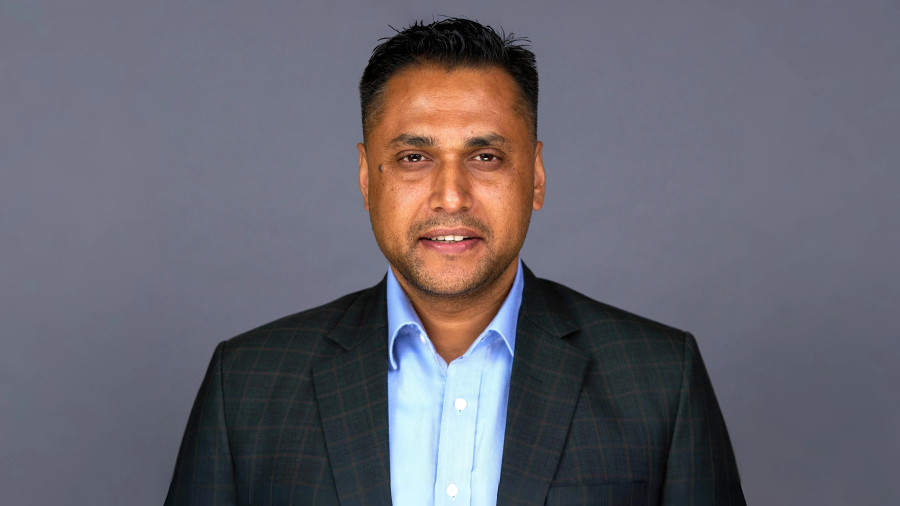
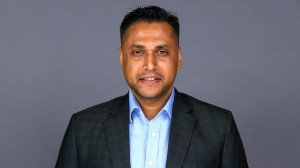
Dr Amrit Baral says Gandaki’s cannabis law is a welcome start but argues it still lacks the science, standards and public education to work. Dr Amrit Baral, a research fellow at Johns Hopkins University. Photo: Courtesy of Dr Amrit Baral
Gandaki Province passed a cannabis cultivation bill on July 9, about three and a half months ago. It became an act after authentication on August 3. Many have called the law historic, while others have pointed to its gaps.
Dr Amrit Baral is a research fellow at the Johns Hopkins Bloomberg School of Public Health in the US. His research covers cannabis, psychedelics and their health impacts. He also writes guest essays for The Post, including one titled “Making the act was the easy part”. Dr Baral sat down with The Post’s Biken K Dawadi to explain what the law gets right, where it falls short and what a workable framework could look like.
What in this law deserves to be welcomed?
It is a historic bill. Given Nepal’s other priorities, one province passing a bill to legalise cannabis is newsworthy. We also have a long history with the plant, from ceremonial use to different health uses since ancient times. Globally, legalisation and medicinal use are the trend, and Gandaki caught that signal and moved ahead. We should welcome it with respect.
But your article says the act was the easy part. What’s the hard part?
An act is mostly written by a team. It sets out who gets licences, how cultivation is regulated, and everything from processing to manufacturing. The detailed picture comes from the directive. The bill talks about income generation, sustainable farming and supporting low-income individuals, but those details are still to come. It also sets requirements like installing CCTV cameras and following certain standards, again without details.
Which details, for instance?
How much land a person can farm, and what kind of background they need. For example, someone with no criminal background could apply for a licence. But who will actually do it? The directive has to spell all of that out.
Were you consulted while the law was being drafted?
Not personally. I was following the developments, and once the bill was authenticated and uploaded to the website, I read it. I was very excited. I research this in the US, and now it was happening in Nepal. Parts of it are logical, but there are gaps.
What is the way forward?
Involve experts. Bring in agriculture and health specialists, economists, farmers and local stakeholders. They know their land and how they grow the plant. Lawyers and advocates should be there too. I study health effects, not agriculture. I don’t know much about the plant’s botany. Each expert adds a dimension. The goal is a team where thoughtful conversation, ideas and constructive criticism lead to a sustainable framework.
How important is it for governments to include researchers like you?
It is very important. Take the 0.3 percent figure. The Act says that but talks about medicinal use, which is contradictory. Anyone working rationally has to involve experts.
How is the 0.3 percent limit contradictory?
Cannabis below 0.3 percent is hemp. That’s the fibre used for cloth and the seeds we’ve long eaten as pickle. All the medicinal evidence, on conditions like cancer, chronic pain, sleep disorders and epilepsy, comes from cannabis above 0.3 percent. Medicinal cannabis means THC-dominant plants or those with a THC-to-CBD ratio. Those are two different frameworks. Hemp needs to be formalised, and the pathway for medicinal cannabis needs to be made clear.
So the Act has a big lapse?
It needs clarity. Is this a hemp bill, a medicine bill, or both? It has to say what hemp is and what medicinal cannabis is. Once that’s clear, it becomes more scientific, more rational and more sustainable.
What would you do instead?
Document it. Gandaki has 11 districts. Say we take 1,200 to 1,500 random samples from them and aggregate the results to see what levels our cannabis has. That is strong evidence, and we can set a threshold based on it. If our cannabis starts at 1 percent and the cap is 0.3, the whole crop is wasted. That burdens farmers too. I’d suggest a germplasm survey and plant documentation. We can’t study every plant, so we sample randomly. It settles the controversy and gives us a report to publish to the world.
Are there examples Nepal can learn from?
Yes. Thailand made a mistake. It issued too many licences and opened a lot of dispensaries, and only later realised the problems. Botswana, Lesotho and Brazil are also working on this. We don’t have to reinvent the wheel. There are also countries culturally close to us, with a collective social mentality. We can learn from them and adapt it for Nepal.
The Act has no clear export guidelines. Does that matter?
It does, and not only for international export. Take cultivation. If we produce biomass, we have to follow standards that Europe and North America follow, like Good Manufacturing Practice and Good Agricultural and Collection Practice. With accreditation, buyers can see that you’ve followed the standards. Cannabis is a bioaccumulator of heavy metals. If we haven’t tested the soil properly, the plant takes up heavy metals, which can harm consumers. Testing for insecticides, pesticides, heavy metals and moulds all falls under those protocols. Products that follow them are easier to export and safer to use.
Nepal also carries a lot of stigma around cannabis consumption. What are its short-term and long-term effects?
This is a very new field, and we learn something new every day. In the short term, there is some evidence that it helps with sleep and insomnia. On the adverse side, it can cause short-term memory loss and make people procrastinate or feel lazy. It can also raise the heart rate. In the long run, the evidence is still building. We have studies on the cardiovascular system and the brain, but they aren’t very robust yet, and study designs are still improving.
Is there evidence on mental health?
Yes. In people who use cannabis chronically, especially high-dose, high-potency THC, studies link it to psychosis, cannabis use disorder and even schizophrenia. But those are mainly observational studies. We didn’t give cannabis to people and watch the results. We compared people who consume naturally with those who don’t, over time. At the top of the evidence hierarchy are randomised clinical trials, followed by prospective longitudinal studies, then cross-sectional studies. Case studies sit at the bottom.
What does that mean for Nepal?
We urgently need robust clinical trials. Regulation and research must go together. My own research runs from cells to society: how does cannabis, or a psychedelic, affect cancer cells, and what does it do to society? Legalisation can also send a message that cannabis is great, when it has both positive and negative sides. People need guidance from a health professional.
So health professionals need preparation too?
Absolutely. If someone uses cannabis medicinally, they need guidance on dosage and formulation, and their side effects need monitoring. I’m developing a course to train Nepal’s health professionals on the endocannabinoid system and how cannabis interacts with it. If availability rises tomorrow, doctors must know how to manage side effects. Take cannabinoid hyperemesis syndrome, which is now common in emergency rooms in the US and Canada. Evidence says cannabis prevents nausea and vomiting, especially chemotherapy-induced nausea in cancer patients. Paradoxically, at high doses and frequent use it can cause extreme nausea and vomiting. As regulation begins here and breeding follows, people will manipulate the plant to raise THC yield. We have to think about how that affects consumers.
You mentioned pharmacovigilance. What would that look like?
In the West, there is a seed-to-shelf system with a barcode. If a patient has an adverse effect after using the cannabis, it can be traced exactly: who grew it and under what conditions. And if something works well for a health condition, we can use that data to reverse-engineer the plant and get the desired yield.
You’ve said Nepal’s cannabis may be genetically special. Why?
It is an open genetic library. Western products focus on THC because it is all artificial selection. Here it’s natural selection, since we haven’t bred the plant intensively. So we may have rare compounds with high medicinal, therapeutic and economic value. The major cannabinoids are THC and CBD, called major because they’re studied more and found in larger quantities. The minor ones, like CBN and CBG, are very valuable now. Our landrace cannabis might have them in higher quantities, but we have to study it. Saying we were part of the hippie trail isn’t enough. We must catch up scientifically.
Many in our audience may not know these terms. In short, what are THC, CBD and CBN?
THC is the intoxicating compound that gets you high. CBD is non-intoxicating. They bind to CB1 and CB2 receptors that we already have. We are born with an endocannabinoid system, like our dopaminergic and serotonergic systems. It has nothing to do with the plant, but it was discovered through the plant, hence the name. “Endo” means endogenous, produced within the body.
What does that system do?
It works like a thermostat. When you switch on an AC and the room reaches a certain temperature, it turns off by itself. The system balances stress and homeostasis in the same way. Cannabinoids from the plant hijack it by binding to those receptors, a lock-and-key phenomenon. It differs from person to person and changes as we age.
With so much information on social media, how should people read health claims?
With an analytical hat on. If a study says cannabis improved sleep, look at the design. How many people were studied? How was the data collected? Are there biases or confounding factors? A study in an African population may not generalise to ours. Check its internal validity too. Cannabis is not a cure-all, whatever people say about cancer or diabetes. We have some great evidence, some good evidence and a lot of very low evidence.
If you could say one thing to lawmakers, what would it be?
Don’t take shortcuts. Do a little research and build a sustainable framework. Bring in health experts, cannabinoid researchers, agriculture experts, lawmakers, advocates and stakeholders for a good discussion. We feel the urgency, and Nepal is behind in cannabis science. But we must be pragmatic and move side by side: the bill, the infrastructure, public education. People should know the risks, benefits and therapeutic properties. At the top of this ecosystem is education. That would be a great project and wouldn’t collapse tomorrow.




 11.63°C Kathmandu