Nepal seeks recognition for six more 8,000-metre peaks
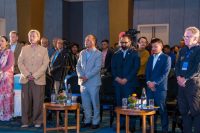
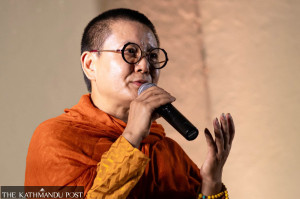
The proposal would increase the number of internationally recognised peaks above 8,000 metres in Nepal from eight to 14, giving the country 14 of the world's 20 highest mountains. The ongoing 2026 general assembly of the International Climbing and Mountaineering Federation (UIAA) in Kathmandu.
Nepal is seeking international recognition for six additional Himalayan peaks above 8,000 metres, a move that would increase the country’s internationally recognised eight-thousanders from eight to 14.
Minister for Culture, Tourism and Civil Aviation Khadak Raj Paudel and Nepal Mountaineering Association (NMA) President Fur Gelje Sherpa presented the proposal at the 2026 general assembly of the International Climbing and Mountaineering Federation (UIAA), held in Kathmandu.
Speaking at the assembly on Thursday evening, Paudel said Nepal was pursuing international recognition for the six peaks as independent mountains above 8,000 metres. Sherpa also addressed the UIAA executive board, urging it to formally assess the proposed peaks and grant them separate international recognition.
Nepal already lists 14 mountains above 8,000 metres in its national records, following a revision by the Department of Tourism in 2025. However, the international mountaineering community currently recognises only eight in Nepal. The NMA is seeking to have the remaining six added to the internationally recognised list.
If the proposal is accepted, Nepal would account for 14 of the world's 20 internationally recognised mountains above 8,000 metres, up from its current share of eight among the global total of 14.
Four of the proposed peaks are in the Kanchenjunga massif and two in the Everest-Lhotse region.
The four in the Kanchenjunga region are Kanchenjunga South (8,476 metres), Kanchenjunga Central (8,473 metres), Yalung Khang (8,505 metres) and Yalung Khang West (8,077 metres). The other two are Lhotse Middle (8,410 metres) and Lhotse Shar (8,400 metres).
Sherpa said each peak had its own name, geographical identity and distinct route to the summit. Reaching one summit did not mean climbing another, he argued, and each should therefore be assessed as an independent mountaineering destination.
“The aim of seeking separate recognition for these peaks is not simply to increase the number of mountains on the international list,” he said at the assembly. “Their distinct identities, local names, geographical features and separate routes to their summits deserve fair and professional assessment.”
He said climbing above 8,000 metres involved exceptional challenges and that reaching each distinct summit should count as an independent mountaineering achievement. Such climbs require extraordinary physical endurance, technical skills, experience and meticulous preparation, he said.
Sherpa said former NMA presidents and executive committee members had been raising the issue for years, but their efforts had yet to secure the expected international recognition or response.
This time, the association has formed a team of experts to advance the proposal. A five-member team led by Madhusudan Adhikari made a detailed presentation outlining the grounds and justification for recognising the six peaks separately.
Paudel said international recognition would strengthen Nepal’s identity as a country of high mountains and open up further opportunities in mountaineering, adventure tourism, Himalayan research and tourism promotion.
“We believe this will also help establish Nepal as a leading destination for the world's highest mountains,” he said.
He said international discussions on mountain recognition and classification should also address climate-related threats to the Himalayas, the conservation of their natural resources and the livelihoods of mountain communities.
Around 60 representatives of mountaineering federations, experts and other stakeholders from countries including Canada, India, Malta, Argentina, the Netherlands, South Africa, Switzerland, the United Kingdom, Belgium, the United States, France, Germany, Japan and Italy are attending the UIAA's 2026 general assembly in Kathmandu.
Hosted by the Nepal Mountaineering Association, the assembly is the third such gathering held in Nepal, following previous editions in 1982 and 2011.
Suraj Kunwar is a senior correspondent with over two decades experience covering Aviation, Tourism and Mountaineering. He received the IFJ Tolerance Award in 2005.




 17.91°C Kathmandu