



 22.94°C Kathmandu

Thu, Oct 22, 2026
Money
Who owns basmati? Nepal enters a global battle over a prized grain
As India and Pakistan compete for geographical indication rights, Nepal is drafting its first GI law to protect products from basmati rice to Ilam tea.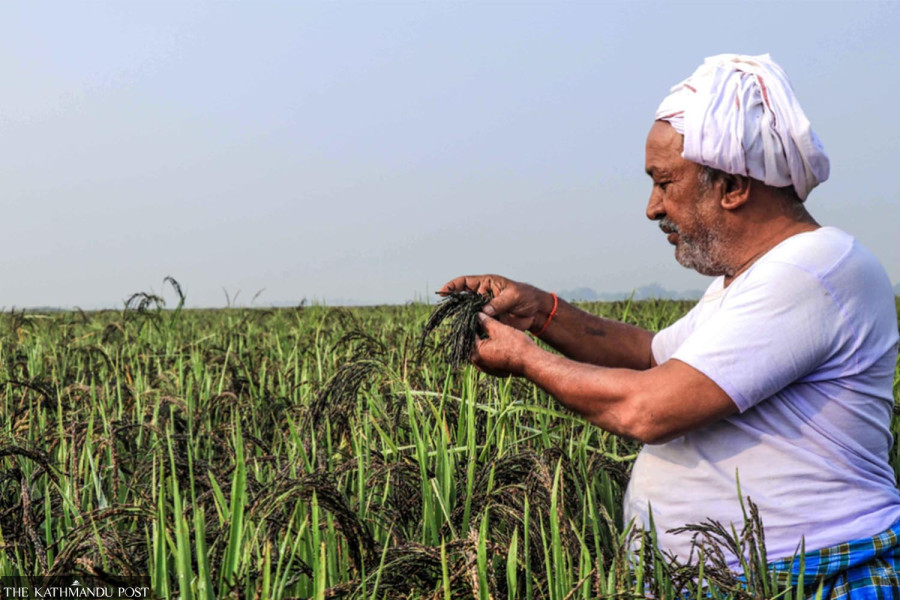
bookmark![]()
Post photo ![]()
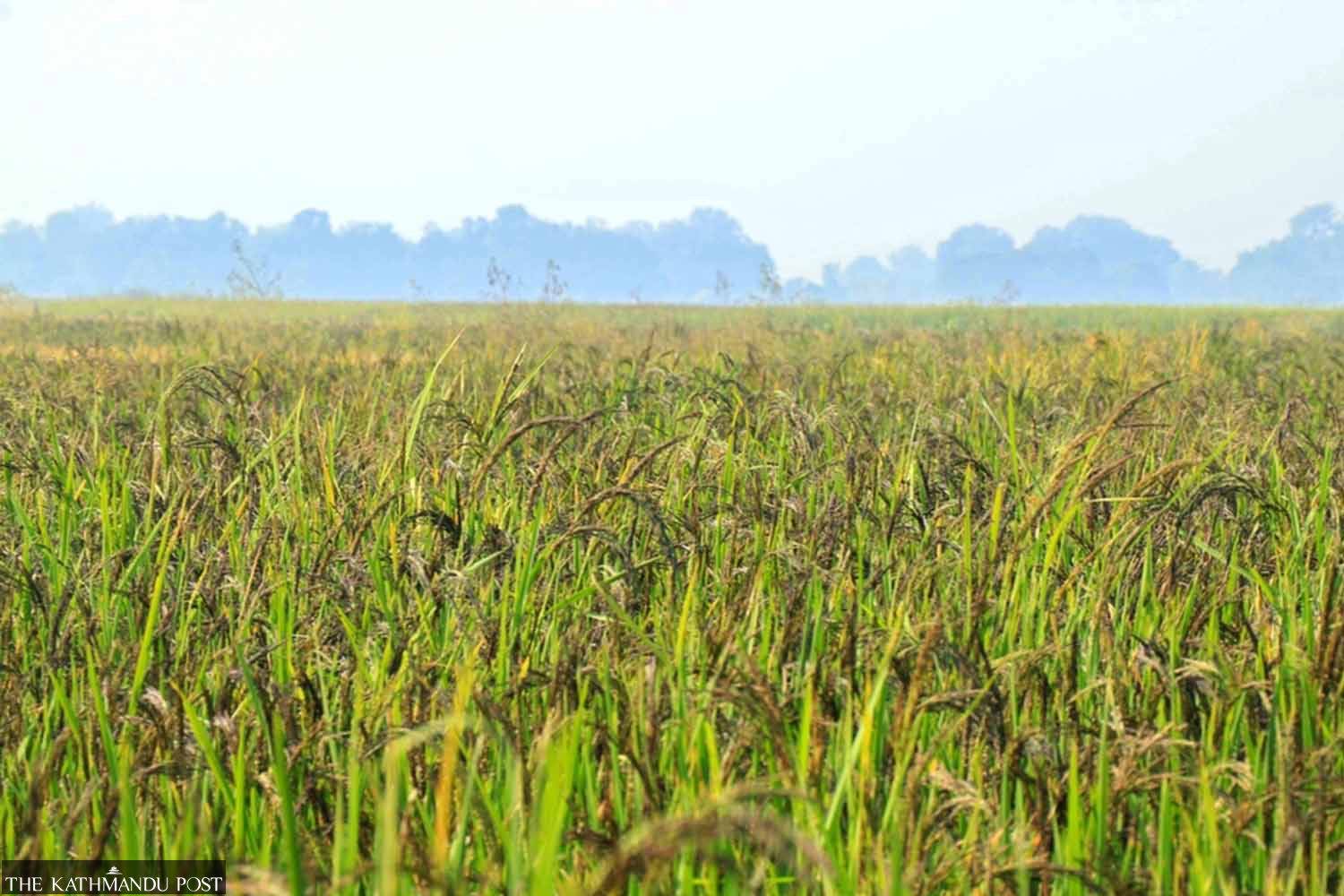
Kalanamak paddy ripens in a field in Lamtiya, Kapilvastu. Manoj Paudel/TKP ![]()
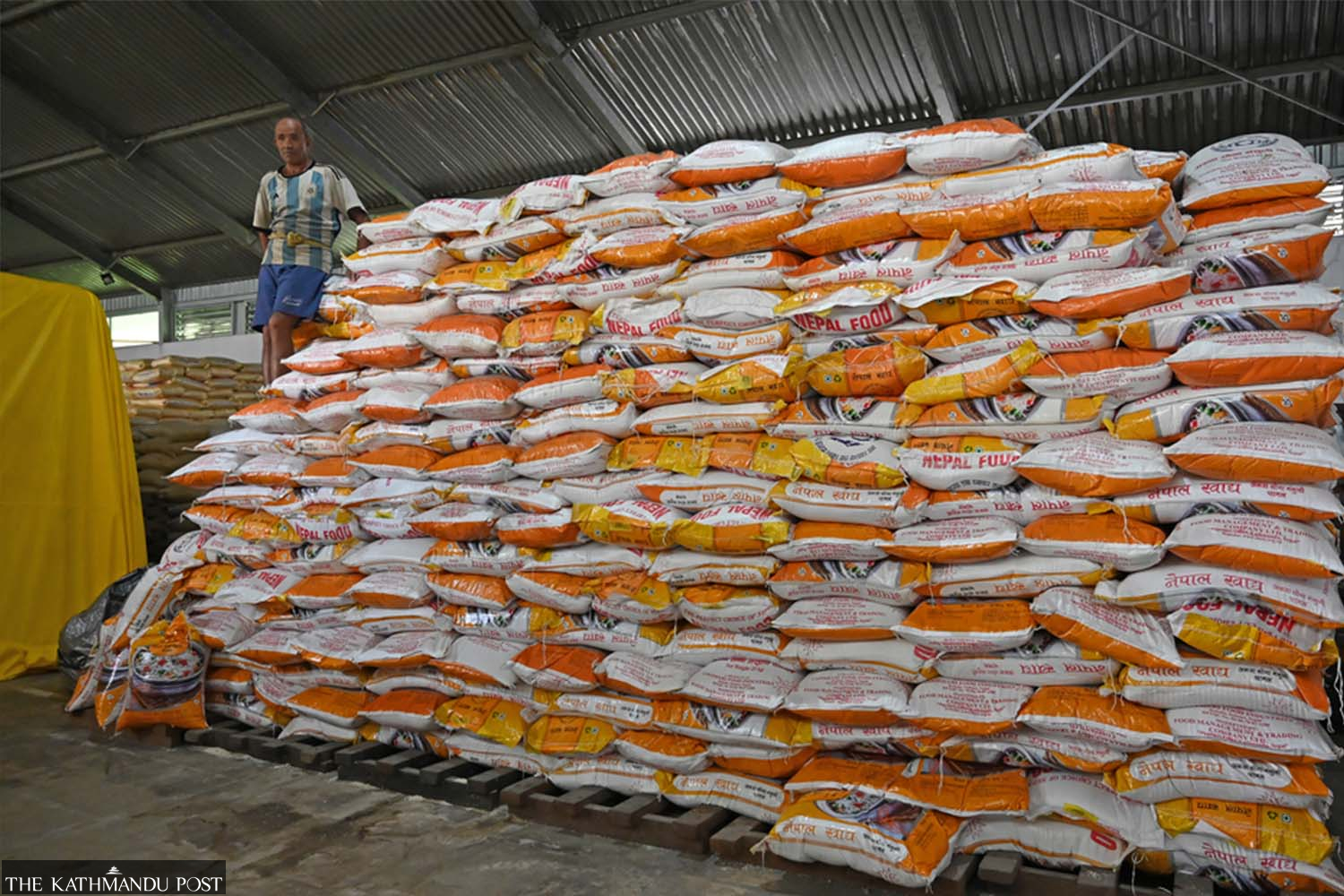
Rice stored at the Food Management and Trading Company warehouse in Thapathali, Kathmandu. Angad Dhakal/TKP ![]()
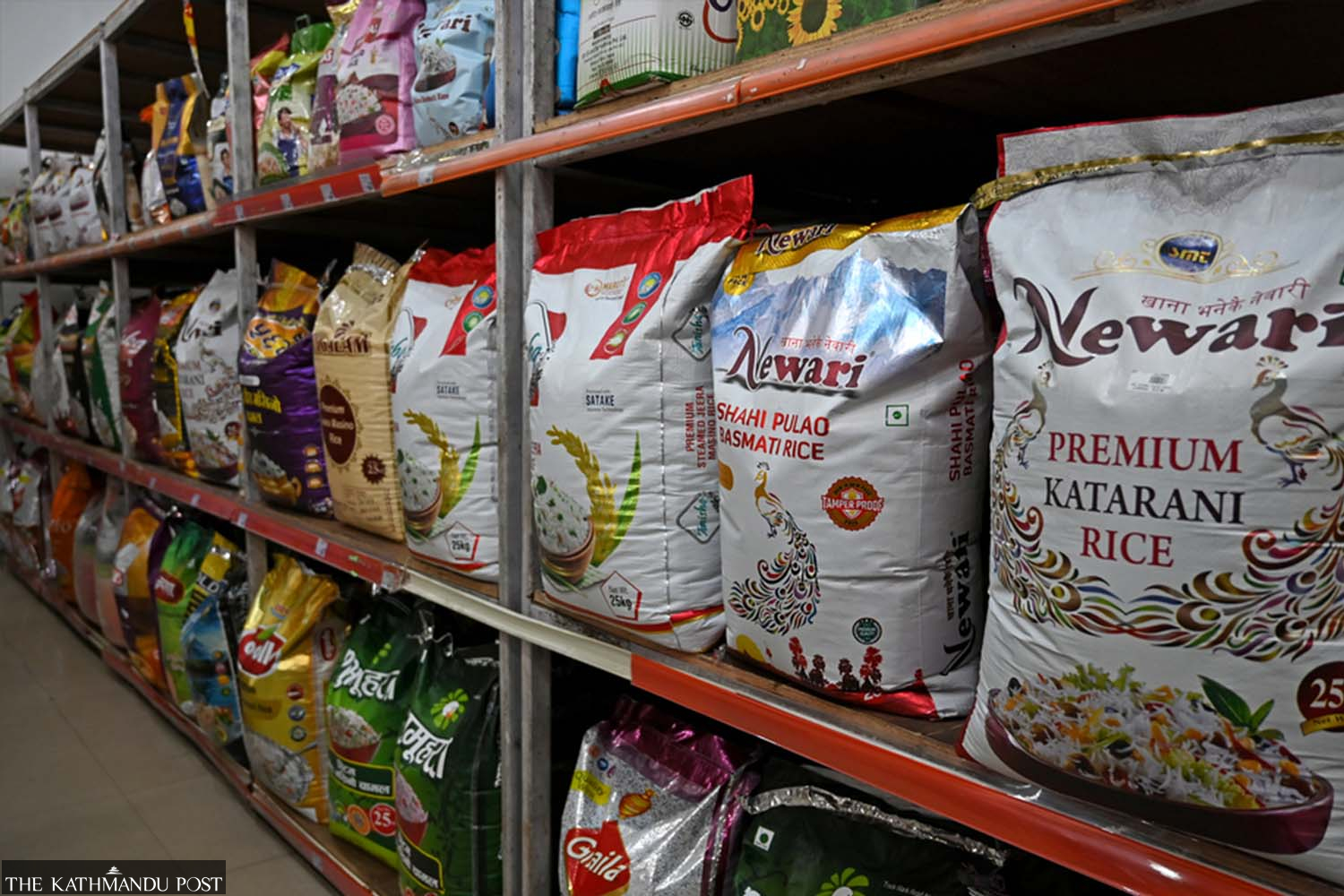
Different brands of rice stocked at a store in Shankhamul, Kathmandu. Angad Dhakal/TKP
Upendra Raj Pandey
Published at : August 9, 2026
Updated at : August 9, 2026 11:16
Kathmandu
Across South Asia, basmati rice has long been associated with prestige. It is the mainstay of parties during special occasions—from weddings and religious ceremonies to Dashain, Tihar and Eid celebrations. The fragrance of basmati—the word ‘basmati’ means ‘fragrant’ in Sanskrit—often defines dishes such as pulao and biryani, adding a sense of occasion to meals served at family kitchens, restaurants and five-star hotel buffets.
This famous aromatic rice is now at the centre of a long-running dispute over its origins, geographical indication (GI) rights and ownership of its global identity. India, Pakistan and, in recent years, Nepal have all entered the race to claim basmati as their own.
As the three countries continue their competing claims, Nepal is preparing to introduce its first standalone legal framework for geographical indications.
The government is moving ahead with an Industrial Property Bill that would provide legal recognition to GI products. The proposed law is expected to create a foundation for protecting Nepali products such as basmati rice, Ilam tea, Jumla beans and Bhaktapur’s juju dhau—literally translating to ‘king of yoghurt’—in domestic and international markets.
Nepal currently has no separate law governing geographical indications. Article 25 of the constitution guarantees property rights, including intellectual property, while the Copyright Act 2002 provides some protection for intellectual creations.
However, the government is seeking to replace the outdated Patent, Design and Trademark Act 1965 with a broader industrial property law. The bill was previously introduced in the House of Representatives on June 6, 2025, by then-industry minister Damodar Bhandari, but became inactive after Parliament was dissolved on September 12 following the Gen Z protests. The government has now revived the draft as part of its list of priority legislation to be enacted within a year.
The proposed law defines a geographical indication as “any sign or geographical name identifying goods produced or processed in a specific geographical location or region where those goods possess qualities, reputation or characteristics associated with that area.”
The bill outlines the criteria for granting GI protection and includes provisions allowing Nepal and other countries to recognise each other’s GI-protected products through bilateral agreements. It also proposes a separate national symbol or logo for GI products.
The long-running basmati dispute
The international battle over basmati gained global attention in 1997, when the Texas-based company RiceTec registered a patent with the United States Patent and Trademark Office (USPTO) for basmati rice and named it “Texmati.”
India contested the claim through the Agricultural and Processed Food Products Export Development Authority (APEDA), while over 50,000 people staged a protest outside the US Embassy in New Delhi. Environmentalist Vandana Shiva termed RiceTec’s claim ‘absurd’.
Following India’s challenge, RiceTec withdrew 15 of its original 20 claims. The remaining rights were limited to three specific hybrid varieties developed by the company itself: Basmati-867, RT-1117 and RT-1121.
The company did not gain exclusive rights over the traditional name “basmati”. Later, after failing to pay maintenance fees, RiceTec lost its patent rights altogether.
The dispute also created a rare moment of alignment between India and Pakistan, two countries that have historically clashed over political and territorial issues. Both opposed any attempt by a foreign company to claim ownership of the traditional rice name.
India later applied for GI protection for basmati in the European Union on July 20, 2018. The application was published in the EU’s Official Journal on September 11, 2020.
India had already granted GI status to basmati in May 2010, covering regions including Punjab, Haryana, Himachal Pradesh, Uttarakhand, Delhi’s surrounding areas, Uttar Pradesh and parts of Jammu and Kashmir.
Pakistan strengthened its own claim by introducing GI legislation in 2021 and submitting a separate application to the EU on August 24, 2023.
Nepal entered the dispute on December 9, 2020, when it filed an objection with the European Union against India’s GI application.
But the move did not happen automatically.
Advocate Gaurish Krishna Kharel, intellectual property and international trade law expert, said Nepal’s intervention came only after government agencies and researchers were repeatedly urged to act.
“We have done so much research on basmati. If we remain silent, India will claim it exclusively,” Kharel recalled telling scientists at the National Agricultural Research Council (NARC) and the National Agriculture Genetic Resource Centre (Genebank).
“This was the first time Nepal had formally challenged a claim at an international forum,” he said.
Documents obtained by Kantipur show that Nepal based its EU objection on several arguments.
Nepal argued that basmati has historically been cultivated, traded and consumed in the country; that international researchers have recognised the Tarai-Madhesh region of Nepal as one of the possible origins of basmati; and that Nepal possesses significant phenotypic and genetic diversity in basmati rice varieties.
Nepal also highlighted the cultural importance of aromatic rice cultivation, noting that varieties including basmati, Kalanamak, Hansharaj and Jhinuwal are grown across more than 30,000 hectares in 41 districts.
The country pointed out that four local basmati varieties, including Pokhareli Jethobudho, Lalka Basmati, Shuddhodhan Kalanamak and Kalonuniya, have been registered with the National Seed Board. The Genebank has also collected and preserved more than 80 germplasm samples of basmati-type rice from across Nepal.
Bal Krishna Joshi, chief of the Genebank, said Nepal’s intervention, although delayed, was an important step.
“It is encouraging that Nepal finally submitted its claim,” he said. “This was the first time the country formally presented its position on this issue at an international forum.”
Pratyush Nath Upreti, an international expert on intellectual property and trade investment law and a reader at Queen’s University Belfast, said Nepal’s claim has merit.
“Historical links, the cultural significance of basmati and traditional cultivation practices in Nepal strengthen Nepal’s position,” he said.
However, Upreti also pointed out a major weakness.
“Much of Nepal’s historical evidence and research has not been effectively presented internationally,” he said. “Some evidence has remained overlooked because of language and translation barriers.”
Kharel argues that India’s own GI claim could indirectly support Nepal’s position because India’s proposed basmati region includes areas bordering Nepal, including parts of Uttar Pradesh and Uttarakhand.
“Basmati does not grow according to political boundaries,” he said. “If the same geography and climate exist on both sides of the border, it cannot be argued that basmati can grow on one side but not the other.”
He also said Australia had refused to grant GI certification to Indian basmati after objections from both Pakistan and Nepal.
Indian exporters reject Nepal’s claim.
Vinod Kumar Kaul, executive director of the Indian Rice Exporters Association, told Kantipur, “Nepal is not a region where basmati is grown.”
However, he did not respond to questions about why basmati could not be grown in Nepal’s similar geographical conditions or why India had not yet secured final GI certification from the EU or other countries.
Muhammad Javed, senior vice-chairman of the Rice Exporters Association of Pakistan, also declined to comment, stating that “the matter is sub-judice in the international court.”
India challenges even basmati produced and packaged in Nepal
APEDA has challenged trademarks registered by Nepali companies for basmati products after Nepal objected to India’s GI claim in the European Union.
According to Kharel, APEDA has filed around 20 to 25 such objections with Nepal’s Department of Industry.
On April 25, 2018, APEDA challenged the trademarks of Shiv Shakti Agri Pvt Ltd’s “Urja Rice” and “Jeera Premium Basmati Rice”, alleging that they infringed on India’s claim over the exclusive “basmati” trademark.
The Department of Industry dismissed the objection on April 28, 2025, saying APEDA had failed to provide sufficient evidence to support its claim.
Pankaj Mallick, general manager of the Shiv Shakti Group, said basmati should not be treated as the exclusive property of a single country.
“Basmati does not belong to only one country. A particular variety of basmati may be associated with a specific region, but no one can claim a monopoly over the name itself,” he said.
He added that while the dispute was pending, the company had temporarily sold its rice under different names.
However, Nepali companies have not won every case.
In the case involving Nepal Food Processing and Packaging’s “Biryani-1121 Premium Royal Rice”, APEDA won after the Nepali company failed to submit a written response. The Department of Industry ruled in APEDA’s favour on June 30, 2025, following a one-sided hearing.
Similarly, APEDA won a dispute involving Nagnagina Food Industry’s “Mahalaxmi Rice” after the company failed to respond within the deadline.
In the case of Chitwan Food Industries’ “Raj” trademark, both sides settled it.
Shree Krishna Paudel, undersecretary at the Department of Industry’s legal division, said Nepal also has a legitimate claim over basmati.
“Basmati belongs to us as well. Unless there is a direct conflict between trademarks, we have ruled in favour of Nepali companies after reviewing the documents,” he said. “However, there have also been cases where APEDA has won because Nepali companies did not appear during the proceedings after receiving objections.”
Kharel said he had repeatedly urged government agencies to protect Nepal’s position.
“I have told the department many times that we cannot allow a claim that we ourselves have made to be lost because of procedural issues,” he said.
Joshi suspects APEDA’s repeated objections are partly aimed at testing whether India can influence the process.
Why Nepal needs a GI law
The economic importance of the basmati dispute is reflected in Nepal’s trade figures.
Nepal imported basmati rice worth Rs8.4 billion in the last fiscal year alone, with India accounting for the largest share of Nepal’s overall rice and paddy imports.
By contrast, Nepal’s rice exports remain negligible. Last year, Nepal exported only broken rice worth around Rs28,000.
Of Nepal’s nearly 1.4 million hectares of paddy cultivation area, around 150,000 hectares are used for aromatic rice varieties, including basmati. Around 60 rice mills currently sell such products under different brands.
Ram Thapa, senior vice-president of the Association of Nepalese Rice, Oil and Pulses Industry, said Nepal has several indigenous rice varieties with international market potential.
“Nepal has traditional varieties such as Pokhareli, Banepari, Marsi and Jethobudho,” he said. “We repeatedly urged the government to brand these products and promote exports, but instead the government did not even allow rice exports.”
He said India’s objection to Nepal’s basmati claim was unjustified.
“Basmati is not only theirs. It is ours too,” he said.
Experts, however, warn that passing a GI law alone will not be enough.
Upreti said the bigger challenge would be implementation and maintaining quality standards.
“The main issue is enforcement and quality assurance,” he said. “If a product receives GI protection but fails to maintain its quality, its reputation declines and the GI itself becomes diluted.”
Kharel and Joshi both argue that Nepal needs a dedicated and powerful enforcement institution, similar to India’s APEDA, possibly under the Nepal Agricultural Research Council.
“Passing a law alone will not solve the problem,” Kharel said. “The institution responsible for implementing it must also have the capacity and authority.”
Agricultural scientists say more than 100 well-known Nepali agricultural products could potentially qualify for GI protection, although no comprehensive study has yet been conducted.
Upreti points to products such as sel roti (ring-shaped sweet rice bread), bara (savoury lentil patty), Palpa’s chukauni (spiced potato-yoghurt salad) and Bhaktapur’s juju dhau as possible candidates.
“But first, proper research needs to be carried out,” he said.



Most Read from Money

Nepal travel agents threaten to stop selling Thailand trips over visa rules

Why does an hour long flight to Dhangadhi cost more than a flight to New Delhi?
Malaysia rejects Nepal’s demand to open recruitment to all manpower agencies

No school, but a graduation cap for women dairy farmers

Nepal arrests four medical service providers as Malaysia recruitment row deepens
Editor's Picks




E-PAPER | October 22, 2026

×