Nepal Electricity Authority (NEA) has stepped up preparations to manage electricity demand and supply during the coming dry season after the Bhotekoshi flood on August 26 disrupted transmission infrastructure and hydropower generation in the Trishuli corridor.
The NEA’s meeting on Tuesday decided to speed up studies and work needed for winter power management and formed a five-member committee to coordinate the response. It also set deadlines for completing transmission and distribution projects in the Kathmandu Valley.
Managing Director Dirghayu Kumar Shrestha said the loss of power generation would put pressure on the system but ruled out winter load-shedding. “Although the shutdown of power plants in the Trishuli river basin has put some pressure on demand and supply management, there would be no load-shedding this winter,” said Shrestha. “We have started preparations now to ensure a reliable electricity supply.”
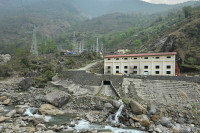
The August 26 flood destroyed the 220 kV Trishuli-3B Hub substation, making power evacuation from several projects uncertain even though some plants escaped direct damage. According to the authority, projects connected through the Trishuli-Chilime transmission system have a combined capacity of 176.1 MW.
The 78 MW Salasungi (Sanjen), 14.8 MW Upper Sanjen, 42.5 MW Sanjen, 14.8 MW Upper Mailung and 5 MW Mailung Khola projects were not damaged by the devastating floods but the power generation has been halted due to the damage of substation. The destruction of the Nuwakot substation has prevented the 176.1 MW of electricity from reaching the national grid.
The flood also damaged operating hydropower projects. More than 256 MW of national generation had been damaged after the disaster and this forced the NEA to run the 106 MW Kulekhani cascade continuously to offset the shortfall. Kulekhani is normally reserved for balancing the grid during the dry winter months.
The authority is also looking at ways to make electricity supplies in flood-hit Nuwakot and Rasuwa more reliable. It has deployed a team to assess whether the damaged Devighat substation can be brought back into operation.
The new five-member committee, coordinated by the director of the Bagmati Provincial Office of the NEA, has been instructed to submit daily progress reports to the executive director and immediately flag implementation problems.
The authority wants the work completed before winter demand begins to rise sharply, according to officials.




 18.53°C Kathmandu