Nepal has two decades to turn its youth bulge into an economic dividend, World Bank reports
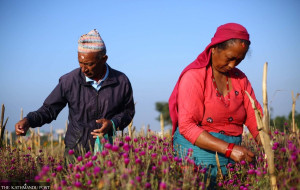
Weak job growth, remittance dependency, and poor social safety nets threaten Nepal’s chance to capitalise on its demographic dividend. Nepal's working-age population is projected to peak in 2047, giving it a longer window than most South Asian countries to benefit from what economists call the demographic dividend. File Photo
Nepal has over two decades to capitalise on its expanding working-age population before the demographic advantage begins to fade. However, according to a new World Bank report, structural weaknesses in employment, healthcare and social protection could prevent the country from translating this opportunity into sustained economic growth.
Nepal's working-age population is projected to peak in 2047, giving it a longer window than most South Asian countries to benefit from what economists call the demographic dividend—the potential economic gains that arise when the share of the working-age population increases relative to dependents.
The country is expected to become an aged society by 2059, when the share of older people will rise significantly, according to the World Bank report—Demographic Change in South Asia: From Tailwinds to Headwinds for Development—released on Tuesday.
The report warns that South Asia's demographic advantage is gradually disappearing, with the region's working-age population of 1.17 billion expected to peak in less than a decade and begin shrinking.
By 2049, South Asia will become an aged region, with 14 percent of its population aged 65 and above.
The transition is happening faster and at a lower level of per capita income than in comparable emerging and developing economies, leaving countries with less time to create productive jobs and establish systems to support ageing populations.
While Nepal has more time than its neighbours, the country's ability to benefit from its demographic transition remains constrained by a narrow employment base, persistent gender inequalities, weak healthcare infrastructure and inadequate retirement protection.
Remittances compare to a quarter of Nepal's gross domestic product. Money sent home by Nepalis working abroad contributed to 40 percent of poverty reduction between 2001 and 2011. But the economic gains from overseas employment have not necessarily translated into higher productivity at home.
Returnee migrant workers earn lower salaries than non-migrants for approximately three years after returning, suggesting that skills and experience acquired abroad do not easily find productive employment in the domestic economy, the report says.
The findings highlight the need to connect vocational training with job placement and life-skills programmes to improve the employment prospects of returnee migrants.
Nepal also faces significant barriers to increasing women's participation in the economy. Women work, on average, nine hours less per week than men. This largely reflects unequal care responsibilities that limit women’s ability to participate in paid employment.
Adolescent fertility rates also remain high, affecting girls' educational attainment and future employment opportunities.
Healthcare access is another major constraint. Around 60 percent of doctors in Nepal are based in urban areas, despite the predominantly rural distribution of the population. The readiness of health facilities to provide services for noncommunicable diseases stands at just 28.4 percent.
These shortcomings could become more costly as the population ages and demand for long-term healthcare increases.
The employment structure presents another challenge. Although construction companies have recorded strong employment growth, largely driven by hydropower development, the overall employment base remains narrow.
The report says the country needs to create more productive jobs, strengthen private sector participation, improve access to finance for micro, small and medium enterprises, and invest in education, skills and healthcare to maximise its demographic advantage.
The challenge is not limited to creating jobs for young people. Nepal must also prepare for a rapidly growing elderly population, most of whom currently lack adequate income security, the report said.
Approximately 91 percent of Nepali workers aged 65 and above are employed in the informal sector, leaving the overwhelming majority outside contributory pension arrangements.
Nepal's Social Security Fund, established in 2018, provides a foundation for expanding social insurance coverage. The contributory scheme is financed through a 31 percent contribution rate, with the government providing matching contributions of 9 percent for informal workers.
The World Bank says scaling up such arrangements could significantly expand old-age income security.
The government also provides a universal Senior Citizen's Allowance of Rs4,000 per month to citizens aged 70 and above, and those aged 60 and above in the Dalit community and Karnali region.
The report says this non-contributory pension provides a critical income floor that should be preserved and progressively expanded.
The demographic challenge is regional, but Nepal's relatively longer preparation period offers an opportunity to build institutions and policies before the pressure of population ageing intensifies.
South Asia's demographic transition has already contributed significantly to economic expansion. Since 2000, a growing share of adults in their prime working years has helped increase the region's annual GDP growth by 0.4 percentage points and labour productivity by 1.1 percentage points.
But that contribution is expected to decline sharply. The annual contribution of demographic changes to regional GDP growth is projected to fall to just 0.1 percentage point between now and 2050.
Only 60 percent of South Asia's working-age population is employed, while 88 percent of those with jobs work informally, often with lower earnings and limited job security.
The region also has one of the world's weakest pension systems. Only 17 percent of its working-age population contributes to a pension scheme, while just 10 percent of older people receive pension benefits—the lowest coverage globally.
"South Asian economies are ageing faster and earlier in their development journeys," said Johannes Zutt, World Bank vice-president for South Asia.
"They need to act now to adopt policies and build infrastructure that create more and better jobs and deepen the gains from their 'youth dividend', while at the same time preparing for ageing," he said.
Zutt said such measures would help countries make the most of their large working-age populations while laying the foundations for a second demographic dividend, in which healthier older people continue contributing to economic activity.
Sangam Prasain is Business Editor at The Kathmandu Post, covering tourism, agriculture, mountaineering, aviation, infrastructure and other economic affairs. He joined The Kathmandu Post in October 2009.




 17.53°C Kathmandu