16.87°C Kathmandu
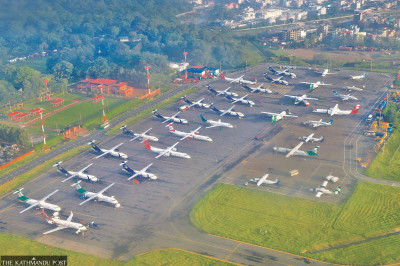
Explained: Why does an hour long flight to Dhangadhi cost more than a flight to New Delhi?
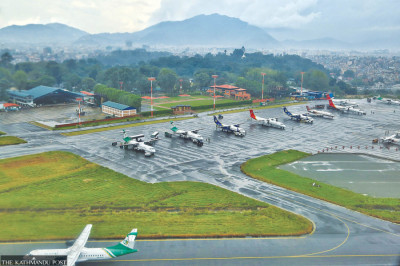
Domestic airfares in Nepal have doubled on the longest route in 12 years, with rising fuel costs, taxes and seasonal demand pushing up ticket prices.
Domestic airfares in Nepal have doubled on the longest route in 12 years, with rising fuel costs, taxes and seasonal demand pushing up ticket prices.
Fifty-six women farmers in Sindhuli have completed four years of training under a Korea-Nepal initiative. They learned modern dairy farming, animal care and financial management.
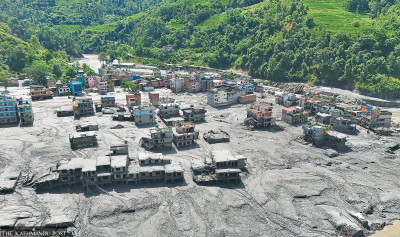
The World Bank estimates $1.66 billion in direct damage to physical assets, with infrastructure accounting for 83 percent of the losses.
The delay in forwarding two bills to split aviation regulation from service provisions has jeopardised the government’s mid-January 2027 target to get Nepal off the European Commission’s air safety list.
The bill, unanimously endorsed by a parliamentary committee and tabled in the National Assembly on Thursday, seeks to overhaul insurance provisions in Nepal’s domestic airline industry.
Despite the pandemic, political unrest and natural disasters, Nepal’s tourism industry has endured, with visitors returning after each shock. But is that resilience masking the need to build a safer, more diversified tourism industry?
The Asian Development Bank has raised its inflation forecast to 5.3 percent and expects the fiscal deficit to widen as reconstruction spending increases following the devastation.
The peak September-November season accounts for nearly 40 percent of Nepal’s annual tourist arrivals. That makes the coming months crucial for an industry still recovering from successive shocks.
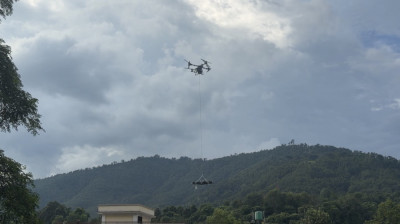
Once deployed mainly by international rescue teams after the 2015 earthquake, Nepal’s drone expertise is now helping deliver supplies, search for survivors and even airlift bodies from areas rescuers cannot safely reach.
The incident indicates that the risks Nepal face in the Himalayan region are increasing alongside climate change.
With the main gateway to China destroyed and alternatives vulnerable to floods, landslides and harsh weather, traders face another uncertain festival season.
A devastating flash flood in Rasuwa has dealt a fresh blow to Nepal’s tourism industry. Experts warn that worsening climate risks in the mountains could make natural disasters an increasingly serious threat to the country’s tourism-dependent economy.
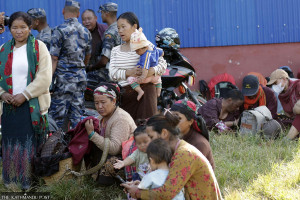
Pilgrims, mostly Indian, including 93 Nepalis, were preparing to cross into Tibet on Wednesday when a flash flood swept away roads and infrastructure in Rasuwa.
Japan is providing Rs2.73 billion in grants to build a nine-storey control tower and upgrade air traffic management systems at Nepal’s busiest airport.
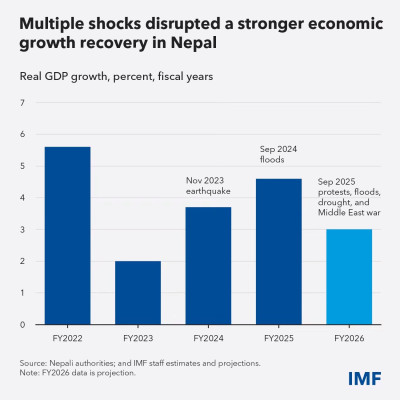
IMF mission chief says Nepal has strengthened its economic buffers and institutions after years of shocks, but must now focus on private investment, job creation and inclusive growth.