WTO flags Nepal’s weak manufacturing base and narrow export markets
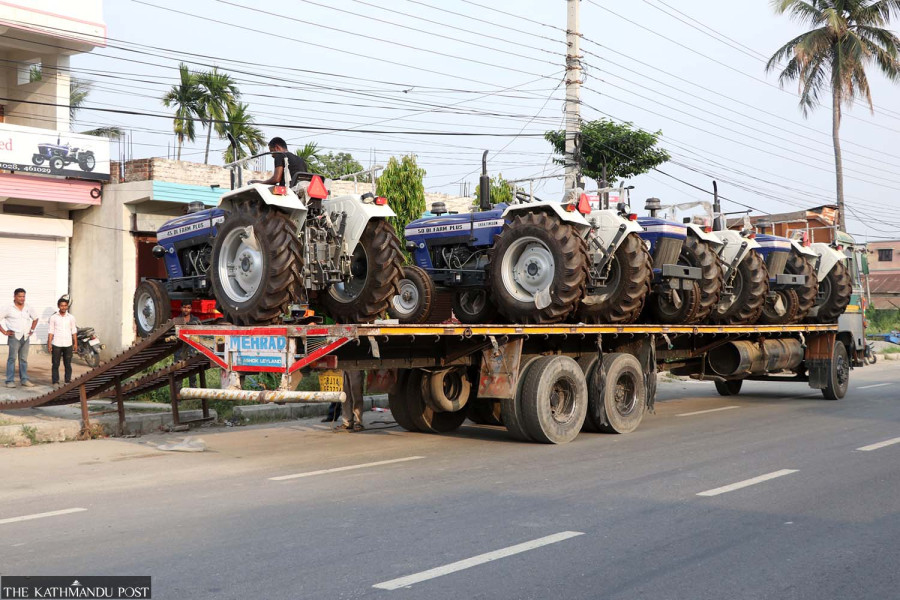
The country’s narrow export base, weak manufacturing capacity, high trade costs, and infrastructure bottlenecks continue to constrain its integration into global markets. Post file Photo
Nepal continues to grapple with poor infrastructure, high trade costs, weak production capacity, and limited export diversification, despite modernising customs and introducing policy reforms to attract investment, a recent review by the World Trade Organisation says.
According to the WTO Secretariat’s Trade Policy Review of Nepal, the country’s manufacturing sector contributes just 4.9 percent to gross domestic product, while around 68 percent of merchandise exports go to India. This points to Nepal’s heavy dependence on a single export market.
Although merchandise exports increased from $860 million in fiscal year 2018-19 to $1.5 billion in 2023, there has been little progress in diversifying export products and destinations, the report says.
The review also pointed to gaps in implementing trade facilitation measures. Only 13 percent of customs declarations are processed through the green channel, while 42 percent still go through the red channel, which requires physical inspection.
The WTO acknowledged Nepal’s efforts to introduce reforms, including amendments to the Foreign Investment and Technology Transfer Act, the E-commerce Act and customs modernisation initiatives. However, it stressed that effective implementation of these measures remains crucial to improving the country’s trade performance.
It stresses the need to expand domestic production capacity, diversify export products and destinations, strengthen trade logistics, and improve participation in regional and global value chains.
Nepal’s economy also remains heavily reliant on remittances equivalent to 25.3 percent of its GDP, while the merchandise trade deficit stands at 24.3 percent of GDP. The figures reflect the country’s dependence on imports to meet domestic consumption and production needs.
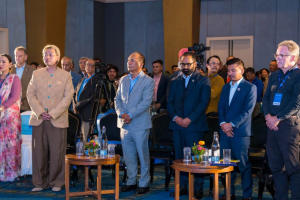
Speaking at the 10th Global Review of Aid for Trade at the WTO in Geneva last Thursday, Ngozi Okonjo-Iweala, director-general of the WTO, called on developing countries, including least-developed countries (LDCs) such as Nepal, to strengthen domestic reforms, production capacity and value addition to increase their share of global trade.
Nepal has received a total of $8.94 million in support from the Enhanced Integrated Framework (EIF), while securing $1.8 million in co-funding from the government, private sector, donors and development partners for trade-related projects.
The EIF is a global partnership dedicated to helping least-developed countries and recently graduated countries harness trade and investment for resilient, sustainable and transformative development.
Anchored at the WTO, the framework brings together LDC governments, funding partners, international agencies and the private sector to address systemic trade and investment constraints and expand opportunities for long-term development.
Addressing the opening plenary session, titled ‘20 Years. Better Trade. Better Lives’, Okonjo-Iweala said development assistance should move beyond financing infrastructure and focus on helping countries overcome domestic regulatory and institutional barriers, expand manufacturing, and improve their ability to compete in international markets.
She said that despite substantial aid for trade over the past two decades, the share of LDCs in global trade has remained stagnant at around 1 percent.
Japan International Cooperation Agency (JICA) President Akihiko Tanaka said Nepal and other developing countries should prioritise quality infrastructure, customs modernisation, and resilient supply chains to strengthen trade competitiveness and achieve long-term economic growth.
“Development cooperation should go beyond mobilising private investment and focus on building infrastructure, strengthening institutions and developing human resources to generate sustainable economic benefits,” he said.
Drawing on JICA’s experience in Africa, Tanaka said one-stop border posts had reduced border-crossing times by around 70 percent at 15 locations through simplified customs procedures, improved coordination, and training of customs officials.
He said developing countries should build their own institutional capacity rather than rely on external assistance to replace domestic systems.
Tanaka also stressed the need for diversifying and strengthening supply chains, particularly as pandemics, conflicts, and natural disasters have exposed vulnerabilities in global trade networks.
For landlocked countries like Nepal, these priorities are particularly important in addressing cross-border trade bottlenecks, high transportation costs, and disruptions caused by natural disasters.
He also called for stronger partnerships among governments, development banks, businesses, and private investors, alongside predictable trade rules, to help developing economies move up the production and manufacturing value chain.
For Nepal, the remarks underline the need to improve the domestic business environment, strengthen productive capacity, promote value-added exports, and address policy and infrastructure bottlenecks that have constrained its integration into global trade.
Matthias Cormann, secretary-general of the Organisation for Economic Co-operation and Development, called on developing countries, including Nepal, to attract greater private investment, improve digital connectivity, and strengthen trade-related institutions to benefit more from global markets.
“LDCs continue to account for only around 1 percent of global goods exports and 0.5 percent of services exports, despite two decades of development assistance. Public development finance should be used to mobilise private investment through guarantees, co-financing and blended finance, while ensuring investments create local jobs, skills and businesses,” he said.
Cormann highlighted digital infrastructure as an increasingly important component of trade, noting that a 1 percent increase in digital connectivity is associated with a 1.5 percent rise in international trade.
Krishana Prasain is a business reporter for The Kathmandu Post covering markets. Before joining The Kathmandu Post in 2018, she spent 3 years in New Business Age magazine covering business.




 20.46°C Kathmandu