Diarrhoeal infections nearly tripled in three years
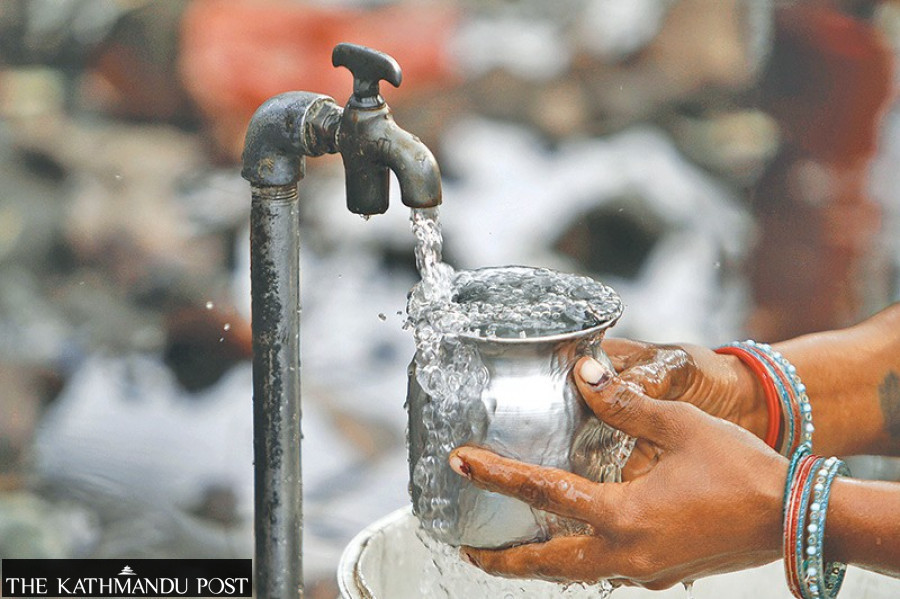
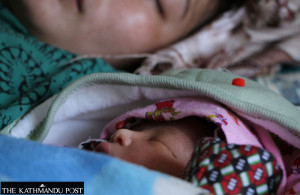
More than half of drinking water samples from public schools and offices in three Lalitpur local units tested positive for faecal coliform and E coli. Contaminated water is blamed for the growing incidence of waterborne diseases, including diarrhoeal infections, across the country. Post File Photo
Drinking water supplied to schools and public offices in the three local units of Lalitpur district—Lalitpur Metropolitan City, Mahalaxmi Municipality and Godawari Municipality—has been found to be contaminated with hazardous microbes.
Of the 45 samples of drinking water collected from public schools and public offices of different parts of the three local units, more than a half tested positive for faecal coliform and E coli, officials say.
“We carried out tests on water samples collected randomly from various schools and public offices some two weeks ago,” said Shree Bhadra Sharma, an official at the Public Health Office, Lalitpur. “Over 50 percent of samples were found to be contaminated. We have notified the schools and public offices and asked them to take preventive measures.”
Contaminated water is blamed for the growing incidence of waterborne diseases, including diarrhoeal infections, across the country. The rate of diarrhoeal infection among children under five has nearly tripled in the past three years.
According to the data provided by the Ministry of Health and Food Safety, the incidence of diarrhoeal infection rose to 318 per 1,000 children under five years of age in the fiscal year 2024-025. In 2022-023, the rate was 115 per 1,000, while in 2023-024 it was 127 per 1,000.
Faecal coliform and E. coli are bacteria commonly found in the intestines and faeces of warm-blooded animals. Their presence in drinking water indicates contamination by sewage or human faeces, officials say.
Similar tests were carried out by the Public Health Office, Kathmandu, a month ago, found faecal coliform and E. coli in all water samples. The samples were collected from Chandragiri Municipality, Kirtipur Municipality, Dakshinkali Municipality, Gokarnashwar Municipality and Kathmandu Metropolitan City.
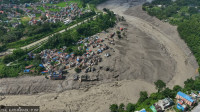
As monsoon rains continue, most drinking water sources have been contaminated by floodwater.
Health officials say drinking contaminated water can cause diarrhoeal diseases, including cholera, dysentery, typhoid, as well as hepatitis A and E.
Though major diarrhoeal outbreaks have not been reported in the Kathmandu valley this year, health facilities have reported a surge in diarrhoeal infections, fever, typhoid and hepatitis A and E.
Some diarrhoeal patients have also tested positive for cholera in rapid diagnosis tests.
The Epidemiology and Disease Control Division, which is responsible for controlling outbreaks of communicable and vector-borne diseases, reported that acute gastroenteritis was the most reported condition in the last week, with 721 cases.
Doctors say reported cases do not capture the full extent of the problem, as many people with diarrhoeal infections do not seek hospital treatment, and instead buy medicines over the counter and recover at home.
“We all know that most of our drinking water sources are not safe and can become contaminated with floodwater,” said Dr Sher Bahadur Pun, chief of Clinical Research Unit at Sukraraj Tropical and Infectious Disease Hospital, Teku. “We must ensure the safety of drinking water. I would request parents to send only boiled water with their school-going children.”
As the authorities have failed to ensure the safety of drinking water, public health experts warn that the risk of a major outbreak of waterborne diseases, including cholera, remains high in the coming days.
They say even jar water sold in the market may not be safe to drink without boiling, as tests carried out in the past found the presence of faecal coliform and E. coli in samples.
Doctors say improving access to safe drinking water, strengthening sanitation and hygiene, raising public awareness, and ensuring early treatment are key to preventing future outbreaks.
The health ministry’s data show that Karnali province recorded the highest rate of diarrhoeal infection—647 per 1,000 children under five years of age in the fiscal year 2024-025, followed by Sudurpaschim province 439; Madhesh 368; Lumbini 320; Koshi 247; Gandaki 203; and Bagmati province 201.
Officials at the Integrated Health Information Management Centre under the Department of Health Services said they are still compiling data for the last fiscal year 2025-026. The available data show an infection rate of 260 per 1,000 children under five years of age.
“This number could change, as we are still compiling the available data,” said Abhaya Shrestha, an official at the centre.
At least 14 children under five died of diarrhoeal infection in the fiscal year 2023-024, four in 2022-023 and one in 2024-025.
Nepal frequently witnesses outbreaks of water- and food-borne diseases, including cholera, during the monsoon season. Thousands of people get infected as floodwaters contaminate most of the drinking water sources.
In fiscal year 2025-026, the country witnessed a major cholera outbreak in which several died and hundreds were infected, especially in Bara and Parsa districts.
The Vibrio cholera 01 Ogawa serotype was responsible for the outbreak. Health authorities had resorted to ring vaccination against cholera after all their efforts in containing the spread of the deadly disease failed.
In the fiscal year 2024-025, at least 95 cholera cases were confirmed in Kathmandu, Lalitpur, Kailali, Pyuthan, Makawanpur, Rolpa, Sindhupalchok, Achham, and Rautahat districts.
Public health experts say that the risk of waterborne diseases will not decline until the country’s water and sanitation conditions improve and people have access to safe drinking water. Several other factors, including storage conditions, supply pipes, and pollution of water sources, also impact the quality of water supplied to households.
Drinking only boiled water is the best way to prevent waterborne diseases,” said Dr Samita Panta Acharya, professor of general practice and emergency medicine at Patan Hospital. “I suggest that everyone drink boiled water. Even the quality of jar water is questionable, as it is not properly monitored.”
How to stay safe from waterborne diseases
Drink only boiled water
Wash your hands with soap and water before and after eating.
Ensure that the water container and utensils are properly cleaned.
Seek treatment early if you suffer from waterborne diseases
Arjun Poudel is a health reporter for The Kathmandu Post. Before joining the Post, he worked for Sagarmatha Television, Naya Patrika, Republica and The Himalayan Times.




 23.78°C Kathmandu